
Freemium
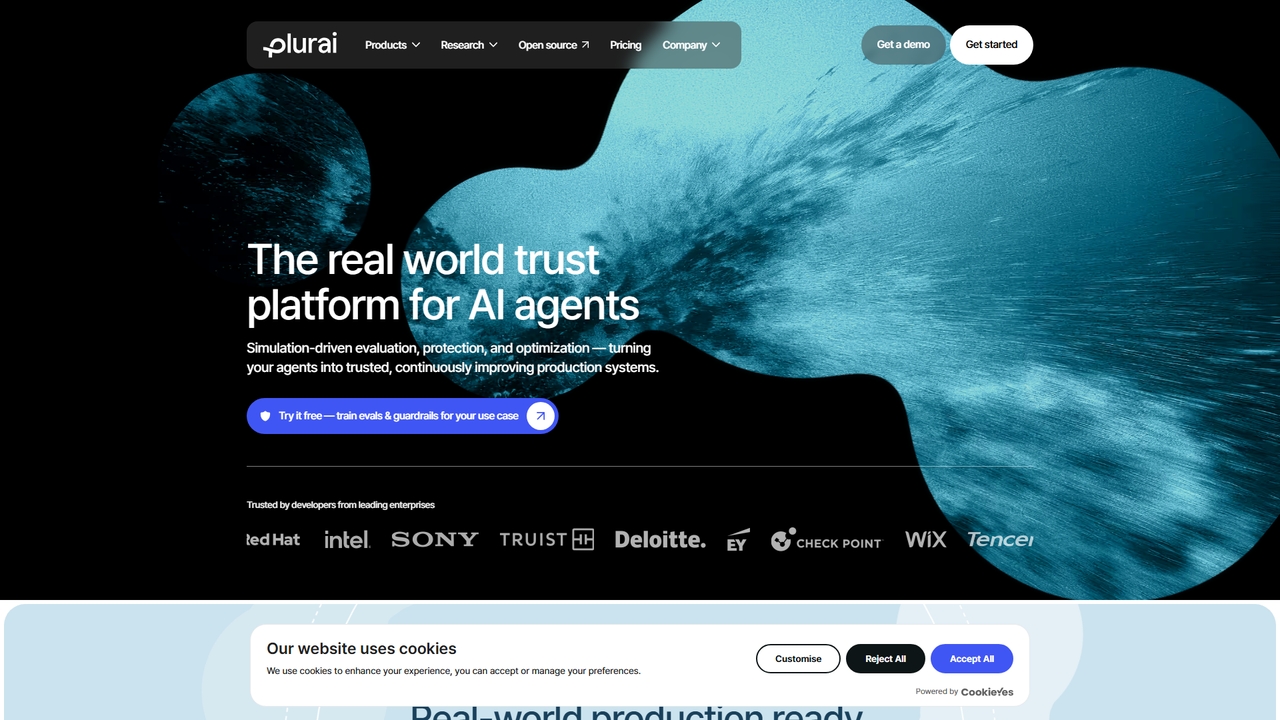
Popular Platforms in Ai Infrastructure include Plurai and ADS4GPTs, helping you work more efficiently.
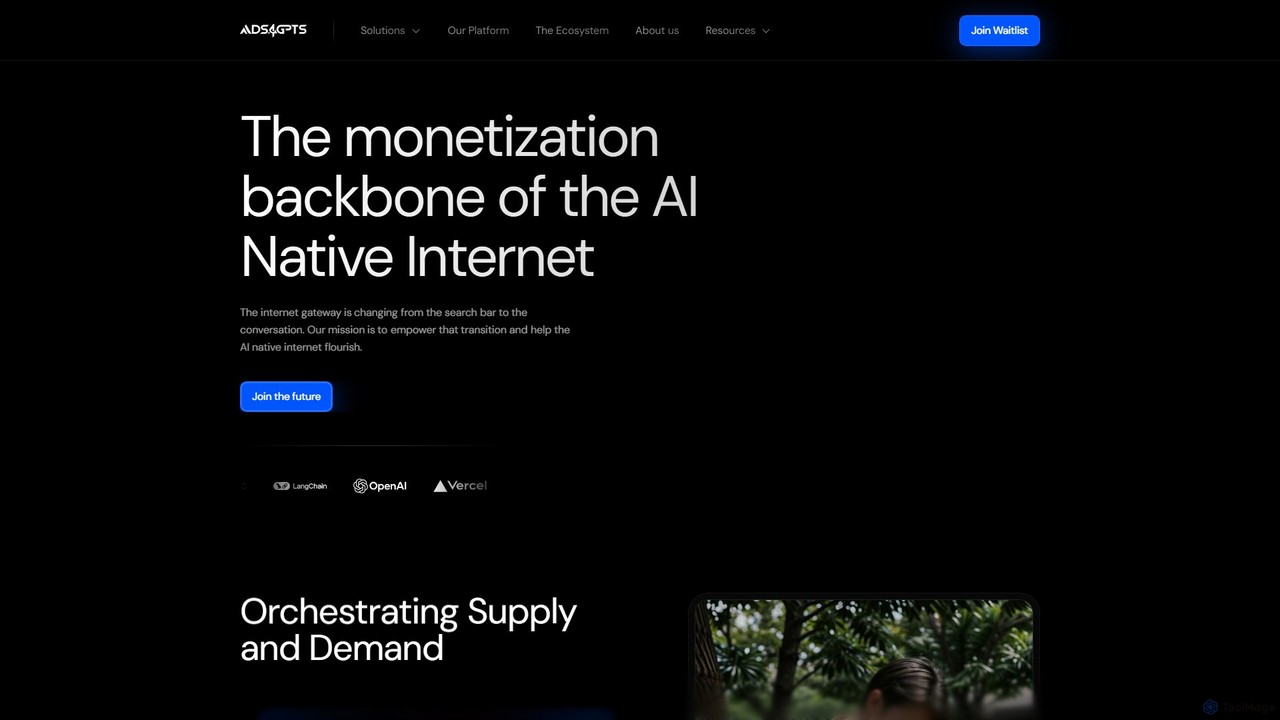
ADS4GPTs is a pioneering AI-native advertising platform designed to be the monetization backbone for the new conversational internet. It enables AI application developers to generate revenue through seamless, privacy-first ads, while offering advertisers unique access to highly engaged, intent-driven audiences within AI chat experiences.
PlatformsAI Platforms are integrated environments that provide comprehensive tools and services for developing, deploying, and managing artificial intelligence applications and machine learning models. These platforms abstract away complex underlying AI infrastructure, offering a streamlined workflow from data ingestion and model training to deployment and monitoring. They empower data scientists, developers, and enterprises to build, scale, and maintain AI solutions more efficiently and collaboratively.
AI Platforms are crucial for organizations aiming to operationalize AI at scale. They are used by data science teams to collaborate on complex model development, by MLOps engineers to automate deployment pipelines, and by enterprises to manage the entire lifecycle of their AI assets, ensuring governance and performance across various applications.
When selecting an AI Platform, evaluate its scalability for your data and compute needs, compatibility with your preferred ML frameworks, and the breadth of its MLOps capabilities. Consider its integration with existing cloud services or on-premise infrastructure, ease of use for your team, and the overall cost-effectiveness, including pricing models for compute and storage.
Data scientists use AI Platforms to build, train, and validate bespoke machine learning models for specific business challenges, such as predicting customer churn or optimizing supply chain logistics. The platform provides the necessary compute resources, data access, and experiment tracking tools, enabling rapid iteration and performance tuning.
MLOps engineers leverage AI Platforms to seamlessly deploy trained models as scalable API endpoints, allowing applications to consume AI predictions in real-time. This includes automated containerization, load balancing, and monitoring to ensure high availability and low latency for services like recommendation engines or fraud detection.
Enterprises utilize AI Platforms to manage the entire lifecycle of their machine learning models, from data versioning and model training to deployment, monitoring, and retraining. This automation ensures model governance, reproducibility, and continuous improvement, reducing manual overhead and risk.
Research teams and data science departments use AI Platforms to foster collaboration, sharing code, data, and experimental results within a secure, version-controlled environment. This accelerates innovation by enabling multiple team members to work on different aspects of a project simultaneously.
Organizations with large datasets and complex models rely on AI Platforms to distribute training jobs across multiple GPUs or CPUs, significantly reducing training times. The platform handles resource allocation and orchestration, allowing users to focus on model logic rather than infrastructure management.
Developers integrate pre-trained models or custom-deployed models from AI Platforms into their applications via APIs. This allows them to quickly add AI capabilities like natural language understanding, image recognition, or personalized content generation without needing deep ML expertise or managing the underlying infrastructure.
AI Platforms are integrated software environments that provide a comprehensive suite of tools and services for the end-to-end lifecycle of AI and machine learning model development, deployment, and management. While AI Infrastructure refers to the foundational hardware (GPUs, CPUs) and low-level software (operating systems, virtualization) that powers AI, AI Platforms sit atop this infrastructure. They abstract away much of the complexity, offering higher-level services like data management, model training orchestration, and MLOps capabilities, making AI development more accessible and efficient for practitioners.
Using an AI Platform offers several key benefits. Firstly, it streamlines the entire ML workflow, from data preparation to model deployment, significantly accelerating development cycles. Secondly, platforms provide robust MLOps capabilities, ensuring model reproducibility, versioning, monitoring, and automated retraining, which is crucial for production environments. Thirdly, they facilitate collaboration among data scientists and engineers, offering shared environments and experiment tracking. Lastly, platforms often provide scalable compute resources and optimized frameworks, leading to more efficient resource utilization and faster model performance.
AI Platforms offer a holistic, integrated environment covering multiple stages of the AI lifecycle, whereas specialized AI tools typically focus on a single, specific task. For example, a data labeling service only handles annotation, and a model trainer might only focus on a specific algorithm. An AI Platform, however, integrates these functionalities (or provides interfaces to them) alongside data management, experiment tracking, deployment, and monitoring, offering a complete ecosystem. This integration reduces tool sprawl and ensures a more cohesive workflow for complex AI projects.
When selecting an AI Platform, consider your organization's specific needs. Evaluate its scalability to handle your current and future data volumes and computational demands. Assess its compatibility with your existing technology stack and preferred machine learning frameworks (e.g., TensorFlow, PyTorch). Look for comprehensive MLOps features, including model versioning, monitoring, and automated retraining. Also, consider the platform's ease of use, documentation, community support, and its pricing model to ensure it aligns with your budget and team's expertise.
Yes, many modern AI Platforms are designed to support various deployment models. Cloud-based AI Platforms (like AWS SageMaker, Google AI Platform, Azure Machine Learning) offer scalable, managed services with extensive integrations into cloud ecosystems. However, there are also hybrid or on-premise AI Platforms (e.g., Kubeflow, open-source solutions, or enterprise-specific offerings) that allow organizations to leverage their existing infrastructure and maintain greater control over data and security. The choice depends on data residency requirements, security policies, and existing infrastructure investments.