ToolMage
Sign in

Best 3 Writing Assistant for Ai Tools

Popular Writing Assistant in Ai Tools include TeraBox, Genie Prompt, and PromptlyGenerated, helping you work more efficiently.

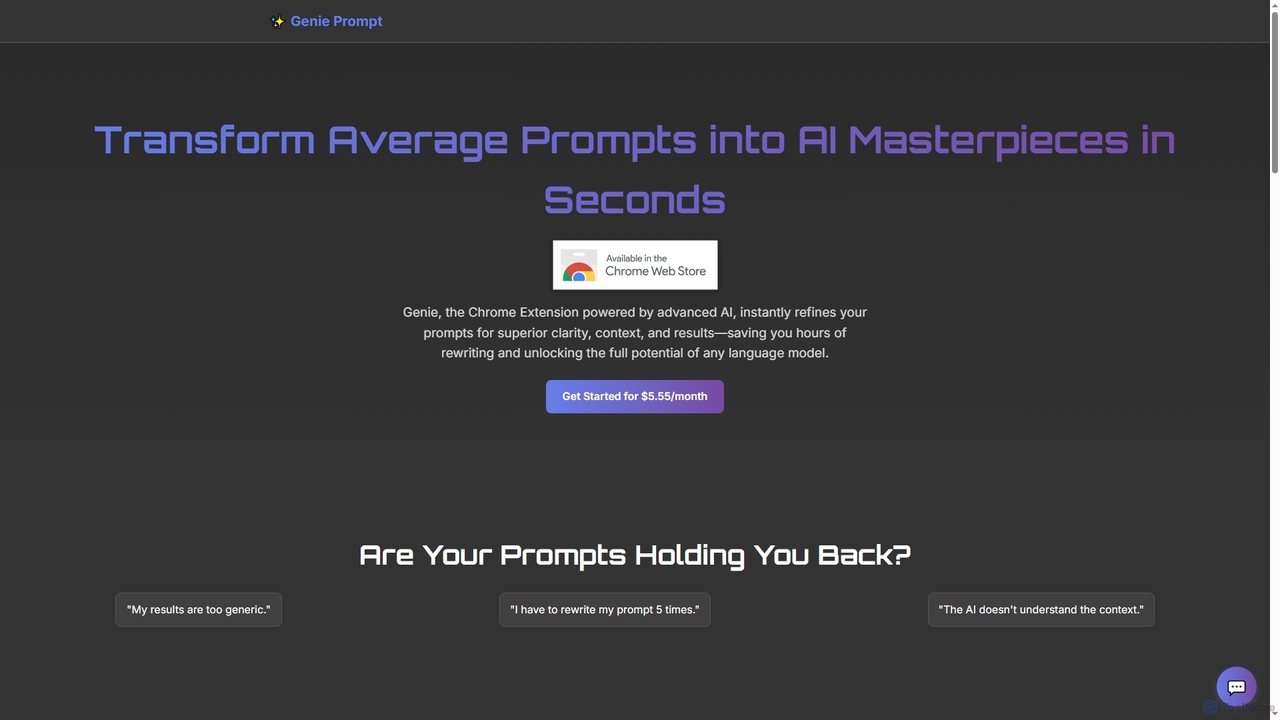
Genie Prompt
Freemium

Genie Prompt

Genie Prompt is a Chrome extension powered by Google's Gemini AI that instantly refines your selected text into superior prompts. It enhances clarity, context, and structure to help you get better, more consistent results from any AI language model, saving you time and effort.

Writing Assistant
Visits 5.5KFavorites 123Likes 135
TeraBox
Freemium

TeraBox

TeraBox is a comprehensive cloud storage solution offering a generous 1TB of free space. It integrates a powerful suite of AI tools for enhanced productivity, including a document scanner, essay writer, and slideshow maker. With a focus on security and cross-platform accessibility, TeraBox allows users to store, back up, share, and manage their files effortlessly, while also providing opportunities to monetize content through its referral program.

Presentation Maker
Visits 6.6MFavorites 130Likes 137
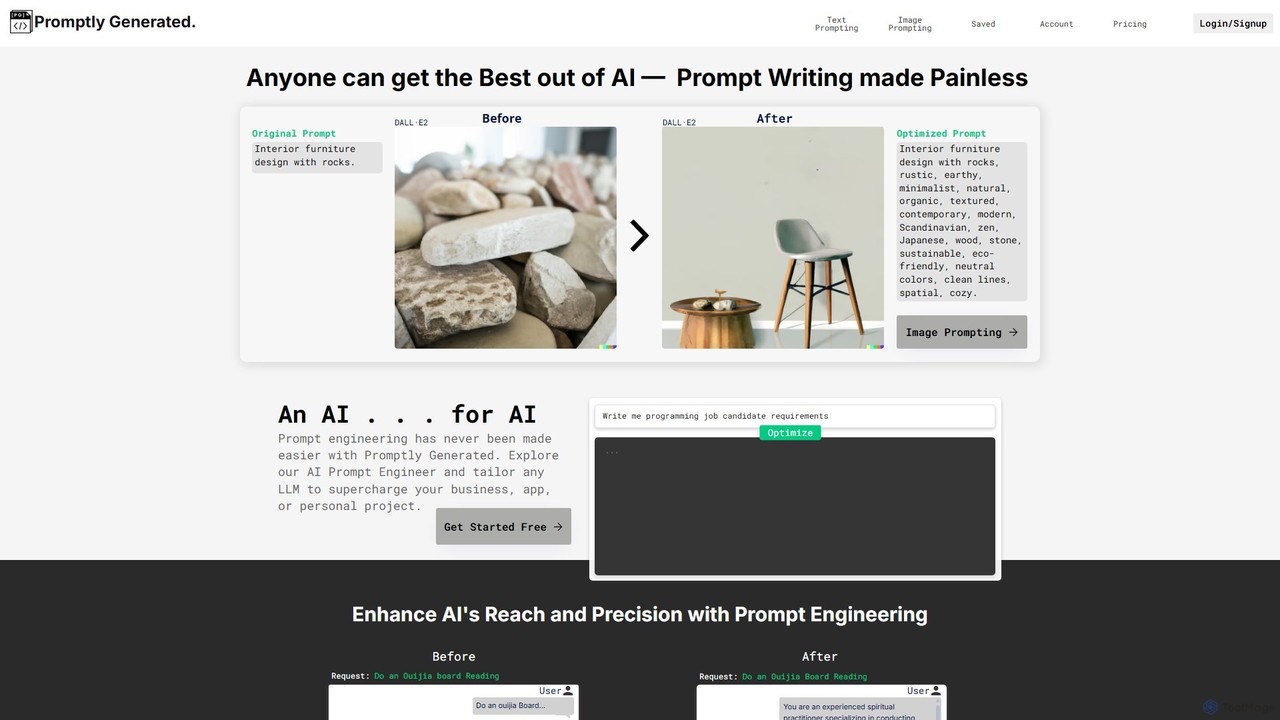
PromptlyGenerated
Freemium

PromptlyGenerated

PromptlyGenerated is an AI-powered prompt engineering tool that helps users create highly optimized prompts for text and image generation models like GPT-4, Midjourney, and Stable Diffusion. It transforms simple ideas into detailed, structured instructions, unlocking the full potential of AI for developers, marketers, and creators without the need for deep technical expertise.

Image Generator
Visits 5.4KFavorites 122Likes 128

About Writing Assistant

Writing Assistant tools are AI-powered applications designed to enhance and streamline the writing process. Leveraging advanced natural language processing (NLP) and machine learning, these tools provide intelligent suggestions for grammar, style, tone, and even content generation. They empower users to produce high-quality, clear, and engaging written material more efficiently, making them invaluable for content creators, marketers, students, and professionals alike.

Core Features

  • Grammar & Spelling Correction: Identifies and corrects errors in syntax, punctuation, and spelling to ensure accuracy.
  • Style & Tone Adjustment: Analyzes text for readability and suggests improvements to match desired tone (e.g., formal, casual, persuasive).
  • Content Generation & Drafting: Assists in generating outlines, paragraphs, or full drafts based on prompts and keywords, overcoming writer's block.
  • Paraphrasing & Summarization: Rewrites existing text to improve originality or condenses long documents into concise summaries.
  • Vocabulary Enhancement: Offers synonyms and alternative phrasing to enrich language and avoid repetition.

Applicable Scenarios

Writing Assistant tools are widely adopted across various fields. Content marketers use them to quickly generate engaging social media posts and blog outlines, while students leverage them for refining academic essays and ensuring proper citation styles. Business professionals utilize these assistants to craft clear, concise emails and reports, ensuring professional communication. Researchers can also benefit from summarizing complex articles and improving the clarity of their scientific papers.

How to Choose

When selecting a Writing Assistant, consider its core functionalities, such as grammar accuracy, style suggestions, and content generation capabilities, ensuring they align with your primary needs. Evaluate its language support and integration with your existing writing platforms (e.g., word processors, browsers). Assess the customization options for tone and style, and compare pricing models, including free tiers versus premium subscriptions, to find a tool that offers the best value and features for your specific writing demands.

Writing Assistant use cases

1

Generating Marketing Copy for Campaigns

A digital marketer needs to create multiple variations of ad copy and social media posts for an upcoming product launch. Using a Writing Assistant, they input key product features and target audience details. The tool then generates several compelling headlines, body paragraphs, and calls-to-action, allowing the marketer to quickly select and refine the best options, significantly reducing the time spent on initial drafting and brainstorming.

2

Refining Academic Essays and Research Papers

A university student is finalizing a complex research paper and needs to ensure clarity, conciseness, and academic integrity. They upload their draft to a Writing Assistant, which identifies grammatical errors, suggests improvements for sentence structure, and flags potential plagiarism issues. The tool also helps in rephrasing dense paragraphs to enhance readability, ensuring the paper meets high academic standards before submission.

3

Composing Professional Emails and Reports

A business professional frequently writes emails and reports that require a formal and clear tone. They use a Writing Assistant to draft their communications, which automatically corrects typos and grammatical mistakes. More importantly, the tool provides suggestions to adjust the tone to be more professional, concise, or persuasive, helping them convey messages effectively and maintain a polished corporate image.

4

Overcoming Writer's Block for Bloggers

A blogger struggles with writer's block when starting new articles and needs fresh ideas or outlines. They input a topic or a few keywords into a Writing Assistant. The tool then generates several potential blog post titles, outlines, and even initial paragraphs, providing a strong starting point. This helps the blogger overcome creative hurdles and maintain a consistent content publishing schedule.

5

Optimizing Product Descriptions for E-commerce

An e-commerce manager needs to write engaging and SEO-friendly product descriptions for hundreds of items. They use a Writing Assistant to generate unique descriptions based on product specifications and target keywords. The tool helps in crafting persuasive language that highlights benefits, ensures consistent brand voice, and optimizes the text for search engines, leading to better product visibility and conversion rates.

6

Translating and Localizing Content

A global content team needs to adapt marketing materials for different regional audiences, ensuring cultural relevance and linguistic accuracy. They use a Writing Assistant with translation and localization features to translate their core content. The tool not only provides direct translations but also offers suggestions for idiomatic expressions and cultural nuances, helping the team produce localized content that resonates with diverse markets.

Writing Assistant FAQ

What are Writing Assistant tools?

Writing Assistant tools are AI-powered software applications designed to help users improve their written communication. They leverage artificial intelligence, specifically natural language processing (NLP), to analyze text and offer suggestions for grammar, spelling, style, tone, and clarity. Their core purpose is to make writing more efficient, accurate, and impactful for various purposes, from academic papers to marketing copy.

How do AI Writing Assistants improve writing quality?

AI Writing Assistants enhance writing quality by identifying and correcting errors that human eyes might miss, such as complex grammatical mistakes, punctuation issues, and subtle stylistic inconsistencies. They also provide suggestions for vocabulary enrichment, sentence restructuring, and tone adjustment, helping writers achieve greater clarity, conciseness, and engagement. Some tools can even detect plagiarism or suggest ways to make content more original.

What's the difference between a Writing Assistant and a traditional grammar checker?

While both identify errors, a traditional grammar checker primarily focuses on basic grammar, spelling, and punctuation rules. A Writing Assistant, however, goes beyond this by offering more advanced features. It analyzes context, suggests improvements for style, tone, and readability, provides content generation capabilities, and can even help with paraphrasing or summarization. It acts as a more comprehensive writing partner, not just an error detector.

Who can benefit most from using Writing Assistant tools?

A wide range of individuals and professionals can benefit from Writing Assistant tools. This includes content creators (bloggers, copywriters, social media managers) who need to produce high volumes of engaging content, students for academic writing and proofreading, business professionals for clear and concise communication, and non-native English speakers looking to refine their language skills. Essentially, anyone who writes regularly and aims for higher quality can find value.

Are AI Writing Assistants reliable for sensitive or critical content?

AI Writing Assistants are highly sophisticated and can significantly improve the quality and efficiency of writing, even for sensitive content. However, they should be used as an aid, not a replacement for human review. For critical or highly sensitive content, it's always recommended to have a human expert review the final output. While AI tools are powerful, human judgment remains crucial for nuanced understanding, ethical considerations, and ensuring absolute accuracy in complex contexts.