Analytics Best in category 2 results Customer Feedback AI Tool

Popular AI tools in the Customer Feedback field of Analytics include Entropik、Cohezion, etc., helping you quickly improve efficiency.

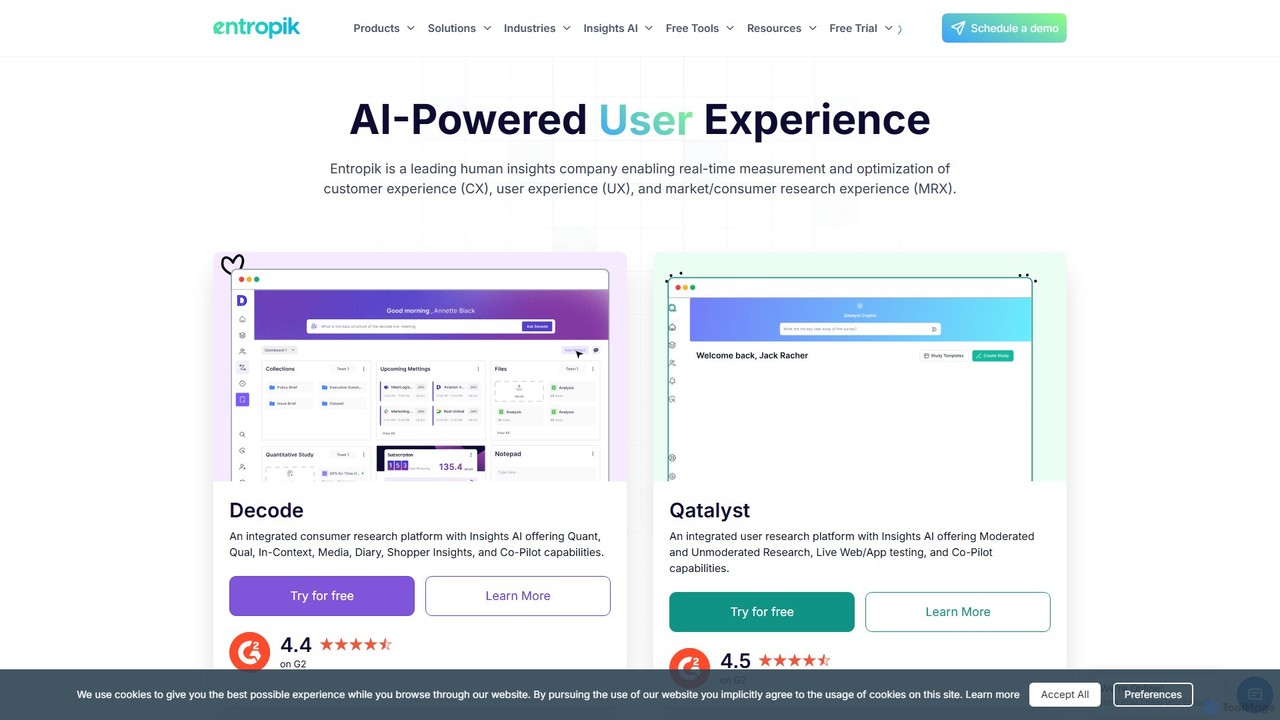
Entropik

Entropik

Entropik is an AI-powered human insights platform for consumer and user research. It uses Emotion AI, Behavior AI, …

17.6K
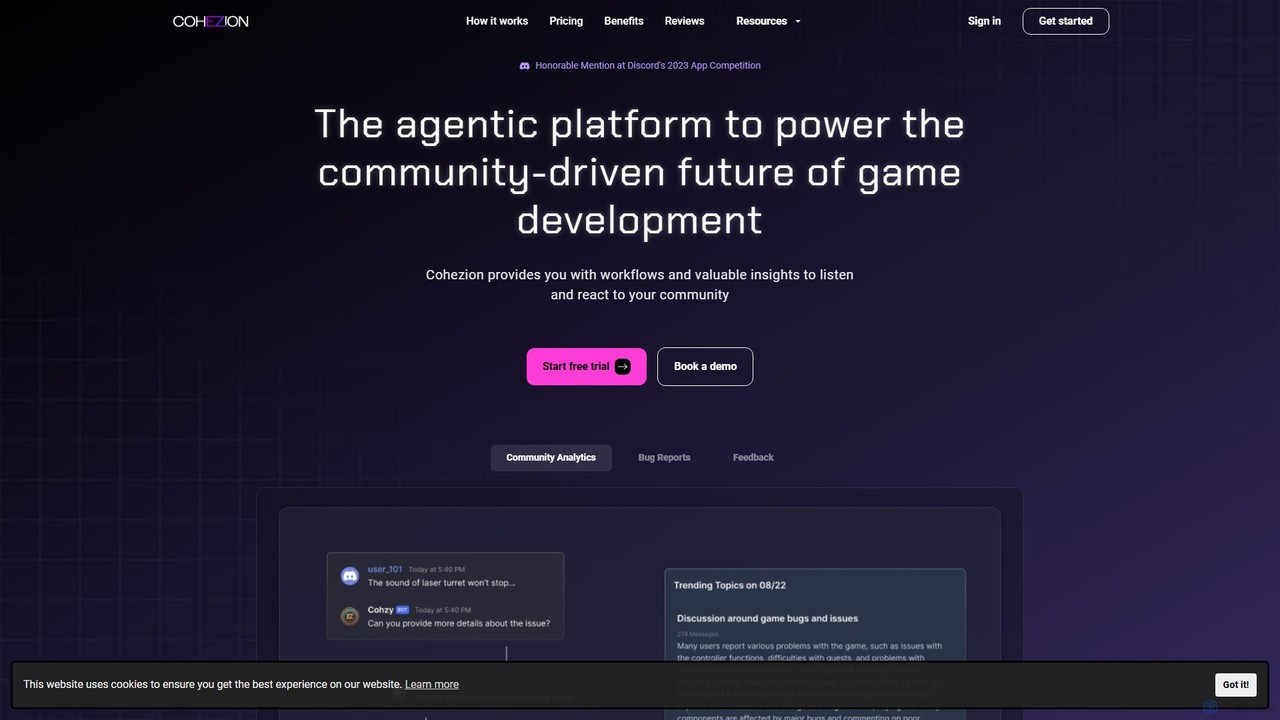
Cohezion

Cohezion

Cohezion is an AI-powered agentic platform for game developers, designed to streamline community management. It automates bug reporting …

2.7K

About Customer Feedback

Customer Feedback tools are AI-powered platforms designed to automatically collect, analyze, and interpret qualitative customer opinions from various sources. They utilize Natural Language Processing (NLP) to perform sentiment analysis, topic modeling, and keyword extraction on unstructured text like reviews, surveys, and support tickets. This process transforms vast amounts of subjective feedback into structured, quantifiable insights, helping businesses understand customer needs, identify product issues, and improve service quality. Unlike general analytics tools that track user behavior, these platforms focus on the 'why' behind the numbers by analyzing the voice of the customer.

Core Features

  • Sentiment Analysis: Automatically classifies customer comments as positive, negative, or neutral to gauge overall satisfaction.
  • Topic & Theme Detection: Identifies and groups recurring subjects, such as 'pricing', 'UI bugs', or 'customer support', from unstructured text.
  • Multi-Channel Aggregation: Gathers feedback from diverse sources like social media, app stores, surveys, and helpdesks into a single dashboard.
  • Insight Summarization: Generates concise summaries of key findings and emerging trends from large volumes of feedback data.
  • Automated Tagging & Routing: Automatically categorizes feedback with relevant tags and directs it to the appropriate teams for action.

Use Cases

These tools are essential for product teams prioritizing feature requests based on user demand, marketing teams monitoring brand perception after a launch, and customer support teams identifying the root cause of recurring issues. They enable data-driven decision-making by converting customer voices into clear, actionable signals.

How to Choose

When selecting a Customer Feedback tool, consider its integration capabilities with your existing channels (e.g., Zendesk, Twitter, App Store). Evaluate the depth of its analytical features—whether you need basic sentiment analysis or advanced root cause detection. Also, assess the usability of its dashboards for sharing insights and its support for all the languages your customers speak.

Customer FeedbackUse Cases

1

Prioritizing Product Roadmap with User Feedback

A Product Manager at a SaaS company needs to decide which features to build next. They receive hundreds of suggestions weekly via Intercom, email, and surveys. Instead of manual tallying, they use an AI feedback tool to aggregate all data. The AI automatically identifies the most frequently requested features, such as 'dark mode' or 'API integration', and clusters related bug reports. This provides a data-driven view of user priorities, enabling the product team to confidently build a roadmap that directly addresses the most pressing customer needs and reduces churn risk.

2

Improving Customer Support with Ticket Analysis

A Head of Customer Support notices high ticket volumes but struggles to identify root causes. By connecting their Zendesk account to an AI feedback tool, they can analyze thousands of historical and incoming tickets. The tool reveals that 15% of all inquiries are related to 'password reset confusion' and that customer sentiment drops sharply when the 'billing page' is mentioned. Armed with this insight, the team creates a clearer help article for password resets and alerts the product team to usability issues, proactively reducing ticket volume by 10% within a month.

3

Monitoring Brand Perception on Social Media

Following a major product launch, a Social Media Manager needs to gauge public reaction across Twitter and Reddit. Manually tracking mentions is impossible. They use an AI feedback tool to monitor brand mentions in real-time. The dashboard visualizes sentiment trends, showing an initial 70% positive reaction. It also surfaces key discussion themes, highlighting praise for the 'new design' but also confusion around 'new pricing tiers'. This allows the marketing team to quickly amplify positive testimonials and create content clarifying the pricing, effectively managing the post-launch narrative.

4

Enhancing E-commerce Listings from Product Reviews

An E-commerce Manager for an apparel brand wants to improve product pages. They use an AI tool to analyze thousands of customer reviews from their website and Amazon. For a popular jacket, the AI extracts common themes: positive reviews frequently mention 'lightweight' and 'great for travel', while negative reviews often cite 'zipper gets stuck'. The manager updates the product description to highlight its travel-friendly features and works with the supplier to improve the zipper quality. This leads to a 15% increase in conversion rate and a reduction in negative reviews for new batches.

5

Analyzing Open-Ended Survey Responses at Scale

A Market Researcher receives thousands of open-ended responses from a Net Promoter Score (NPS) survey. Manually coding this data would take weeks. They upload the responses to an AI feedback platform. The tool automatically identifies the key drivers for 'Promoters' (e.g., 'excellent customer service', 'easy to use') and 'Detractors' (e.g., 'slow shipping', 'high price'). The researcher can quickly generate a report with quantitative data on qualitative feedback, presenting clear, evidence-based recommendations to leadership on which areas to improve to boost customer loyalty.

6

Validating New Features with Beta Tester Feedback

A UX Researcher is managing a closed beta for a new software feature. Feedback is collected from a dedicated Slack channel and in-app forms. They use an AI tool to ingest this unstructured feedback. The AI clusters comments related to usability issues, such as 'can't find the save button' and 'export is confusing'. It also surfaces positive sentiment around specific UI elements. This provides the design team with a prioritized list of actionable fixes and validations before the public launch, ensuring a smoother user experience and higher adoption rates from day one.

Customer FeedbackFrequently Asked Questions