ToolMage
Sign in

Best 2 Beat Making AI tools for Audio

Popular Beat Making AI tools in Audio include Lyrist and BeatBuzz, helping you work more efficiently.

BeatBuzz
Paid

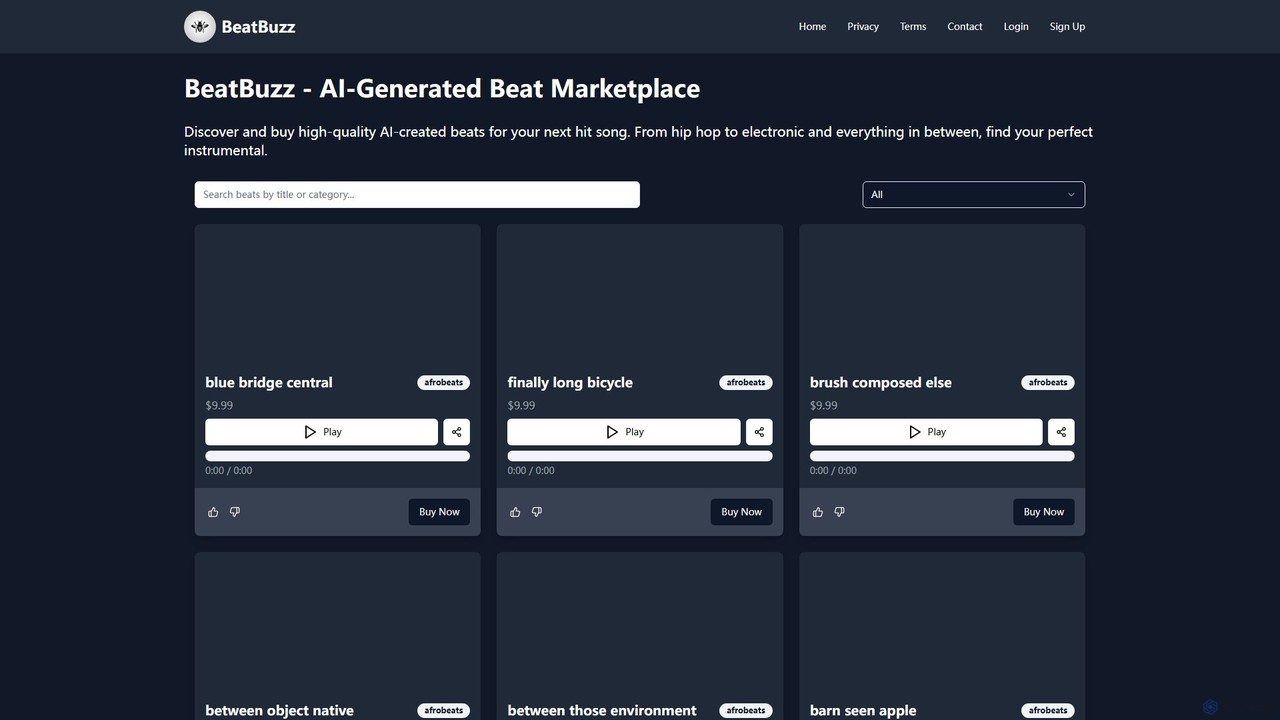
BeatBuzz

BeatBuzz is an AI-powered marketplace for discovering and purchasing high-quality, unique instrumental beats. Catering to artists, producers, and content creators, it offers a vast library of tracks across genres like Hip Hop, Trap, EDM, and more. Instantly find and license the perfect royalty-free beat for your next project at an affordable, flat-rate price.

Beat Making
Visits 4KFavorites 92Likes 92
Lyrist
Freemium

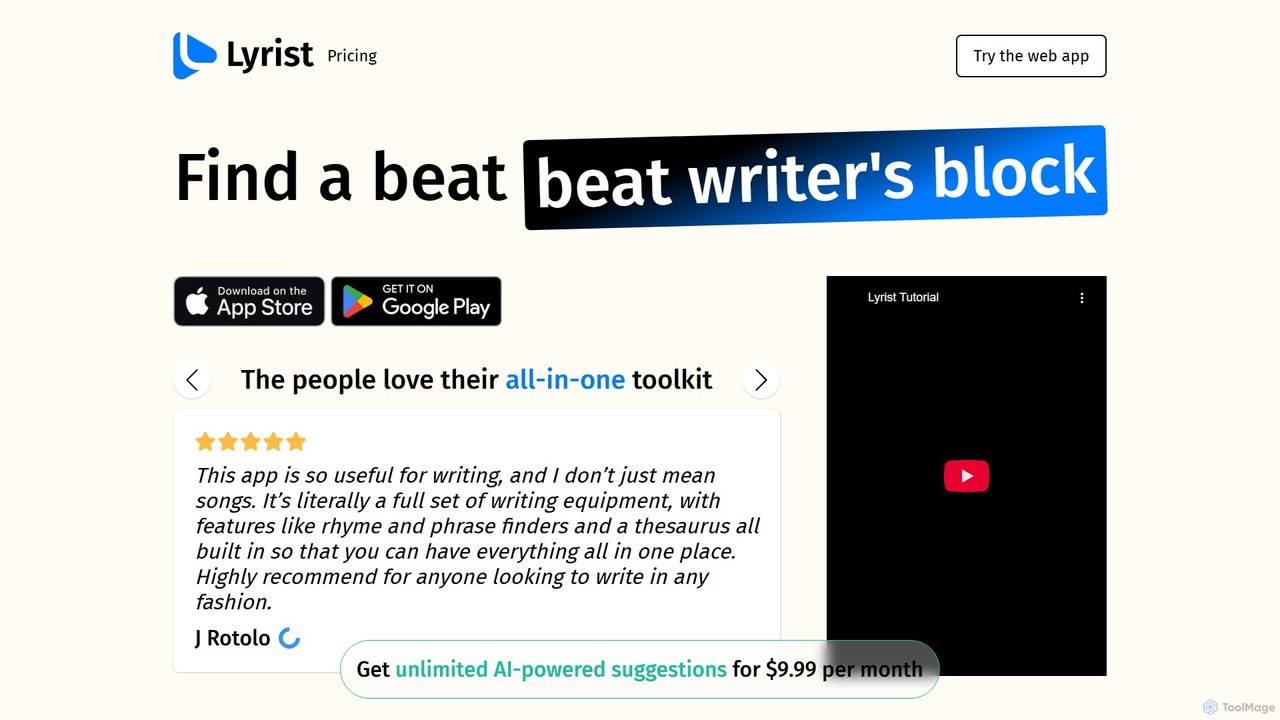
Lyrist

Lyrist is an all-in-one AI-powered writing toolkit for songwriters, poets, and creative writers. It helps you find beats, overcome writer's block with intelligent suggestions, and provides essential tools like a rhyme finder, phrase finder, and thesaurus, all in a single, streamlined platform.

Beat Making
Visits 6.1KFavorites 139Likes 166

About Beat Making

AI Beat Making tools are specialized applications that use artificial intelligence to generate and arrange rhythmic patterns, drum loops, and melodic elements. These tools leverage machine learning models trained on vast music datasets to create unique beats in various genres, from hip-hop to electronic music. They empower producers, artists, and creators to quickly prototype musical ideas, overcome creative blocks, and produce custom backing tracks without extensive music theory knowledge. The core advantage lies in their ability to offer infinite variations and stylistic flexibility on demand.

Core Features

  • AI Rhythm Generation: Creates complex and original drum patterns based on genre, mood, or simple text prompts.
  • Genre-Specific Styling: Adapts beat creation to specific styles like Lo-fi, Trap, EDM, and Pop.
  • MIDI and Audio Export: Provides output in both editable MIDI format and high-quality audio files (WAV, MP3).
  • Sample Manipulation: Intelligently slices, re-arranges, and processes audio samples to create new rhythmic textures.
  • Melody & Bassline Suggestion: Recommends complementary melodic phrases and basslines that fit the generated beat.

Applicable Scenarios

These tools are primarily used by music producers for rapid idea generation, rappers and singers seeking custom instrumentals, and content creators needing royalty-free background music for videos or podcasts. They are also valuable in game development for creating dynamic soundtracks and for music educators as a teaching aid.

How to Choose

Key selection factors include the diversity of available genres, the level of control over generated elements, integration with DAWs (e.g., VST/AU plugins), output quality, and the licensing terms for commercial use of the created beats. Also, consider the user interface's intuitiveness and the platform's learning curve.

Featured tool rankings

Beat Making use cases

1

Rapid Beat Prototyping for Music Producers

A music producer facing a tight deadline needs a fresh starting point for a new song. Instead of manually programming drums, they use an AI beat maker to generate a dozen unique hip-hop drum loops at 90 BPM. They select the most compelling pattern, export it as MIDI to their DAW, and then customize the individual drum hits and add their own melodic layers. This process turns hours of work into minutes, instantly overcoming writer's block and setting a solid foundation for the track.

2

Custom Backing Tracks for Vocalists

A singer-songwriter has written lyrics but lacks the production skills to create a full instrumental. They use an AI beat making tool, specifying the mood as "chill" and the genre as "R&B." The AI generates a complete beat with drums, bass, and keyboard chords. The vocalist can then adjust the tempo and key to match their vocal range, download the high-quality audio file, and use it as a professional-sounding backing track for recording demos or performing live.

3

Royalty-Free Music for Content Creators

A YouTuber needs consistent, high-quality background music for their daily vlogs without risking copyright strikes. They subscribe to an AI beat making service that allows commercial use of its creations. For each video, they generate a new 3-minute Lo-fi beat that perfectly matches the video's relaxed vibe. This provides an endless supply of unique, brand-safe music, eliminating the need to search through generic stock music libraries and ensuring their content stands out.

4

AI-Assisted Remixing and Sampling

A DJ and producer wants to create a remix of an acapella vocal track. They first use an AI beat maker to generate a powerful drum and bass foundation in the style of modern tech house. They then import the generated stems into their production software, layering the acapella on top. The AI provides a rhythmically complex and sonically modern instrumental that complements the vocal, allowing the producer to focus on creative arrangement and effects rather than building the beat from scratch.

5

Interactive Soundtracks for Game Development

An indie game developer is creating a rhythm-based game and needs a large library of diverse beats. Using an AI beat maker, they generate hundreds of short beat loops across various genres like synthwave and drum and bass. They export these loops as individual stems (kick, snare, hi-hats). In the game engine, these stems can be triggered and layered dynamically based on the player's actions, creating an interactive and ever-changing soundtrack that is both engaging and cost-effective to produce.

6

Music Education and Skill Development

A student learning music production uses an AI beat maker as an educational tool. To understand the structure of different genres, they instruct the AI to create beats in styles they are unfamiliar with, such as Drill or Afrobeats. By exporting the results as MIDI files, they can deconstruct the patterns in their DAW, analyzing the velocity, timing, and instrument choices. This provides practical, hands-on insight into professional beat construction, accelerating their learning process.

Beat Making FAQ

What are AI Beat Making tools?

AI Beat Making tools are software applications that use artificial intelligence to automatically generate rhythmic and melodic musical elements. Unlike simple loop libraries, they create original patterns based on user inputs like genre, mood, or tempo. Key features often include drum sequence generation, bassline creation, and chord progression suggestions, enabling users to produce unique musical foundations quickly.

How do I choose the right AI Beat Making tool?

To choose the right tool, consider these factors:

  • Genre Library: Ensure it supports the musical styles you work with.
  • Customization: Check if you can edit the generated MIDI notes, change sounds, and adjust patterns.
  • Integration: If you use a DAW like Ableton or FL Studio, look for a tool that works as a VST or AU plugin.
  • Output Formats: Verify it can export high-quality WAV/MP3 audio and flexible MIDI files.
  • Licensing: Confirm that the generated beats are royalty-free for your intended use, especially for commercial projects.
What's the difference between AI Beat Makers and traditional DAWs?

The primary difference is creation versus generation. A traditional Digital Audio Workstation (DAW) is a blank canvas, providing tools like sequencers and synthesizers for you to manually create music from scratch. An AI Beat Maker is a generative tool that creates the initial musical ideas *for* you. Many producers use AI beat makers as a starting point or plugin *within* their DAW to speed up their workflow.

Can I legally use beats made with AI in my commercial songs?

This depends entirely on the specific tool's terms of service. Most reputable AI beat making services offer commercial licenses, often as part of a subscription, granting you royalty-free rights to use the generated music in your songs, videos, and other projects. Always read the licensing agreement carefully before publishing any work to ensure you are compliant and own the necessary rights.

Who are AI Beat Making tools for?

These tools are for a wide range of users. Music producers use them to quickly brainstorm ideas and overcome creative blocks. Rappers, singers, and songwriters use them to create custom backing tracks for their vocals. Content creators and filmmakers use them to generate royalty-free background music. Even beginners and students can use them to learn about song structure and music production in an accessible way.