QuickUtils
QuickUtils offers a comprehensive suite of free, privacy-focused online tools designed for instant productivity. From AI-powered image background …
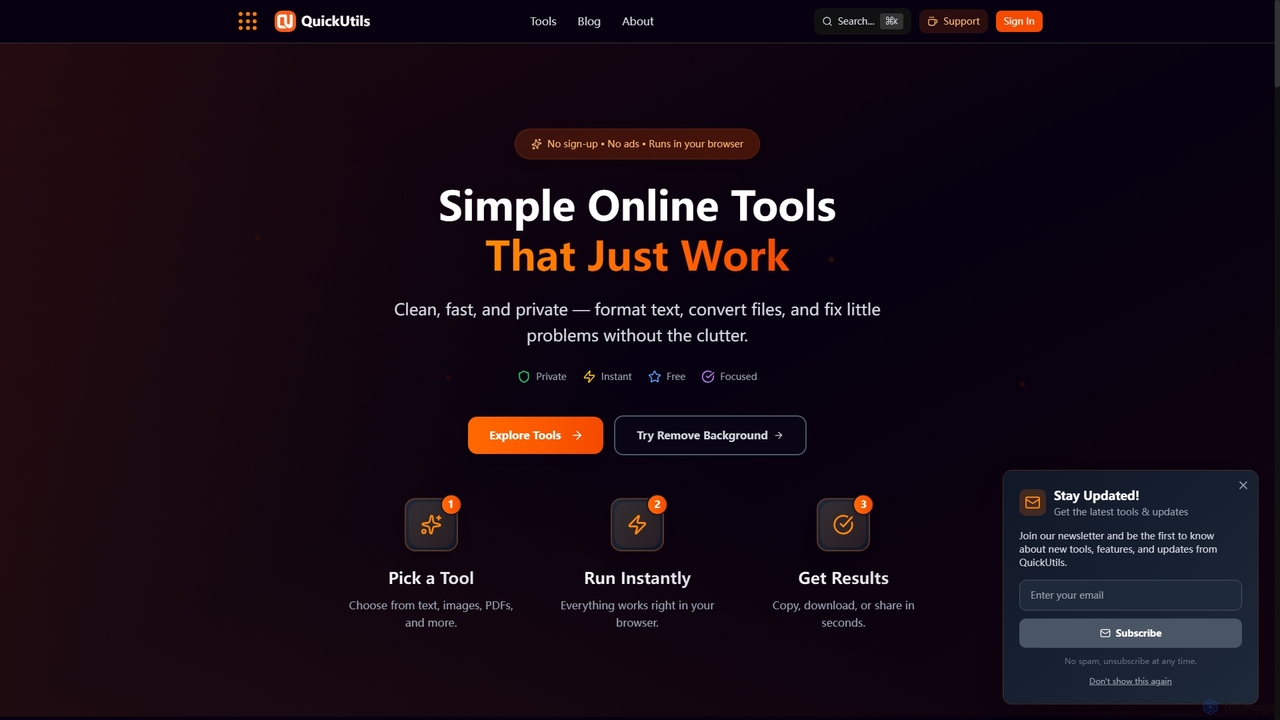
QuickUtils offers a comprehensive suite of free, privacy-focused online tools designed for instant productivity. From AI-powered image background removal and text paraphrasing to QR code generation and JSON formatting, it provides clean, fast, and secure utilities that run directly in your browser without sign-ups or ads.
About Conversion
AI Audio Conversion tools are a specialized category of software that uses artificial intelligence to transform audio data from one format or modality to another. These tools leverage advanced models for speech recognition (STT), speech synthesis (TTS), and source separation to perform complex conversions with high accuracy. Their primary value lies in repurposing audio content, enhancing accessibility, and automating workflows like transcription, voiceover creation, and music production. Unlike simple format converters, these AI-powered solutions can fundamentally change the nature of audio, such as turning spoken words into text or generating lifelike speech from a script.
Core Features
- Speech-to-Text (STT): Accurately converts spoken language from audio or video files into written text, often with speaker identification.
- Text-to-Speech (TTS): Generates natural-sounding, human-like speech from text input, with options for different voices, languages, and emotions.
- Voice Cloning & Modification: Creates a synthetic replica of a specific voice from a short audio sample or alters the characteristics of an existing voice.
- Music Source Separation: Isolates individual elements like vocals, drums, bass, and instruments from a single mixed audio track (stems).
- Intelligent Transcoding: Converts audio files between formats (e.g., MP3, WAV, FLAC) while using AI to optimize quality and preserve important metadata.
Use Cases
These tools are widely used by content creators for generating subtitles and transcripts for podcasts and videos. Developers integrate TTS and STT APIs to build voice-enabled applications and accessibility features. Musicians and producers utilize source separation for remixing, sampling, and audio restoration. Businesses also employ them for creating multilingual marketing content and automated voice response systems.
How to Choose
When selecting an AI Audio Conversion tool, first identify your primary need—be it transcription, voice generation, or music separation. Evaluate the accuracy of transcription or the naturalness of the synthesized voice. Check the range of supported languages, dialects, and voices. For developers, the availability and documentation of an API are crucial. Finally, consider the pricing model, whether it's subscription-based, pay-per-use, or a one-time purchase, to align with your budget and usage volume.

ConversionUse Cases
Automating Podcast Transcription and Show Notes
A podcast creator regularly produces hour-long interviews. Manually transcribing each episode for accessibility and content repurposing would take hours. By using an AI Speech-to-Text tool, they can upload the final audio file and receive a full, time-stamped transcript within minutes. The tool can even distinguish between the host and the guest. This accurate transcript is then used to quickly generate detailed show notes, create blog posts summarizing the episode, and pull out key quotes for social media promotion, saving over 80% of the time previously spent on manual transcription.
Creating Multilingual Voiceovers for Video Content
A YouTuber wants to expand their audience globally by offering videos in Spanish and German. Instead of hiring multiple voice actors, they use an AI Text-to-Speech tool with voice cloning capabilities. First, they provide a short sample of their own voice. Then, they feed the translated video scripts (in Spanish and German) into the tool. The AI generates a high-quality voiceover in the target languages that retains the unique tone and style of their original voice. This allows them to produce multilingual content efficiently, maintaining brand consistency across different languages and reaching a wider international audience at a fraction of the cost.
Extracting Vocal Samples for Music Production
A music producer wants to remix a classic song but only has the final mixed track, not the individual instrument stems. They need to isolate the lead vocal to build a new arrangement around it. Using an AI music source separation tool, they upload the song file. The AI analyzes the audio and separates it into distinct tracks: vocals, drums, bass, and other instruments. The producer can then download the clean, isolated vocal track as a WAV file. This allows them to creatively sample, pitch-shift, and process the vocals independently, a task that was previously impossible without access to the original studio master tapes.
Generating Audiobooks from Digital Text
An independent author wants to make their e-book accessible to visually impaired readers and those who prefer audio content, but lacks the budget for a professional narrator and studio time. They use an advanced AI Text-to-Speech platform. They upload their manuscript chapter by chapter and select a voice that matches the book's tone—choosing from various ages, genders, and accents. The AI generates each chapter as a high-quality audio file, complete with natural intonation and pacing. The author can then compile these files into a full audiobook for distribution on various platforms, opening up a new revenue stream and reaching a broader audience.
Developing an Interactive Voice Response (IVR) System
A growing e-commerce company needs to improve its customer service phone line. Instead of a static, pre-recorded menu, they want a dynamic system that can provide real-time order updates. Using an AI Text-to-Speech API, their developers build an IVR system. When a customer calls and enters their order number, the system queries the database, retrieves the status, and constructs a sentence like, 'Your order, number 9876, has been shipped and is expected to arrive on Friday.' The TTS API then converts this text into clear, natural-sounding speech in real-time. This automates a common query, freeing up human agents for more complex issues.
Transcribing Meetings for Accurate Record-Keeping
A project team holds weekly virtual meetings to discuss progress and next steps. It's challenging for one person to take detailed minutes while also participating. They use an AI transcription tool that integrates with their video conferencing platform. The tool records the meeting and generates a transcript that identifies each speaker and timestamps their contributions. After the meeting, the project manager can quickly review the text, search for key decisions, and copy action items into their project management software. This ensures an accurate, searchable record of every meeting, improves accountability, and saves significant administrative time.