
ToolMage
Sign in

Best 1 Mixing And Mastering AI tools for Audio

Popular Mixing And Mastering AI tools in Audio include santelmomusic, helping you work more efficiently.

santelmomusic
Paid

santelmomusic

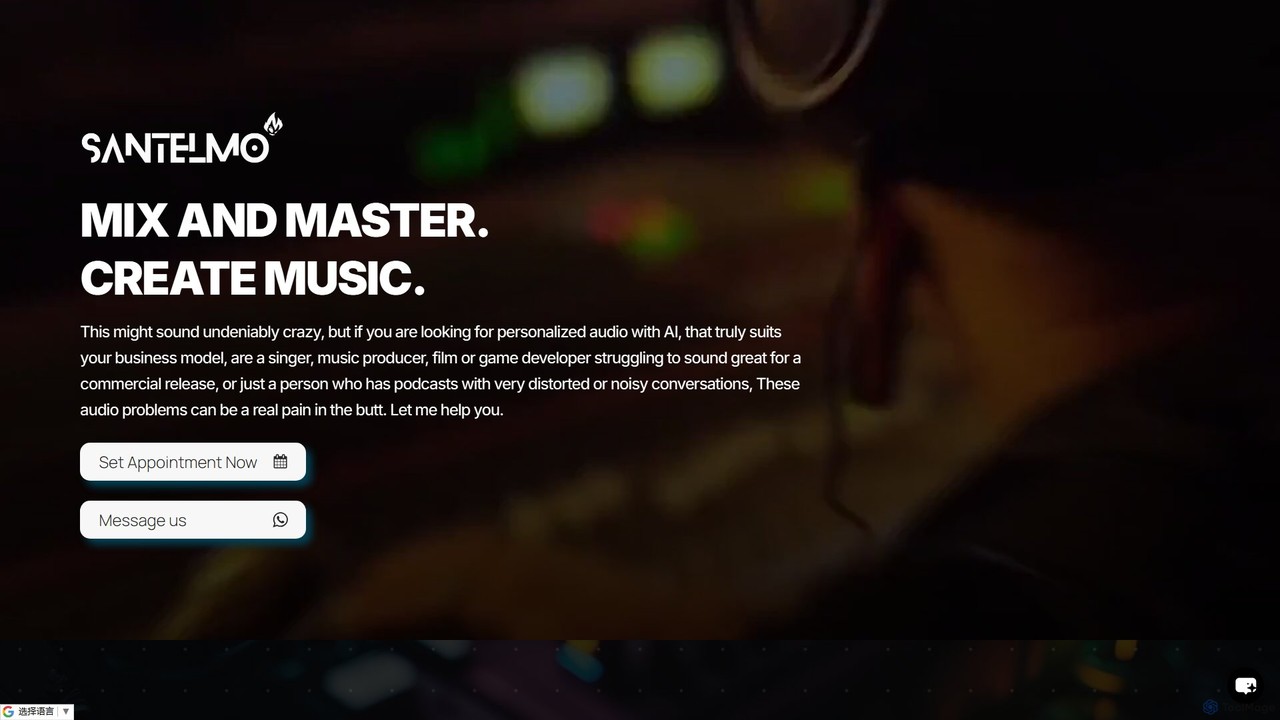
A service combining human sound engineers with AI to offer personalized music production, mixing, mastering, and audio restoration. They create custom songs, change voice models, produce non-copyright music, and clean up podcast audio for artists, developers, and businesses.

Mixing And Mastering
Visits 5.1KFavorites 115Likes 105

About Mixing And Mastering

AI Mixing and Mastering tools are a category of AI-powered software designed to enhance and finalize audio recordings for distribution. These tools leverage advanced machine learning algorithms to analyze audio characteristics, automatically apply professional-grade equalization, compression, limiting, and spatial effects, and optimize loudness levels. They provide an accessible and efficient way for creators to achieve polished, broadcast-ready sound quality, significantly streamlining the post-production workflow in audio engineering.

Core Features

  • AI-Powered EQ & Dynamics: Automatically analyzes audio and applies intelligent equalization, compression, and limiting to balance frequencies and control dynamics.
  • Loudness Normalization: Optimizes track loudness to meet industry standards for streaming platforms (e.g., Spotify, Apple Music) ensuring consistent playback.
  • Spectral Analysis & Repair: Identifies and helps mitigate common audio issues like harsh frequencies, sibilance, or unwanted resonances.
  • Stereo Imaging & Widening: Enhances the stereo field, adding depth and spaciousness to the mix without introducing phase issues.
  • Genre-Specific Presets: Offers AI-suggested mastering chains and presets tailored to various music genres or audio types (e.g., podcast, vocal, instrumental).

Applicable Scenarios

Independent musicians and bands use these tools to achieve professional-sounding demos and releases without needing extensive studio equipment or engineering expertise. Podcasters and content creators rely on them to ensure consistent vocal clarity, remove background noise, and normalize audio levels across episodes. Small recording studios and producers utilize AI for quick initial mixes or to refine final masters, saving time and resources while maintaining high-quality output.

How to Choose

When selecting an AI Mixing and Mastering tool, consider the quality and sophistication of its AI algorithms for accurate audio analysis and processing. Evaluate its integration capabilities with your existing Digital Audio Workstation (DAW) and plugin ecosystem. Assess the range of customizable parameters and genre-specific presets offered, ensuring they align with your creative control needs. Finally, compare pricing models and user interface intuitiveness for a seamless workflow.

Mixing And Mastering use cases

1

Automated Podcast Audio Enhancement

Podcasters and content creators often record in varied environments, leading to inconsistent audio quality. AI mixing and mastering tools automatically clean up vocal tracks, reduce background noise, remove echoes, and normalize loudness across entire episodes. This ensures a professional, consistent listening experience for the audience, saving hours of manual editing and improving content delivery speed.

2

Achieving Release-Ready Music Masters

Independent musicians and small labels can use AI mastering to prepare their tracks for commercial release on streaming platforms. The AI analyzes the track's dynamics, frequency balance, and stereo image, then applies appropriate processing to meet industry loudness standards and sonic expectations. This allows artists to achieve a polished, competitive sound without the high cost of professional mastering engineers.

3

Balancing Instrument Levels for Demos

Songwriters and producers creating demo tracks need quick, balanced mixes to present their ideas effectively. AI mixing tools can automatically adjust the volume and pan of individual instrument tracks, ensuring each element sits well in the mix. This provides a clear, coherent sound for collaborators or potential clients, accelerating the feedback and revision process.

4

Vocal Clarity and Presence for Voiceovers

Voiceover artists, YouTubers, and e-learning creators require crisp, clear vocals. AI mixing tools can enhance vocal presence, remove sibilance, and apply subtle compression and EQ to make voices stand out. This ensures that spoken content is easily understood and engaging, improving the overall quality of educational or narrative audio.

5

Optimizing Audio for Video Production

Video editors frequently deal with audio recorded from various sources, leading to uneven levels and inconsistent quality. AI mastering tools can quickly normalize dialogue, music, and sound effects, ensuring a balanced and impactful soundtrack for films, commercials, or social media videos. This streamlines the post-production audio workflow, allowing editors to focus on visual storytelling.

6

Creative Remixing and Stem Separation

DJs, remix artists, and music producers can utilize AI tools that offer stem separation capabilities. These tools can intelligently isolate vocals, drums, bass, and other instruments from a complete track. This allows for creative remixing, sampling, or creating instrumental versions, opening up new possibilities for musical arrangement and production.

Mixing And Mastering FAQ

What are AI Mixing and Mastering tools?

AI Mixing and Mastering tools are software applications that use artificial intelligence and machine learning algorithms to automate and enhance the audio post-production process. They analyze raw audio, identify sonic characteristics, and apply sophisticated processing like equalization, compression, limiting, and spatial effects to balance elements, improve clarity, and optimize loudness for distribution. These tools aim to make professional-grade audio finishing more accessible and efficient.

How do AI Mixing and Mastering differ from traditional methods?

The primary difference lies in automation and decision-making. Traditional mixing and mastering rely heavily on the human ear, experience, and subjective artistic choices of an audio engineer. AI tools, conversely, use data-driven algorithms to analyze audio and apply processing based on learned patterns and industry standards. While AI offers speed, consistency, and accessibility, traditional methods often provide more nuanced creative control and a human touch that can be crucial for unique artistic expression.

Who can benefit most from AI Mixing and Mastering tools?

Independent musicians, podcasters, content creators, and small studios benefit significantly from AI mixing and mastering. These tools are ideal for those without extensive audio engineering knowledge or access to high-end studios, providing a cost-effective way to achieve professional-sounding results. They are also valuable for experienced producers seeking quick initial mixes, consistent loudness across projects, or a reliable second opinion on their masters.

What specific audio processing tasks can AI Mixing and Mastering tools perform?

AI Mixing and Mastering tools can perform a wide range of tasks, including:

  • Intelligent EQ: Automatically adjusting frequency balance to enhance clarity and punch.
  • Dynamic Processing: Applying compression and limiting to control volume peaks and improve overall loudness.
  • Stereo Widening: Enhancing the perceived width and depth of a mix.
  • Loudness Normalization: Optimizing tracks to meet specific loudness standards for streaming platforms.
  • De-noising & De-essing: Reducing unwanted background noise, hums, or harsh sibilance in vocals.
  • Stem Separation: Isolating individual instruments (vocals, drums, bass) from a full mix for remixing or analysis.

Are AI Mixing and Mastering tools a replacement for human audio engineers?

Currently, AI Mixing and Mastering tools are best viewed as powerful assistants rather than complete replacements for human audio engineers. While they excel at technical optimization, consistency, and speed, they may not fully replicate the nuanced artistic judgment, deep understanding of genre-specific aesthetics, or creative problem-solving that an experienced human engineer brings. For critical, high-budget projects, a human engineer's expertise often remains invaluable, but AI tools are rapidly closing the gap for many applications.