MusicDatak
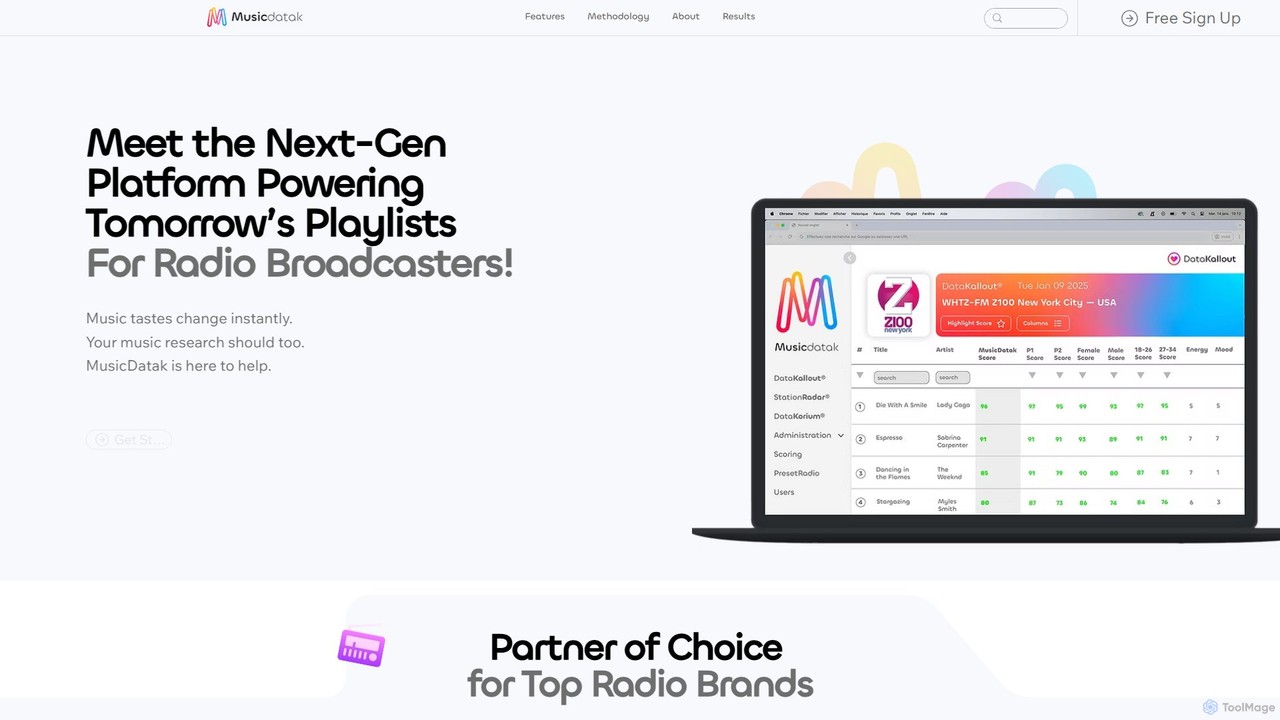
MusicDatak is a next-generation music research platform for radio broadcasters. It replaces outdated methods by analyzing real-time data …
MusicDatak is a next-generation music research platform for radio broadcasters. It replaces outdated methods by analyzing real-time data from streaming services, social media, and competitor stations. Using its proprietary StationFingerprint® technology, it provides actionable insights to help program directors craft data-driven playlists that resonate with their target audience, discover hidden hits, and optimize their entire music library for maximum listener engagement and ratings growth.
About Music Analytics
Music Analytics are AI-powered tools designed to extract, analyze, and interpret various aspects of musical data. These tools leverage advanced machine learning algorithms to process audio files, metadata, and listener engagement metrics, providing deep insights into musical characteristics, audience behavior, and market trends. They empower artists, labels, marketers, and researchers to make data-driven decisions, optimize strategies, and understand the impact of music more profoundly within the broader Audio category.
Core Features
- Genre and Mood Classification: Automatically identifies musical genres, subgenres, and emotional characteristics (e.g., happy, sad, energetic) from audio tracks.
- Audience Demographics and Engagement: Analyzes listener data to reveal demographic insights, geographic distribution, streaming patterns, and interaction metrics across platforms.
- Trend Prediction and Market Insights: Utilizes historical and real-time data to forecast emerging music trends, identify popular sounds, and assess market potential for new releases.
- Structural and Harmonic Analysis: Breaks down songs into components like tempo, key, rhythm, and chord progressions, offering detailed insights into musical composition.
- Sentiment Analysis of Lyrics: Processes lyrical content to understand the underlying emotional tone and thematic elements, complementing audio analysis.
Use Cases
Music Analytics tools are invaluable for professionals across the music industry. Record labels use them to scout talent and predict hit potential, while independent artists gain insights into their audience to refine their sound and marketing. Music marketers leverage these tools to target campaigns more effectively, understanding which demographics respond best to specific musical attributes. Furthermore, researchers apply them for academic studies on music psychology and cultural trends.
How to Choose
When selecting a Music Analytics tool, consider the breadth of data sources it integrates (streaming platforms, social media, sales data). Evaluate the depth of analysis offered, such as granular insights into musical elements versus high-level trend reports. Assess the quality of its visualization and reporting features for clear interpretation. Finally, consider its real-time processing capabilities and how well it integrates with existing workflows for seamless data utilization.

Music AnalyticsUse Cases
Optimizing Music Marketing Campaigns
Music marketers use AI Music Analytics to understand which specific musical attributes (e.g., tempo, mood, genre) resonate with different demographic segments. By analyzing listener data from streaming platforms and social media, they can tailor advertising content, select appropriate channels, and schedule promotions to maximize engagement and reach, leading to higher conversion rates for new releases or artist promotions.
Identifying Emerging Artists and Trends
A&R professionals at record labels leverage Music Analytics to scout for new talent and identify nascent musical trends. These tools can analyze vast amounts of independent music, detect unique sonic signatures, and predict potential commercial success based on early listener engagement and stylistic alignment with trending sounds, streamlining the talent acquisition process.
Enhancing Songwriting and Production
Songwriters and music producers utilize Music Analytics to gain objective feedback on their compositions. By analyzing structural elements, emotional impact, and listener retention data, they can identify sections that might be less engaging or areas for improvement in melody, harmony, or rhythm. This data-driven approach helps refine tracks for maximum audience appeal before final release.
Personalizing Music Recommendations
Streaming services and music platforms employ Music Analytics to provide highly personalized recommendations to users. By analyzing individual listening habits, genre preferences, and mood associations with specific tracks, AI algorithms can curate dynamic playlists and suggest new artists or songs that align perfectly with a user's taste, significantly enhancing user experience and retention.
Understanding Audience Demographics for Live Events
Event organizers and promoters use Music Analytics to understand the demographic profile and geographic distribution of an artist's fanbase. This insight helps in selecting optimal tour locations, tailoring promotional materials to specific audience segments, and predicting attendance numbers, ensuring more successful and profitable live music events.
Copyright Infringement Detection
Legal teams and rights holders employ Music Analytics to detect potential copyright infringements. AI tools can analyze audio fingerprints and structural similarities across vast databases of music, identifying instances where melodies, harmonies, or entire compositions might have been illegally sampled or replicated, providing crucial evidence for legal action and protecting intellectual property.