
ToolMage
Sign in

Best 1 Podcast Discovery AI tools for Audio

Popular Podcast Discovery AI tools in Audio include Podcurator, helping you work more efficiently.

Podcurator
Paid

Podcurator

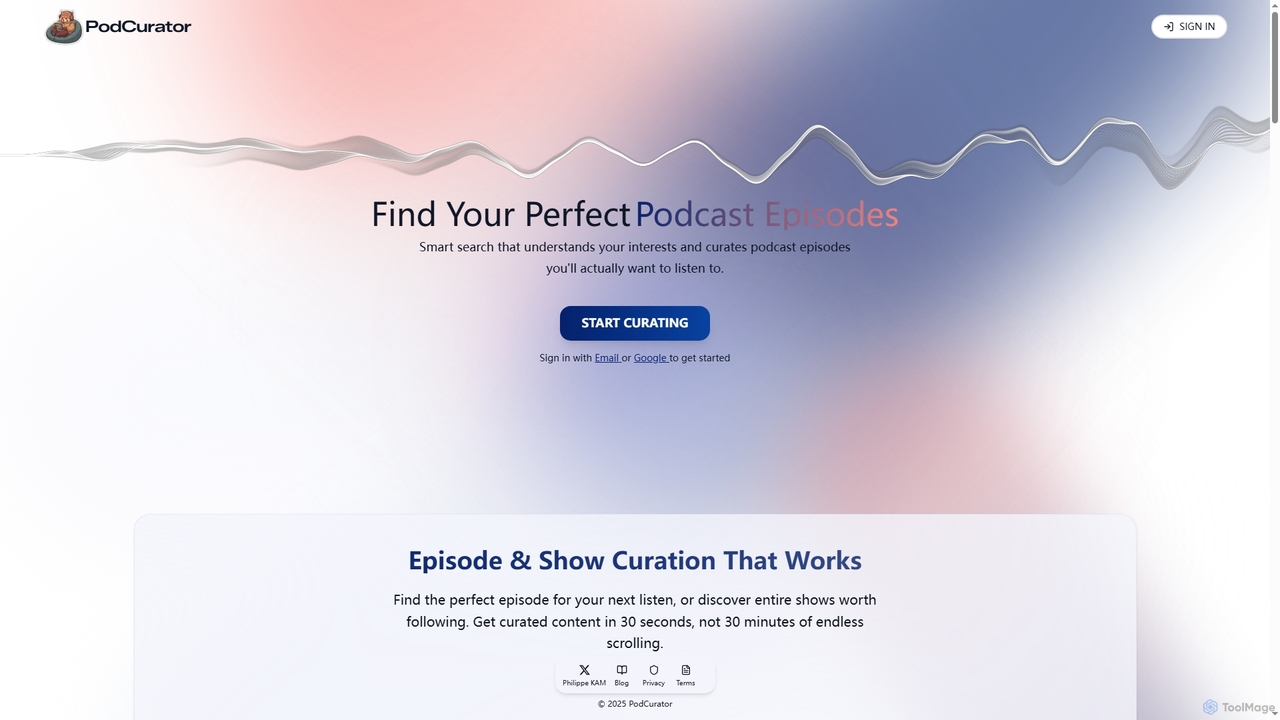
Podcurator is an AI-powered podcast curation tool designed to help users quickly discover highly relevant podcast episodes and shows. It uses natural language processing to understand user interests and provides transparent, context-aware recommendations, saving significant time compared to manual searching.

Podcast Discovery
Visits 7.2KFavorites 123Likes 104

About Podcast Discovery

Podcast Discovery tools are specialized applications that use AI to help listeners find new podcasts tailored to their specific interests. They leverage natural language processing (NLP) and machine learning to analyze podcast transcripts, titles, and descriptions for deeper contextual understanding. This allows for more nuanced and accurate recommendations than traditional keyword searches, uncovering relevant episodes and shows that might otherwise be missed. Some advanced tools can even pinpoint specific moments or discussions within audio files.

Core Features

  • Semantic Search: Search for concepts, topics, and ideas, not just exact keywords, to find more relevant content.
  • Personalized Recommendations: Receive suggestions based on your listening history, explicit preferences, and similarity to other content.
  • Transcript-Based Search: Find podcasts that mention specific names, topics, or phrases within the full audio conversation.
  • Clip & Moment Discovery: Isolate and share specific segments or highlights from long episodes without needing to listen to the entire file.
  • Topic & Trend Analysis: Identify emerging themes, popular guests, and trending subjects within the podcasting ecosystem.

Use Cases

These tools are ideal for avid listeners seeking niche content that standard directories don't surface. Researchers, journalists, and students use them to quickly locate expert opinions or data points within hours of audio. Podcast creators also benefit by researching topics, finding cross-promotion opportunities, and analyzing what resonates with audiences in their genre.

How to Choose

When selecting a Podcast Discovery tool, evaluate the depth of its search capabilities—does it search full transcripts or just metadata? Consider the quality of its recommendation engine and its ability to learn from your feedback. Also, check its library size and language support to ensure it covers the content you're interested in. Finally, assess its user interface and integration with your preferred podcast listening apps.

Podcast Discovery use cases

1

Finding Expert Opinions for Research

A journalist writing an article on quantum computing uses an AI Podcast Discovery tool to find specific discussions on the topic. Instead of manually searching through dozens of tech podcasts, they input a semantic query like 'ethical implications of quantum supremacy'. The tool scans thousands of hours of transcripts and returns a playlist of 5-10 minute clips where experts directly address this concept. This saves dozens of hours of research and provides direct, attributable quotes for their article.

2

Discovering Niche Hobby Podcasts

A hobbyist interested in 'sustainable gardening in arid climates' finds that standard podcast apps only return broad gardening shows. Using an AI discovery tool, they can search for this specific long-tail topic. The AI analyzes episode content and identifies several niche podcasts and specific episodes from larger shows that are highly relevant. The user discovers a small but dedicated community podcast they would have never found otherwise, perfectly matching their unique interest.

3

Podcast Creator Topic & Guest Research

A podcaster planning a new season on 'The Future of Work' uses a discovery tool for competitive analysis. They search for topics their competitors have already covered, like '4-day work week' or 'remote team management'. The tool shows them which angles have been discussed extensively and which ones have been overlooked. They also use it to find potential guests by searching for experts who have appeared on similar podcasts, helping them build a list of relevant interview candidates.

4

Creating Themed Commute Playlists

A professional with a 30-minute daily commute wants to learn about 'venture capital'. They use a discovery tool to create a playlist of podcast episodes on this topic that are each around 30 minutes long. The AI gathers relevant episodes from various business and finance podcasts, automatically filtering them by duration. This provides a curated, hands-free learning experience perfectly tailored to their commute time, eliminating the need to manually search for and queue up new episodes each day.

5

Identifying Sponsorship & Ad Opportunities

A marketing manager for a new project management software wants to find podcasts for sponsorship. They use a discovery tool to search for conversations where hosts or guests mention 'team productivity challenges' or 'issues with Asana'. The tool identifies podcasts where the audience is likely facing the exact problems their software solves. This allows them to build a highly targeted list of potential partners, increasing the ROI of their advertising spend by reaching a pre-qualified audience.

6

Language Learning Through Topical Immersion

A student learning French wants to improve their vocabulary related to cooking. Instead of generic language-learning podcasts, they use a discovery tool to find authentic podcasts made for native French speakers about 'pâtisserie' or 'cuisine provençale'. The tool's ability to search transcripts allows them to find episodes that repeatedly use specific culinary terms. This provides an immersive learning experience with real-world context, accelerating their vocabulary acquisition in a specific domain of interest.

Podcast Discovery FAQ

What are AI Podcast Discovery tools?

AI Podcast Discovery tools are applications that use artificial intelligence, particularly natural language processing (NLP), to help users find relevant podcasts and episodes. Unlike simple keyword search, they analyze the full context of conversations in transcripts to understand topics, concepts, and sentiment. This allows them to provide highly accurate recommendations and enable searches for specific ideas or moments within episodes, going far beyond what standard podcast directories offer.

How do these tools differ from the search in Spotify or Apple Podcasts?

Standard search in apps like Spotify or Apple Podcasts is primarily based on keywords found in titles, show notes, and descriptions. AI Podcast Discovery tools offer a much deeper search capability. Key differences include:

  • Transcript Search: AI tools index and search the full spoken content of episodes, not just the metadata.
  • Semantic Understanding: They understand the meaning and context behind your query, finding discussions about a topic even if the exact keywords aren't used.
  • Moment Discovery: They can pinpoint the exact timestamps where a topic is discussed, allowing you to jump directly to the relevant segment.
In essence, they move from finding shows to finding specific knowledge within shows.

Who can benefit from using a Podcast Discovery tool?

A wide range of users can benefit from these tools. Avid listeners can find niche content that aligns perfectly with their interests. Researchers, students, and journalists can drastically reduce research time by quickly finding expert commentary on specific topics. Podcast creators can perform market research, find guests, and generate ideas for new content. Finally, marketers and brands can identify relevant podcasts for targeted advertising and sponsorship opportunities.

What are the key features to look for in a Podcast Discovery tool?

When choosing a tool, prioritize these features:

  • Search Quality: Look for true semantic search that understands context, not just keywords. The ability to search full transcripts is crucial.
  • Recommendation Engine: A good tool learns from your listening habits and feedback to provide increasingly personalized suggestions.
  • Filtering Options: The ability to filter results by date, episode duration, language, or even guest name is highly valuable.
  • User Interface: The platform should be intuitive and make it easy to explore, save, and share findings.

Is the audio content itself analyzed by these tools?

Yes, but typically indirectly. Most AI Podcast Discovery tools don't analyze the raw audio waves. Instead, they first use an AI transcription service to convert the spoken audio into text. This text transcript is then indexed and analyzed by natural language processing (NLP) models. It's this text-based analysis that allows the tools to understand topics, identify keywords, and find specific moments in the conversation. The accuracy of the discovery tool is therefore highly dependent on the quality of the initial transcription.