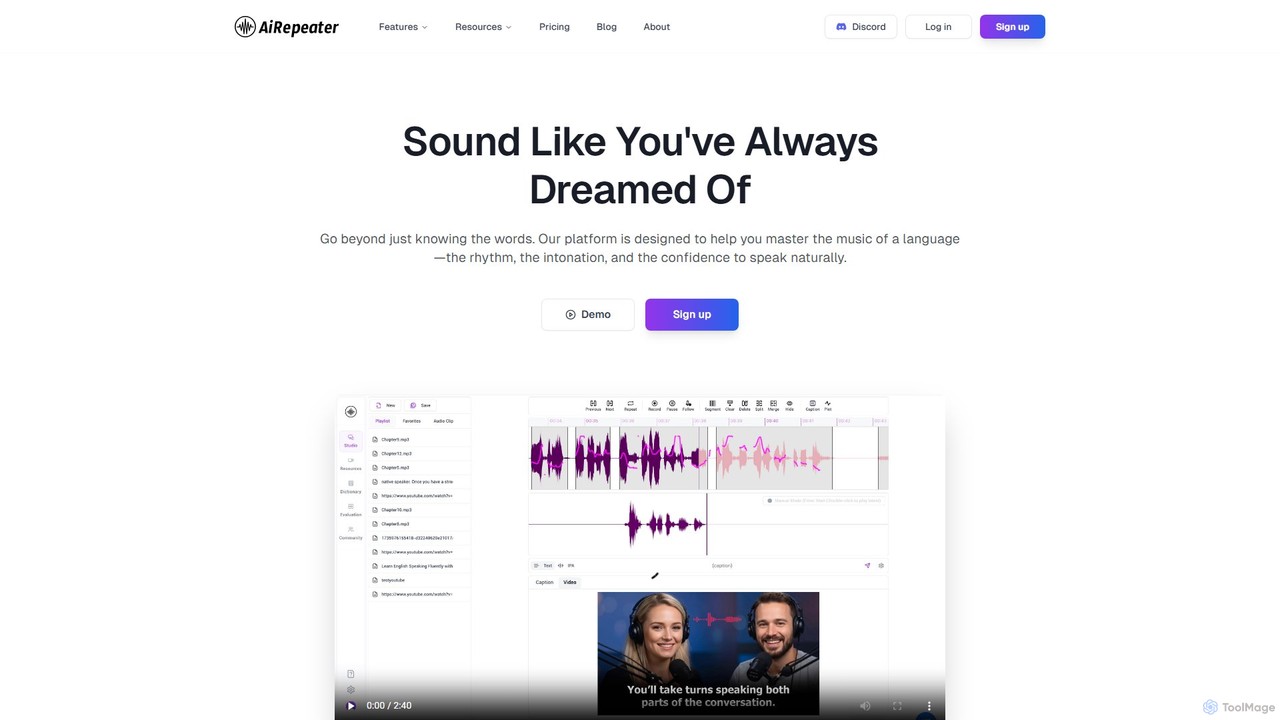
AI Pronunciation tools are specialized applications that use speech recognition to evaluate and improve how users speak a language. Leveraging machine learning models trained on native speech, these tools provide detailed, real-time feedback on individual sounds (phonemes), intonation, and rhythm. They are designed to help users identify specific errors and practice correct articulation, accelerating the path to clear communication. Unlike general audio recorders, these tools offer actionable, phoneme-level diagnostics.
Core Features
- Phoneme-Level Analysis: Provides feedback on the accuracy of individual vowel and consonant sounds.
- Intonation & Stress Feedback: Visualizes and scores pitch contours and word emphasis to match native patterns.
- Real-Time Scoring: Offers immediate scores and corrections as the user speaks, enabling rapid improvement.
- Native Speaker Comparison: Allows users to compare their pronunciation directly against a native speaker's recording.
- Progress Tracking: Monitors improvement over time for specific sounds and words.
Use Cases
These tools are widely used by language learners preparing for proficiency tests like TOEFL or IELTS. They are also valuable for business professionals, actors, and public speakers who need to refine their accent and clarity for international audiences or specific roles. Additionally, they serve as supplementary aids in speech therapy and corporate communication training.
How to Choose
When selecting an AI Pronunciation tool, consider the range of supported languages and dialects. Evaluate the granularity of the feedback—does it analyze individual phonemes or just whole words? Also, check the quality of its real-time analysis, the user interface for visualizing feedback, and whether it offers integration with other learning platforms or curricula.