
ToolMage
Sign in

Best 1 Search AI tools for Audio

Popular Search AI tools in Audio include Clip, helping you work more efficiently.

Clip
Freemium

Clip

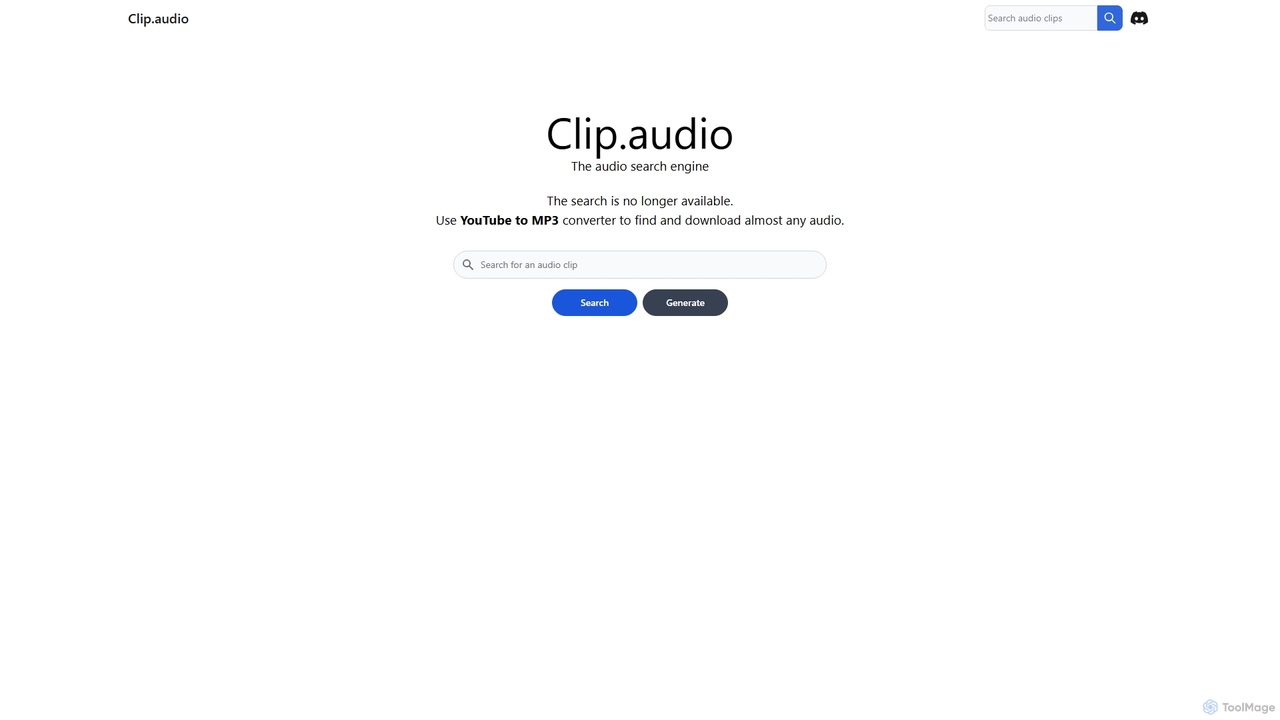
Clip is an advanced AI-powered audio search engine designed for creators. It enables users to find the perfect sound effects, music clips, and audio samples using natural language queries, sound similarity searches, and detailed filtering, streamlining the creative workflow.

Search
Visits 4.1KFavorites 118Likes 105

About Search

AI Audio Search tools are a specialized category of software that uses artificial intelligence to find specific content within audio files. Instead of relying on filenames or metadata, these tools analyze the actual audio data, using technologies like speech recognition and sound event detection. This allows users to pinpoint exact words, sounds, music, or speakers in large audio libraries, dramatically accelerating research and content creation workflows. They are a key component within the broader Audio tools ecosystem for managing and extracting value from sound data.

Core Features

  • Spoken Word Search: Instantly locate specific words or phrases spoken in audio recordings like podcasts or meetings.
  • Sound Event Detection: Identify and search for non-speech sounds, such as a siren, applause, or a specific animal noise.
  • Acoustic Fingerprinting: Find music tracks by matching a short audio clip or by searching for acoustically similar songs.
  • Speaker Identification: Isolate and search for segments of audio spoken by a particular individual.
  • Semantic Search: Search for audio using descriptive concepts or moods (e.g., "upbeat instrumental music") rather than exact keywords.

Use Cases

These tools are invaluable for podcasters, video editors, and journalists who need to sift through hours of interviews to find key quotes. Music supervisors and sound designers use them to navigate vast libraries of music and sound effects. In corporate settings, they are used by legal and compliance teams to monitor call center recordings for quality assurance and regulatory adherence.

How to Choose

When selecting an AI Audio Search tool, consider the accuracy of its transcription and sound recognition. Evaluate the range of supported audio formats and languages. For developers, the availability and documentation of an API for integration is crucial. Also, assess the tool's indexing speed and whether its pricing model aligns with your usage volume, such as per minute of audio processed or a monthly subscription.

Featured tool rankings

Search use cases

1

Locating Key Quotes in Podcast Interviews

Podcast producers and editors often work with hours of raw interview footage. Manually listening to find a specific 30-second quote can be extremely time-consuming. Using an AI Audio Search tool, a producer can type the desired phrase, like "the future of renewable energy," into the search bar. The tool scans the audio's automatically generated transcript and instantly provides timestamps for every instance the phrase was mentioned. This reduces the search process from hours to seconds, allowing for faster editing and content repurposing.

2

Discovering Music for Film and Video Projects

Music supervisors need to find the perfect track that matches the mood of a scene. Instead of browsing endless lists based on genre tags, they can use an AI Audio Search tool with semantic search capabilities. They can input descriptive queries like "anxious, fast-paced electronic track without vocals" or even upload a reference track. The AI analyzes the acoustic properties of thousands of songs in a library to return a curated list of stylistically and emotionally similar options, streamlining the creative discovery process.

3

Monitoring Call Center Recordings for Compliance

A financial services company needs to ensure its agents are using specific required disclosures during customer calls. Manually reviewing thousands of hours of calls is impractical. By using an AI Audio Search tool, the compliance team can set up automated searches for key phrases (e.g., "this call is being recorded") or for the absence of such phrases. The system can flag non-compliant calls for human review, providing the exact timestamp of the issue. This automates a critical compliance task and reduces legal risk.

4

Finding Sound Effects Using Descriptive Terms

A sound designer for a video game needs to find a specific sound: a heavy wooden door creaking open slowly in a large, empty hall. Searching a library by filename like "door_creak_04.wav" is inefficient. With an AI-powered sound library, the designer can type "heavy wooden door slow creak in reverberant space." The AI, trained on sound characteristics, understands these descriptors and retrieves relevant sound effects that match the acoustic qualities of the query, saving significant time in the creative process.

5

Analyzing Customer Feedback from Voicemails

A product manager wants to understand common themes in customer voicemails left for the support line. Instead of listening to hundreds of messages, they use an AI Audio Search tool to transcribe all voicemails. Then, they can search for keywords like "frustrating," "confusing feature," or mentions of a competitor's product. This allows for rapid quantitative and qualitative analysis of customer sentiment, helping to prioritize product improvements without the manual overhead of transcription and listening.

6

Identifying Speakers in a Multi-Person Meeting

A project manager needs to create meeting minutes from a two-hour recording with multiple speakers. An AI Audio Search tool with speaker diarization can automatically process the audio and distinguish between different voices, labeling them as 'Speaker 1', 'Speaker 2', etc. The manager can then assign names to these labels. This allows them to search for everything a specific person said, such as finding all action items assigned to 'John', making the process of creating accurate minutes significantly faster and more reliable.

Search FAQ

What are AI Audio Search tools?

AI Audio Search tools are applications that analyze the content of audio files to enable powerful search capabilities. Unlike traditional search that only looks at file names and metadata, these tools use AI technologies like speech-to-text and sound recognition to let you search for spoken words, specific sounds, musical patterns, or even identify different speakers within an audio recording. They essentially make audio content as searchable as text documents.

How do I choose the right AI Audio Search tool?

To choose the right tool, consider these factors:

  • Accuracy: Evaluate the accuracy of its speech-to-text transcription and sound identification for your specific use case.
  • Supported Content: Check if it supports the audio formats (e.g., MP3, WAV) and languages you work with.
  • Features: Determine if you need basic keyword search, speaker identification, sound effect search, or advanced semantic search.
  • Integration: If you need to integrate it into your own application, look for a well-documented API.
  • Speed and Scalability: Consider how quickly the tool can index and search your audio files, especially if you have a large volume of data.
What's the difference between AI Audio Search and traditional file search?

The key difference is what is being searched. Traditional file search looks at surface-level information like the file name, date created, and any manually added tags or metadata. AI Audio Search, on the other hand, analyzes the *content* of the audio itself. It 'listens' to the file to understand the spoken words, identify different sounds, and recognize musical characteristics, allowing you to search for things that are actually happening inside the audio recording.

What kind of audio content can be searched with these tools?

AI Audio Search tools are versatile and can be applied to a wide range of audio content. Common examples include:

  • Spoken Word Content: Podcasts, interviews, lectures, meeting recordings, and voicemails.
  • Media Production Assets: Large libraries of royalty-free music and sound effects.
  • Broadcast Media: Radio broadcasts, news clips, and television audio tracks.
  • Call Center Recordings: Customer service calls for quality assurance, compliance, and sentiment analysis.
  • User-Generated Content: Audio from social media videos and other online platforms.
Who benefits most from using AI Audio Search tools?

While many can benefit, certain professionals see a significant impact on their workflows. This includes content creators (podcasters, video editors) who need to find specific moments in long recordings. Journalists and researchers use them to quickly analyze interviews and audio archives. Legal and compliance teams in corporations rely on them to monitor communications. Additionally, music supervisors and sound designers use these tools to efficiently navigate and discover assets in vast creative libraries.