Audio Best in category 2 results Songwriting AI Tool

Popular AI tools in the Songwriting field of Audio include Song.do、Cadenza, etc., helping you quickly improve efficiency.

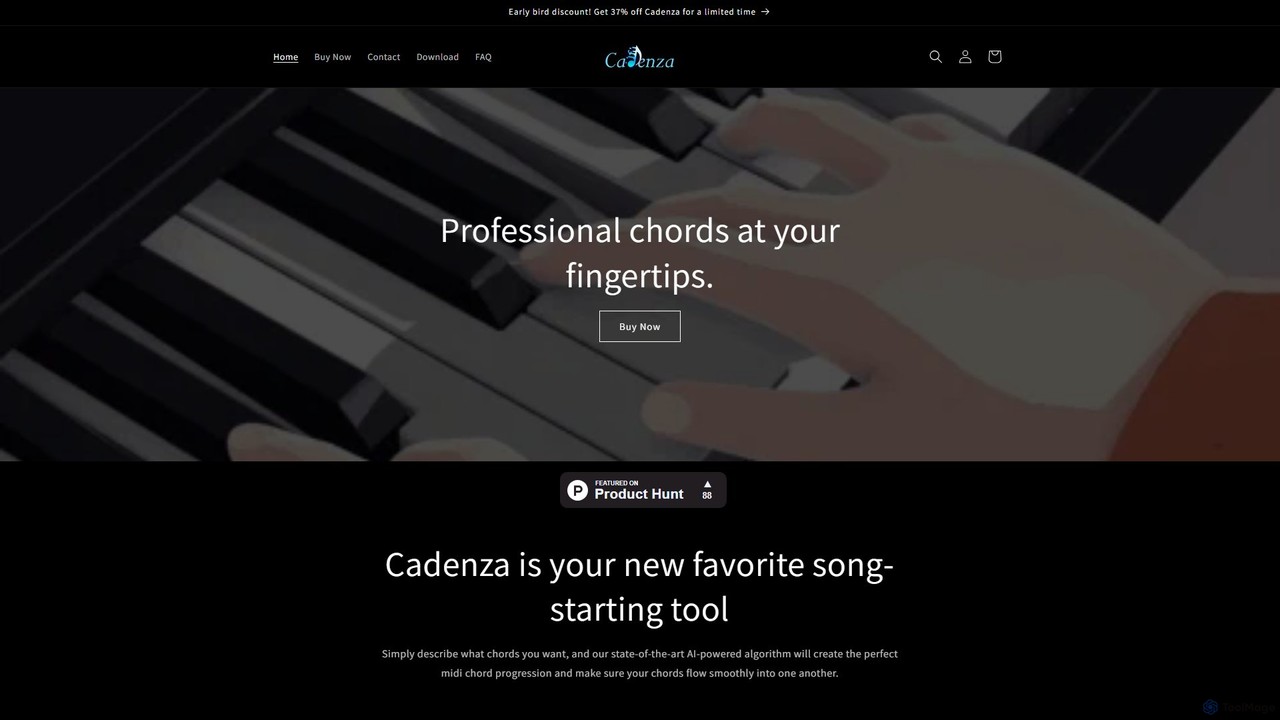
Cadenza

Cadenza

Cadenza is an AI-powered desktop app that generates professional MIDI chord progressions from simple text descriptions. Ideal for …

3.5K
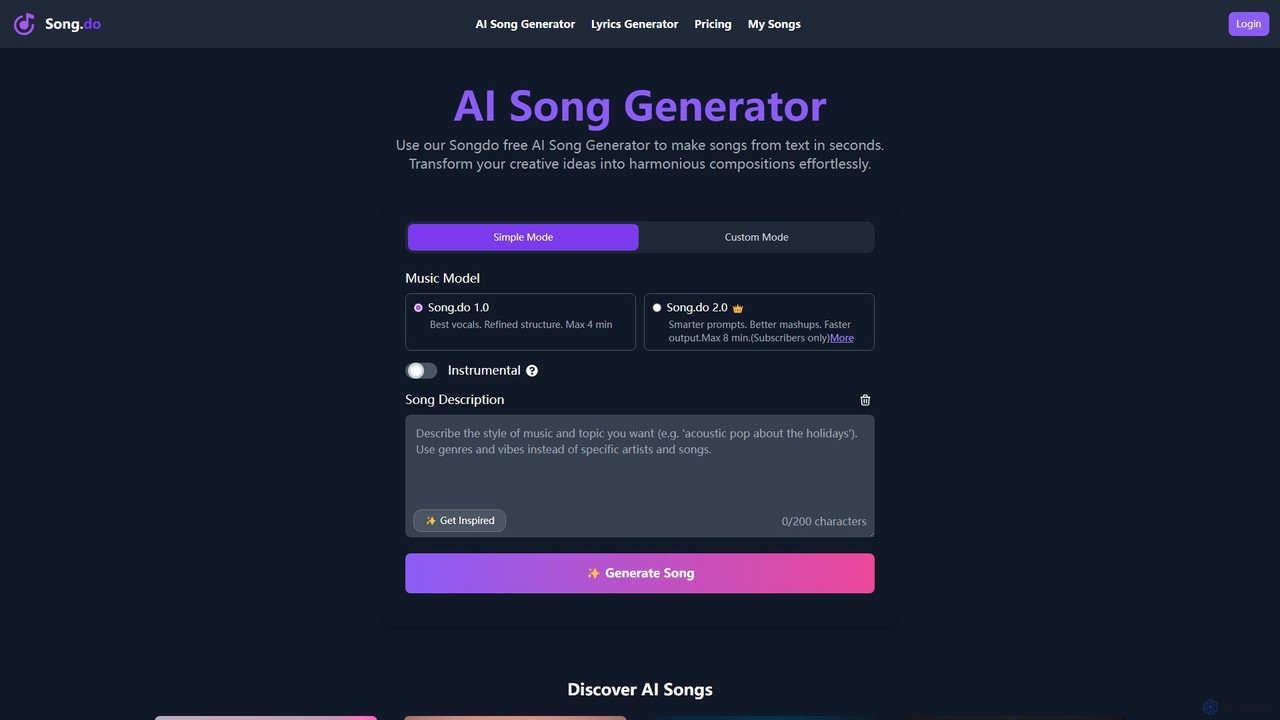
Song.do

Song.do

Song.do is a powerful AI music generator that transforms your ideas into complete songs. Simply provide text prompts …

449.9K

About Songwriting

AI Songwriting tools are a class of creative assistants that use generative AI to help musicians and writers create lyrics, melodies, and chord progressions. These tools leverage large language models for lyrical ideation and algorithmic composition techniques to generate musical elements. They serve as powerful partners to overcome writer's block, explore new musical directions, and accelerate the initial stages of song creation. By providing instant inspiration, these platforms enable creators to focus more on arrangement, production, and performance.

Core Features

  • Lyric Generation: Creates verses, choruses, and bridges based on themes, keywords, or genres.
  • Melody Generation: Produces original melodic lines, often as MIDI data, that fit a given chord structure.
  • Chord Progression Suggestion: Recommends harmonic sequences tailored to specific moods or styles.
  • Song Structure Assistance: Helps organize song sections into conventional formats like verse-chorus-bridge.
  • Rhyme & Synonym Finder: Offers context-aware rhyming words and synonyms to refine lyrical content.

Use Cases

AI Songwriting tools are valuable for solo artists, bands, music producers, and advertising agencies. For example, a songwriter experiencing a creative slump can use a tool to generate fresh lyrical themes. A producer can quickly create multiple melody options for a client's track. Advertising teams can rapidly prototype jingles by generating catchy hooks and lyrics.

How to Choose

When selecting an AI Songwriting tool, consider the quality and style of its generated output. Evaluate its flexibility—does it allow for detailed customization or is it fully automated? Check the available output formats, such as text, MIDI, or audio, to ensure compatibility with your workflow and Digital Audio Workstation (DAW). Also, consider the user interface and whether it complements your creative process.

SongwritingUse Cases

1

Overcoming Songwriter's Block

A folk songwriter is stuck trying to write the second verse of a new song about changing seasons. They input the song's theme ('autumn turning to winter') and the first verse into an AI songwriting tool. The AI generates several lyrical concepts and rhyming couplets that match the established tone and meter. The writer selects the most inspiring lines, edits them to fit their personal style, and successfully completes the verse, breaking through their creative block in minutes instead of hours.

2

Generating Melodic Hooks for Pop Music

A music producer is working on a pop track for a client but needs a catchy chorus melody. They input the chorus chord progression (e.g., Am-G-C-F) into an AI melody generator, specifying the genre as 'Pop' and the mood as 'Uplifting'. The tool generates five distinct MIDI melody options. The producer auditions each one over the track, combines elements from two of them, and quickly finalizes a memorable hook that elevates the entire song, saving significant composition time.

3

Exploring New Chord Progressions

A guitarist who usually writes rock music wants to experiment with a jazz-influenced style. Unfamiliar with typical jazz harmony, they use an AI songwriting tool's chord progression generator. They select 'Jazz' as the genre and 'Melancholy' as the mood. The AI suggests several progressions using extended chords like 7ths and 9ths. The guitarist uses one of these progressions as a starting point, inspiring a completely new song that pushes their creative boundaries.

4

Rapidly Prototyping Commercial Jingles

An advertising agency needs to create three distinct jingle options for a new coffee brand by the end of the day. A creative uses an AI songwriting tool, inputting keywords like 'fresh,' 'morning,' and 'energy.' The tool generates multiple short lyrical hooks and corresponding simple melodies. The creative can then quickly mix and match these elements to assemble three complete demo jingles, presenting varied and polished ideas to the client on a tight deadline.

5

Co-writing Lyrics with an AI Partner

A lyricist is collaborating on a project and wants to explore different perspectives for a song about resilience. They use an AI tool as a brainstorming partner, feeding it prompts like 'write a chorus about a mountain withstanding a storm.' The AI provides several versions. While none are perfect, one version contains a powerful metaphor the lyricist hadn't considered. They use this AI-generated metaphor as the centerpiece of their new chorus, blending AI ideation with human artistry to create a more profound lyric.

6

Music Education and Theory Practice

A music student learning about harmony wants to understand the emotional impact of different chord progressions. They use an AI songwriting tool to generate progressions in various modes and keys, such as a sad progression in C minor or a hopeful one in G major. By listening to and playing over these AI-generated examples, the student gains a practical, auditory understanding of music theory concepts that goes beyond textbook definitions, accelerating their learning process.

SongwritingFrequently Asked Questions