ToolMage
Sign in

Best 3 Speech Analysis AI tools for Audio

Popular Speech Analysis AI tools in Audio include Accent Guesser, Speech Meter, and speaktrack.ai, helping you work more efficiently.

Accent Guesser
Freemium

Accent Guesser

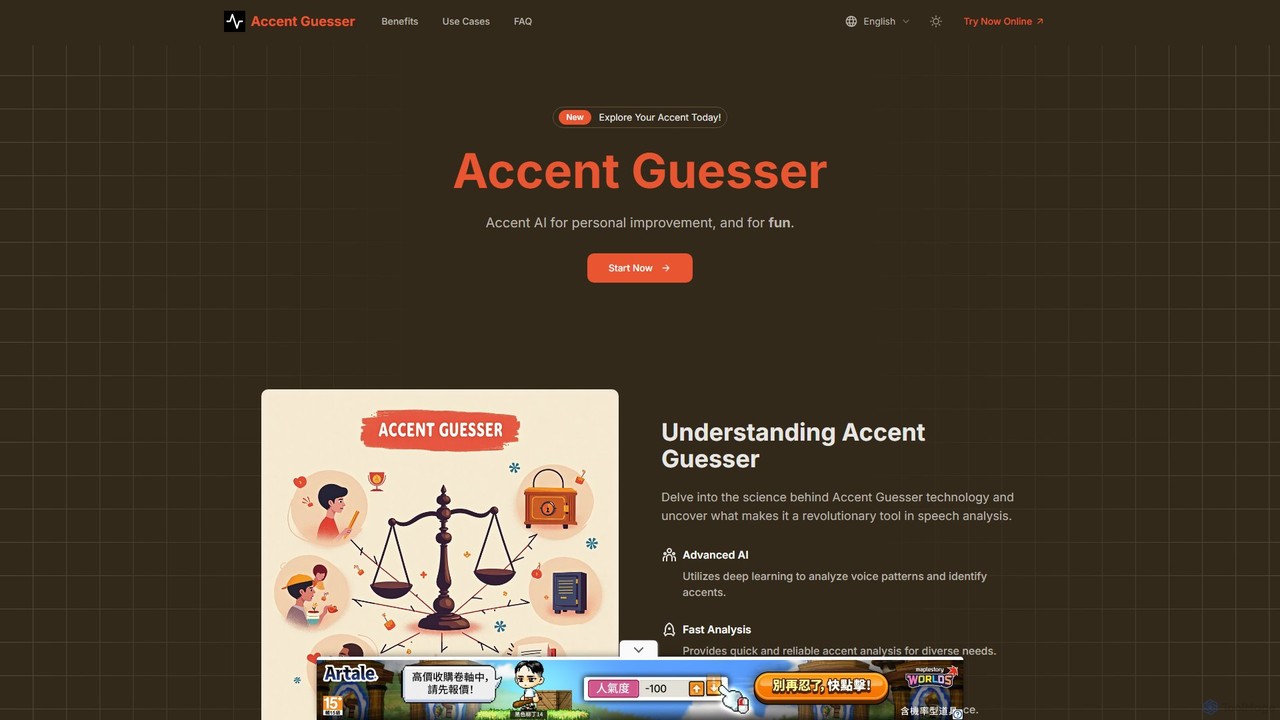
Accent Guesser is an AI-powered tool that analyzes your voice to identify your accent with remarkable accuracy. Using advanced deep learning, it provides instant insights into your speech patterns and linguistic background. It's a fun and engaging way for language learners, tech enthusiasts, and curious individuals to explore global accents and enhance communication skills. Simply record your voice on the website and discover the unique characteristics of your accent in seconds.

Speech Analysis
Visits 5.4KFavorites 107Likes 120
speaktrack.ai
Freemium

speaktrack.ai

speaktrack.ai is an AI-powered speech coach that analyzes your speaking patterns to provide personalized, data-driven feedback. It helps you eliminate filler words, improve pacing, and enhance vocal delivery, making you a more confident and effective communicator for presentations, meetings, and interviews.

Speech Analysis
Visits 3.6KFavorites 117Likes 134
Speech Meter
Free

Speech Meter

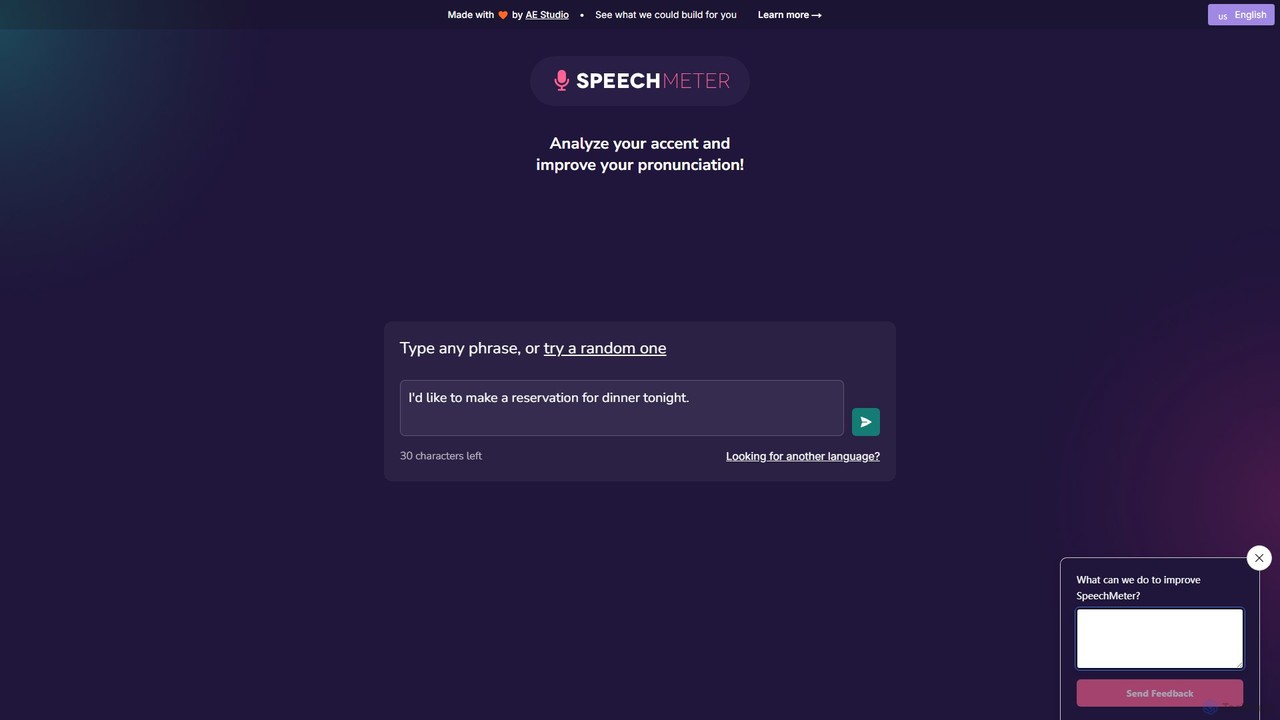
Speech Meter is an AI-powered tool designed to help you analyze and improve your pronunciation and accent. By recording your voice and comparing it to a standard model, it provides instant, objective feedback. Ideal for language learners, professionals, and anyone looking to enhance their speaking clarity, this free web-based tool offers a simple way to practice and build confidence in your spoken communication skills.

Speech Analysis
Visits 3.7KFavorites 125Likes 117

About Speech Analysis

Speech Analysis tools are AI-powered solutions that process spoken language to extract deep insights and patterns. These tools leverage advanced natural language processing (NLP) and machine learning to go beyond simple transcription, identifying elements like emotion, sentiment, speaker characteristics, and speech anomalies. They provide valuable data for improving communication, understanding customer behavior, and enhancing various audio-based applications. This specialized field within audio AI focuses on the nuances of human voice.

Core Features

  • Emotion Detection: Identifies and quantifies emotional states (e.g., joy, anger, sadness) from vocal tone and speech patterns.
  • Sentiment Analysis: Determines the overall positive, negative, or neutral sentiment expressed in spoken content.
  • Speaker Diarization: Automatically identifies and separates different speakers in an audio recording, attributing speech segments to each.
  • Keyword & Topic Extraction: Pinpoints key terms and overarching themes discussed within spoken dialogue.
  • Acoustic Feature Analysis: Measures vocal characteristics like pitch, volume, speaking rate, and pauses for deeper insights.

Applicable Scenarios

Speech Analysis tools are crucial for businesses seeking to understand customer interactions, researchers studying communication patterns, and developers building advanced voice-enabled applications. They are employed in call centers for quality assurance, in healthcare for monitoring patient vocal biomarkers, and in media for content analysis.

How to Choose

When selecting a Speech Analysis tool, consider the specific insights you need (e.g., emotion, sentiment, speaker ID). Evaluate its accuracy, language support, integration capabilities with existing systems, and scalability for your data volume. Also, assess data privacy and compliance features, especially for sensitive information.

Featured tool rankings

Speech Analysis use cases

1

Enhance Call Center Quality Assurance

Call center managers utilize speech analysis tools to automatically monitor agent-customer interactions. By analyzing sentiment, emotion, and speaking patterns, they can identify training needs, improve service quality, and ensure compliance, moving beyond manual review processes. This leads to more effective coaching and better customer satisfaction, significantly reducing the time spent on quality checks.

2

Understand Customer Feedback from Voice

Product teams and marketers employ speech analysis to process voice messages, recorded interviews, or public audio reviews. The tools extract key topics, common complaints, and positive sentiments, providing actionable insights into customer preferences and pain points without requiring extensive manual listening. This helps in faster product iteration and more targeted marketing campaigns.

3

Monitor Mental Health through Vocal Biomarkers

Healthcare professionals and researchers use speech analysis to detect subtle changes in vocal patterns, pitch, and speaking rate that may indicate stress, depression, or other cognitive conditions. This non-invasive method offers a potential early warning system or a way to track treatment efficacy over time, providing objective data for clinical assessment and personalized care plans.

4

Automate Meeting Summarization and Action Item Extraction

Business professionals leverage speech analysis to process meeting recordings. The tools can identify different speakers, extract key decisions, action items, and topics discussed, significantly reducing the time spent on manual note-taking and ensuring important information is captured accurately. This streamlines post-meeting workflows and improves team productivity.

5

Personalize Voice Assistant Interactions

Developers integrate speech analysis into voice assistants to understand user intent and emotional state more deeply. By detecting frustration or confusion, the assistant can adapt its responses, offer more empathetic support, or escalate to a human agent, leading to a more natural and satisfying user experience. This enhances the intelligence and responsiveness of conversational AI.

6

Analyze Media Content for Trends and Bias

Media analysts and researchers use speech analysis to examine broadcast news, podcasts, and interviews. They can identify dominant narratives, speaker sentiment towards specific topics, and even detect potential biases in reporting by analyzing vocal tone and word choice across different segments. This provides valuable insights for media monitoring, content strategy, and academic research.

Speech Analysis FAQ

What are Speech Analysis tools?

Speech Analysis tools are AI-powered applications that analyze spoken language to extract meaningful insights beyond just the words themselves. They identify elements like emotion, sentiment, speaker identity, speech patterns, and acoustic features, providing a deeper understanding of communication. These tools are crucial for understanding human interaction and deriving actionable intelligence from audio data.

How do Speech Analysis tools differ from simple audio transcription?

While audio transcription converts speech to text, Speech Analysis goes much further. Transcription focuses on what was said, whereas Speech Analysis focuses on how it was said and what it implies. It extracts non-verbal cues, emotional states, sentiment, speaker characteristics, and other contextual data that transcription alone cannot provide, offering a richer layer of understanding.

What are the key benefits of using Speech Analysis tools?

The key benefits include gaining deeper insights into customer behavior and satisfaction, improving communication strategies, automating quality assurance processes, identifying potential health indicators, and enhancing the personalization of voice interfaces. These tools transform raw audio into structured, actionable data, enabling better decision-making and operational efficiency across various sectors.

What factors should I consider when choosing a Speech Analysis tool?

When choosing a Speech Analysis tool, consider its accuracy in detecting specific features (e.g., emotion, sentiment), the languages it supports, its ability to integrate with your existing platforms, and its scalability for your data volume. Also, evaluate the level of customization offered, data privacy policies, and the clarity of its analytical reports to ensure it meets your specific needs.

Can Speech Analysis tools detect sarcasm or irony?

Detecting sarcasm or irony is a complex challenge for AI, as it often relies on subtle vocal cues, context, and cultural understanding. While advanced Speech Analysis tools can identify certain vocal patterns (like changes in pitch or tone) that might indicate sarcasm, accurately interpreting it remains difficult. They can provide indicators, but human review is often still needed for definitive interpretation of such nuanced expressions.