BoldVoice
BoldVoice is an AI-powered accent training app designed to help non-native English speakers master the American accent. Through …
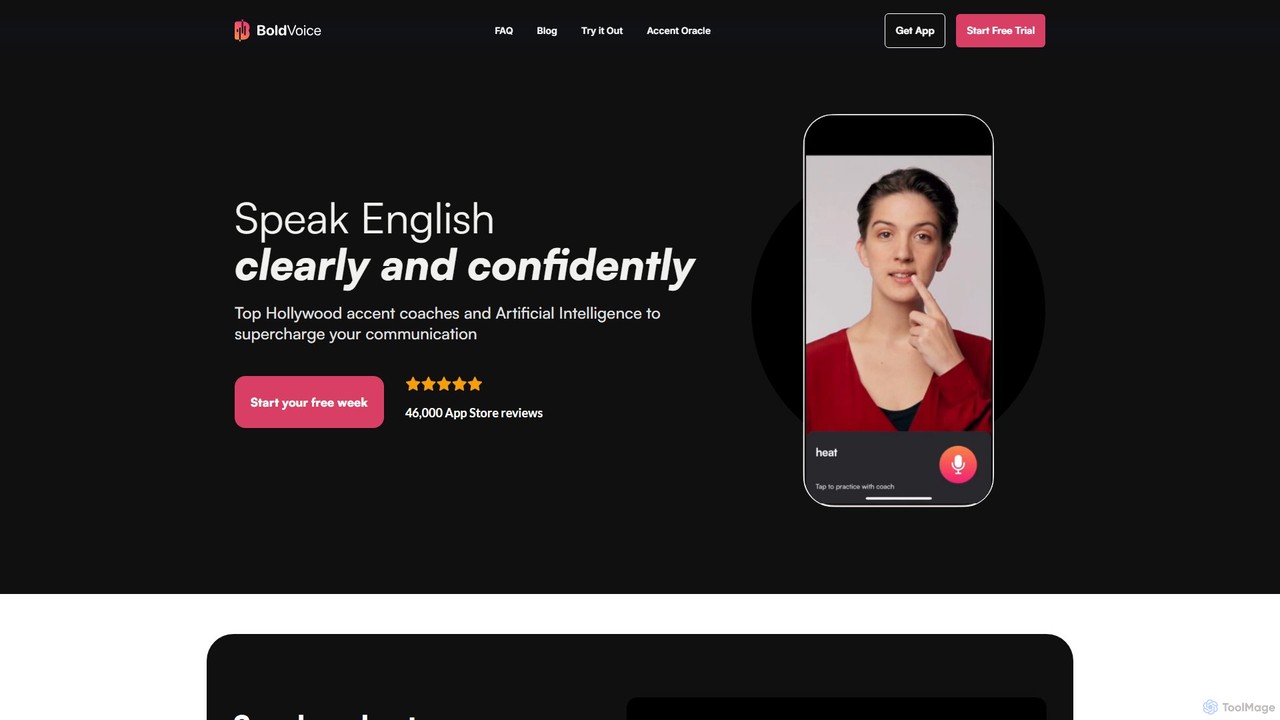
BoldVoice is an AI-powered accent training app designed to help non-native English speakers master the American accent. Through video lessons from Hollywood accent coaches and instant, detailed feedback from its AI, it helps users improve pronunciation, intonation, and confidence in their speech.
About Speech Training
AI Speech Training tools are specialized applications designed to analyze and improve human vocal delivery. They use advanced speech recognition and machine learning algorithms to provide real-time, data-driven feedback on pronunciation, intonation, pacing, and fluency. These tools function as a personal digital coach, helping users build confidence and clarity for public speaking, language learning, or professional communication. By identifying specific areas for improvement, they offer a structured path to more effective and articulate speech.
Core Features
- Pronunciation Analysis: Provides detailed feedback on individual sounds (phonemes), word stress, and rhythm to match native speaker standards.
- Fluency & Pace Tracking: Measures speaking rate (words per minute), detects filler words (e.g., 'um', 'ah'), and analyzes pause length for smoother delivery.
- Intonation & Tone Feedback: Analyzes pitch variation and vocal tone to help convey the intended emotion, confidence, and emphasis.
- Real-time Transcription: Converts spoken words to text instantly, allowing users to review their speech for accuracy and word choice.
- Performance Reporting: Generates comprehensive reports that track progress over time with scores and visual data on various speech metrics.
Use Cases
These tools are widely used by language learners aiming to reduce their accent and improve pronunciation. Professionals, such as executives and sales representatives, use them to rehearse presentations and refine their pitches. They are also valuable for students preparing for oral exams, customer service agents improving communication clarity, and anyone looking to enhance their public speaking skills.
How to Choose
When selecting an AI Speech Training tool, first consider the languages and dialects it supports. Evaluate the granularity of the feedback—does it offer phoneme-level analysis or just general scores? Look for a variety of practice scenarios relevant to your goals, such as interviews or presentations. Finally, assess its progress tracking capabilities and user interface to ensure it provides clear, actionable insights for improvement.

Speech TrainingUse Cases
Perfecting Pronunciation for Language Learning
A student learning English as a second language uses an AI Speech Training tool to improve their accent. They practice daily conversational phrases and receive immediate, phoneme-level feedback. The tool highlights mispronounced sounds, compares their intonation to a native speaker's, and provides visual aids like a virtual mouth showing correct tongue placement. After several weeks, their pronunciation score improves by 30%, and they gain the confidence to speak more freely in real-life conversations.
Rehearsing a High-Stakes Business Presentation
An executive prepares for a crucial board meeting by recording her presentation into an AI speech coach. The tool analyzes her delivery, flagging sections where her speaking pace is too fast and identifying the overuse of filler words like 'basically'. It also provides a tone analysis, suggesting she inject more energy into her opening statement. She rehearses multiple times, using the feedback to refine her pacing and word choice, resulting in a more confident and persuasive final delivery that captivates the board.
Improving Clarity for Customer Service Calls
A call center manager uses AI Speech Training software to onboard new agents. Agents practice handling common customer queries in simulated calls. The AI provides feedback on their speech clarity, pace, and tone, ensuring they sound empathetic and professional. The system generates a 'clarity score' for each agent, which becomes a key performance indicator. This training process reduces agent ramp-up time by 25% and leads to higher customer satisfaction scores due to clearer communication.
Preparing for a University Oral Examination
A graduate student uses an AI speech training app to prepare for their thesis defense. They upload their script and practice delivering it section by section. The app provides feedback on their speaking rate, helping them fit the presentation within the time limit. It also analyzes their vocal variety, prompting them to use more dynamic intonation to keep the examination committee engaged. The student uses the tool to build confidence and ensure their delivery is as polished as their research.
Refining a Sales Pitch for Better Conversion
A sales team integrates an AI speech training tool into their CRM. After each client call, the recording is automatically analyzed. Sales reps receive a report highlighting their talk-to-listen ratio, use of persuasive language, and tone consistency. The AI identifies moments where a rep sounded hesitant or spoke too quickly. By reviewing these insights, the team collectively refines their pitch, leading to a 15% increase in lead-to-opportunity conversion rates over one quarter.
Mastering a New Accent for Voice Acting
A voice actor preparing for a role that requires a specific regional accent uses an AI speech training tool. They listen to native speaker samples within the app and then record themselves mimicking the phrases. The AI provides a detailed breakdown of their accent, comparing their vowel sounds, cadence, and intonation patterns to the target accent. This allows for precise, targeted practice, helping the actor master the nuances of the accent much faster than traditional methods of listening and repeating alone.