ToolMage
Sign in

Best 3 Stock Music AI tools for Audio

Popular Stock Music AI tools in Audio include Depositphotos, MotionElements, and createthat.ai, helping you work more efficiently.

Depositphotos
Paid

Depositphotos

Depositphotos is a global marketplace for royalty-free images, videos, and music, featuring a library of over 317 million files. It uniquely combines a vast stock media library with an unlimited AI image generator, providing a comprehensive solution for creators, marketers, and businesses.

Stock Music
Visits 6.4MFavorites 150Likes 135
MotionElements
Freemium

MotionElements

MotionElements is a comprehensive royalty-free marketplace for video creators, offering millions of stock videos, music tracks, sound effects, and video templates. It features powerful AI-powered search tools to help creators find the perfect assets quickly, all under a simple, universal license for any project.

Stock Music
Visits 788.1KFavorites 102Likes 98
createthat.ai
Freemium

createthat.ai

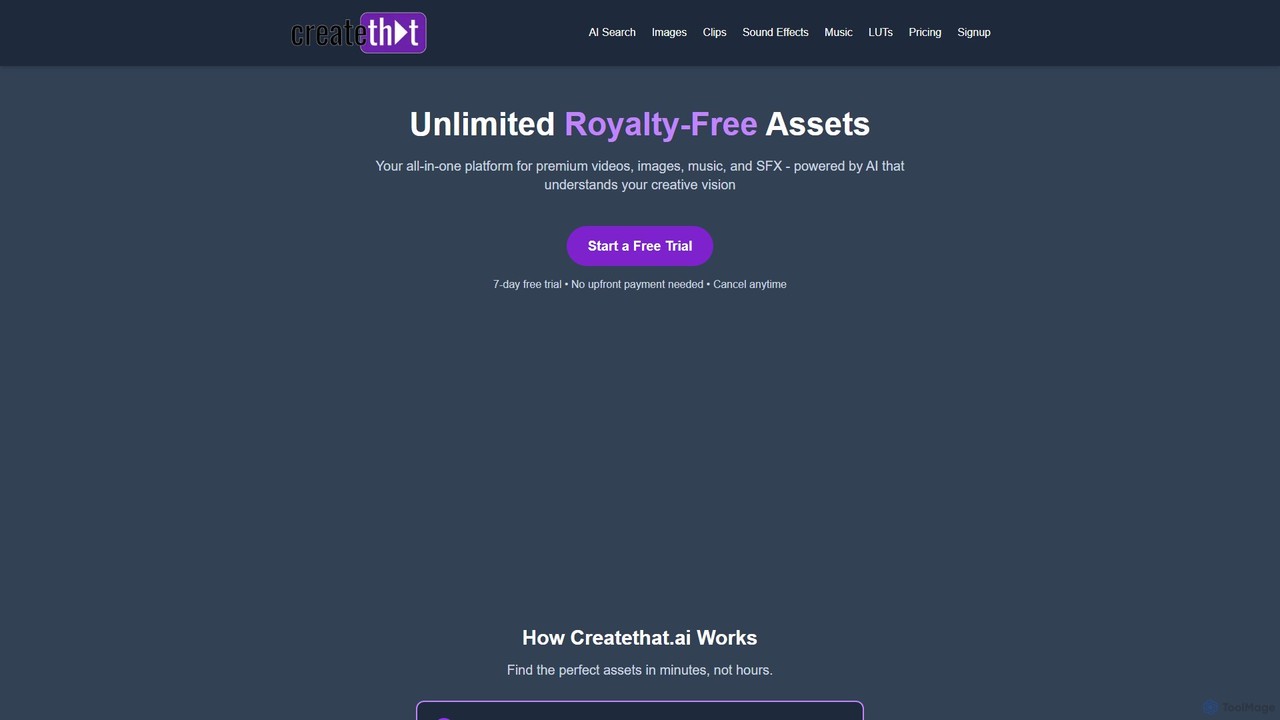
Createthat.ai is an AI-powered platform offering a vast library of royalty-free stock assets, including videos, images, music, and sound effects. Its unique natural language search engine understands creative intent, allowing creators to find the perfect assets in minutes. It provides a simple, all-encompassing commercial license, making it ideal for YouTubers, marketers, and video editors looking to streamline their content creation workflow.

Stock Music
Visits 101.9KFavorites 94Likes 107

About Stock Music

AI Stock Music tools are a class of audio applications that use generative artificial intelligence to create original, royalty-free music tracks. These tools analyze user inputs such as genre, mood, tempo, or instrumentation to compose unique melodies and harmonies from scratch. Their primary value lies in providing content creators, developers, and marketers with instant access to custom-fit, copyright-safe music, eliminating the need to search through vast traditional libraries. This on-demand generation capability allows for a high degree of creative control and ensures each track can be tailored to specific project needs.

Core Features

  • Prompt-Based Generation: Create music from simple text descriptions, specifying mood, genre, and instruments.
  • Parameter Customization: Adjust track length, tempo (BPM), and key to perfectly match video or other media.
  • Instrument & Style Variation: Generate multiple unique versions of a track or swap out instruments to find the ideal sound.
  • Royalty-Free Licensing: Automatically receive a license for commercial use, avoiding complex copyright claims.
  • Stem Exports: Download individual instrument tracks (e.g., drums, bass, melody) for advanced mixing and editing.

Use Cases

AI Stock Music is widely used by video content creators for YouTube and social media to produce unique background scores without risking copyright strikes. Marketers and advertising agencies leverage these tools to create custom jingles and soundtracks for promotional videos that align with brand identity. Additionally, indie game and app developers use them to generate adaptive and ambient music for their projects on a limited budget.

How to Choose

When selecting an AI Stock Music tool, first evaluate the quality and realism of the generated audio. Consider the depth of customization options available, such as the ability to control specific instruments and song structure. It's also crucial to review the licensing terms to ensure they cover your intended commercial use cases. Finally, compare pricing models—whether subscription-based for unlimited access or pay-per-track—to find what best suits your project frequency and budget.

Stock Music use cases

1

Create Background Music for YouTube Videos

A content creator needs unique, copyright-safe background music for their weekly vlogs. Instead of spending hours searching traditional stock music sites, they use an AI Stock Music tool. They input a prompt like 'upbeat, motivational acoustic pop for a travel vlog, 3 minutes long'. The AI generates several options in seconds. The creator selects the best fit, adjusts the tempo slightly to match their video's pacing, and downloads the track. This process provides a perfectly tailored soundtrack for each video, enhances production value, and completely avoids copyright claims, saving significant time and potential legal issues.

2

Generate Custom Soundtracks for Indie Games

An indie game developer is working on a fantasy RPG and needs adaptive music for different environments—a calm village, a mysterious forest, and an intense boss battle. With a limited budget, hiring a composer is not feasible. Using an AI music generator, the developer creates multiple tracks by specifying 'peaceful medieval fantasy flute music' for the village and 'dark, tense orchestral strings with heavy percussion' for the battle. They generate several variations for each theme and use the stem export feature to layer sounds dynamically in the game engine, creating a rich, adaptive soundtrack that responds to gameplay without the high cost of custom composition.

3

Produce On-Brand Music for Marketing Campaigns

A marketing agency is creating a social media video ad for a luxury tech brand. The ad needs a soundtrack that sounds sophisticated, modern, and slightly futuristic. Instead of licensing a generic corporate track, the marketing team uses an AI music tool. They input 'sleek, minimalist electronic music with a confident, inspiring mood'. The AI produces a track that perfectly matches the brand's high-end aesthetic. The team can then generate shorter loops and stingers from the main track for use in Instagram Stories and other short-form content, ensuring consistent, on-brand audio across the entire campaign at a fraction of the cost of a commissioned piece.

4

Create Original Podcast Intro and Outro Music

A podcaster wants to establish a strong brand identity with a unique theme song for their new true-crime series. They need something suspenseful and atmospheric. Using an AI music generator, they enter the prompt 'dark, mysterious ambient music with a slow, pulsing synth bass and subtle piano melody'. After generating a few options, they find a 30-second piece that sets the perfect tone. They use this for the intro and generate a slightly different, more conclusive-sounding variation for the outro. This gives their podcast a professional and memorable audio signature that distinguishes it from others, all created in under an hour without any musical composition skills.

5

Develop UI Soundscapes for Mobile Apps

A developer is building a meditation and wellness app and wants to include calming, non-distracting background music for users during their sessions. The music needs to loop seamlessly and be very subtle. The developer uses an AI music tool to generate several long tracks based on prompts like 'minimalist ambient pads, soothing, no melody, 432 Hz'. They can specify a 10-minute length to ensure a long, non-repetitive loop. This allows them to quickly populate the app with a variety of high-quality ambient soundscapes, enhancing the user experience and reinforcing the app's calming purpose without incurring the high costs of licensing specialized wellness music.

6

Quickly Score Corporate Presentations

A corporate trainer needs to create an engaging training video for new employees. To make the presentation more professional, they want to add background music. They need something that is neutral, optimistic, and not distracting. Using an AI stock music generator, they type 'uplifting, gentle corporate music with piano and light strings'. Within minutes, they have a suitable 5-minute track that they can loop for the duration of their presentation. This simple step elevates the quality of the training material, making it more engaging for the audience, and is accomplished quickly without any audio editing expertise or budget for music licensing.

Stock Music FAQ

What is AI Stock Music?

AI Stock Music refers to original music tracks created by generative artificial intelligence systems. Unlike traditional stock music libraries where you search a pre-existing catalog, AI tools generate new, unique music on-demand based on user prompts. Users can specify parameters like genre, mood, instruments, and tempo, and the AI composes a royalty-free track tailored to those needs. This technology provides a fast, customizable, and cost-effective solution for creators needing copyright-safe music for videos, games, podcasts, and other media.

How to choose the right AI Stock Music tool?

To choose the right tool, consider these factors:

  • Audio Quality: Listen to samples to assess the realism and musicality of the generated tracks. Does it sound like a real instrument or overly synthetic?
  • Customization Control: Check the level of control you have. Can you specify exact BPM, key, instruments, and song structure (e.g., intro, verse, chorus)?
  • Licensing Terms: Carefully read the license agreement. Ensure it grants you a perpetual, worldwide, royalty-free license for your intended use (commercial, broadcast, etc.).
  • Pricing Model: Compare subscription plans versus pay-per-download models. A subscription may be better for frequent users, while per-track pricing is suitable for occasional projects.
  • Ease of Use: Test the user interface. A good tool should allow you to generate and refine music quickly with an intuitive workflow.
AI Stock Music vs. Traditional Stock Music Libraries: What's the difference?

The core difference is creation versus curation. Traditional stock music libraries offer a curated catalog of pre-made tracks created by human artists. You search for what you need and license an existing song. AI Stock Music tools, on the other hand, are generators. You provide prompts and parameters, and the AI composes a brand new, unique piece of music for you. Key differences include:

  • Uniqueness: AI-generated tracks are unique to your request, while traditional stock tracks can be used by thousands of others.
  • Customization: AI offers deep customization of length, tempo, and instrumentation on the fly. Traditional tracks are fixed.
  • Speed: AI can generate options in seconds, whereas searching a large library can be time-consuming.
  • Artistry: Traditional libraries feature human artistry and emotion, which may be more nuanced than current AI compositions.
Is music generated by AI truly royalty-free?

Generally, yes. Most reputable AI stock music platforms are designed to provide users with a license that is royalty-free. This means that after you generate and download a track (either through a subscription or a one-time fee), you can use it in your projects without paying additional fees (royalties) for each view, broadcast, or sale. However, it is absolutely crucial to read the specific terms of service for each tool. Some may have limitations on use cases (e.g., theatrical releases) or require attribution. Always verify the license covers your specific needs to ensure you are legally compliant.

What are the main features of AI Stock Music generators?

AI Stock Music generators typically offer a suite of features designed for rapid customization and creation. The most common features include:

  • Text-to-Music Generation: The core function, allowing users to describe the desired music in natural language.
  • Mood and Genre Selection: Pre-set tags and categories (e.g., 'Cinematic', 'Upbeat', 'Ambient') to guide the AI.
  • Tempo (BPM) and Duration Control: The ability to set the exact speed and length of the track to fit a video or timeline.
  • Instrument Selection: Options to include or exclude specific instruments like piano, guitar, or synthesizers.
  • Variation Generation: Creating multiple different versions of a single musical idea with one click.
  • Stem Export: Allowing users to download individual instrument layers for advanced editing in digital audio workstations (DAWs).