AudioShake
AudioShake is a cutting-edge AI platform that separates audio into its core components (stems). It can isolate vocals, …
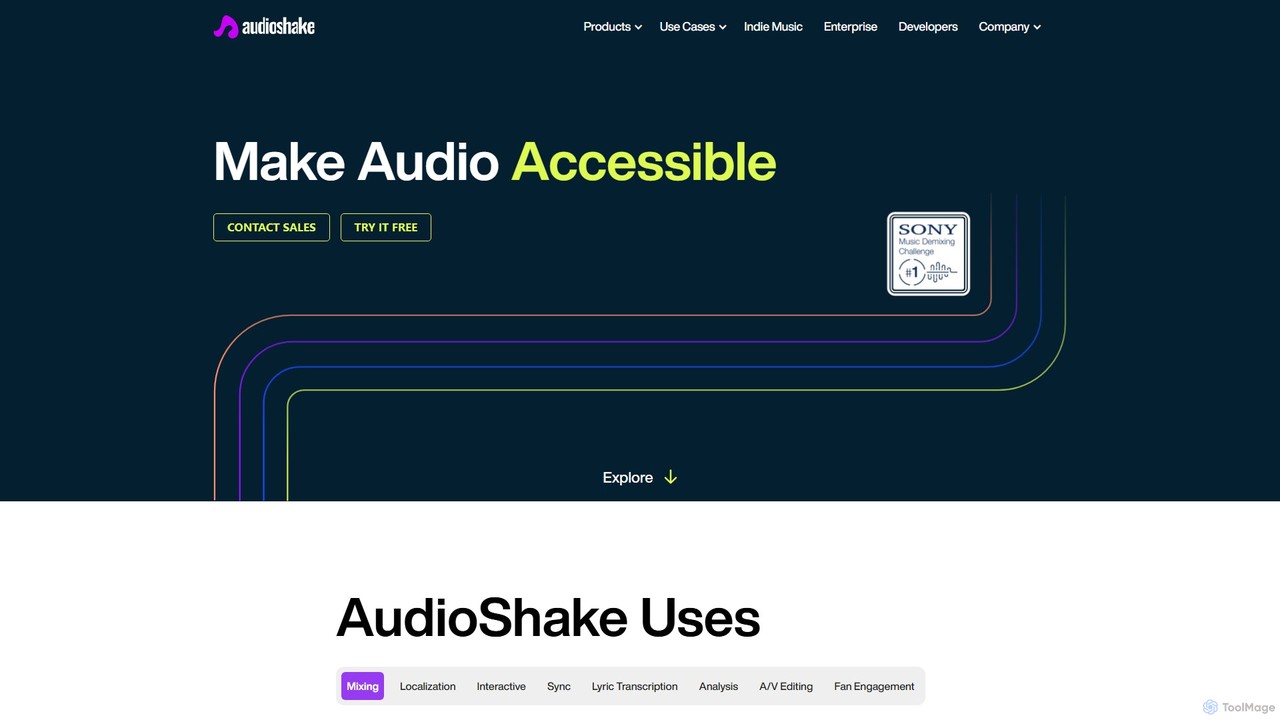
AudioShake is a cutting-edge AI platform that separates audio into its core components (stems). It can isolate vocals, instruments, dialogue, and effects from any audio source, enabling high-quality mixing, remastering, dubbing, and sync licensing. Trusted by industry leaders like Disney and Warner Music, it unlocks new creative and commercial possibilities for music, film, and broadcast professionals.
About Voice Processing
Voice Processing AI tools are a specialized category within AI audio, designed to analyze, synthesize, and manipulate human speech. These tools leverage advanced artificial intelligence, including natural language processing and deep learning, to transform spoken language into actionable data or generate highly natural-sounding speech. They are crucial for enhancing human-computer interaction, automating communication tasks, and creating dynamic audio content across various industries.
Core Features
- Speech Recognition (ASR): Converts spoken words into written text with high accuracy, supporting various accents and languages.
- Text-to-Speech (TTS): Generates natural and expressive human-like speech from written text, often with customizable voices and tones.
- Voice Cloning & Synthesis: Replicates specific vocal characteristics to create new speech in a desired voice or synthesizes entirely new voices.
- Emotion Detection: Analyzes vocal cues to identify and interpret emotional states within spoken language.
- Noise Reduction & Enhancement: Filters out background noise and improves the clarity of speech in audio recordings.
Use Cases
Voice Processing AI tools are widely adopted in scenarios requiring sophisticated interaction with spoken language. They are essential for automating customer service through intelligent virtual assistants, enabling hands-free control of devices, and facilitating content creation by generating realistic voiceovers for videos and podcasts. These tools also play a vital role in transcribing meetings and interviews, making information more accessible and searchable.
How to Choose
When selecting a Voice Processing AI tool, consider its accuracy in speech recognition and the naturalness of its text-to-speech output, especially for specific languages and accents. Evaluate its integration capabilities with your existing systems and workflows, as well as its scalability to handle varying volumes of audio data. Finally, assess the pricing model and the level of customization offered for voice characteristics and emotional nuances.

Voice ProcessingUse Cases
Automating Customer Service Interactions
Customer service departments utilize Voice Processing AI to power intelligent virtual assistants. These AI tools accurately recognize spoken customer queries (ASR), understand their intent, and generate natural-sounding verbal responses (TTS). This significantly reduces agent workload, provides instant support 24/7, and ensures consistent service quality, leading to improved customer satisfaction and operational efficiency.
Generating Multilingual Voiceovers for Content
Content creators and media companies employ Voice Processing AI to produce high-quality voiceovers for videos, podcasts, and e-learning materials. By inputting scripts, the AI generates natural-sounding speech in various languages and voices (TTS), eliminating the need for human voice actors for every language. This accelerates content localization, expands audience reach, and reduces production costs and timelines.
Real-time Meeting Transcription and Summarization
Professionals and teams use Voice Processing AI to automatically transcribe spoken dialogue from meetings, lectures, or interviews into text in real-time. Beyond transcription, advanced tools can identify speakers, extract key topics, and generate concise summaries. This ensures accurate record-keeping, allows participants to focus on discussion rather than note-taking, and makes information easily searchable and shareable.
Developing Advanced Voice Assistants and Smart Devices
Developers integrate Voice Processing AI into smart home devices, mobile applications, and automotive systems to enable intuitive voice control. The AI accurately interprets spoken commands (ASR) and provides verbal feedback (TTS), creating a seamless and hands-free user experience. This technology is fundamental for building responsive and intelligent conversational interfaces that understand and respond to human speech.
Enhancing Accessibility for Diverse Users
Voice Processing AI plays a crucial role in making digital content and interfaces accessible to individuals with visual impairments or reading difficulties. Text-to-Speech (TTS) converts written content into spoken audio, allowing users to consume information audibly. Conversely, Speech Recognition (ASR) enables users with motor impairments to interact with computers and devices using their voice, fostering greater inclusivity.
Analyzing Call Center Conversations for Insights
Businesses leverage Voice Processing AI to analyze vast volumes of call center recordings. The AI transcribes calls (ASR) and then processes the text to detect sentiment, identify keywords, track compliance, and evaluate agent performance. This provides invaluable insights into customer needs, common issues, and service quality, enabling data-driven improvements in customer experience and operational strategies.