
ToolMage
Sign in

Best 1 Social Media Automation AI tools for Automation

Popular Social Media Automation AI tools in Automation include Browserman, helping you work more efficiently.

Browserman

Browserman

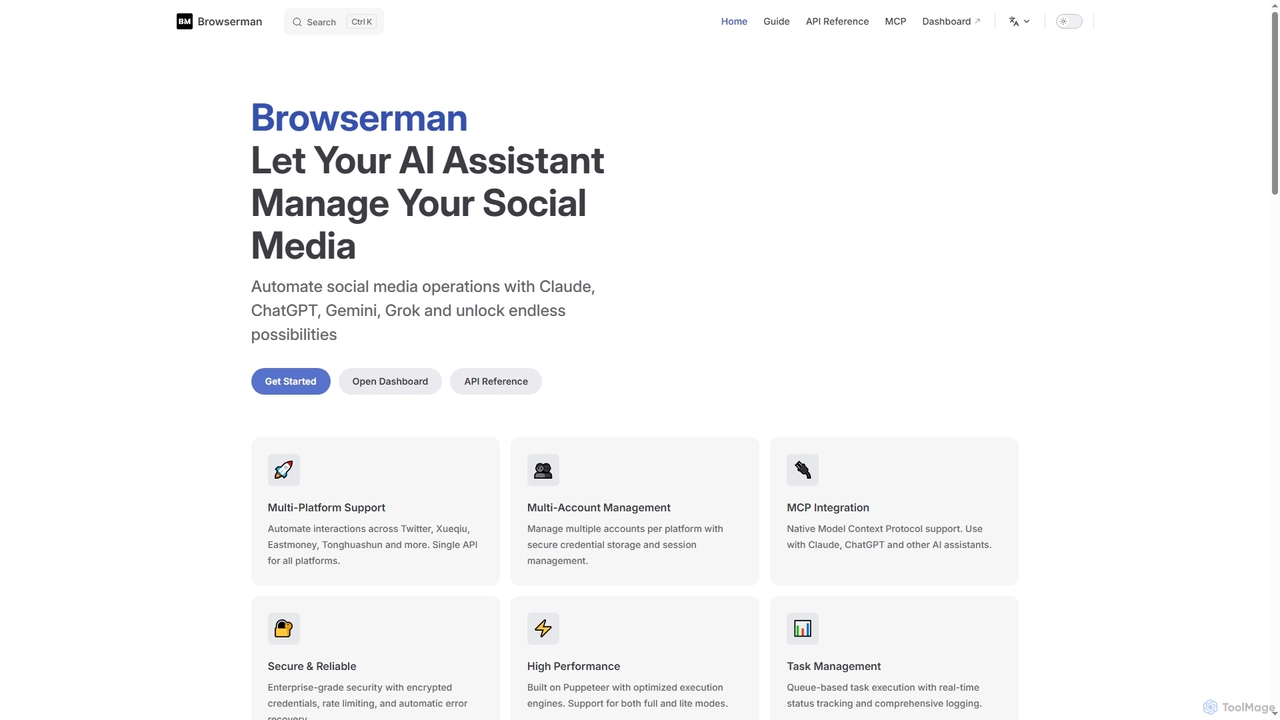
Browserman is an advanced browser automation platform designed to empower AI assistants like Claude, ChatGPT, Gemini, and Grok to manage social media operations. It offers multi-platform and multi-account support, a robust REST API, and native Model Context Protocol (MCP) integration for seamless, scalable, and secure automation workflows.

Integration
Visits 6KFavorites 143Likes 130

About Social Media Automation

Social Media Automation tools are AI-powered platforms designed to streamline and optimize tasks across various social media channels. These tools leverage artificial intelligence to automate content scheduling, posting, engagement, and analytics, freeing up marketers and businesses to focus on strategy. They enhance efficiency, maintain a consistent brand presence, and improve audience interaction by automating repetitive social media management activities, fitting within the broader category of digital automation.

Core Features

  • Automated Content Scheduling & Publishing: Schedule and publish posts across multiple platforms at optimal times.
  • AI-Powered Content Generation: Generate captions, hashtags, or even visual content ideas using AI.
  • Engagement Automation: Automate responses to comments, direct messages, or mentions.
  • Performance Analytics & Reporting: Track key metrics and generate automated reports on social media performance.
  • Audience Targeting & Segmentation: Identify and target specific audience segments for tailored campaigns.

Applicable Scenarios

Digital marketing agencies use these tools to efficiently manage numerous client accounts and campaigns. Small businesses leverage them to maintain an active online presence without needing dedicated social media staff. Large enterprises utilize them for consistent brand messaging and crisis management across global social channels, ensuring unified communication.

How to Choose

Consider the range of social media platforms supported, the depth of AI capabilities for content and engagement, and integration with other marketing tools. Evaluate scalability for your team size, the pricing model, and the robustness of analytics and reporting features. Prioritize ease of use and a clear return on investment for your specific social media goals.

Social Media Automation use cases

1

Automating Daily Content Posting

Marketing teams schedule a week's worth of posts across Instagram, Facebook, and X (formerly Twitter) in one go. The social media automation tool automatically publishes content at peak engagement times, ensuring a consistent brand presence without manual daily intervention. This saves hours of administrative work, allowing marketers to focus on campaign strategy and creative content development rather than repetitive tasks.

2

AI-Driven Engagement & Customer Service

Brands use social media automation tools to monitor social mentions and automatically respond to common customer queries or comments. AI analyzes sentiment and routes complex issues to human agents, while handling FAQs instantly. This improves response times, enhances customer satisfaction by providing quick and relevant information, and significantly reduces the workload on social media managers, allowing them to focus on high-value interactions.

3

Cross-Platform Content Repurposing

Content creators upload a long-form blog post or video, and the social media automation tool uses AI to generate multiple short-form captions, relevant hashtags, and image suggestions tailored for different platforms like LinkedIn, TikTok, and Instagram Stories. This maximizes content reach and efficiency, adapting content for diverse audiences and saving significant time in manual content adaptation for each platform.

4

Competitor Monitoring & Trend Analysis

Businesses deploy social media automation to track competitor activities, identify emerging industry trends, and monitor relevant keywords. The tool provides automated alerts and reports on competitor strategies, popular topics, and shifts in audience sentiment. This enables proactive adjustments to marketing campaigns and content strategy, ensuring the business remains competitive and responsive to market changes.

5

Influencer Outreach & Campaign Management

Marketing professionals use social media automation to identify potential influencers based on audience demographics and engagement rates. The tool can then automate initial outreach messages, track campaign performance, and manage communication workflows. This streamlines the entire process of building and managing influencer marketing campaigns, from discovery to performance analysis, saving time and ensuring consistent messaging.

6

Personalized Ad Campaign Optimization

Advertisers integrate social media automation with ad platforms to dynamically adjust ad creatives, targeting parameters, and bidding strategies based on real-time performance data. AI identifies underperforming ads or segments and suggests optimizations, leading to higher ROI and more efficient ad spend. This ensures ad campaigns are continuously optimized for maximum impact and cost-effectiveness without constant manual oversight.

Social Media Automation FAQ

What is Social Media Automation?

Social Media Automation refers to the use of software and AI tools to manage and execute social media tasks automatically. It typically involves scheduling posts, automating engagement, analyzing performance, and even generating content. The goal is to save time, maintain consistency, and optimize social media presence without constant manual effort, thereby enhancing overall digital marketing efficiency.

How does AI enhance Social Media Automation?

AI significantly enhances social media automation by enabling more intelligent and personalized interactions. AI algorithms can analyze audience data to suggest optimal posting times, generate relevant captions and hashtags, moderate comments, and even personalize responses to user inquiries. This moves beyond simple scheduling to strategic, data-driven social media management, making automation smarter and more effective.

What are the key benefits of using Social Media Automation tools?

The primary benefits include significant time savings by automating repetitive tasks, improved content consistency across platforms, enhanced audience engagement through timely and personalized interactions, and data-driven insights for better strategy. It also allows smaller teams to manage a larger social media presence effectively, leading to increased productivity and a stronger online brand presence.

How to choose the right Social Media Automation tool for my business?

When selecting a social media automation tool, consider your specific needs: the social platforms you use, your budget, desired automation level (scheduling vs. AI-driven engagement), analytics requirements, and team size. Look for features like multi-platform support, content creation assistance, robust analytics, and integration capabilities with other marketing tools to ensure it aligns with your overall digital strategy.

Is Social Media Automation ethical, and does it affect genuine engagement?

Social Media Automation, when used responsibly, is ethical and can enhance genuine engagement by freeing up time for more meaningful interactions. However, over-reliance on generic automated responses or spammy tactics can harm authenticity. The key is to use automation to streamline repetitive tasks and provide quick responses, allowing human intervention for deeper, personalized engagement and community building, ensuring a balance between efficiency and authenticity.