
ToolMage
Sign in

Best 1 Traffic Bot for Automation

Popular Traffic Bot in Automation include ClickSEO, helping you work more efficiently.

ClickSEO
Freemium

ClickSEO

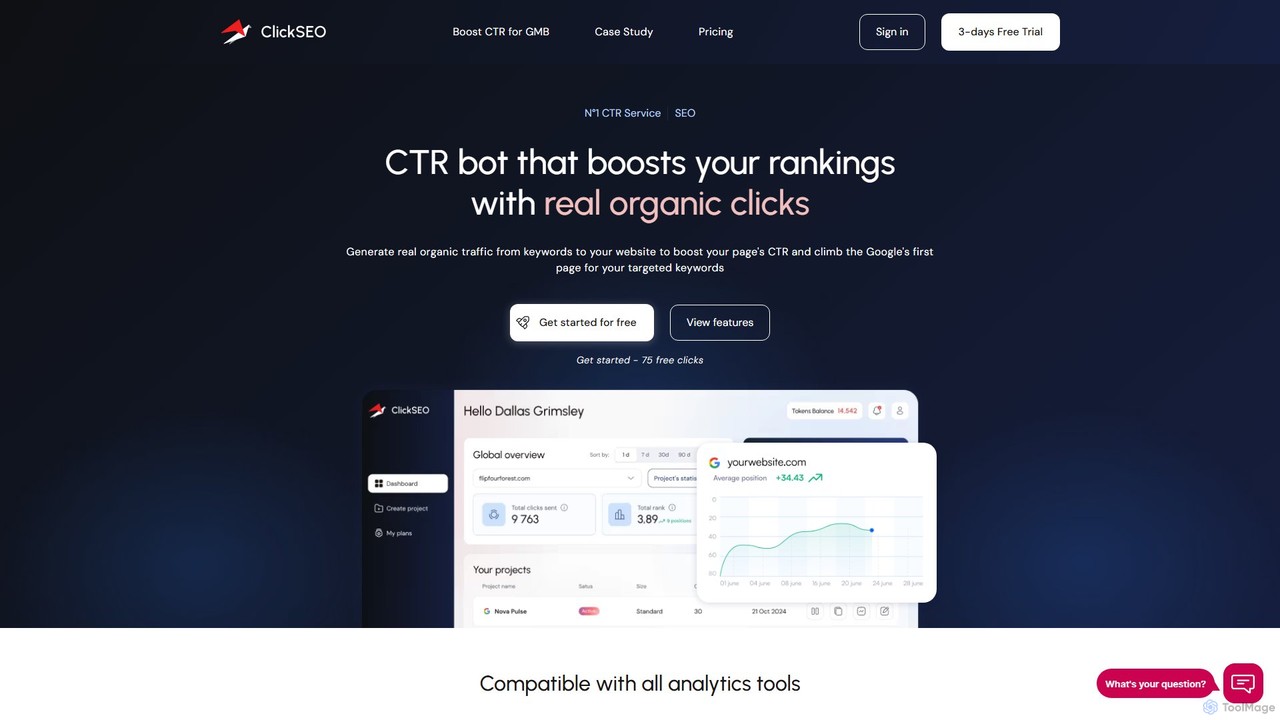
ClickSEO is an automated CTR (Click-Through Rate) bot designed to boost your website's SEO rankings. It generates real, geo-targeted organic traffic from specific keywords to your site, improving key metrics like CTR, dwell time, and bounce rate. It also supports Google My Business to enhance local SEO.

Traffic Bot
Visits 10.4KFavorites 143Likes 136

About Traffic Bot

Traffic Bots are AI-powered tools designed to simulate human user behavior on websites or applications. As a specialized sub-category within automation, these bots leverage advanced algorithms to mimic actions like page visits, clicks, scrolls, and form submissions. Their primary purpose is to generate artificial web traffic, perform automated testing, or gather specific data, offering scalable solutions for various digital tasks.

Core Features

  • Automated Browsing: Simulates realistic page views, clicks, and navigation paths across websites.
  • Behavioral Mimicry: Emulates human-like interaction patterns, including random delays, mouse movements, and scroll depths, to avoid detection.
  • Proxy Integration: Utilizes diverse IP addresses and VPNs to distribute traffic sources and enhance anonymity.
  • Custom Scripting: Allows users to define complex interaction flows and specific actions for tailored automation tasks.
  • Data Extraction: Capable of navigating and collecting specific information from web pages during automated sessions.

Applicable Scenarios

Traffic Bots are widely used in digital marketing, web development, and competitive analysis. They are essential for website performance testing, where simulating high user loads helps identify bottlenecks. In SEO, they can be used to analyze ranking factors or simulate user engagement. Businesses also employ them for ad campaign validation and gathering competitive intelligence by monitoring competitor websites.

How to Choose

When selecting a Traffic Bot, prioritize tools that offer sophisticated behavioral mimicry to ensure realistic interactions and avoid detection. Evaluate its scalability to handle your required traffic volume and its proxy integration capabilities for anonymity. Customization options for scripting complex user journeys and comprehensive reporting features for analyzing bot activity are also crucial for effective deployment.

Traffic Bot use cases

1

Website Load and Performance Testing

Web developers and QA engineers use Traffic Bots to simulate thousands of concurrent users visiting a website. This helps stress-test server infrastructure, identify performance bottlenecks, and ensure the site can handle high traffic volumes before launch or during peak periods, preventing crashes and improving user experience.

2

SEO Ranking and Engagement Simulation

Digital marketers employ Traffic Bots to simulate organic search traffic and user engagement on specific web pages. By generating realistic page views, clicks from search results, and time spent on page, these bots can help analyze how search engine algorithms might interpret user behavior signals, potentially influencing SEO rankings.

3

Ad Campaign Validation and Fraud Detection

Advertisers and ad agencies utilize Traffic Bots to validate the legitimacy of ad impressions and clicks. They can simulate bot traffic to test ad network defenses against fraud or, conversely, generate controlled impressions to verify ad delivery and visibility, ensuring campaign budgets are spent effectively on real human engagement.

4

Competitive Website Monitoring and Intelligence

Market researchers and business strategists deploy Traffic Bots to automatically visit and navigate competitor websites. This allows for continuous monitoring of price changes, new product launches, content updates, or promotional offers, providing valuable competitive intelligence without manual, time-consuming effort.

5

Automated Data Scraping and Collection

Data analysts and researchers use Traffic Bots to automate the process of navigating complex websites and extracting specific data points. Unlike simple scrapers, these bots can mimic human interaction to bypass anti-bot measures, fill forms, and access dynamic content, collecting large datasets for market analysis or research projects.

6

User Journey and UX Testing

UX designers and product managers leverage Traffic Bots to simulate various user paths and interactions through a website or application. This helps in identifying broken links, navigation issues, or usability problems across different scenarios, ensuring a smooth and intuitive user experience for actual visitors.

Traffic Bot FAQ

What are Traffic Bots?

Traffic Bots are automated software programs designed to simulate human user activity on websites, applications, or online platforms. They are a subset of automation tools that generate artificial traffic by performing actions like page visits, clicks, form submissions, and content interactions, often mimicking human behavior patterns.

How do Traffic Bots work?

Traffic Bots operate by sending automated requests to web servers, simulating browser interactions, or using headless browsers to mimic a real user. They can be programmed to follow specific navigation paths, click on elements, fill out forms, and often integrate with proxy networks to use different IP addresses, making their activity appear diverse and harder to detect as non-human.

What are the main applications of Traffic Bots?

Traffic Bots have several key applications, including website load testing to assess server capacity, SEO analysis and engagement simulation to understand ranking factors, ad campaign validation to detect fraud, competitive intelligence gathering by monitoring competitor sites, and automated data scraping for market research. They are versatile tools for various digital tasks.

Are Traffic Bots legal and ethical to use?

The legality and ethics of Traffic Bots depend heavily on their intended use. Legitimate uses include website testing, performance monitoring, and ethical competitive analysis. However, using them for malicious purposes like ad fraud, DDoS attacks, or artificially inflating website metrics without disclosure is generally illegal and unethical, violating terms of service and potentially laws.

How do I choose a reliable Traffic Bot tool?

When selecting a Traffic Bot tool, consider its ability to mimic human behavior realistically, including random delays and mouse movements, to avoid detection. Look for robust proxy integration for diverse IP addresses, flexible custom scripting options for complex tasks, and comprehensive reporting features to analyze bot activity. Scalability and ease of use are also important factors for effective deployment.