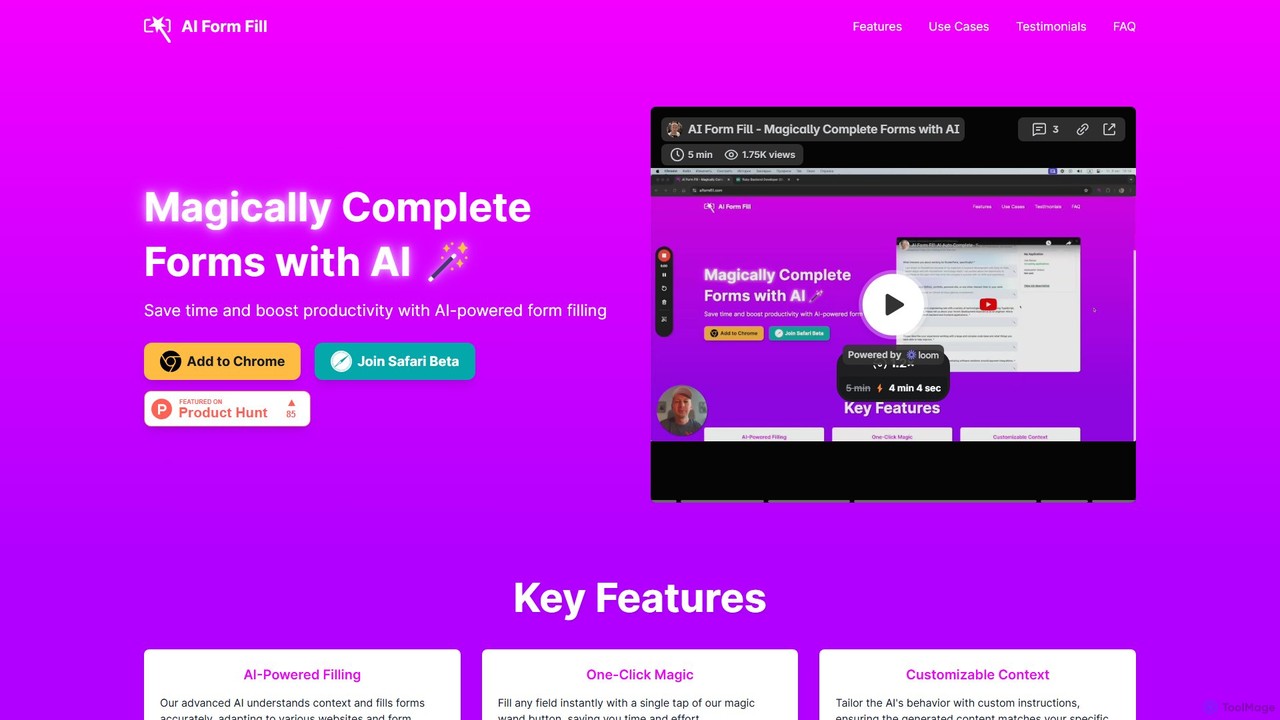
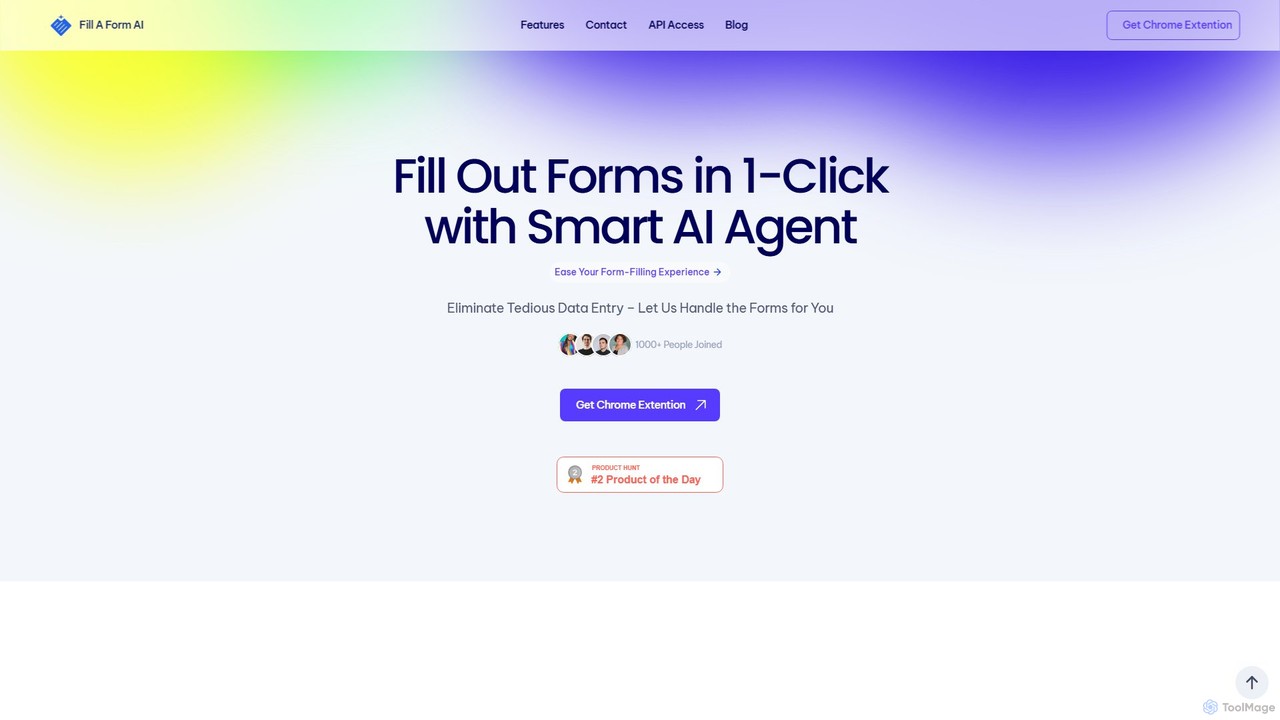
Form Filler tools are a type of browser extension that uses AI to automatically and intelligently complete web forms. These tools analyze the structure and labels of a form to accurately identify fields for names, addresses, emails, and payment information, populating them instantly from a user's securely stored profile. This significantly speeds up repetitive data entry tasks, such as online checkouts, registrations, and applications, while minimizing typos and errors. Their primary advantage over standard browser autofill is superior accuracy on complex or non-standard forms.
Core Features
- AI-Powered Field Recognition: Intelligently identifies form fields based on context and labels, even on custom-designed websites.
- Secure Profile Management: Allows users to create and securely store multiple profiles (e.g., personal, work, different addresses) with strong encryption.
- One-Click Completion: Fills out entire multi-page forms with a single command, saving considerable time.
- Custom Field Support: Enables saving and auto-filling non-standard information specific to certain websites or industries.
- Cross-Device Synchronization: Keeps profiles and settings synced across different browsers and devices for a consistent experience.
Use Cases
Form Fillers are widely used by individuals and professionals who frequently interact with online forms. Key users include e-commerce shoppers completing checkout processes, job seekers submitting numerous applications, digital marketers filling out lead generation forms, and software testers using various data sets to test registration flows. They are invaluable for any task that involves repetitive data entry on the web.
How to Choose
When selecting a Form Filler, consider the following: First, evaluate its security model, ensuring it uses strong, client-side encryption to protect your data. Second, check its compatibility with the browsers and websites you use most often. Third, assess the accuracy of its AI field recognition on various form types. Finally, consider its profile management capabilities—does it support the complexity and number of identities you need to manage?