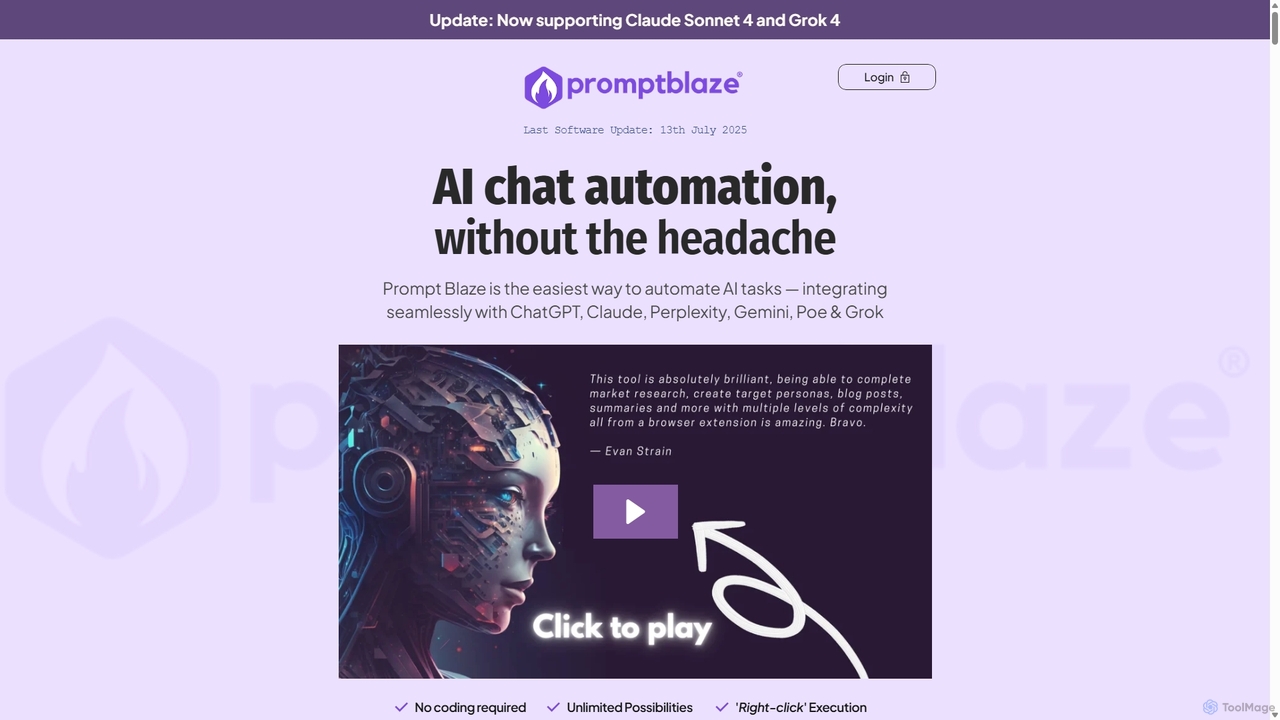
Prompt Engineering tools are specialized AI-powered solutions designed to optimize and refine the inputs, known as prompts, given to artificial intelligence models. These tools, often available as browser extensions, empower users to craft highly effective prompts that elicit precise, high-quality, and desired outputs from large language models (LLMs) and other generative AI systems. By providing structured frameworks and intelligent suggestions, they streamline the often-iterative process of prompt creation, significantly enhancing efficiency, consistency, and the overall performance of AI interactions across various applications.
Core Features
- Prompt Templates: Offers a library of pre-defined, optimized prompt structures tailored for common tasks, industries, and specific AI models, accelerating the initial prompt creation process and ensuring best practices.
- Optimization Suggestions: Provides real-time feedback, linguistic analysis, and intelligent recommendations to improve prompt clarity, specificity, and overall effectiveness, helping users avoid ambiguity and achieve better results.
- Version Control & Management: Enables users to track, save, and manage different iterations of prompts, facilitating A/B testing, performance comparison, and easy rollback to previous successful versions for continuous improvement.
- Output Analysis & Refinement: Integrates features to help evaluate AI responses based on prompt variations, offering insights into how different prompt elements influence the output quality and guiding users to refine their prompts for superior results.
- Seamless Integration: Many tools, especially those functioning as browser extensions, integrate directly into popular web-based AI interfaces, content management systems, or development environments, enabling in-context prompt engineering without disrupting the workflow.
Use Cases
Prompt Engineering tools are invaluable for professionals across diverse domains seeking to maximize AI utility. Content creators leverage them to generate consistent, engaging, and SEO-optimized text for blogs, articles, and marketing materials. Marketers refine prompts for compelling ad copy, social media posts, and email campaigns that resonate with target audiences. Developers utilize these tools for more accurate code generation, efficient debugging, and understanding complex algorithms. Researchers benefit by crafting precise queries for data summarization, literature reviews, and identifying key insights from vast datasets, ensuring AI outputs meet specific academic and analytical standards.
How to Choose
When selecting a Prompt Engineering tool, consider its integration capabilities with your existing browsers, AI platforms, and workflow. Evaluate the breadth and quality of its prompt templates and the sophistication of its optimization features, such as real-time suggestions and linguistic analysis. Assess its version control and collaboration functionalities if working in a team. Furthermore, examine the ease of use, the intuitiveness of its user interface, and the availability of community support or shared prompt libraries to ensure the tool aligns perfectly with your technical proficiency and specific operational needs.