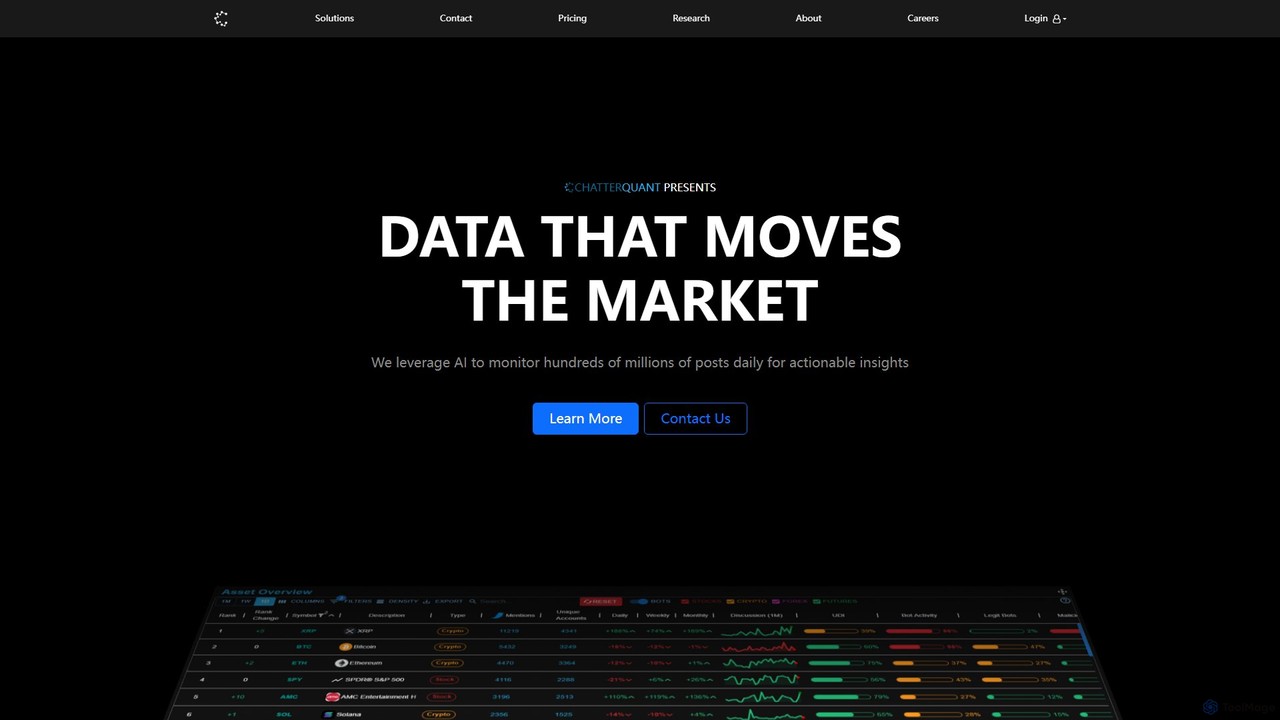
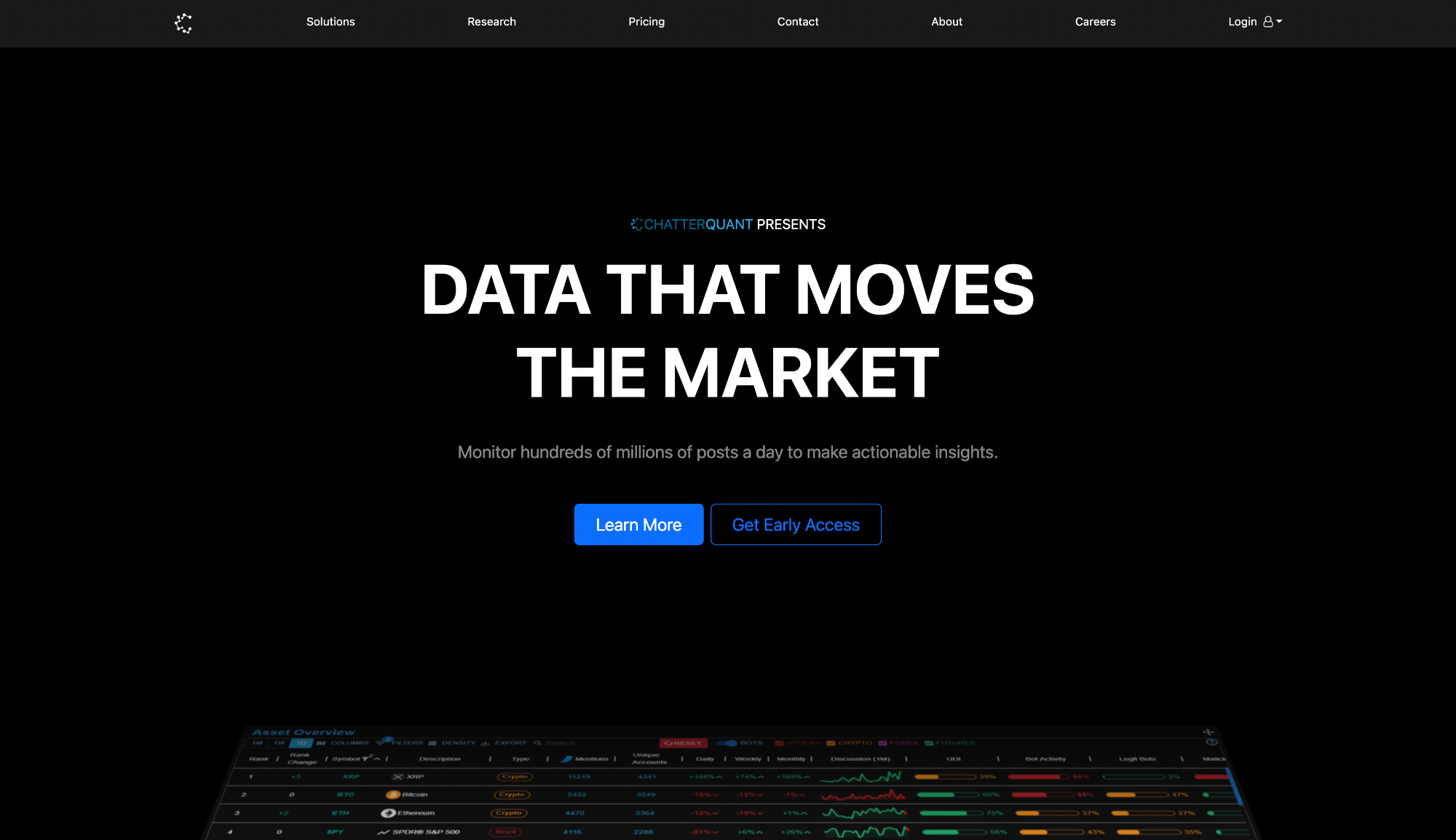
Alternative Data tools are AI-powered platforms designed to collect, process, and analyze non-traditional data sources for predictive insights. These tools utilize machine learning and NLP to extract valuable signals from vast, unstructured datasets like satellite imagery, web traffic, social media sentiment, and credit card transactions. They provide investors, analysts, and businesses with unique, real-time intelligence that is not available through conventional financial reports. This enables earlier trend detection, a more comprehensive market view, and a significant competitive edge in decision-making.
Core Features
- Data Source Aggregation: Connects to and ingests data from diverse sources like web scraping, satellite feeds, and social APIs.
- Unstructured Data Processing: Uses AI to structure and analyze text, images, geolocation data, and other complex formats.
- Predictive Signal Extraction: Identifies patterns and correlations that indicate future company performance or market shifts.
- Insight Visualization: Presents complex data findings through intuitive dashboards, heatmaps, and trend charts.
- API Access: Provides programmatic access to processed data and insights for integration into proprietary models.
Applicable Scenarios
These tools are predominantly used in the finance and investment sectors, including hedge funds and asset management firms, for generating alpha. They are also increasingly adopted in corporate strategy, market research, and supply chain management to monitor competitors, understand consumer behavior, and anticipate operational disruptions.
Selection Criteria
When choosing an Alternative Data tool, evaluate the breadth, depth, and historical availability of its data sources. Assess the sophistication of its AI models for signal extraction and the robustness of its API for integration. Crucially, verify that the data is sourced ethically and complies with privacy regulations like GDPR and CCPA.