ToolMage
Sign in

Best 1 Crm Enrichment AI tools for Data

Popular Crm Enrichment AI tools in Data include Highperformr, helping you work more efficiently.

Highperformr
Freemium

Highperformr

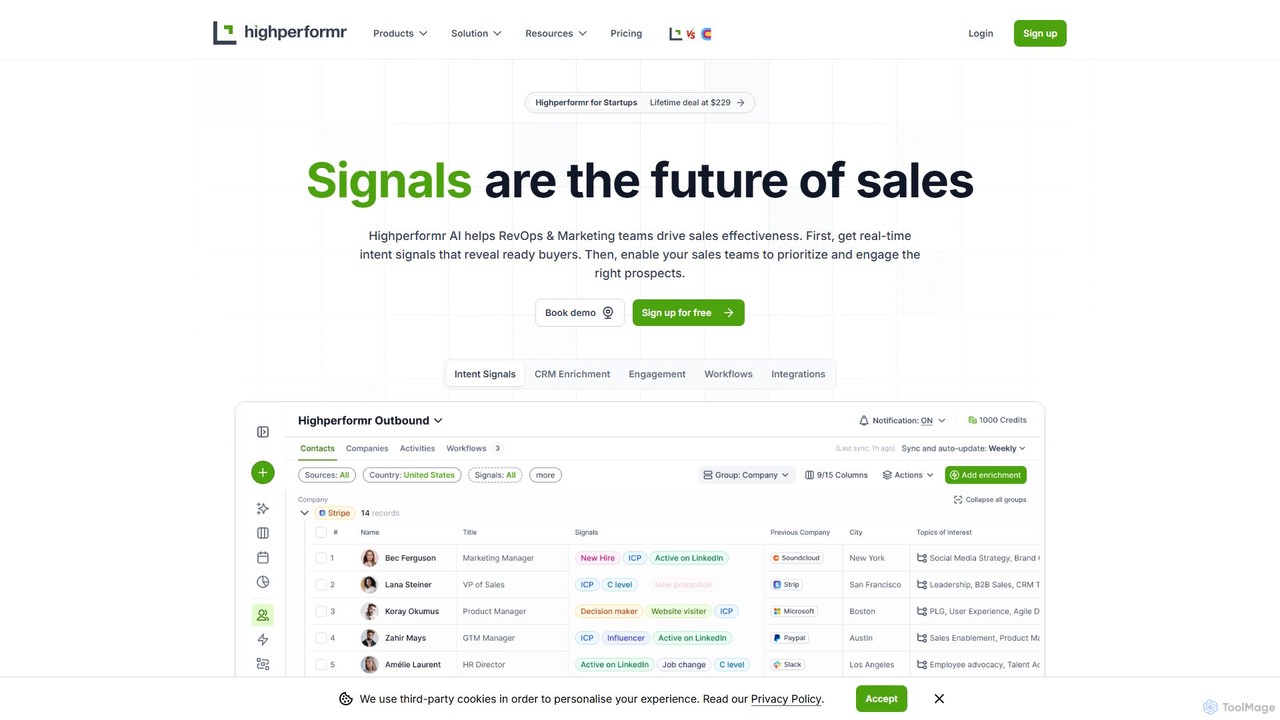
Highperformr is an AI-powered GTM intelligence platform that helps B2B sales, marketing, and RevOps teams identify ready-to-buy prospects through real-time intent signals. It enriches your CRM, automates workflows, and enables targeted outreach to boost sales effectiveness and accelerate growth.

Crm Enrichment
Visits 168.4KFavorites 121Likes 119

About Crm Enrichment

CRM Enrichment tools are a class of AI-powered software that automatically update and augment contact and company records within your Customer Relationship Management (CRM) system. By cross-referencing your existing data with vast external databases, these tools fill in missing information like job titles, company size, social profiles, and technology stacks. This process transforms incomplete contact lists into comprehensive, actionable customer profiles, enabling more effective sales and marketing strategies. The core value lies in providing the context needed for personalized communication and accurate lead qualification.

Core Features

  • Data Append: Automatically adds missing data points such as phone numbers, email addresses, and industry information to existing records.
  • Firmographic & Technographic Data: Provides detailed company information, including revenue, employee count, location, and the software technologies they use.
  • Contact Verification: Validates email addresses and phone numbers in real-time to reduce bounce rates and improve data hygiene.
  • Lead Scoring Enhancement: Supplies key data attributes that can be used to automatically score and prioritize incoming leads based on ideal customer profiles.
  • Social Profile Integration: Finds and links professional social media profiles (like LinkedIn) to contact records for deeper insights.

Use Cases

These tools are widely used by sales development representatives (SDRs), marketing operations teams, and account managers. For instance, a sales team can use it to enrich a list of inbound leads before outreach to personalize their messaging. Marketing teams leverage it to segment their audience for targeted campaigns, while data administrators use it for routine database cleansing and maintenance.

How to Choose

When selecting a CRM Enrichment tool, consider the quality and source of their data, as data accuracy is paramount. Evaluate its integration capabilities with your existing CRM (e.g., Salesforce, HubSpot). Also, assess the breadth of data points offered and whether they align with your business needs. Finally, compare pricing models—whether it's per-record, subscription-based, or API usage—and ensure compliance with data privacy regulations like GDPR and CCPA.

Crm Enrichment use cases

1

Enhancing Sales Prospecting with Actionable Data

A Sales Development Representative (SDR) receives a new inbound lead with only a name and email address. Before making contact, the SDR uses a CRM Enrichment tool integrated with their Salesforce. The tool automatically appends the lead's job title, company name, industry, employee count, and a link to their LinkedIn profile. Armed with this context, the SDR can tailor their outreach email to address the lead's specific role and industry pain points, significantly increasing the chances of getting a response compared to a generic message. This process turns a cold lead into a warm, informed conversation starter.

2

Automating Lead Scoring and Routing

A marketing operations manager sets up an automated workflow in their marketing automation platform (e.g., HubSpot). When a new lead fills out a form, a CRM Enrichment tool is triggered via API. The tool fetches the lead's company size and industry. The workflow is configured to automatically assign a higher score to leads from companies with over 500 employees in the technology sector. These high-value leads are then instantly routed to the enterprise sales team's queue, while smaller leads are placed in a nurturing sequence. This automation ensures that the most promising leads receive immediate attention, shortening the sales cycle.

3

Personalizing Customer Onboarding Experiences

A Customer Success Manager (CSM) is assigned a new client. To prepare for the kickoff call, the CSM uses an enrichment tool to get a full picture of the client's company and the key stakeholder's role. The tool reveals the company's recent funding rounds, their primary technology stack, and the stakeholder's previous experience at another company. During the call, the CSM can reference this information to build rapport and tailor the onboarding plan to the client's specific technical environment and business goals. This proactive, informed approach leads to a smoother onboarding process and higher initial customer satisfaction.

4

Executing Targeted Account-Based Marketing (ABM) Campaigns

An ABM team identifies a list of 50 target enterprise accounts. Their CRM only contains the company names. They use an enrichment tool to populate these accounts with key data points, including industry, annual revenue, and the technologies they use. More importantly, the tool identifies and adds contact information for key decision-makers (e.g., VPs of Engineering, CMOs) within those accounts. The marketing team can then create highly personalized ad campaigns and content tailored to the specific industry and challenges of each account, while the sales team has a direct list of relevant people to contact, making the ABM strategy far more effective.

5

Maintaining CRM Data Hygiene and Accuracy

A data administrator for a large corporation is tasked with cleaning an aging CRM database with thousands of contacts. Many contacts have changed jobs or their companies have been acquired. Instead of a manual, time-consuming audit, the administrator runs a batch enrichment process on the entire database. The tool flags invalid email addresses for removal, updates job titles and company information for contacts who have moved, and appends new information to incomplete records. This periodic cleansing, performed quarterly, ensures the sales and marketing teams are working with accurate, up-to-date information, improving campaign effectiveness and preventing wasted effort.

6

Improving Marketing Campaign Segmentation

A marketing team wants to launch a new feature targeted at companies in the SaaS industry with 50-200 employees. Their current CRM data lacks reliable industry and employee count information. They use an enrichment tool to process their entire contact list. After enrichment, they can easily create a dynamic list of all contacts that match the specific criteria. This allows them to send a highly relevant email campaign and run targeted social media ads exclusively to this segment, resulting in higher engagement rates, better quality leads, and a more efficient use of their marketing budget compared to a broad, untargeted campaign.

Crm Enrichment FAQ

What is CRM Enrichment?

CRM Enrichment is the process of using third-party software to automatically add, update, and augment data within your Customer Relationship Management (CRM) system. It takes basic contact information (like an email or name) and appends it with valuable data points from external sources. This typically includes firmographic data (company size, industry, revenue), demographic data (job title, location), and technographic data (what software the company uses). The primary goal is to transform incomplete records into rich, comprehensive profiles to support sales, marketing, and customer service efforts.

How to choose the right CRM Enrichment tool?

Choosing the right tool depends on several key factors. First, evaluate the data quality and coverage; check their data sources and accuracy rates. Second, consider the integration capabilities with your existing CRM and marketing automation platforms. Third, assess the specific data points you need—do you require basic firmographics or more advanced data like buying intent signals and technographics? Finally, compare pricing models (per-record vs. subscription) and ensure the provider complies with data privacy regulations like GDPR and CCPA.

What's the difference between CRM Enrichment and a contact database?

The main difference lies in their function and application. A contact database is a static list of contacts that you purchase or build to find new leads. CRM Enrichment, on the other hand, is a dynamic process that works on your *existing* data. It takes the contacts you already have in your CRM and adds more information to them. While a database helps with lead generation (quantity), enrichment focuses on lead qualification and data quality (quality), making your current database more valuable and actionable.

What kind of data can CRM Enrichment tools provide?

CRM Enrichment tools can provide a wide range of data, typically categorized as follows:

  • Firmographic Data: Information about a company, such as industry, company size (employee count), annual revenue, location, and founding date.
  • Demographic Data: Information about an individual contact, including job title, seniority level, location, and professional social media profiles.
  • Technographic Data: Insights into the technology stack a company uses, such as their CRM, marketing automation platform, or cloud provider.
  • Intent Data: Signals that indicate a company or contact might be actively looking to buy a product or service, based on their online behavior.

Is using CRM Enrichment tools compliant with privacy regulations like GDPR?

Compliance is a critical consideration. Reputable CRM Enrichment providers are aware of regulations like GDPR and CCPA and typically source their data from publicly available or ethically licensed sources, such as company websites, public filings, and professional networks. They often provide features to help you manage compliance. However, the ultimate responsibility lies with you, the data controller. It is essential to choose a provider that is transparent about their data sources and to ensure your use of the enriched data aligns with your company's privacy policy and all applicable laws.