Data Best in category 3 results Integration AI Tool

Popular AI tools in the Integration field of Data include Boost.space、boltic、Peaka, etc., helping you quickly improve efficiency.

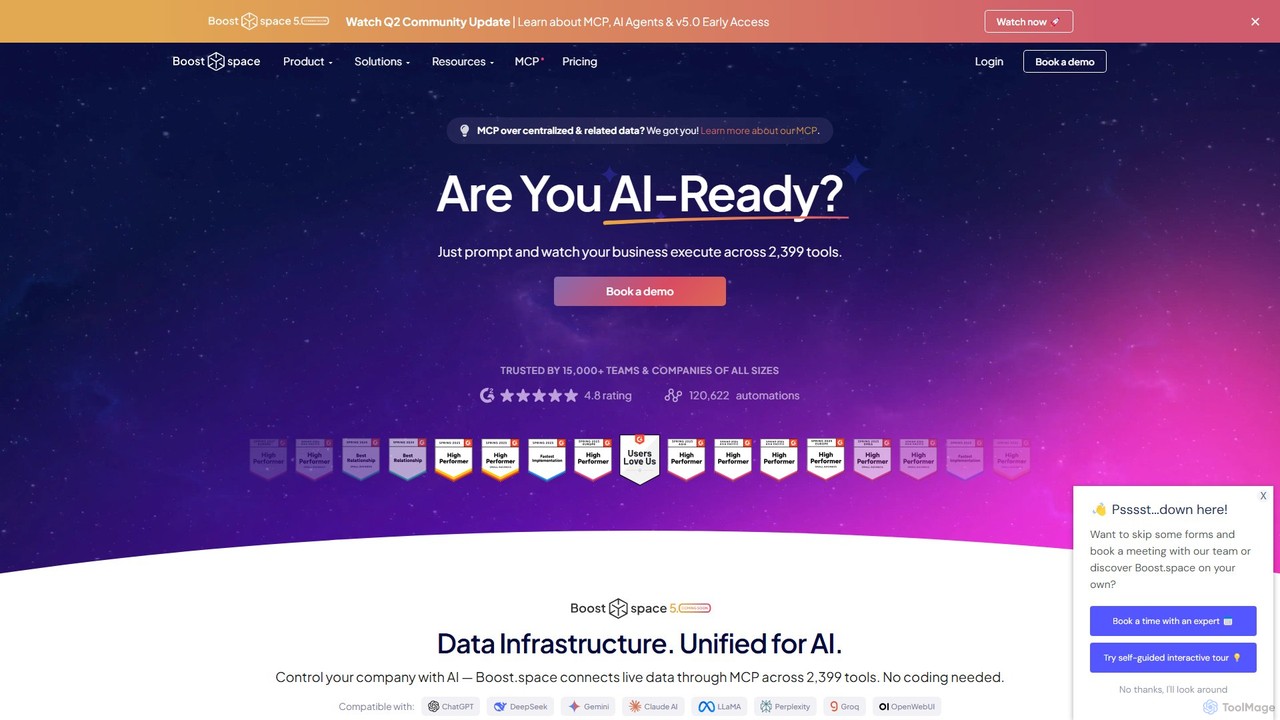
Boost.space

Boost.space

Boost.space is the first AI-ready data synchronization platform that unifies data from over 2,399 tools. It provides a …

113.7K
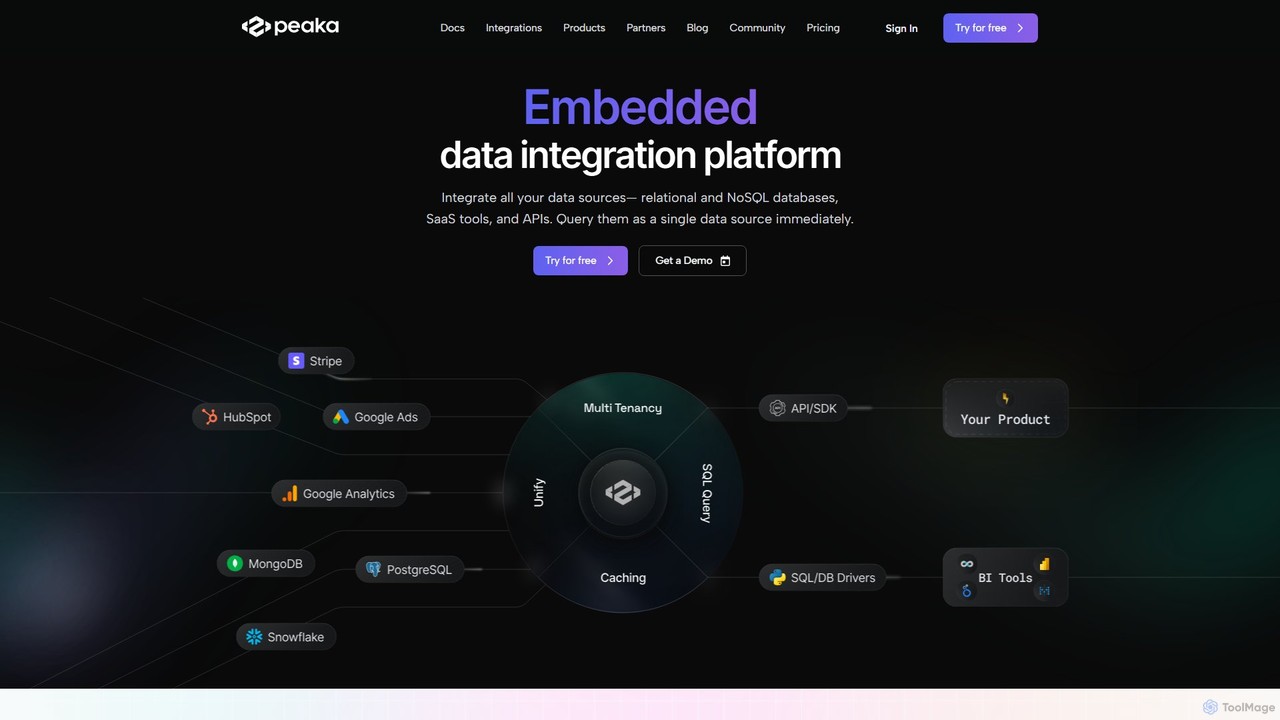
Peaka

Peaka

Peaka is a zero-ETL data integration platform that unifies disparate data sources like databases, SaaS tools, and APIs …

7.6K
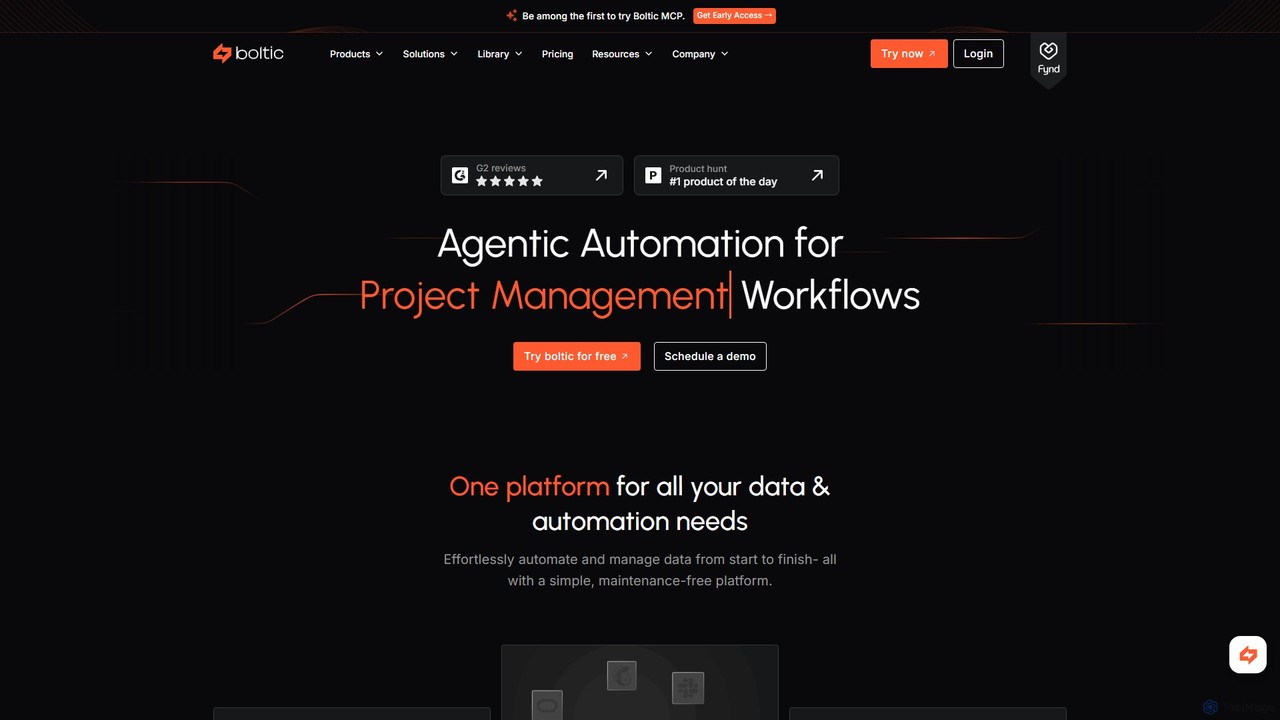
boltic

boltic

Boltic is an enterprise-grade, no-code data platform that automates workflows and integrates disparate data sources. It empowers businesses …

18.0K

About Integration

AI Integration tools are specialized platforms designed to seamlessly connect disparate applications, data sources, and AI models. These tools leverage artificial intelligence to automate data mapping, workflow orchestration, and real-time information exchange, enabling businesses to unify their digital ecosystem and enhance operational efficiency. They are crucial for building cohesive AI-driven solutions within the broader data management landscape.

Core Features

  • API Orchestration: Manages and automates complex interactions between multiple APIs, streamlining data flow and service calls.
  • Intelligent Data Mapping: Uses AI to automatically identify, transform, and map data fields between different systems, reducing manual effort.
  • Workflow Automation: Designs and executes automated sequences of tasks across various applications, triggered by specific events or schedules.
  • Real-time Synchronization: Ensures data consistency across connected systems by updating information instantly as changes occur.
  • Connector Libraries: Provides pre-built connectors for popular business applications, databases, and cloud services, simplifying setup.

Applicable Scenarios

Businesses needing to connect their CRM system with an AI-powered analytics platform to gain deeper customer insights. Developers integrating custom machine learning models into existing enterprise resource planning (ERP) software. Marketing teams automating data transfer between advertising platforms and customer data platforms for unified campaign management.

How to Choose

When selecting an AI Integration tool, evaluate its compatibility with your existing tech stack and the breadth of its pre-built connectors. Consider its scalability to handle growing data volumes and transaction loads, as well as its ease of use, particularly if your team has limited coding expertise. Security features, compliance certifications, and the pricing model based on usage or connectors are also critical factors.

IntegrationUse Cases

1

Automating Customer Support Workflows

Customer service departments can integrate their CRM system with an AI chatbot platform and a knowledge base. When a customer query arrives, the AI integration tool routes it to the chatbot, which accesses the knowledge base for answers. If escalation is needed, the tool creates a ticket in the CRM, pre-populating details, ensuring seamless handoff and faster resolution times.

2

Synchronizing Marketing Data Across Platforms

Marketing teams often use multiple tools for advertising, analytics, and customer relationship management. An AI integration solution can automatically pull campaign performance data from ad platforms (e.g., Google Ads, Facebook Ads), combine it with website analytics, and push unified customer profiles into a CRM. This provides a holistic view of customer journeys and campaign effectiveness.

3

Integrating Custom AI Models into Enterprise Applications

Data science teams develop specialized AI models for tasks like fraud detection or personalized recommendations. AI integration tools enable these models to be seamlessly embedded into existing enterprise applications (e.g., banking systems, e-commerce platforms). This allows real-time predictions or insights generated by the AI to directly influence operational decisions without extensive recoding.

4

Building Real-time Data Pipelines for Business Intelligence

Business analysts require up-to-date data from various sources for dashboards and reports. AI integration tools can establish real-time data pipelines, collecting information from transactional databases, IoT devices, and external APIs. The data is automatically transformed and loaded into a data warehouse or BI platform, providing immediate insights for strategic decision-making.

5

Connecting IoT Devices with Cloud AI Services

In smart manufacturing or smart city initiatives, numerous IoT devices generate vast amounts of sensor data. An AI integration platform can connect these devices to cloud-based AI services for real-time anomaly detection, predictive maintenance, or environmental monitoring. This enables proactive responses and optimizes resource utilization based on continuous data streams.

6

Streamlining Content Creation and Publishing

Content creators can integrate AI writing assistants, image generators, and translation tools with their Content Management System (CMS) or social media schedulers. The integration automates the transfer of AI-generated text and images, facilitates multi-language content deployment, and schedules posts, significantly reducing manual copy-pasting and accelerating content workflows.

IntegrationFrequently Asked Questions