Data Best in category 2 results Market Analysis AI Tool

Popular AI tools in the Market Analysis field of Data include BTCAura、memecoinseason, etc., helping you quickly improve efficiency.

Free
BTCAura

BTCAura

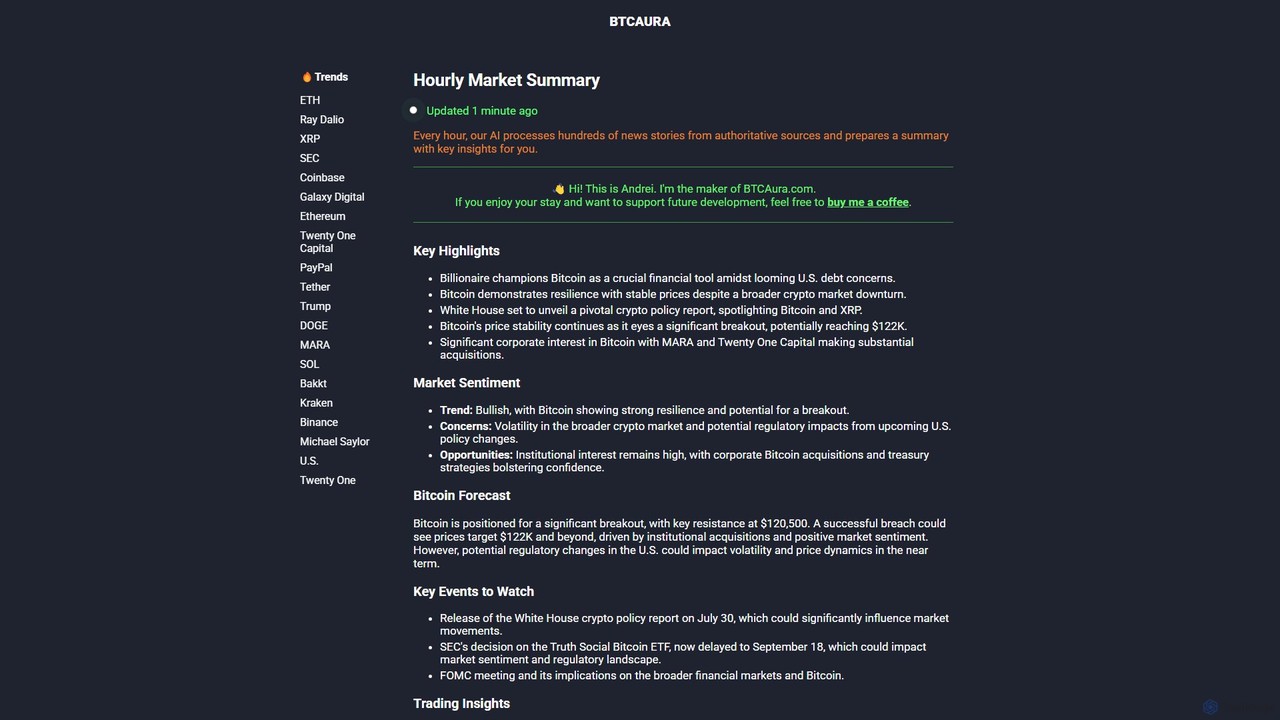
BTCAura is an AI-powered news aggregator for Bitcoin. It processes hundreds of news stories from top sources to …

2.3K
memecoinseason

memecoinseason

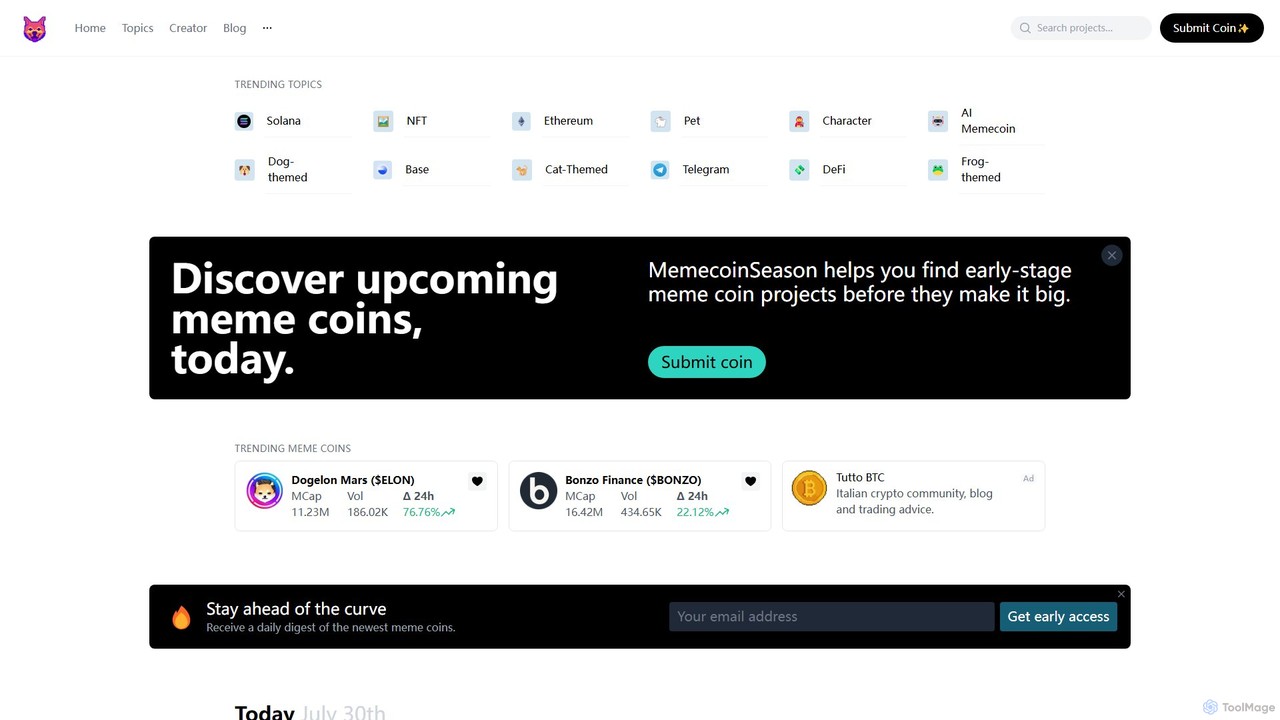
A discovery platform for early-stage meme coins and presales. Memecoinseason helps crypto enthusiasts and investors find promising microcap …

2.3K

About Market Analysis

Market Analysis tools are AI-powered platforms designed to collect, process, and interpret vast amounts of market data. Leveraging advanced algorithms, they provide actionable insights into market trends, competitor strategies, and consumer behavior. These tools empower businesses to make data-driven decisions, offering a specialized focus within the broader 'Data' category by transforming raw information into strategic intelligence.

Core Features

  • Competitor Benchmarking: Automatically track and analyze competitor pricing, product offerings, marketing campaigns, and market share to identify strengths and weaknesses.
  • Trend Prediction: Utilize historical data and machine learning models to forecast future market trends, consumer demand shifts, and emerging opportunities.
  • Consumer Sentiment Analysis: Analyze social media, reviews, and online discussions to gauge public opinion and emotional responses towards brands, products, or services.
  • Market Segmentation: Identify and categorize distinct customer groups based on demographics, behavior, and preferences to tailor marketing efforts and product development.
  • Pricing Optimization: Analyze market demand, competitor pricing, and cost structures to recommend optimal pricing strategies for products and services.

Applicable Scenarios

These tools are indispensable for marketing teams seeking to understand their target audience deeply and for product managers aiming to align new offerings with market demand. Business strategists use them to identify growth opportunities and mitigate risks, while sales teams leverage insights to refine targeting and messaging. They are crucial for any organization needing to make informed decisions based on dynamic market conditions.

How to Choose

When selecting an AI Market Analysis tool, consider its data integration capabilities with your existing systems (CRM, ERP), the breadth and depth of its analytical features (e.g., sentiment analysis, predictive modeling), and the clarity of its reporting and visualization dashboards. Evaluate the accuracy of its predictions, the ease of use for your team, and the scalability of the solution to grow with your business needs. Finally, assess the pricing model against your budget and the level of customer support offered.

Market AnalysisUse Cases

1

Identifying Emerging Market Opportunities

A business development manager uses AI market analysis tools to scan global news, patent filings, and research papers for early signals of new technologies or consumer needs. By analyzing unstructured data and identifying weak signals, the tool helps pinpoint nascent markets or underserved niches before competitors, enabling the company to strategically invest in new product lines or expand into promising regions, potentially securing a first-mover advantage.

2

Optimizing Product Launch Strategies

A product marketing team employs AI market analysis to gauge public sentiment and competitive reactions to pre-launch announcements or beta tests. The tool analyzes social media buzz, forum discussions, and news articles to identify key concerns, feature requests, or potential marketing message misinterpretations. This allows the team to refine their product messaging, adjust pricing, or even tweak features before the official launch, maximizing market acceptance and minimizing negative reception.

3

Monitoring Brand Reputation and Public Perception

A corporate communications specialist utilizes AI market analysis to continuously monitor online mentions, news coverage, and social media conversations related to their brand. The tool provides real-time alerts on sentiment shifts, identifies key influencers discussing the brand, and flags potential PR crises. This enables proactive reputation management, allowing the specialist to quickly respond to negative feedback, amplify positive stories, and maintain a favorable public image.

4

Analyzing Competitor Strategies and Market Share

A strategic analyst in a competitive industry uses AI market analysis to gain a comprehensive view of competitor activities. The tool aggregates data from financial reports, news releases, product reviews, and social media to map out competitor product launches, pricing changes, marketing spend, and customer satisfaction. This allows the analyst to identify competitive threats, benchmark their own performance, and formulate defensive or offensive strategies to maintain or gain market share.

5

Personalizing Marketing Campaigns with Consumer Insights

A digital marketing manager leverages AI market analysis to deeply understand customer segments and their preferences. The tool processes vast amounts of behavioral data, purchase history, and online interactions to create detailed customer personas and predict future purchasing patterns. This insight allows the manager to craft highly personalized marketing messages, recommend relevant products, and target specific demographics with tailored campaigns, significantly improving conversion rates and customer engagement.

6

Forecasting Sales and Demand for Inventory Management

A supply chain manager uses AI market analysis to predict future sales volumes and demand fluctuations. By integrating external market data (e.g., economic indicators, seasonal trends, competitor promotions) with internal sales data, the tool provides highly accurate forecasts. This enables the manager to optimize inventory levels, reduce stockouts and overstocking, streamline procurement, and improve overall supply chain efficiency, leading to significant cost savings and improved customer satisfaction.

Market AnalysisFrequently Asked Questions