Data Best in category 1 results Optical Character Recognition AI Tool

Popular AI tools in the Optical Character Recognition field of Data include GetSearchablePDF, etc., helping you quickly improve efficiency.

GetSearchablePDF

GetSearchablePDF

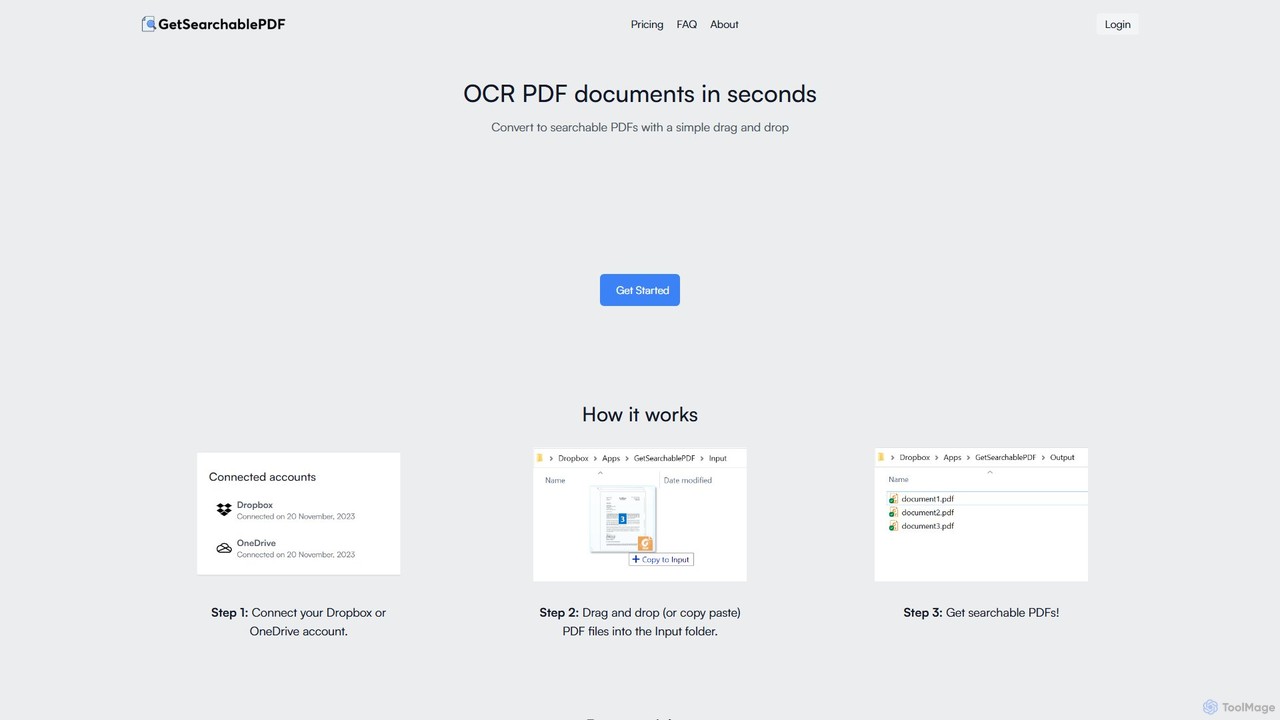
GetSearchablePDF is an AI-powered OCR tool that effortlessly converts scanned documents, images, and even handwritten notes into fully …

4.6K

About Optical Character Recognition

Optical Character Recognition (OCR) tools are a class of software that converts images of typed, handwritten, or printed text into machine-readable text data. These tools use AI, computer vision, and pattern recognition to identify characters and words within images, PDFs, or scanned documents. The primary value of OCR is in automating data entry, digitizing physical archives, and making text content within images searchable and editable. Modern OCR systems can also understand complex layouts, tables, and forms, extracting structured information efficiently.

Core Features

  • Text Extraction: Converts text from various image formats (JPG, PNG, TIFF) and PDFs into editable plain text.
  • Layout Analysis: Recognizes and preserves the original document structure, including columns, tables, headers, and paragraphs.
  • Multi-language Support: Accurately identifies and processes text in a wide range of languages and scripts.
  • Handwriting Recognition (ICR): Interprets and digitizes handwritten text, although accuracy can vary based on legibility.
  • Structured Data Extraction: Automatically identifies and pulls specific data fields from documents like invoices, receipts, and forms.

Use Cases

OCR technology is widely used in industries like finance for invoice processing, healthcare for digitizing patient records, and legal for making case files searchable. It's essential for roles such as data entry clerks, archivists, office administrators, and researchers who need to convert large volumes of physical or image-based documents into usable digital data.

How to Choose

When selecting an OCR tool, consider its accuracy rate for your specific document types and languages. Evaluate its integration capabilities via API for connecting with your existing software. Check if it specializes in certain documents, such as invoices or legal contracts, which may offer higher precision. Finally, assess the pricing model based on your expected volume, whether it's per-page or a subscription plan.

Optical Character RecognitionUse Cases

1

Automate Invoice Data Entry

An accounts payable specialist in a mid-sized company receives dozens of PDF invoices from vendors daily. Instead of manually typing invoice numbers, dates, amounts, and line items into the accounting system, they use an OCR tool. The tool automatically scans each invoice, extracts the required data with high accuracy, and populates the fields in the accounting software via an API integration. This reduces data entry time by over 80% and minimizes costly human errors, allowing the team to focus on payment verification and vendor relations.

2

Digitize Historical Archives for Research

A university library is tasked with making its collection of 19th-century newspapers digitally accessible. An archivist uses a high-speed scanner and an OCR tool trained on historical fonts. The software processes thousands of scanned pages, converting the aged, printed text into fully searchable digital files. As a result, researchers and students can now perform keyword searches across the entire collection from anywhere, uncovering information that would have previously required days of manual reading. This project preserves fragile documents and democratizes access to historical knowledge.

3

Extract Contact Info from Business Cards

A sales team attends a major industry conference and collects hundreds of business cards. Instead of spending hours manually entering this data into their CRM, each team member uses a mobile OCR app. They simply take a photo of a business card, and the app instantly extracts the name, title, company, phone number, and email address. With one tap, this information is used to create a new contact in the company's CRM. This process ensures that leads are followed up on promptly and data is accurate and consistent across the team.

4

Streamline Expense Reporting with Receipt Scanning

A consultant who travels frequently for work needs to submit detailed expense reports. Manually logging every meal, taxi, and hotel receipt is tedious. By using an expense management app with built-in OCR, they can simply take a photo of each receipt. The app's OCR technology automatically identifies the vendor, date, and total amount, and categorizes the expense. This creates a digital, itemized list that can be submitted for reimbursement with a single click, saving hours of administrative work each month and ensuring compliance with company policy.

5

Create Searchable Legal Document Repositories

A law firm needs to process thousands of pages of discovery documents for a major case, including contracts, emails, and depositions. Manually reviewing this volume of paper is impractical. The legal team scans all documents and runs them through an OCR tool specialized for legal text. This converts the entire set into a searchable digital archive. Paralegals and attorneys can then instantly search for specific keywords, names, or phrases across all documents, drastically accelerating the evidence review process and improving the accuracy of their case preparation.

6

Improve Accessibility of Educational Materials

An accessibility services office at a university needs to provide course materials to students with visual impairments. A staff member scans textbook chapters, handouts, and articles. An OCR tool converts these scanned images into accessible formats like structured text or audio-compatible files. This digital text can then be easily read by screen reader software, providing students with equitable and timely access to their learning materials. The process is much faster than manual transcription and ensures students can keep pace with their coursework.

Optical Character RecognitionFrequently Asked Questions