Tractian
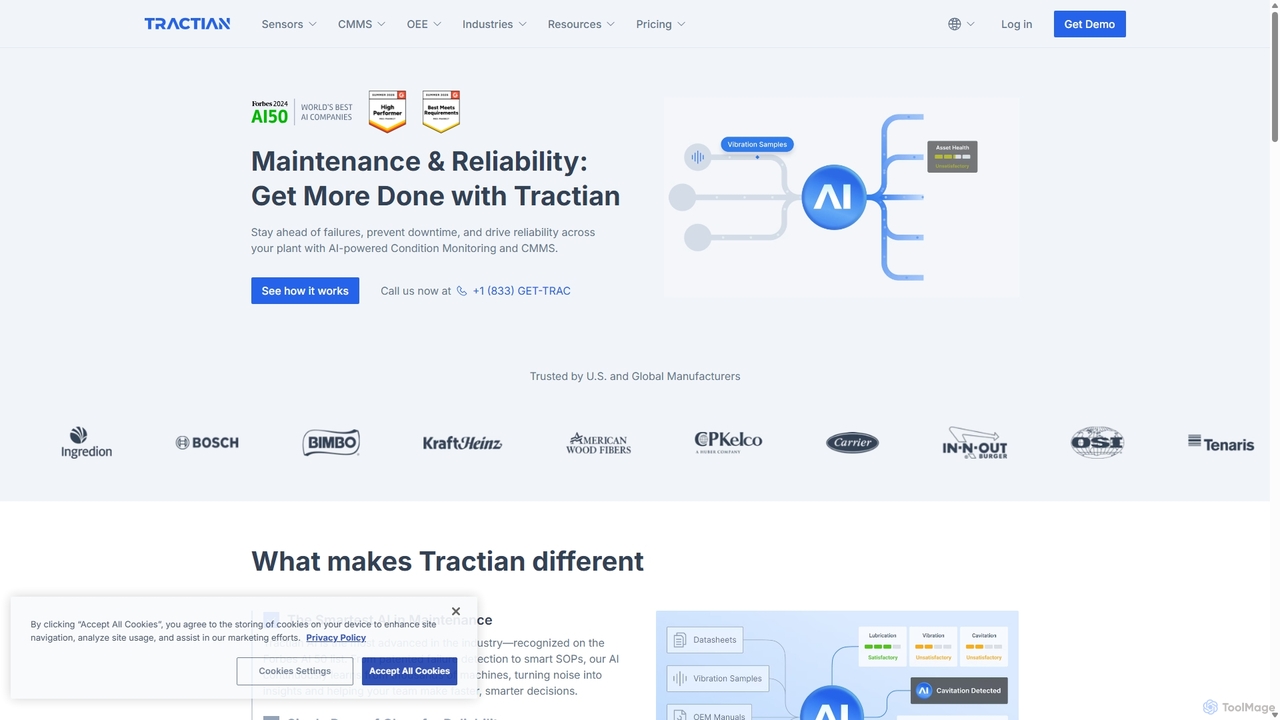
Tractian is an AI-powered Industrial Copilot for manufacturing, maintenance, and reliability. It integrates advanced condition monitoring sensors, AI-driven …
Tractian is an AI-powered Industrial Copilot for manufacturing, maintenance, and reliability. It integrates advanced condition monitoring sensors, AI-driven failure detection, and a full-featured CMMS into a single platform. This system predicts machine failures to prevent downtime, streamlines maintenance workflows, and optimizes overall operational efficiency. Trusted by global manufacturers and recognized on the Forbes AI 50 list, Tractian empowers teams to make smarter, data-driven decisions and transform maintenance into a competitive advantage.
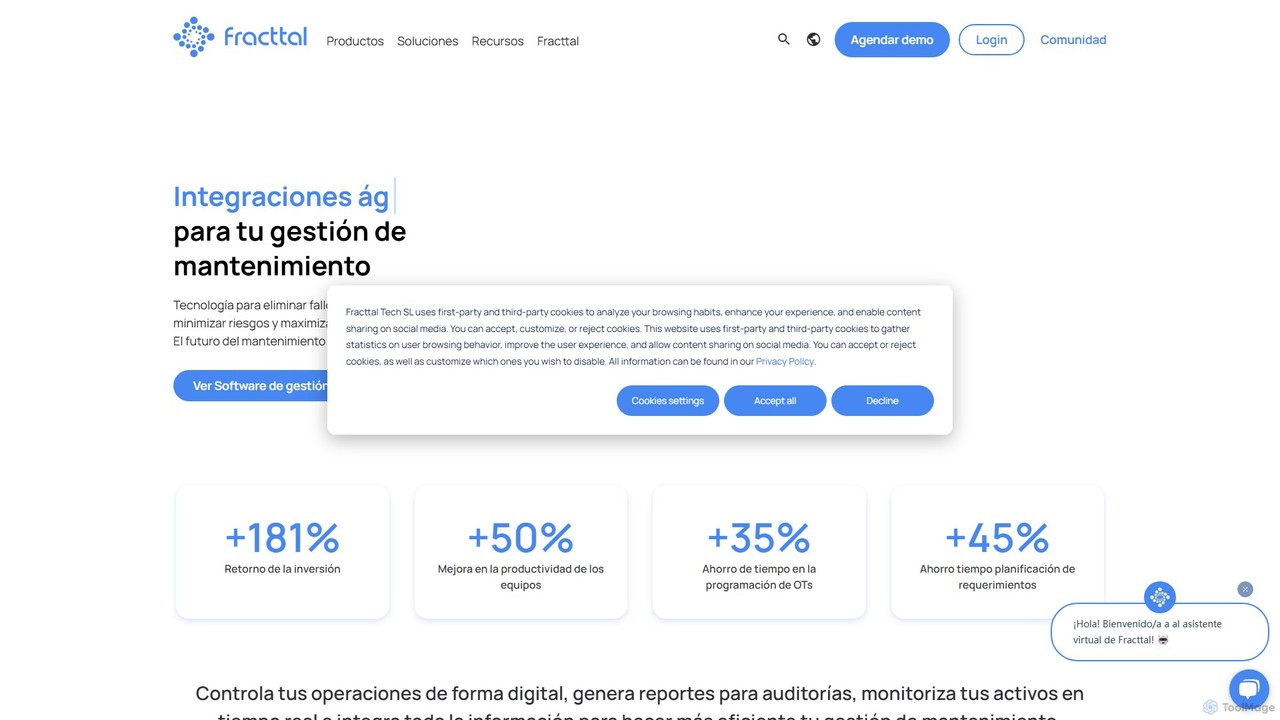
Fracttal
Fracttal is an AI-powered maintenance management platform (CMMS/EAM) designed to optimize asset performance and operational efficiency. It combines …
Fracttal is an AI-powered maintenance management platform (CMMS/EAM) designed to optimize asset performance and operational efficiency. It combines predictive maintenance, IoT device integration, and an AI assistant to help businesses reduce failures, cut costs, and maximize asset uptime across various industries.
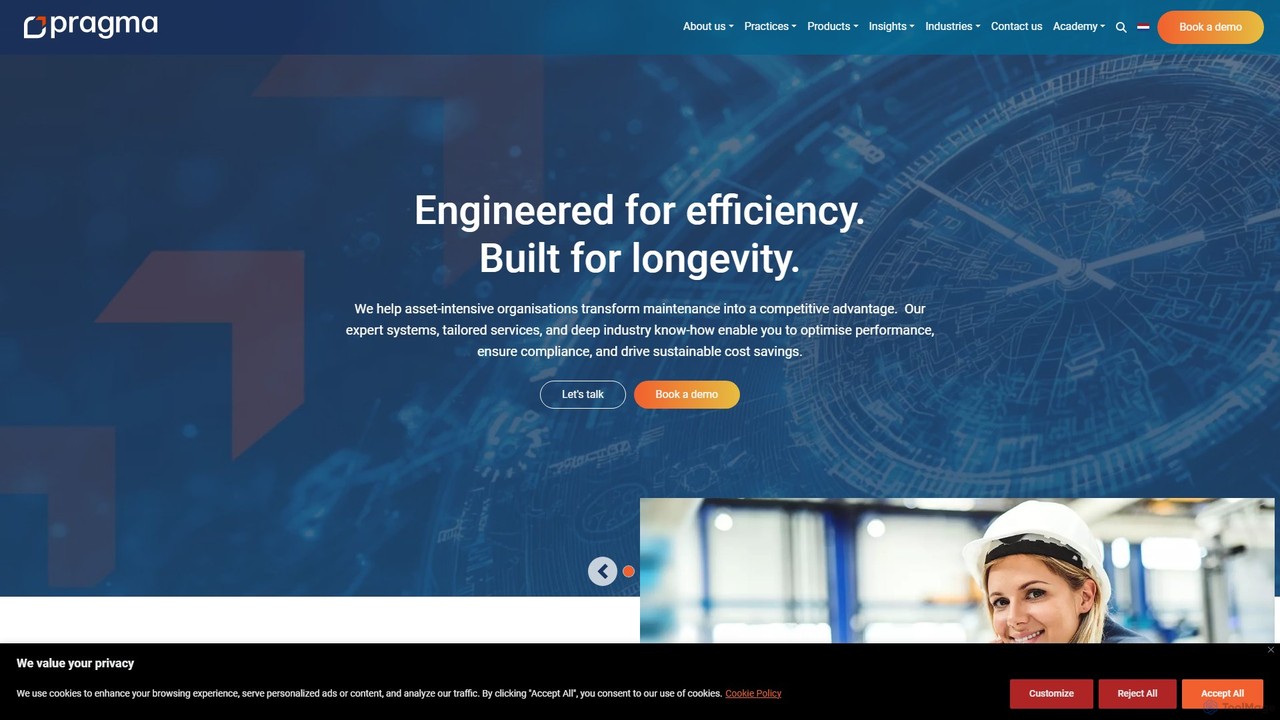
Pragma
Pragma is an AI-powered Enterprise Asset Management (EAM) platform designed to optimize the entire lifecycle of physical assets. …
Pragma is an AI-powered Enterprise Asset Management (EAM) platform designed to optimize the entire lifecycle of physical assets. By leveraging AI, IoT, and predictive analytics, Pragma helps businesses shift from reactive to proactive maintenance, reducing downtime, cutting costs, and extending asset lifespan. It's a comprehensive solution for industries like manufacturing, energy, and logistics.
About Predictive Analytics
Predictive Analytics tools are a class of software that use historical data, statistical algorithms, and machine learning to forecast future outcomes. These platforms analyze past events to identify patterns and build models that predict what is likely to happen next. The primary value of predictive analytics lies in its ability to transform raw data into actionable, forward-looking insights, enabling organizations to make proactive decisions. By moving beyond descriptive reporting, these tools help businesses anticipate trends, understand customer behavior, and mitigate potential risks before they occur.
Core Features
- Statistical Modeling: Build and deploy models like regression, classification, and clustering to uncover relationships in data.
- Time-Series Forecasting: Predict future values based on historical time-stamped data, essential for demand and sales planning.
- Risk Scoring: Quantify the likelihood of specific outcomes, such as customer churn, credit default, or fraud.
- Pattern Recognition: Automatically identify significant patterns and anomalies in large datasets that are not apparent to human analysts.
- Scenario Analysis: Simulate the impact of different variables on future outcomes to support strategic planning.
Use Cases
Predictive analytics is widely applied across various industries. In marketing, it's used for lead scoring and churn prediction. Financial services leverage it for credit risk assessment and fraud detection. Retailers use it for demand forecasting and inventory optimization, while in manufacturing, it enables predictive maintenance to prevent equipment failure.
How to Choose
When selecting a predictive analytics tool, consider its range of supported algorithms and modeling techniques. Evaluate its data integration capabilities with your existing systems (e.g., CRM, databases). Assess the user interface—whether it's a low-code platform for business users or a code-based environment for data scientists. Also, consider its scalability to handle growing data volumes and its features for model deployment and performance monitoring.
Predictive AnalyticsUse Cases
Predicting Customer Churn in SaaS
A marketing manager at a SaaS company needs to reduce customer churn. Using a predictive analytics tool, they integrate customer usage data, support ticket history, and subscription information. The tool builds a classification model that identifies customers with a high probability of churning in the next 30 days. This allows the marketing team to proactively engage these at-risk customers with targeted retention campaigns, such as special offers or personalized support, ultimately reducing the overall churn rate and increasing customer lifetime value.
Optimizing Retail Inventory with Demand Forecasting
A retail supply chain manager aims to prevent stockouts and reduce overstock costs. They use a predictive analytics platform to analyze historical sales data, seasonality, promotional events, and even external factors like weather. The tool generates a time-series forecast predicting demand for each product at a granular level (per store, per day). Based on these predictions, the manager can automate inventory replenishment, optimize stock levels across the supply chain, and plan promotions more effectively, leading to higher sales and lower holding costs.
Assessing Credit Risk for Loan Applications
A financial analyst at a bank is responsible for approving or denying loan applications. Instead of relying solely on traditional credit scores, they use a predictive analytics tool to build a more sophisticated risk model. The model incorporates hundreds of variables, including transaction history, income stability, and behavioral data. For each application, the tool generates a precise risk score, predicting the likelihood of default. This enables the bank to make faster, more accurate lending decisions, reduce bad debt, and offer personalized interest rates based on individual risk profiles.
Implementing Predictive Maintenance in Manufacturing
An operations manager in a factory wants to minimize equipment downtime. They deploy sensors on critical machinery to collect real-time data like temperature, vibration, and pressure. This data is fed into a predictive analytics platform, which has been trained on historical failure data. The model continuously analyzes the sensor data to predict when a machine is likely to fail. This allows the maintenance team to schedule repairs proactively before a breakdown occurs, reducing unplanned downtime, extending equipment life, and lowering maintenance costs.
Scoring Leads for Sales Prioritization
A sales team is overwhelmed with a high volume of inbound leads. To focus their efforts, a data analyst uses a predictive analytics tool to create a lead scoring model. The model analyzes attributes of past successful customers, such as company size, industry, website activity, and job title. It then assigns a score to each new lead, predicting their likelihood to convert. The sales team can then prioritize their outreach, focusing on the highest-scoring leads first, which increases conversion rates and improves overall sales efficiency.
Detecting Fraudulent Financial Transactions
A fraud detection team at an e-commerce company needs to identify and block fraudulent transactions in real-time. They implement a predictive analytics system that analyzes transaction data, including purchase amount, location, time, and device information. The system uses a machine learning model trained on historical fraudulent and legitimate transactions to score each new transaction for fraud risk. When a transaction exceeds a certain risk threshold, it is automatically flagged for manual review or blocked, protecting the company from financial loss and maintaining customer trust.