Newsquawk
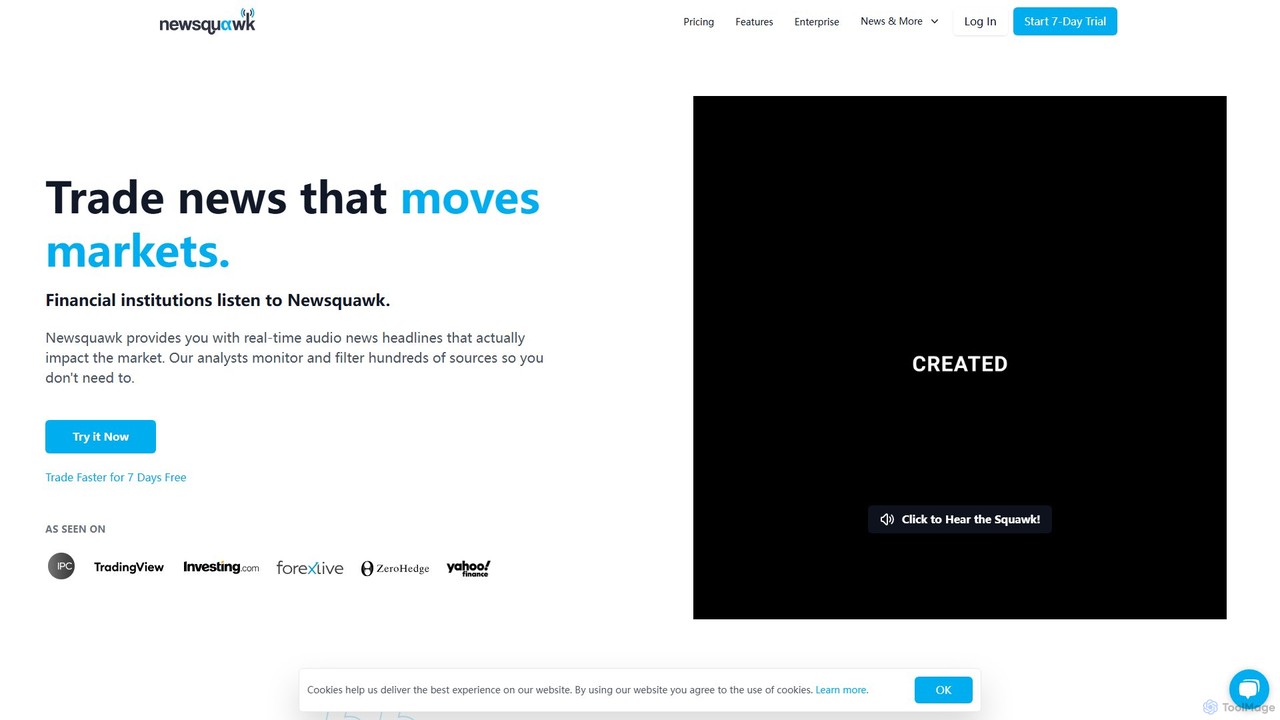
Newsquawk is a real-time audio and text news service for financial traders. It delivers market-moving news headlines, filtered …
Newsquawk is a real-time audio and text news service for financial traders. It delivers market-moving news headlines, filtered by expert analysts and AI, to help traders react faster than the market. The service covers all major asset classes, including equities, forex, fixed income, and commodities.
About Real Time Data
Real Time Data tools are a specialized category of data platforms that use AI to process and analyze information as it is generated, typically within milliseconds or seconds. These tools are built on stream processing frameworks, enabling them to handle continuous flows of data from sources like IoT sensors, financial markets, or user activity logs. Their primary value lies in providing immediate insights for instant decision-making, such as detecting fraud or personalizing user experiences on the fly. Unlike traditional batch processing systems that analyze data periodically, real-time tools offer a dynamic, up-to-the-moment view of operations.
Core Features
- Stream Processing Engine: Ingests and analyzes continuous data streams without needing to store them first.
- Low-Latency Querying: Executes complex analytical queries on live data with minimal delay, often in sub-second timeframes.
- Real-Time Anomaly Detection: Automatically identifies unusual patterns or outliers in data streams as they occur.
- Live Dashboards and Alerts: Provides dynamic visualizations and automated notifications based on current data conditions.
- Scalable Ingestion: Capable of handling high-velocity and high-volume data from thousands of sources simultaneously.
Use Cases
These tools are critical in industries where immediate action is necessary. In finance, they power algorithmic trading and instant fraud detection. E-commerce platforms use them for real-time inventory management and dynamic pricing. In logistics and transportation, they enable live vehicle tracking and route optimization based on current traffic conditions. They are also fundamental for monitoring industrial IoT devices for predictive maintenance.
How to Choose
When selecting a Real Time Data tool, first evaluate its data source compatibility and integration capabilities with your existing systems (e.g., Kafka, APIs, databases). Assess its performance metrics, specifically latency and throughput, to ensure it meets your application's speed requirements. Consider the complexity of its query language and the user-friendliness of its development interface. Finally, examine its scalability and pricing model to ensure it can grow with your data volume and fits within your budget.

Real Time DataUse Cases
Real-Time Fraud Detection in Financial Transactions
A financial services company needs to prevent fraudulent credit card transactions instantly. Security analysts use a real-time data tool to process millions of transaction events per second. The AI model analyzes streaming data points like transaction amount, location, time, and merchant type against the user's historical patterns. If a transaction deviates significantly from the norm, the system flags it as suspicious and triggers an immediate alert or blocks the transaction, all within 200 milliseconds. This prevents financial loss for both the customer and the company without disrupting legitimate purchases.
Live Monitoring of IoT Sensor Data for Predictive Maintenance
A manufacturing plant manager aims to reduce equipment downtime. They deploy a real-time data platform to ingest and analyze data streams from hundreds of sensors on their machinery, monitoring variables like temperature, vibration, and pressure. The AI tool continuously analyzes these streams to detect subtle anomalies that precede equipment failure. When a potential issue is identified, the system automatically generates a maintenance ticket and alerts the engineering team. This proactive approach allows for scheduled repairs, preventing costly unplanned shutdowns and extending the lifespan of the machinery.
Dynamic Content Personalization on E-commerce Websites
An e-commerce marketing manager wants to increase conversion rates by showing customers the most relevant products. They use a real-time data tool to track user behavior on their website, including clicks, searches, and items added to the cart. This data stream is analyzed instantly to update the user's profile. The AI then powers a recommendation engine that dynamically changes the products displayed on the homepage and in promotional banners during the same session. This immediate personalization leads to a more engaging shopping experience and a measurable uplift in sales.
Live Fleet Tracking and Route Optimization
A logistics company coordinator needs to manage a fleet of delivery trucks efficiently. They use a real-time data platform that ingests GPS data from each vehicle and combines it with live traffic information from external APIs. The system displays the real-time location of every truck on a map. An AI algorithm continuously analyzes this data to predict arrival times and identify potential delays. If a faster route becomes available due to changing traffic conditions, the system automatically sends updated directions to the driver's navigation device, improving delivery times and reducing fuel costs.
Real-Time Social Media Trend and Sentiment Analysis
A social media manager for a global brand needs to monitor public perception and react quickly to emerging trends. They use an AI-powered real-time data tool to analyze millions of posts, comments, and mentions across social platforms. The tool identifies trending topics related to their brand, classifies the sentiment (positive, negative, neutral) of conversations in real time, and detects sudden spikes in negative sentiment that could indicate a PR crisis. This allows the marketing team to engage with relevant conversations instantly, capitalize on viral trends, and manage their brand reputation proactively.
Algorithmic Trading Based on Live Market Data
A quantitative analyst at a hedge fund develops trading strategies that rely on speed. They use a real-time data platform to subscribe to multiple high-frequency market data feeds, including stock prices, order books, and news wires. The AI system processes this torrent of information in microseconds, identifying fleeting arbitrage opportunities or predictive patterns. When the algorithm detects a profitable trading signal, it automatically executes buy or sell orders. The entire process, from data ingestion to trade execution, must occur in a fraction of a second to be effective, a task only achievable with specialized real-time data tools.