BeachAtlas
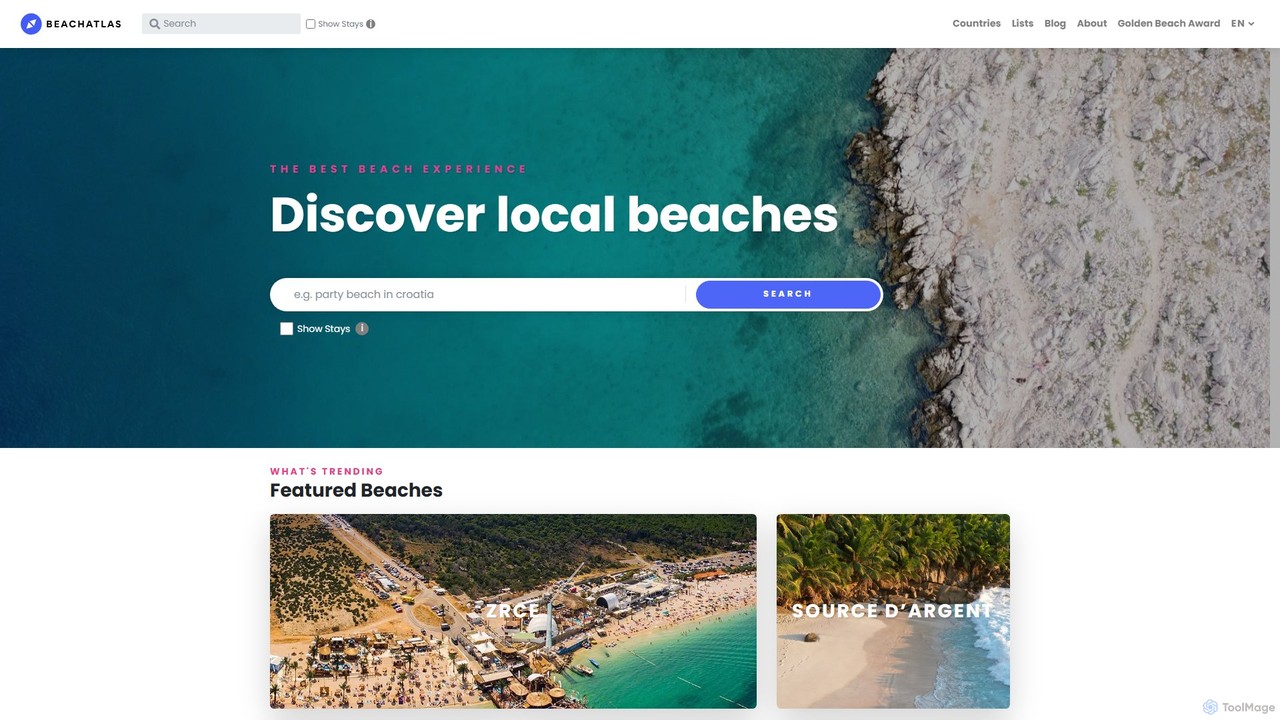
BeachAtlas is an AI-powered travel platform designed to help users discover the perfect beach experience. It leverages AI …
BeachAtlas is an AI-powered travel platform designed to help users discover the perfect beach experience. It leverages AI to provide personalized recommendations, curated lists for various interests (like party, family, or dog-friendly beaches), and in-depth guides to global beach destinations. By analyzing trends and user data, BeachAtlas simplifies vacation planning and offers unique travel inspiration.
About Recommendation Engine
A Recommendation Engine is a type of data analysis tool that uses AI algorithms to predict and suggest items a user is likely to be interested in. These systems analyze user behavior, historical data, and item attributes through techniques like collaborative filtering and content-based filtering. The primary value of a recommendation engine is to deliver personalized experiences, which can significantly increase user engagement, conversion rates, and customer loyalty. By automating content and product discovery, they help users navigate vast catalogs efficiently, making them a cornerstone of modern e-commerce, streaming services, and content platforms.
Core Features
- Personalized Suggestions: Generates unique recommendations for each user based on their past behavior, preferences, and interactions.
- Collaborative Filtering: Recommends items by identifying patterns from users with similar tastes or behaviors.
- Content-Based Filtering: Suggests items that share similar attributes with items a user has previously shown interest in.
- Real-time Adaptation: Dynamically updates recommendations based on the user's most recent actions and context.
- Performance Analytics: Provides dashboards and reports to track key metrics like click-through rates and conversion uplift from recommendations.
Use Cases
Recommendation engines are widely used across various digital platforms. In e-commerce, they power 'Customers who bought this also bought' sections. For media and streaming services, they curate personalized playlists and movie suggestions. News aggregators and social media platforms also use them to create personalized content feeds, ensuring users see the most relevant information first.
How to Choose
When selecting a recommendation engine, consider the specific algorithms it supports and their suitability for your data type. Evaluate its integration capabilities with your existing tech stack, such as your CRM or e-commerce platform. Assess the scalability to handle your user and item volume, and consider the level of customization and control offered over the recommendation logic. Finally, review the analytics features to ensure you can measure its impact effectively.

Recommendation EngineUse Cases
Personalizing E-commerce Product Discovery
An e-commerce manager for an online fashion retailer uses a recommendation engine to enhance the shopping experience. The engine is integrated into product pages to display 'You Might Also Like' carousels and on the cart page for 'Complete The Look' suggestions. It analyzes a user's browsing history, items added to the cart, and purchase data from similar customers. This personalization helps shoppers discover relevant items they might have missed, leading to a measurable increase in average order value and session duration.
Curating Content for Streaming Services
A content strategist at a video streaming platform implements a recommendation engine to increase viewer retention. The engine powers the 'Recommended for You' and 'Trending Now' sections on the homepage. It processes viewing history, ratings, genres liked, and even the time of day a user watches content. By continuously suggesting relevant movies and shows, the platform keeps users engaged, reduces churn, and increases the likelihood of them discovering and enjoying new content from its vast library.
Personalizing News Feeds for Media Outlets
A digital editor at a news organization uses a recommendation engine to create personalized news feeds for its readers. The system tracks which articles a user reads, the topics they follow, and how much time they spend on each page. Based on this data, the engine populates the user's homepage with stories that match their interests, balancing breaking news with in-depth features. This approach increases reader loyalty and the number of articles read per session, which in turn boosts ad revenue and subscription potential.
Enhancing B2B Lead Nurturing
A marketing automation specialist in a B2B software company employs a recommendation engine to nurture leads more effectively. The engine is integrated with their content hub and email marketing platform. It suggests relevant blog posts, whitepapers, and case studies to leads based on their industry, job role, and previous content consumption. By delivering highly targeted content at each stage of the buyer's journey, the company improves lead scores, accelerates the sales cycle, and increases the conversion rate from marketing qualified lead to sales qualified lead.
Optimizing Music Discovery on Audio Platforms
A product manager for a music streaming service leverages a recommendation engine to power features like 'Discover Weekly' playlists and artist radio stations. The engine analyzes listening habits, skipped tracks, liked songs, and playlist additions. It also uses audio analysis to identify songs with similar acoustic features. This creates a highly personalized and continuous music discovery experience, encouraging users to spend more time on the platform and fostering a stronger connection with artists, both new and established.
Improving In-App Purchase Suggestions in Gaming
A monetization manager for a mobile game studio uses a recommendation engine to personalize in-app purchase offers. The engine analyzes player behavior, such as their level, play style, and past purchases. Based on this profile, it presents targeted offers for virtual goods, power-ups, or cosmetic items that are most relevant to the player at that moment. This tailored approach increases the conversion rate of in-app purchases and enhances the player experience by offering items that provide genuine value to their gameplay.