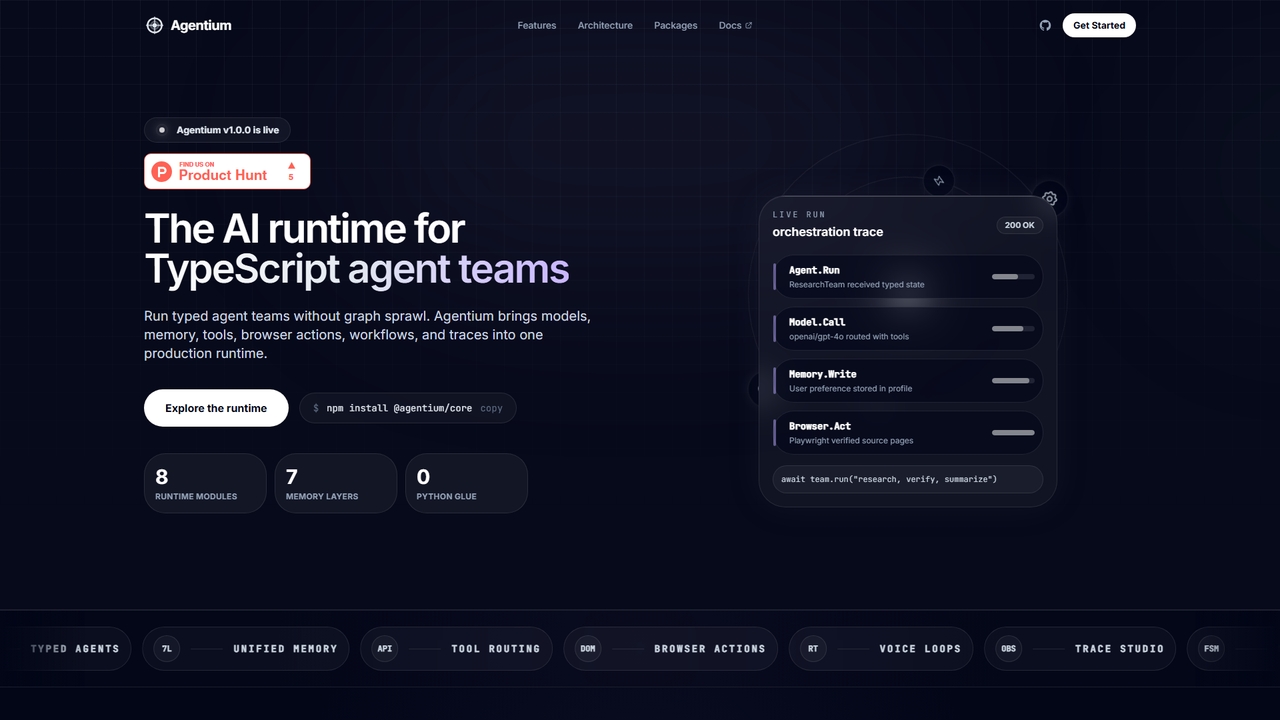
Agentium
Agentium is an AI runtime for TypeScript agent teams, providing a unified platform for orchestration, memory, tools, and …
Agentium is an AI runtime for TypeScript agent teams, providing a unified platform for orchestration, memory, tools, and observability to build sophisticated agent systems.
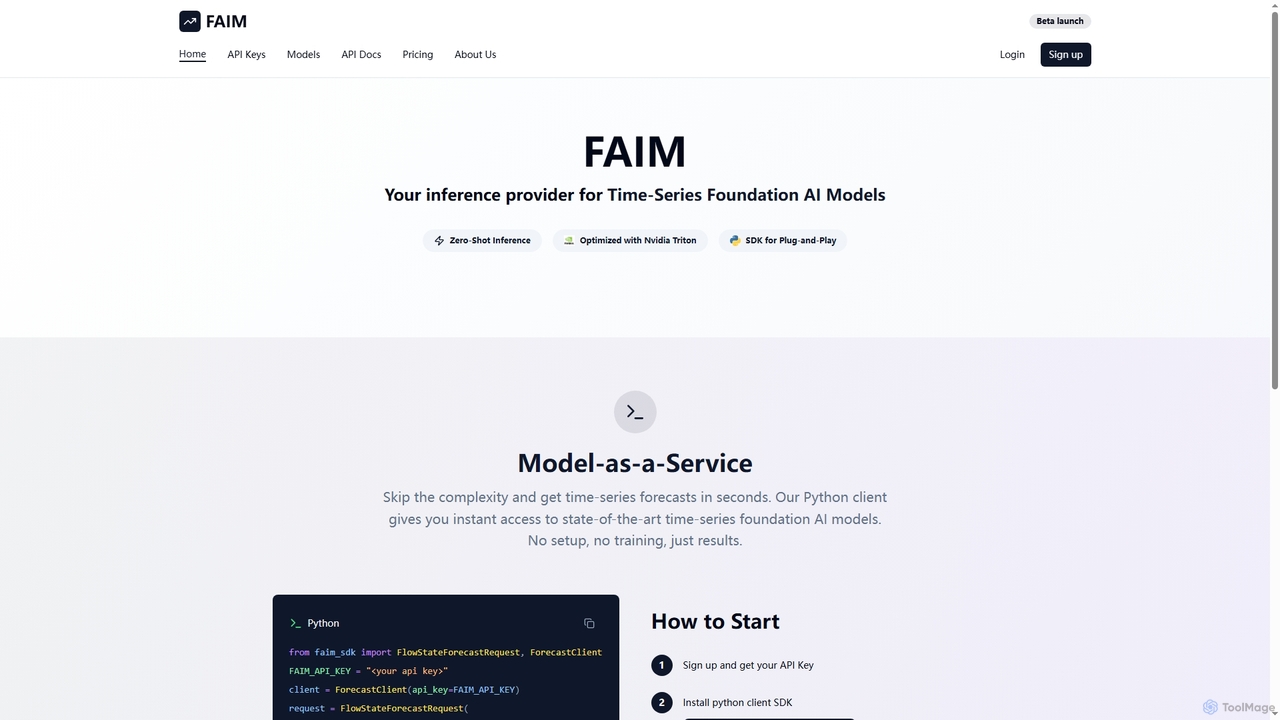
Faim
Faim is a Model-as-a-Service platform providing zero-shot inference for time-series forecasting. It offers instant access to state-of-the-art AI …
Faim is a Model-as-a-Service platform providing zero-shot inference for time-series forecasting. It offers instant access to state-of-the-art AI models like Chronos2, TiRex, and FlowState via a simple Python SDK, eliminating the need for complex setup or model training.
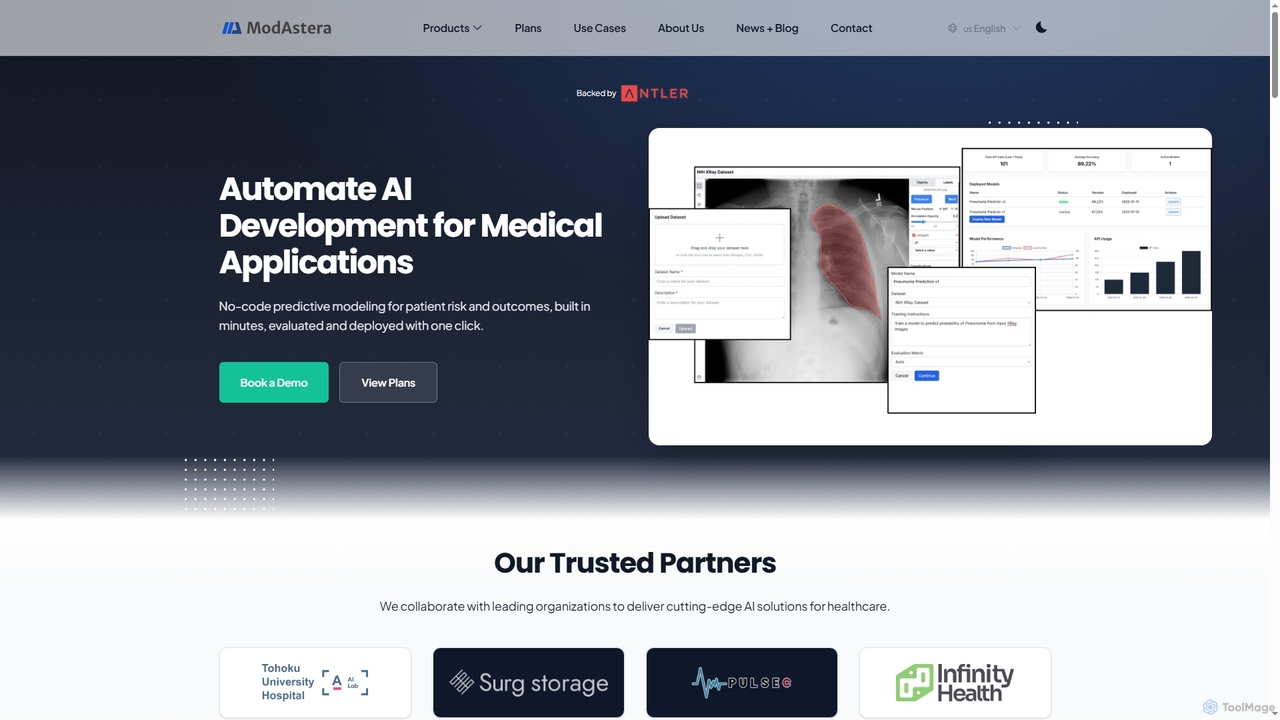
ModAstera
ModAstera is a no-code AI development platform designed for medical applications. It automates predictive modeling for patient risk …
ModAstera is a no-code AI development platform designed for medical applications. It automates predictive modeling for patient risk and outcomes, featuring AI-assisted data annotation and one-click deployment to significantly reduce development time and costs for health tech innovators.
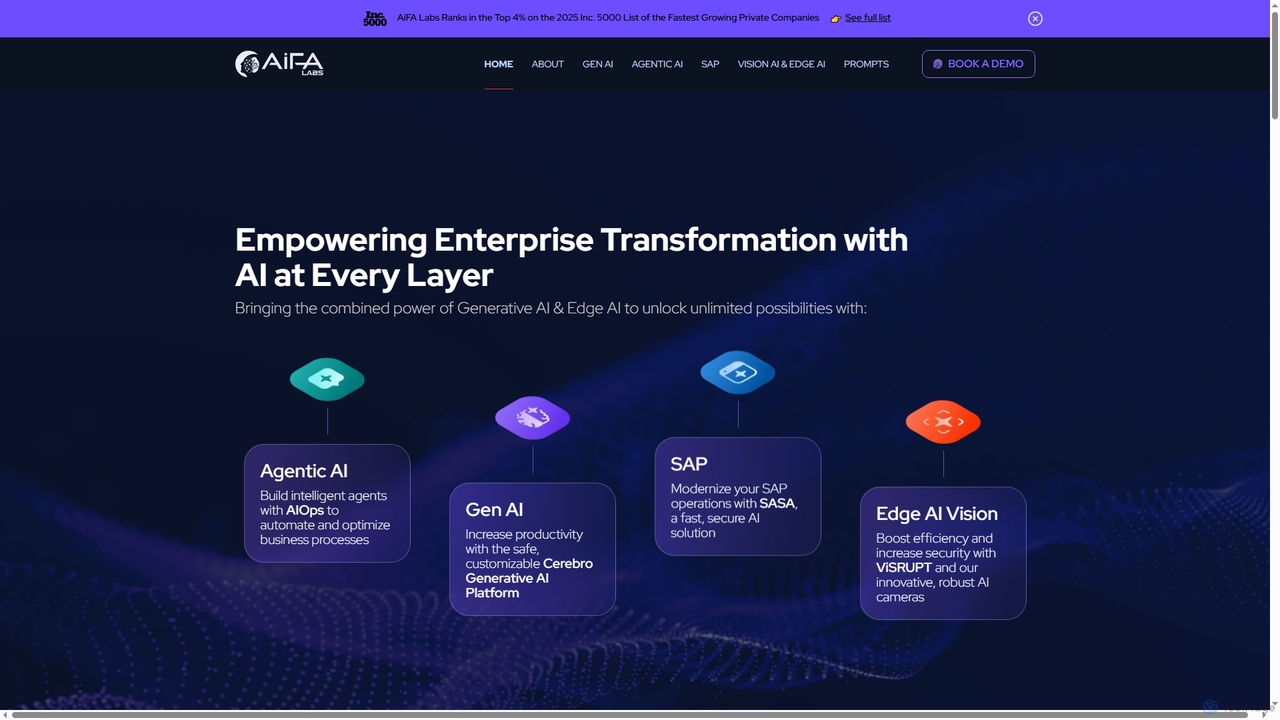
AiFA Labs
AiFA Labs provides a comprehensive enterprise AI platform, Cerebro, designed to empower business transformation. It integrates Generative AI, …
AiFA Labs provides a comprehensive enterprise AI platform, Cerebro, designed to empower business transformation. It integrates Generative AI, Agentic AI, SAP automation, and Edge AI Vision to enhance productivity, automate processes, and ensure security and compliance across various industries.
Genius
Genius is an agentic enterprise intelligence platform by VERSES AI, designed for building reliable, domain-specific predictive models. It …
Genius is an agentic enterprise intelligence platform by VERSES AI, designed for building reliable, domain-specific predictive models. It empowers ML researchers, engineers, and data scientists to tackle complex problems involving uncertainty by using Active Inference and Bayesian methods, delivering explainable, efficient, and adaptable AI solutions.
Vespa.ai
Vespa.ai is a high-performance AI search platform for building large-scale applications. It unifies vector search, text search, and …
Vespa.ai is a high-performance AI search platform for building large-scale applications. It unifies vector search, text search, and machine-learned ranking to power advanced use cases like Retrieval-Augmented Generation (RAG), recommendation engines, and intelligent search. Designed for real-time inference and scalability, it's trusted by leading companies like Spotify and Perplexity to handle massive datasets with low latency.
Fast.ai
Fast.ai is a research institute dedicated to making deep learning accessible to everyone. It offers free courses, an …
Fast.ai is a research institute dedicated to making deep learning accessible to everyone. It offers free courses, an open-source software library (fastai), cutting-edge research, and a vibrant community, empowering coders of all backgrounds to become deep learning practitioners.
Ploomber
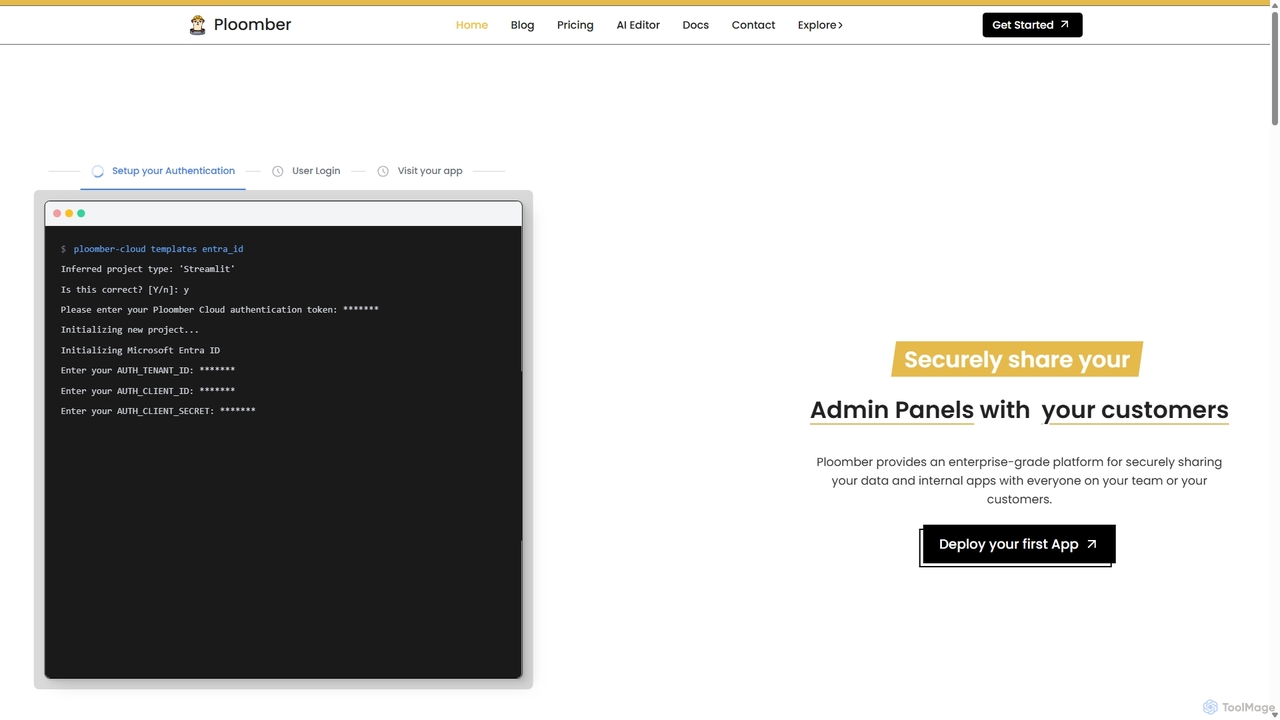
Ploomber is an enterprise-grade platform for deploying, managing, and scaling data applications. It simplifies the deployment of frameworks …
Ploomber is an enterprise-grade platform for deploying, managing, and scaling data applications. It simplifies the deployment of frameworks like Streamlit, Dash, and FastAPI, offering robust features such as automated DevOps, advanced security, auto-scaling, and flexible deployment options from cloud to on-premise, tailored for data science and AI teams.
Zilliz
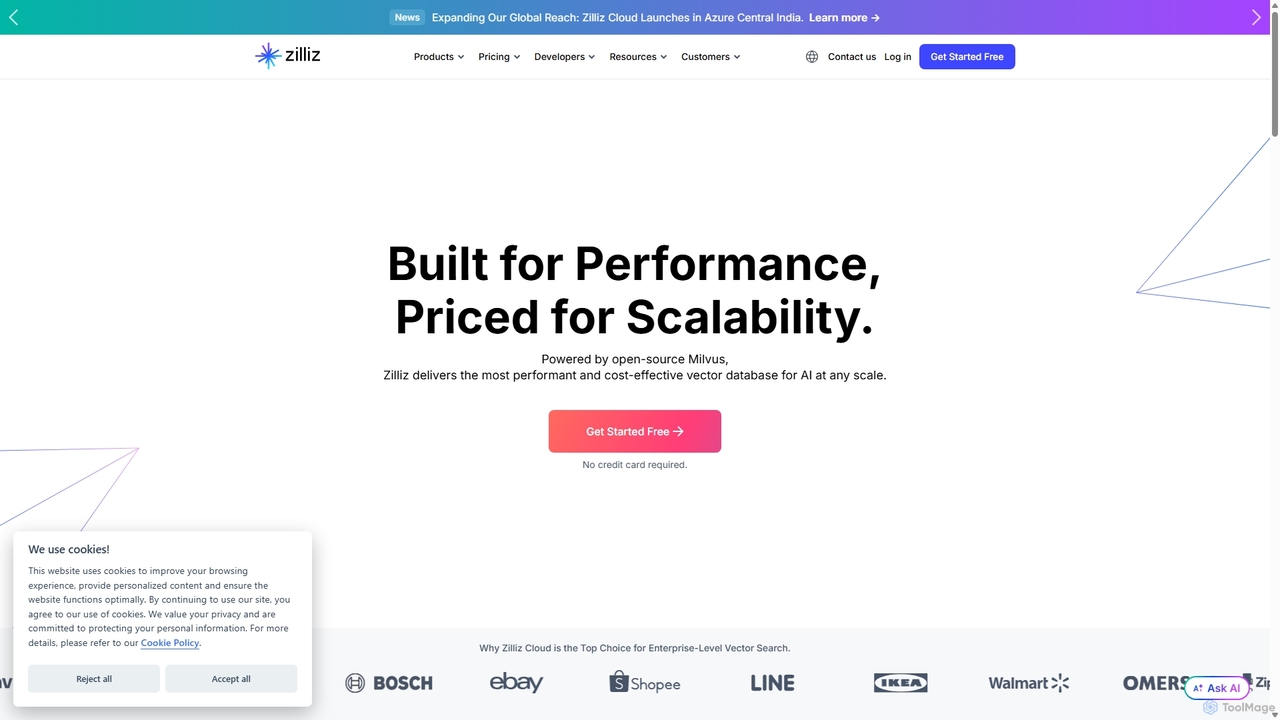
Zilliz is an enterprise-grade vector database built for scalable AI applications. Powered by the popular open-source project Milvus, …
Zilliz is an enterprise-grade vector database built for scalable AI applications. Powered by the popular open-source project Milvus, it provides a high-performance, cost-effective, and fully-managed service (Zilliz Cloud) for storing, indexing, and searching billions of vector embeddings. It's designed to power applications like RAG, recommendation systems, and multimodal search, with seamless integrations into major AI frameworks and cloud platforms.
Tryolabs
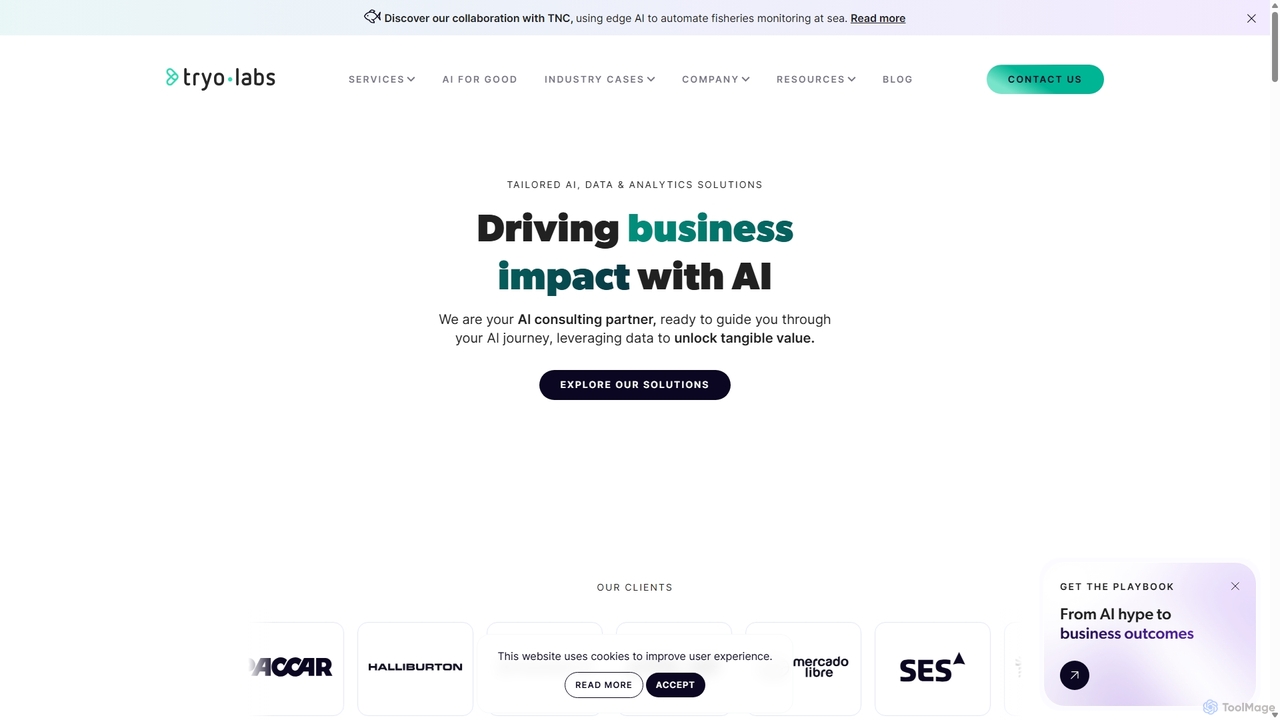
Tryolabs is a premier AI and Machine Learning consulting firm that partners with businesses to create custom, high-impact …
Tryolabs is a premier AI and Machine Learning consulting firm that partners with businesses to create custom, high-impact solutions. Since 2009, they have specialized in data engineering, video analytics, predictive modeling, and MLOps, transforming complex data into tangible business value and competitive advantages for leading enterprises.
SelfMachines
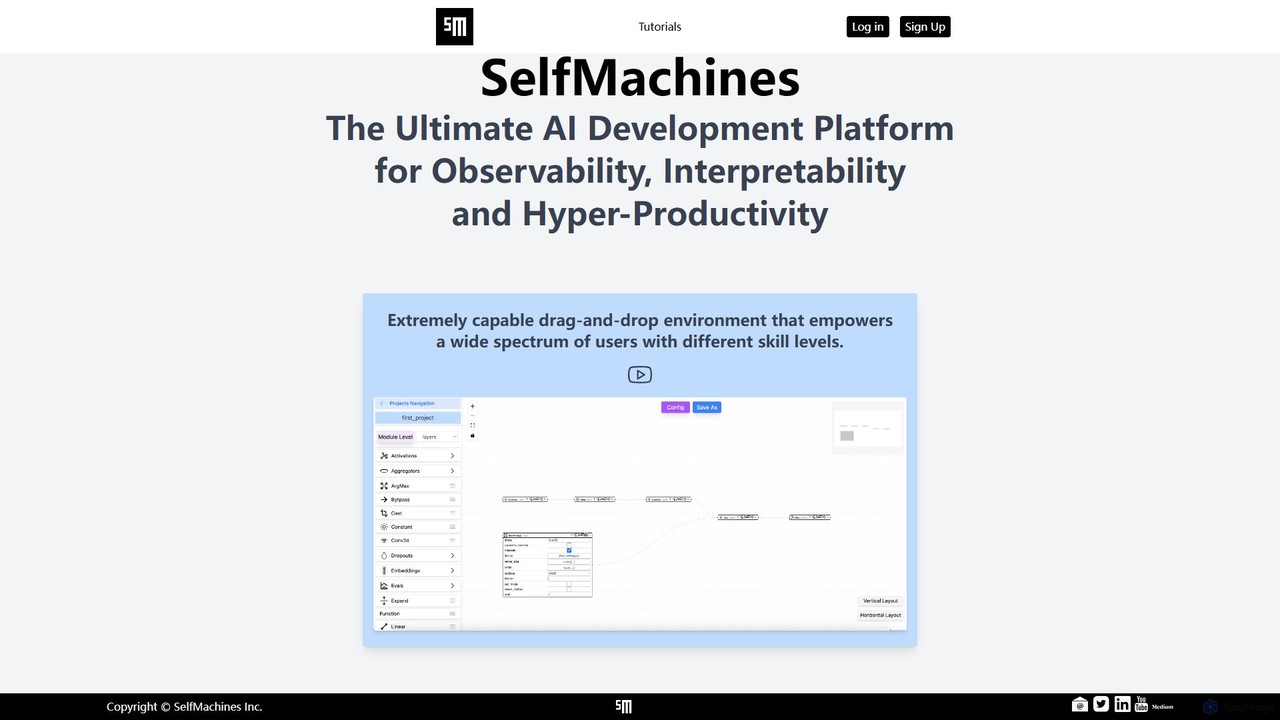
SelfMachines is a no-code AI development platform for building, training, and deploying complex, custom AI systems. It features …
SelfMachines is a no-code AI development platform for building, training, and deploying complex, custom AI systems. It features a unique hierarchical graph-based architecture, a drag-and-drop interface, and modular extensibility, empowering users of all skill levels to create highly tailored solutions with enhanced observability and interpretability.
Jiva.ai
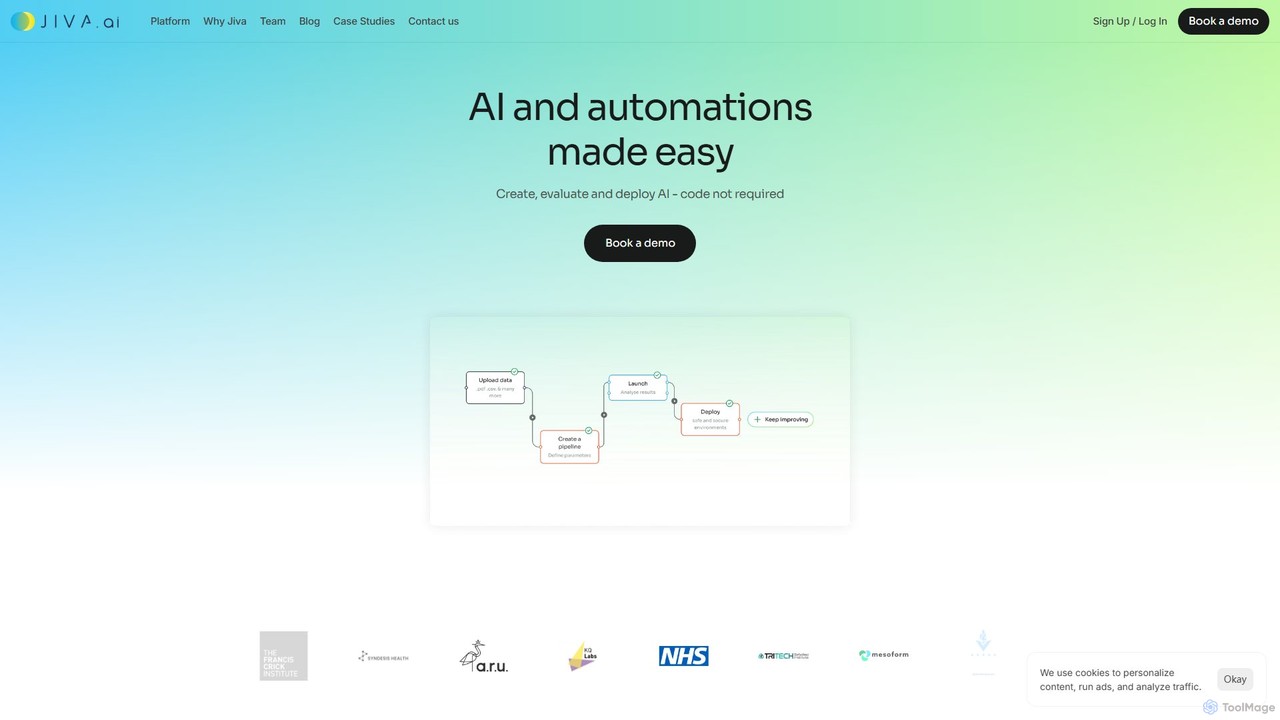
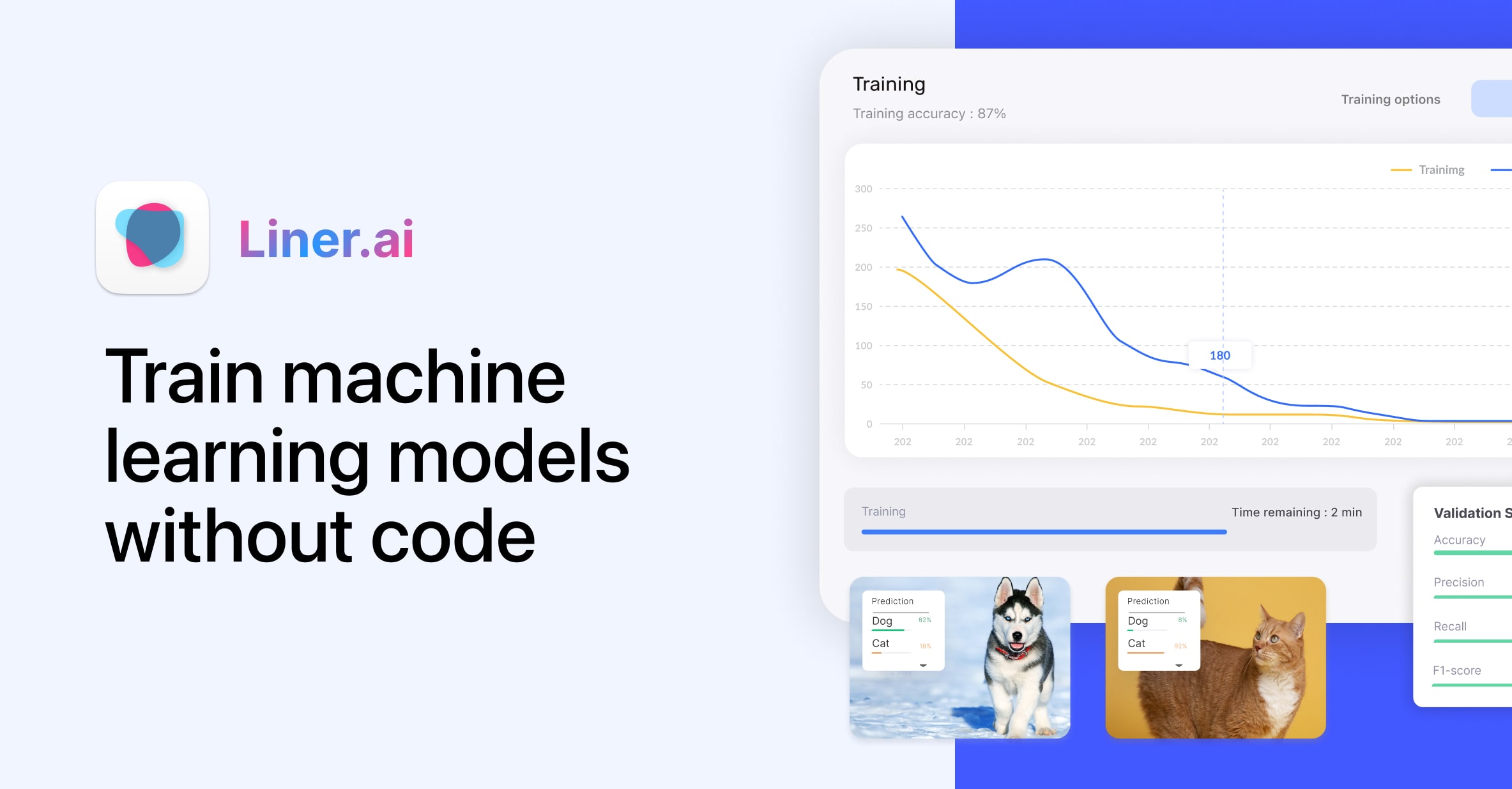
Jiva.ai is a zero-code, end-to-end platform for rapid multimodal AI development. It empowers organizations to build, train, and …
Jiva.ai is a zero-code, end-to-end platform for rapid multimodal AI development. It empowers organizations to build, train, and deploy complex AI models using imaging, video, text, audio, and structured data, without needing extensive data science expertise.
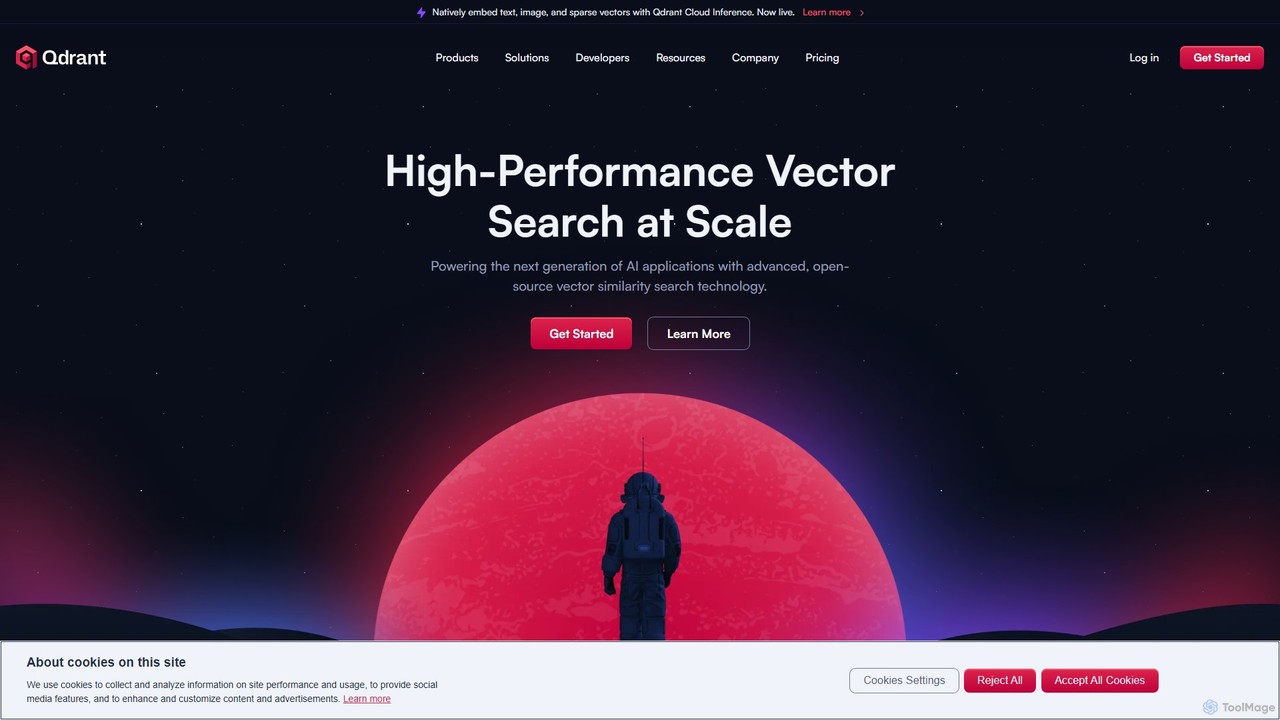
Qdrant
Qdrant is a high-performance, open-source vector database and similarity search engine built in Rust. It's designed to power …
Qdrant is a high-performance, open-source vector database and similarity search engine built in Rust. It's designed to power next-generation AI applications by efficiently managing and searching billions of high-dimensional vectors. With advanced features like rich filtering, payload storage, and various quantization methods, Qdrant enables developers to build scalable and cost-effective solutions for semantic search, recommendation systems, and Retrieval Augmented Generation (RAG).
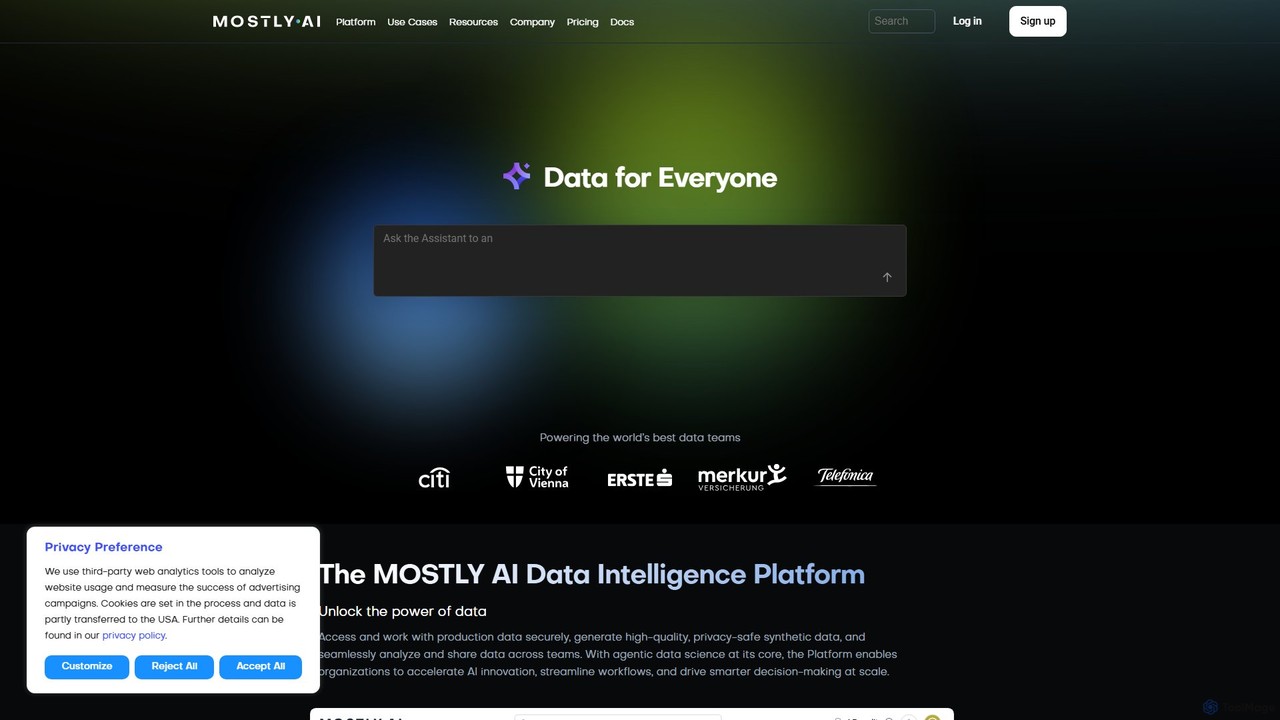
MOSTLY AI
MOSTLY AI is a Data Intelligence Platform that specializes in generating high-quality, privacy-safe synthetic data. It enables organizations …
MOSTLY AI is a Data Intelligence Platform that specializes in generating high-quality, privacy-safe synthetic data. It enables organizations to securely access, analyze, and share data, accelerating AI innovation and streamlining workflows while ensuring full compliance with privacy regulations.
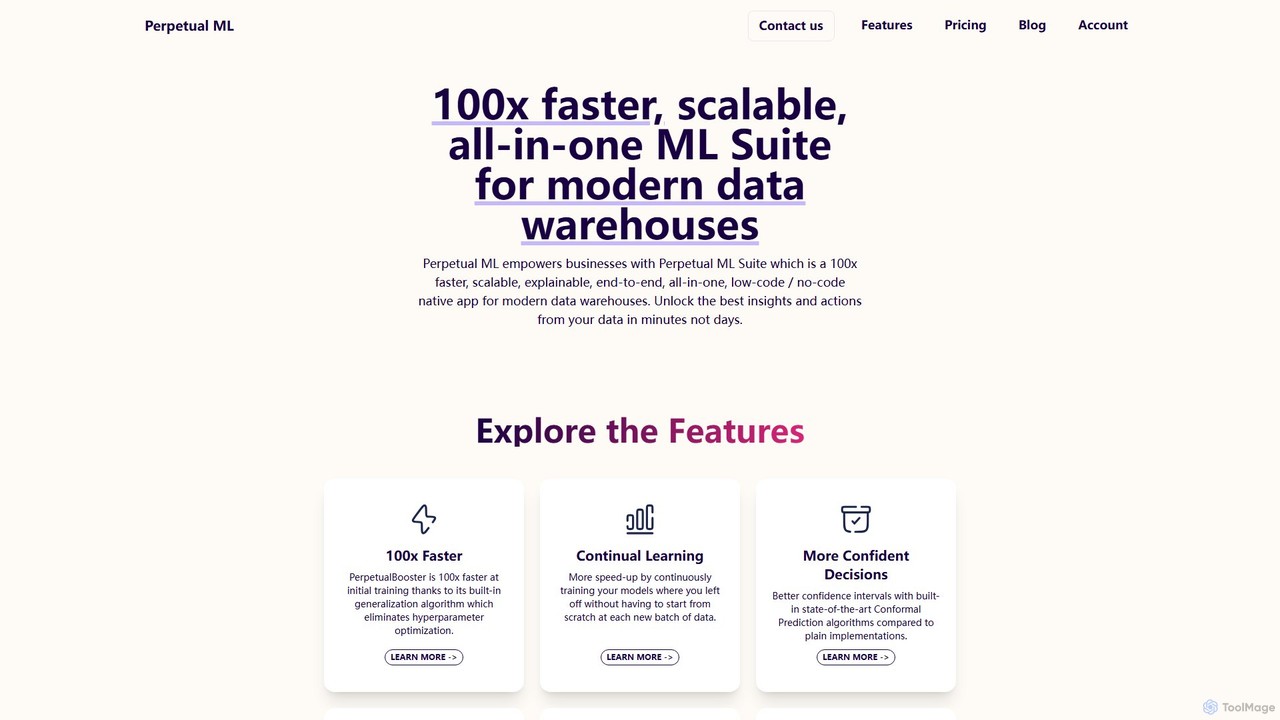
perpetual_ml
Perpetual ML is an all-in-one, low-code/no-code machine learning suite designed for modern data warehouses like Snowflake. It accelerates …
Perpetual ML is an all-in-one, low-code/no-code machine learning suite designed for modern data warehouses like Snowflake. It accelerates model training by up to 100x by eliminating hyperparameter optimization. The platform supports continual learning, integrated model monitoring, and provides state-of-the-art conformal prediction for more confident decision-making, all without requiring specialized hardware like GPUs.
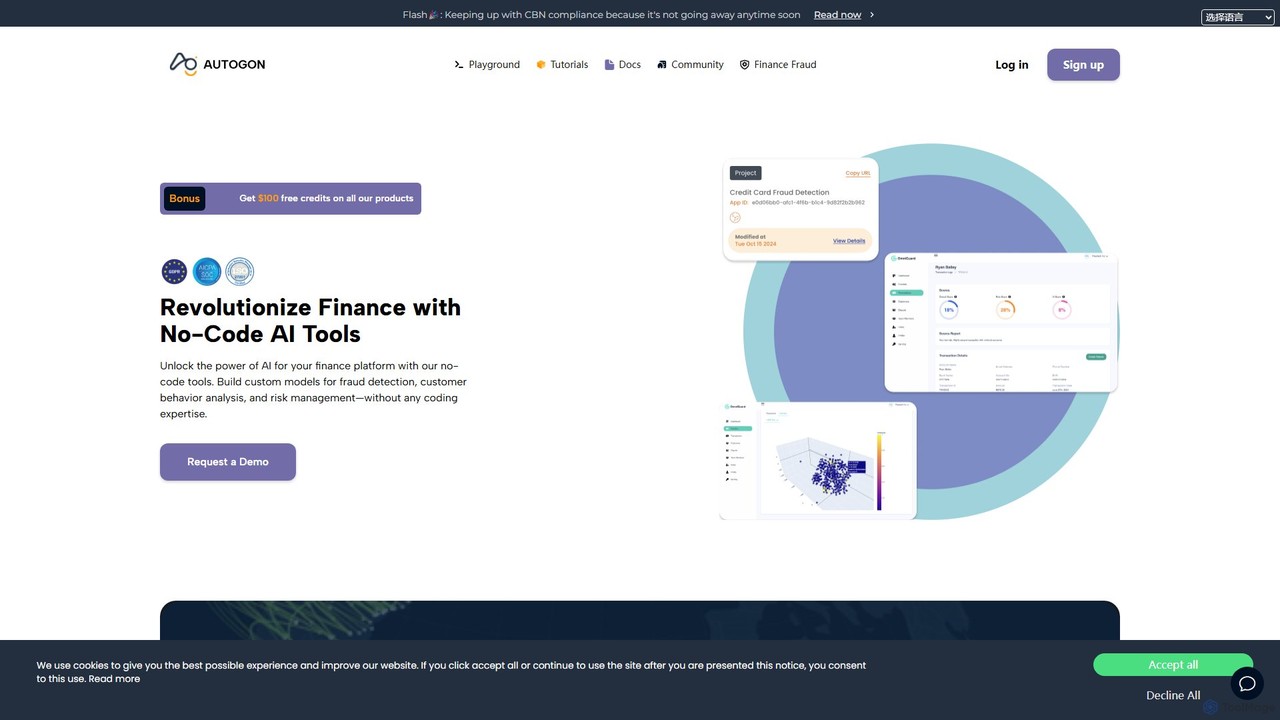
autogon
Autogon is a powerful no-code AI platform designed to democratize artificial intelligence, especially for the finance sector. It …
Autogon is a powerful no-code AI platform designed to democratize artificial intelligence, especially for the finance sector. It enables users to build, deploy, and manage custom AI models for fraud detection, risk management, customer analytics, and automated chatbots without writing a single line of code. It also offers a versatile AI playground for various other industries.
bosch_ai
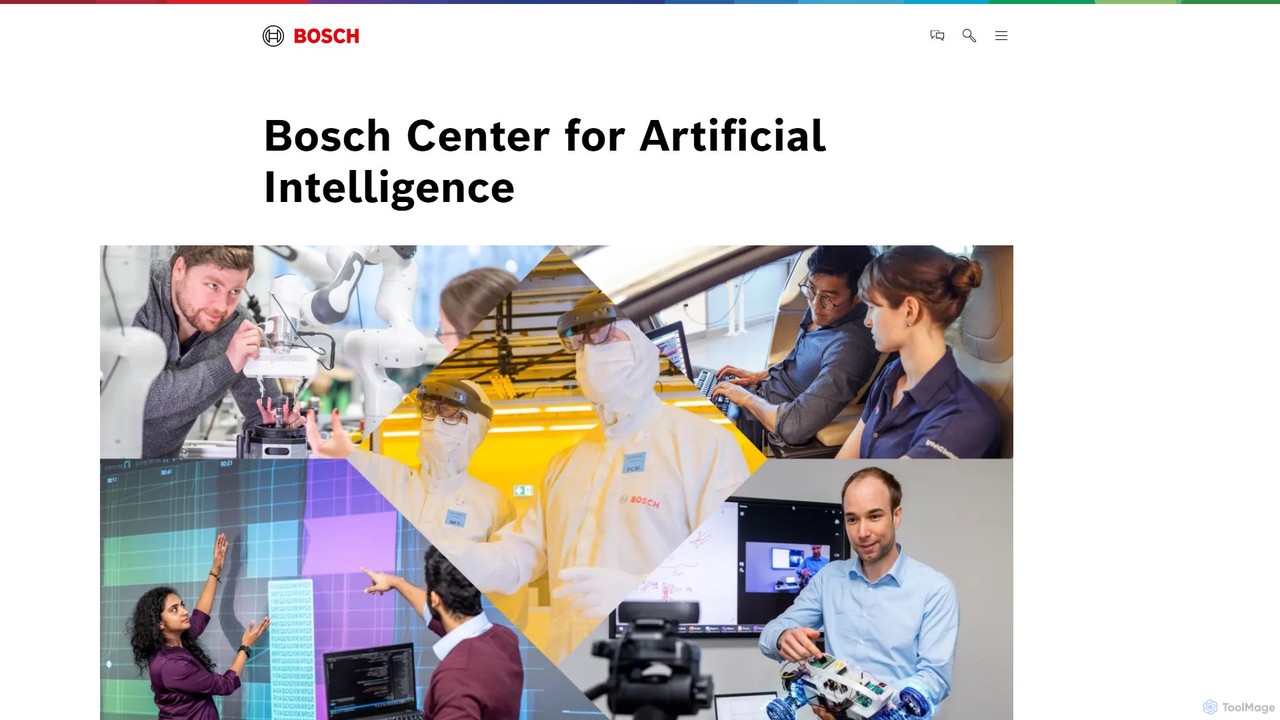
Bosch Center for Artificial Intelligence (BCAI) is Bosch's center of excellence for AI, driving the development and deployment …
Bosch Center for Artificial Intelligence (BCAI) is Bosch's center of excellence for AI, driving the development and deployment of safe, robust, and explainable AI solutions across industrial sectors. It bridges fundamental research with real-world applications in manufacturing, automotive, and supply chain management.
Neurond AI
Neurond AI is a full-service artificial intelligence company providing bespoke AI and data science solutions for businesses globally. …
Neurond AI is a full-service artificial intelligence company providing bespoke AI and data science solutions for businesses globally. With over 15 years of experience, they specialize in machine learning, NLP, computer vision, and forecasting to help organizations work smarter, enhance productivity, and unlock new possibilities.

Eventual
Eventual is building the future of data infrastructure with Daft, a high-performance, open-source query engine for multimodal data. …
Eventual is building the future of data infrastructure with Daft, a high-performance, open-source query engine for multimodal data. It enables engineers to process petabyte-scale images, video, audio, and text with the simplicity of SQL, drastically accelerating AI and ML workflows without the need for deep distributed systems expertise.
Mixpeek
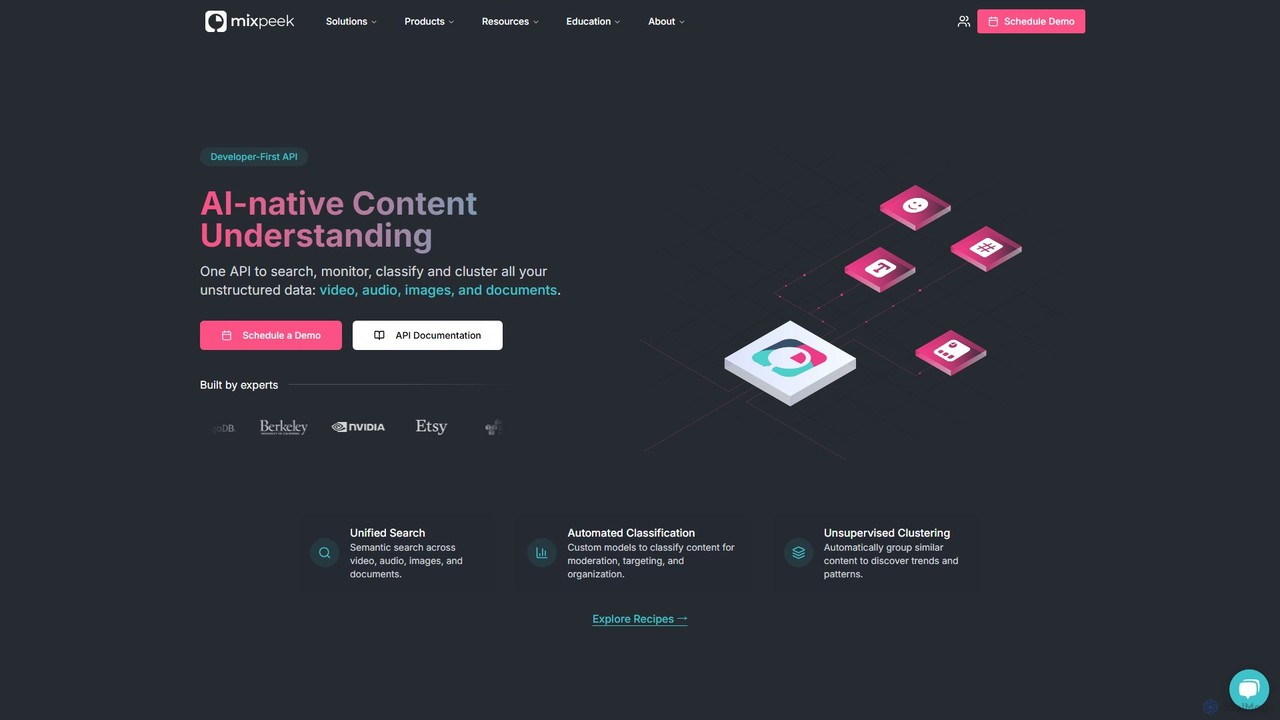
Mixpeek is a developer-first API and multimodal data warehouse for processing, searching, and analyzing unstructured data like video, …
Mixpeek is a developer-first API and multimodal data warehouse for processing, searching, and analyzing unstructured data like video, audio, images, and documents. It simplifies the AI/ML pipeline with unified semantic search, automated classification, and seamless model management, allowing developers to build powerful multimodal applications.
WisBot
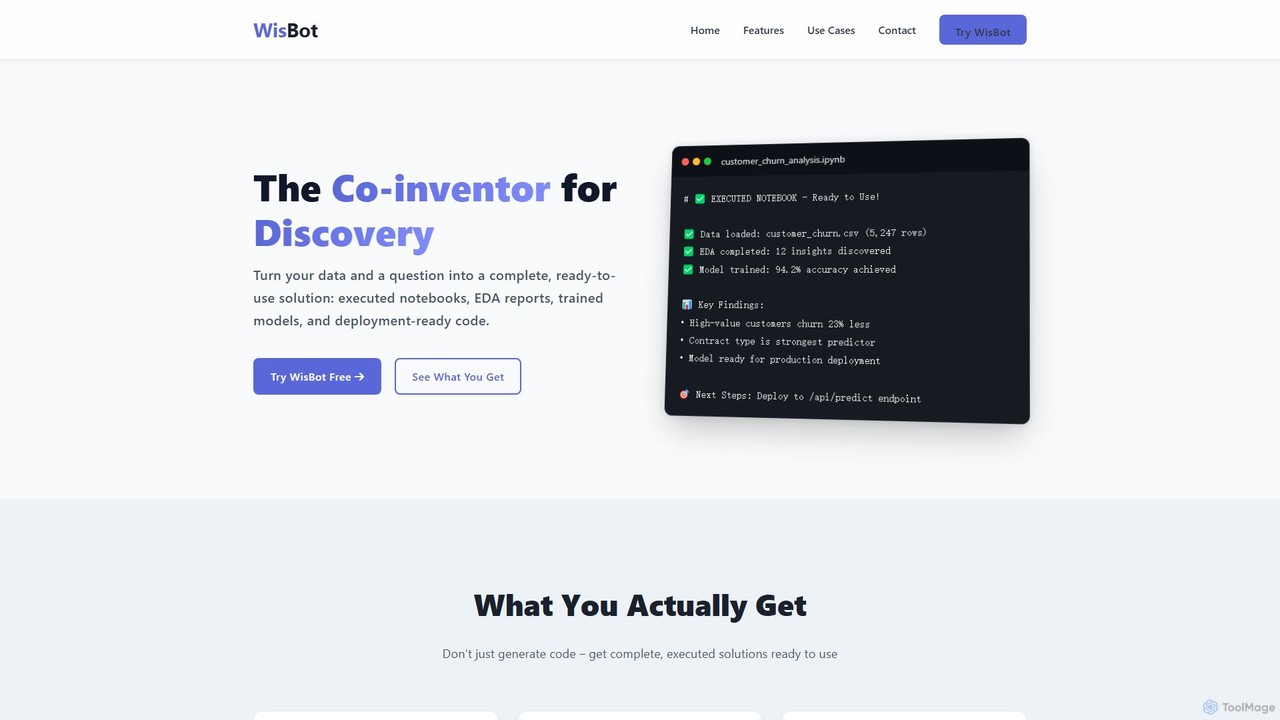
WisBot is an AI co-inventor that accelerates data science and software development. It goes beyond code generation by …
WisBot is an AI co-inventor that accelerates data science and software development. It goes beyond code generation by delivering complete, executed Jupyter notebooks for data analysis and production-ready Python project scaffolds. Simply upload your data and a prompt to receive fully tested, documented, and deployable solutions, streamlining your workflow from discovery to production.
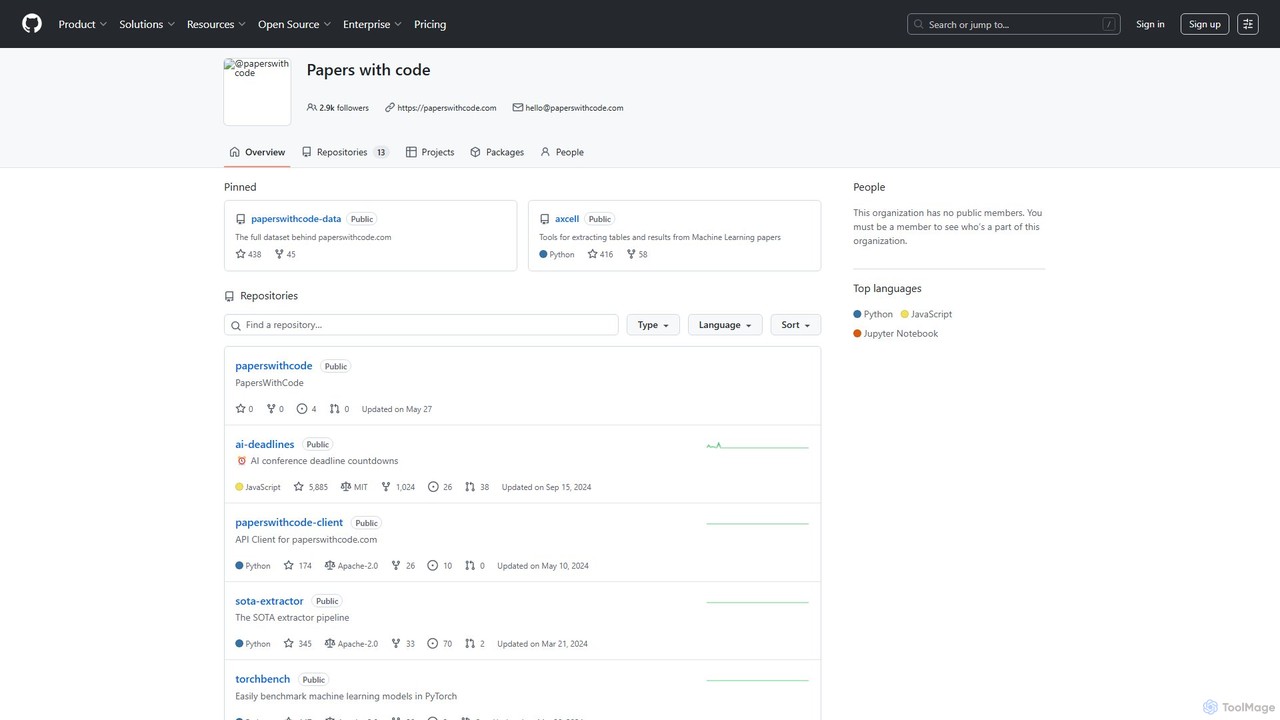
Papers with Code
Papers with Code is a free, open resource for machine learning researchers and developers. It connects scientific papers …
Papers with Code is a free, open resource for machine learning researchers and developers. It connects scientific papers to their corresponding open-source code, making research more accessible and reproducible. The platform features state-of-the-art leaderboards, browsable datasets, and a comprehensive collection of AI research, helping users track progress, find implementations, and accelerate their work. It is an essential tool for anyone in the AI/ML community.
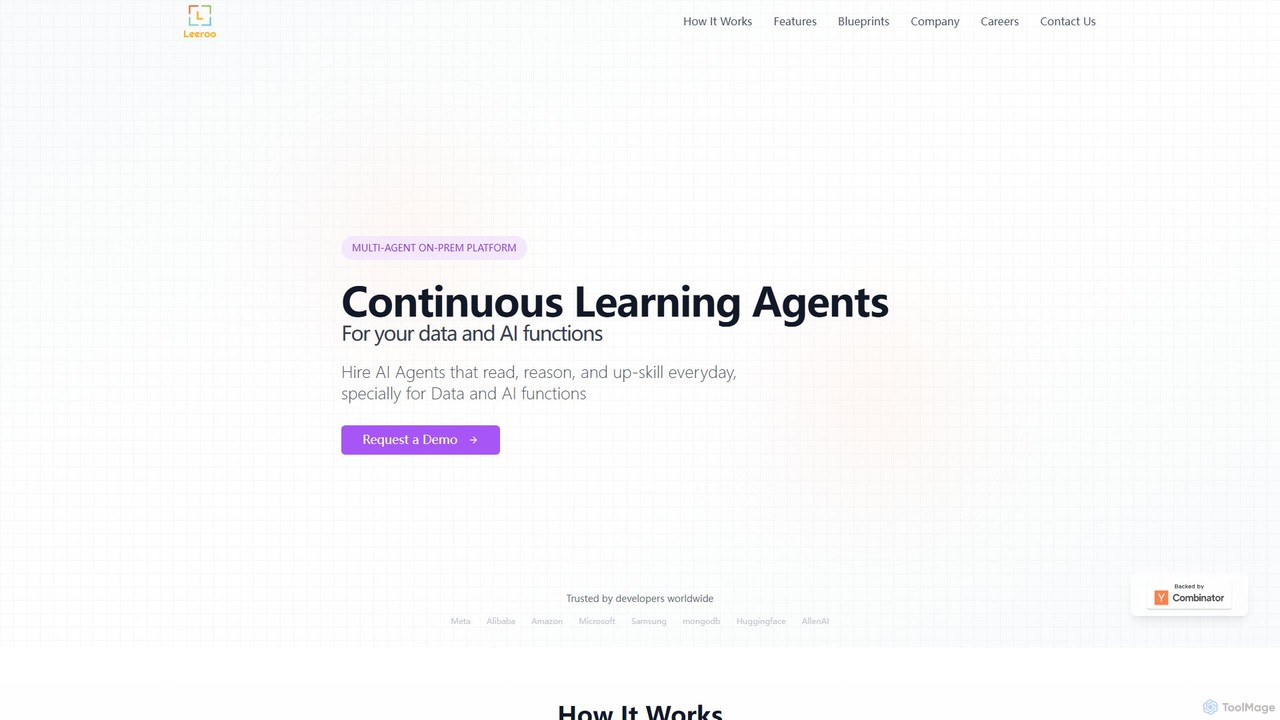
Leeroo
Leeroo is an advanced multi-agent AI platform offering trainable deep agents that learn continuously. Designed for enterprise use, …
Leeroo is an advanced multi-agent AI platform offering trainable deep agents that learn continuously. Designed for enterprise use, it can be deployed on-premise or in the cloud to automate complex data and AI functions. The platform enables agents to collaborate, reason, and up-skill daily, ensuring data sovereignty and delivering expert-level performance for specialized engineering tasks.
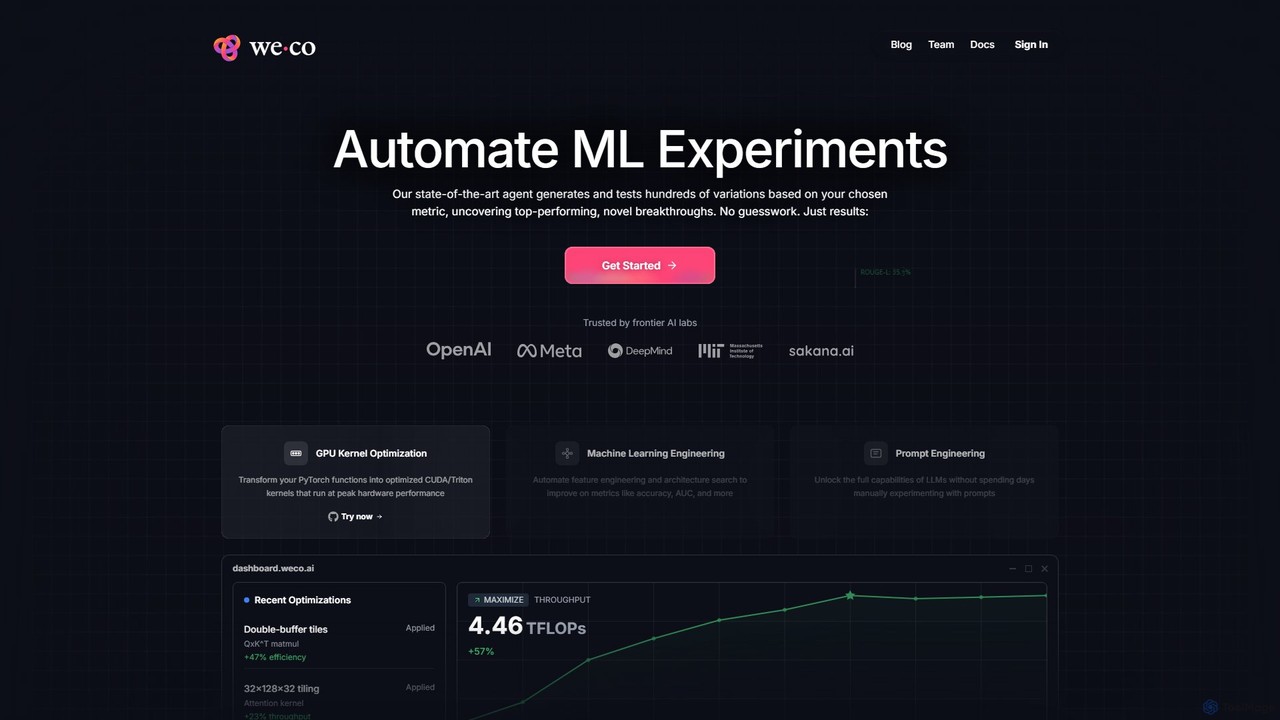
weco
weco is an AI-powered platform that automates machine learning experiments. It utilizes a state-of-the-art agent to generate and …
weco is an AI-powered platform that automates machine learning experiments. It utilizes a state-of-the-art agent to generate and test hundreds of code variations for GPU kernel optimization, feature engineering, and prompt engineering, systematically finding top-performing solutions based on user-defined metrics.
About Machine Learning
Machine Learning (ML) tools are a specialized category of software designed to build, train, and deploy models that learn from data to make predictions or decisions. These tools utilize statistical algorithms to identify patterns in large datasets without being explicitly programmed for each task. They empower users to create applications for forecasting, classification, and clustering, turning raw data into actionable intelligence. As a core component of Data Science, Machine Learning focuses specifically on the algorithmic and computational aspects of creating predictive systems.
Core Features
- Model Training & Evaluation: Provides environments and libraries for training algorithms on data and assessing their performance with metrics like accuracy and precision.
- Feature Engineering: Includes functionalities for transforming, cleaning, and selecting the most relevant data features to improve model performance.
- Algorithm Libraries: Offers a collection of pre-built algorithms for tasks such as regression, classification, clustering, and dimensionality reduction.
- Deployment & MLOps: Facilitates the integration of trained models into production applications and manages their lifecycle, including monitoring and retraining.
- Data Exploration & Visualization: Integrated tools to analyze and visualize datasets, helping to understand data distributions and relationships before modeling.
Use Cases
Machine Learning tools are widely used across various industries. In finance, they are essential for credit scoring and algorithmic trading. Healthcare professionals use them for disease diagnosis from medical images and predicting patient outcomes. In e-commerce and marketing, these tools power recommendation engines and customer churn prediction models, enabling personalized user experiences and targeted campaigns.
How to Choose
When selecting a Machine Learning tool, consider your technical expertise; some platforms offer no-code/low-code interfaces (AutoML), while others are code-centric (e.g., Python libraries). Evaluate the tool's scalability to handle your data volume and its library of available algorithms for your specific problem. Also, assess its integration capabilities with your existing data sources and deployment environments, as well as the overall cost structure.
Featured Tool Leaderboard
Most Popular
Sorted by highest monthly traffic










Most Interactive
Sorted by lowest bounce rate





Highest User Engagement
Sorted by Average Visit Duration
Top Free Tools
Free and sorted by traffic


Machine LearningUse Cases
Predicting Customer Churn for a Subscription Service
A data analyst for a SaaS company needs to identify customers at high risk of canceling their subscriptions. Using a machine learning platform, they upload historical customer data, including usage patterns, subscription tenure, and support ticket history. They use an AutoML feature to automatically test various classification algorithms like Logistic Regression and Gradient Boosting. The platform identifies the best-performing model, which predicts churn with 85% accuracy. This allows the marketing team to proactively engage at-risk customers with targeted retention offers, reducing overall churn by 15% in the next quarter.
Automating Medical Image Analysis
A medical researcher is developing a system to detect early signs of a disease from MRI scans. Using a machine learning framework with deep learning capabilities, they build a Convolutional Neural Network (CNN). They train the model on a large, annotated dataset of thousands of scans. The ML tool provides features for data augmentation to improve model robustness. After training and validation, the deployed model can analyze new scans and highlight potentially anomalous regions with a high degree of accuracy, serving as a powerful assistive tool for radiologists and speeding up the diagnostic process.
Developing a Real Estate Price Prediction Model
A real estate firm wants to provide accurate property value estimates to its clients. A data scientist on their team uses a machine learning library like Scikit-learn within a cloud-based notebook environment. They gather a dataset of property sales, including features like square footage, number of bedrooms, location, and age. They preprocess the data and train several regression models, such as Linear Regression and Random Forest, to predict sale prices. The ML tool's visualization features help them analyze feature importance and model errors. The final model is integrated into the firm's website, providing instant, data-driven property valuations.
Building a Personalized Product Recommendation Engine
An e-commerce platform aims to increase user engagement and sales by showing personalized product suggestions. An ML engineer uses a cloud ML service to build a recommendation system. They combine two approaches: collaborative filtering (based on what similar users liked) and content-based filtering (based on product attributes). The platform provides managed infrastructure to process massive user interaction logs and product catalogs. After training, the model is deployed as an API. The website calls this API to fetch real-time recommendations for each user, resulting in a 10% increase in average order value and improved customer satisfaction.
Implementing Predictive Maintenance for Industrial Machinery
A manufacturing plant manager wants to minimize downtime by predicting equipment failures before they happen. An ML engineer collects sensor data (temperature, vibration, pressure) from machinery. Using a time-series analysis library within an ML platform, they build a model that learns the normal operating patterns. The model is trained to detect anomalies that often precede a failure. When deployed, the system monitors sensor data in real-time and sends an alert to the maintenance team when it predicts a high probability of failure. This shifts the maintenance strategy from reactive to proactive, saving significant costs and improving operational efficiency.
Sentiment Analysis of Customer Feedback
A product manager wants to understand public opinion about a new feature by analyzing thousands of online reviews and social media comments. They use a Natural Language Processing (NLP) model available in a machine learning tool. They fine-tune a pre-trained sentiment analysis model on a small, domain-specific dataset to improve its accuracy. The tool processes the text data and classifies each comment as positive, negative, or neutral. The aggregated results are displayed on a dashboard, providing the product team with clear, quantitative insights into customer sentiment, helping them prioritize future development efforts.