Precip
Precip provides hyper-local, highly accurate rainfall totals and historical weather data through a web dashboard and a powerful …
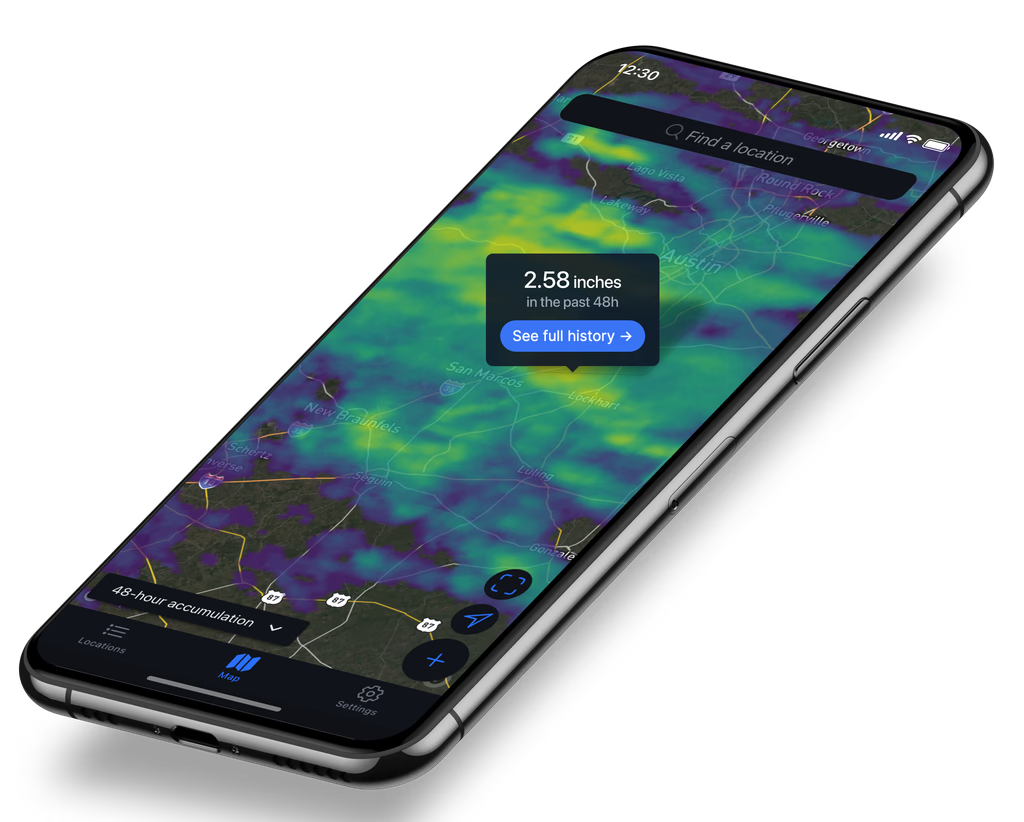
Precip provides hyper-local, highly accurate rainfall totals and historical weather data through a web dashboard and a powerful API. It's designed for industries like agriculture, construction, and logistics, offering 1km resolution data, real-time rainfall notifications, and multi-location monitoring. By tracking actual precipitation, Precip helps businesses make informed, data-driven decisions, optimize schedules, and manage weather-dependent operations more efficiently, surpassing the accuracy of standard forecasts.
About Weather
AI Weather tools are a specialized category of data analysis platforms that use machine learning and predictive modeling to deliver highly accurate and granular weather forecasts. These tools process vast datasets from satellites, radar, and ground sensors to identify complex atmospheric patterns that traditional models might miss. Their primary value lies in providing actionable, hyper-local, and long-range weather intelligence for critical decision-making. This enables industries to mitigate risks, optimize operations, and improve resource planning based on precise weather predictions.
Core Features
- Predictive Modeling: Utilizes machine learning algorithms to generate forecasts with higher accuracy and longer lead times.
- Hyper-local Forecasting: Provides weather data for specific locations, such as a single farm field or city block.
- Climate Risk Analysis: Assesses the long-term impact of climate change on specific assets or regions.
- Real-time Data Integration: Continuously ingests and processes live weather data for up-to-the-minute predictions.
- Customizable Alerts: Allows users to set up automated notifications for specific weather conditions or thresholds.
Use Cases
AI Weather tools are crucial for industries sensitive to weather conditions. In agriculture, they inform precision farming by optimizing irrigation and pesticide schedules. The renewable energy sector uses them to forecast wind and solar output for grid management. Logistics and transportation companies rely on these tools to optimize routes and avoid delays caused by severe weather.
How to Choose
When selecting an AI Weather tool, consider the forecast resolution and accuracy required for your use case. Evaluate the availability and ease of integration of its API for seamless workflow automation. Assess the range of data sources it uses and the transparency of its predictive models. Finally, check for industry-specific modules or features that align with your business needs.
WeatherUse Cases
Optimize Irrigation for Precision Agriculture
A farm manager responsible for a large vineyard uses an AI Weather tool to get hyper-local forecasts. The tool provides predictions for rainfall, soil moisture, and evapotranspiration rates for specific zones within the vineyard. Based on this data, the manager adjusts the automated irrigation system daily, delivering water only when and where it's needed. This prevents overwatering, reduces water consumption by up to 30%, and improves grape quality by minimizing stress on the vines.
Forecast Renewable Energy Generation
An operations manager at a wind farm uses an AI weather platform to predict wind speed and direction with high accuracy for the next 72 hours. The AI model analyzes complex topographical and atmospheric data specific to the farm's location. This allows the company to provide reliable power generation forecasts to the grid operator, optimize turbine maintenance schedules during low-wind periods, and maximize revenue by selling energy more effectively on the spot market.
De-risk Logistics and Supply Chains
A logistics coordinator for a national shipping company uses an AI weather service to monitor conditions along all active delivery routes. The system provides real-time alerts for severe weather events like blizzards, floods, or high winds that could impact transit times or driver safety. By receiving advance warnings, the coordinator can proactively re-route trucks, communicate potential delays to customers, and adjust delivery schedules, minimizing disruptions and reducing weather-related costs by 15-20%.
Assess Climate Risk for Insurance Underwriting
An underwriter at an insurance company uses an AI-powered climate risk platform to evaluate a property's long-term exposure to natural disasters. The tool analyzes historical weather data and climate projection models to generate a risk score for events like wildfires, hurricanes, and floods over a 30-year period. This data-driven assessment allows the underwriter to price insurance policies more accurately, reflecting the true risk level and ensuring the company's long-term financial stability against climate change impacts.
Plan Outdoor Event and Construction Schedules
A project manager for a large construction site uses an AI weather tool to plan work schedules a week in advance. The tool provides hourly forecasts for precipitation, wind gusts, and temperature extremes. This allows the manager to schedule weather-sensitive tasks like concrete pouring or crane operations for optimal conditions, ensuring worker safety and preventing costly project delays. For a major outdoor festival, this same approach helps organizers decide on contingency plans for rain or extreme heat.
Predict Retail Demand for Seasonal Goods
A demand planner for a national retail chain integrates an AI weather API into their inventory management system. The model correlates upcoming weather patterns with historical sales data. For example, it predicts a surge in demand for air conditioners and sunscreen ahead of a forecasted heatwave, or a spike in rock salt sales before a snowstorm. This allows the retailer to proactively adjust stock levels across different regions, preventing stockouts of high-demand items and minimizing overstock of others.