Standup Mate
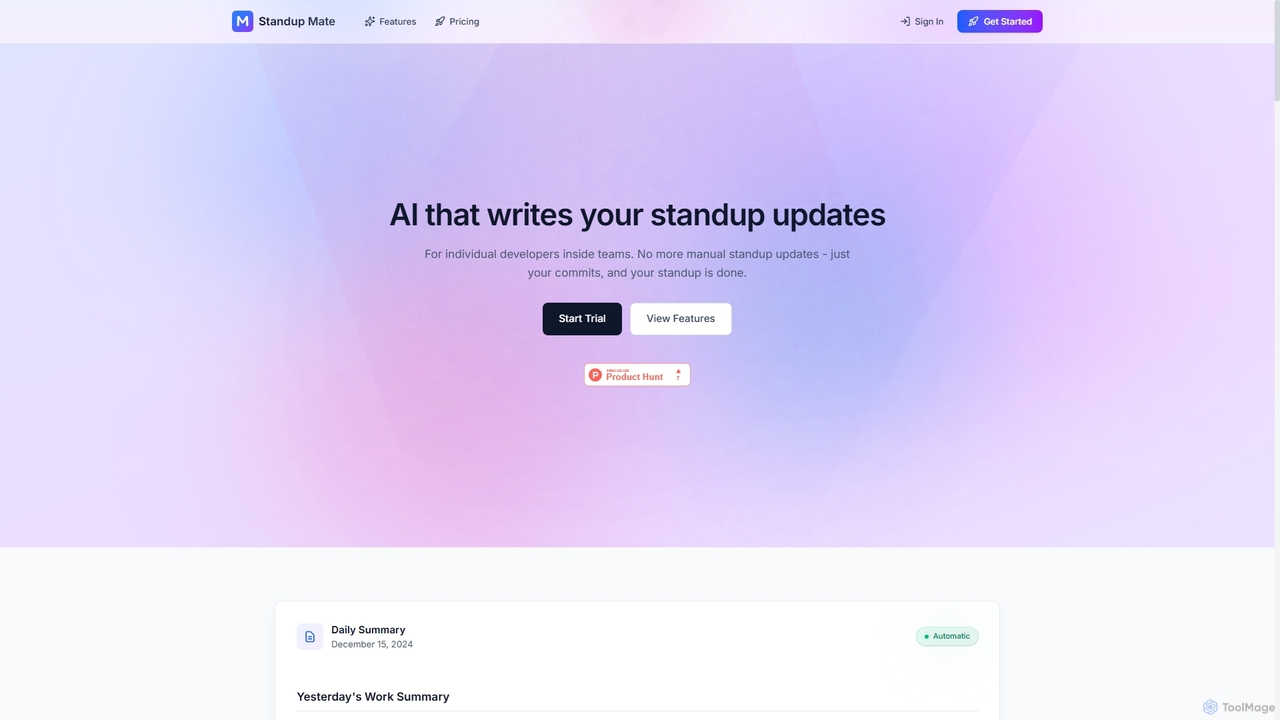
Standup Mate is an AI-powered tool that automatically generates daily standup updates and sprint reports directly from your …
Standup Mate is an AI-powered tool that automatically generates daily standup updates and sprint reports directly from your GitHub activity. Designed for individual developers, it transforms commits, pull requests, and issues into clear, concise summaries, saving valuable time and ensuring accurate reporting without manual effort.
Howsthisgoing
Howsthisgoing is an AI-powered project manager for Slack that automates team standups and status updates. It integrates with …
Howsthisgoing is an AI-powered project manager for Slack that automates team standups and status updates. It integrates with tools like GitHub to generate intelligent summaries and provide instant insights into your team's progress, blockers, and code changes, all through natural language queries within Slack.
Bitbucket
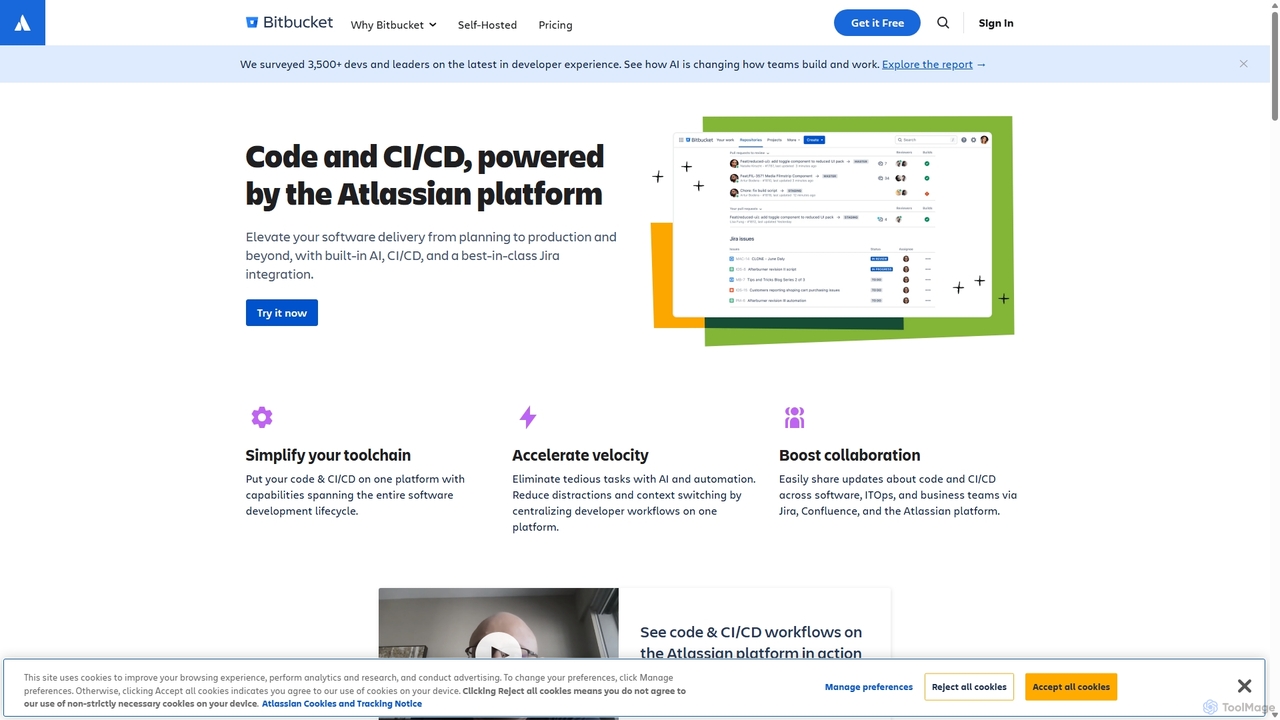
Bitbucket is a Git-based code hosting and collaboration platform for professional teams. It offers best-in-class Jira integration, built-in …
Bitbucket is a Git-based code hosting and collaboration platform for professional teams. It offers best-in-class Jira integration, built-in CI/CD (Pipelines), and AI-powered features to streamline the entire software development lifecycle, from planning to deployment and beyond.
Stepsize AI
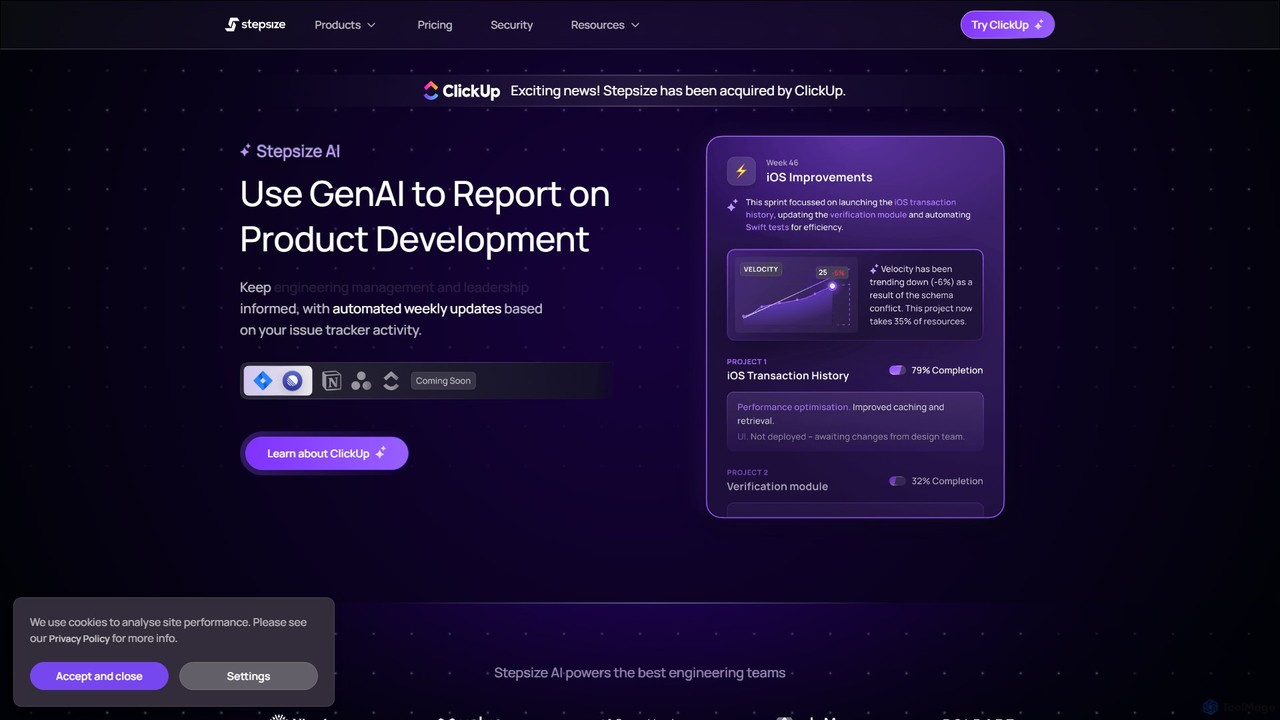
Stepsize AI is an intelligent reporting tool for software development teams. It integrates with Jira and Linear to …
Stepsize AI is an intelligent reporting tool for software development teams. It integrates with Jira and Linear to automatically generate dashboards and weekly progress reports. Using AI, it provides metrics with plain-language commentary, identifies project themes, and surfaces delivery risks, eliminating manual reporting and keeping teams aligned.
Git Digest
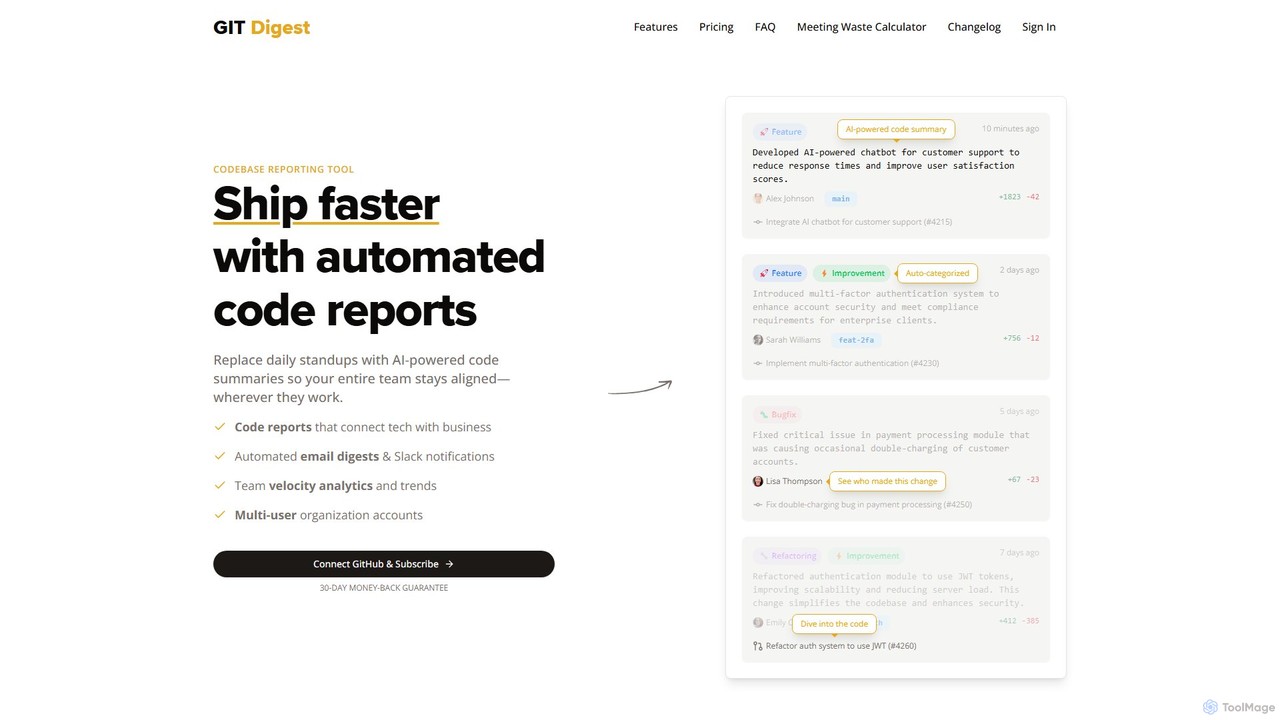
Git Digest is an AI-powered codebase reporting tool that automates daily standups. It analyzes GitHub commits and generates …
Git Digest is an AI-powered codebase reporting tool that automates daily standups. It analyzes GitHub commits and generates clear, concise summaries delivered via email or Slack, helping development teams stay aligned, save time, and ship faster. It also provides team velocity analytics and bridges the gap between technical and business stakeholders.
huly
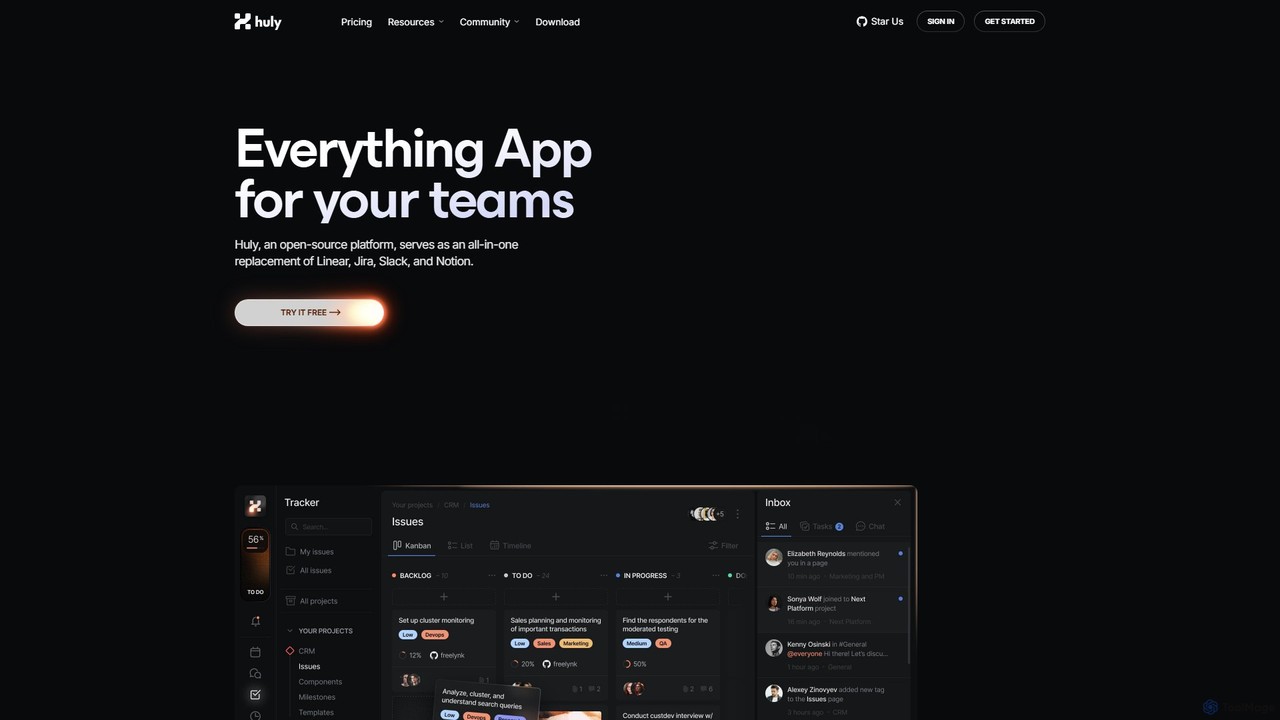
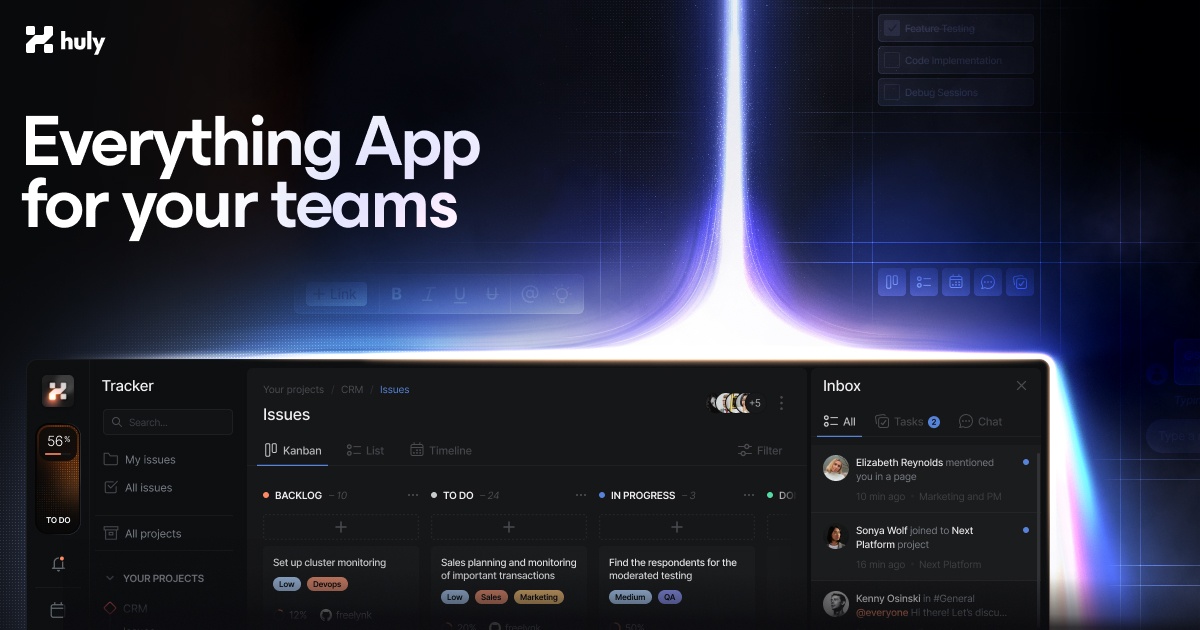
Huly is an open-source, all-in-one productivity platform designed for teams. It integrates project management, team chat, virtual offices, …
Huly is an open-source, all-in-one productivity platform designed for teams. It integrates project management, team chat, virtual offices, and a knowledge base, aiming to replace tools like Jira, Slack, and Notion. With deep GitHub integration and upcoming AI features, Huly streamlines workflows for developers and product teams, fostering unmatched collaboration and efficiency in a single, unified workspace.
DepsHub
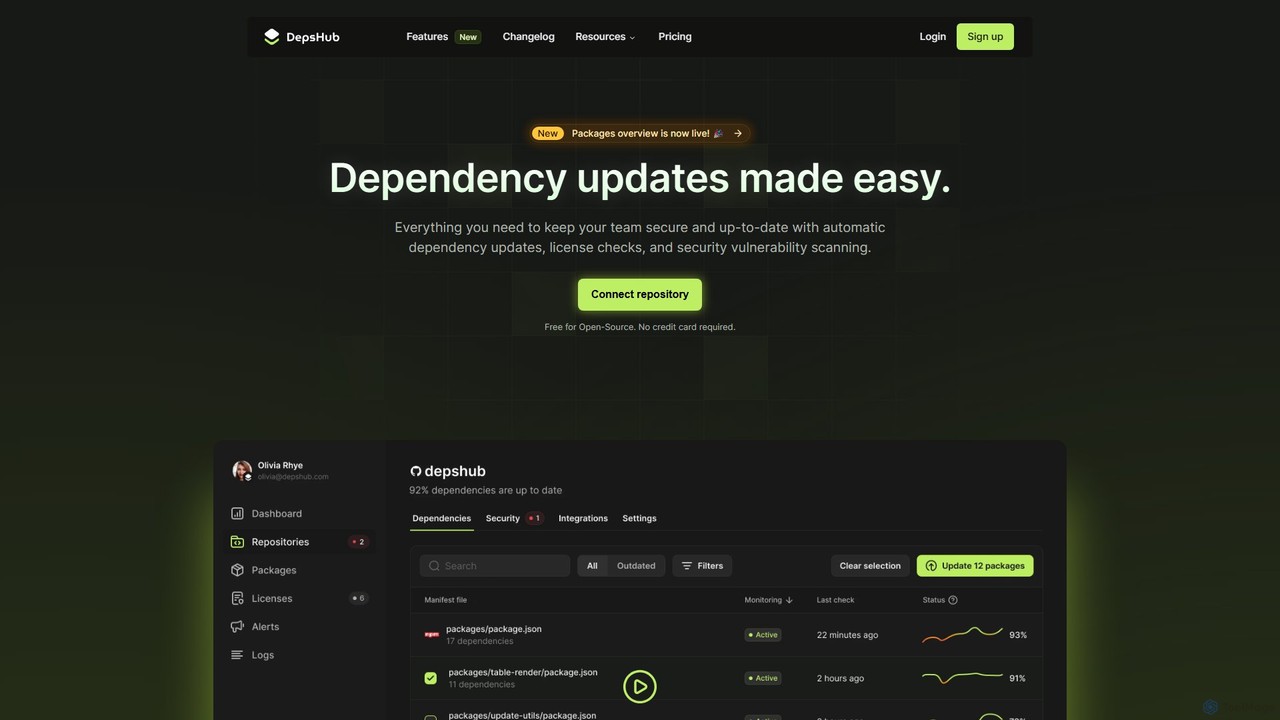
DepsHub is an AI-powered platform that automates dependency management for development teams. It simplifies updates, performs security vulnerability …
DepsHub is an AI-powered platform that automates dependency management for development teams. It simplifies updates, performs security vulnerability scanning, and ensures license compliance, allowing developers to focus on coding while maintaining a secure and up-to-date codebase.
About Code Management
AI Code Management tools are a specialized category of developer utilities that use machine learning to analyze, review, and optimize source code. They go beyond traditional static analysis by understanding the context and logic of the code, not just its syntax. This enables development teams to automatically detect complex bugs, security vulnerabilities, and performance bottlenecks early in the development lifecycle. By providing intelligent suggestions for refactoring and improvement, these tools help enhance code quality, accelerate review processes, and maintain a healthy codebase.
Core Features
- AI-Powered Code Review: Automatically analyzes pull requests and provides contextual feedback on bugs, style, and best practices.
- Security Vulnerability Detection: Identifies potential security flaws like SQL injection and data leaks by analyzing code patterns.
- Intelligent Refactoring Suggestions: Recommends code structure improvements to enhance readability, maintainability, and performance.
- Code Quality & Health Analytics: Provides dashboards and metrics to track code complexity, technical debt, and overall quality over time.
- Semantic Code Search: Allows developers to search for code snippets based on functionality or logic, not just keywords.
Use Cases
These tools are essential for software development teams in any industry, from tech startups to large enterprises. They are particularly valuable for projects with large codebases, multiple contributors, or stringent security and performance requirements. DevOps engineers integrate them into CI/CD pipelines to automate quality gates, while team leads use them to enforce coding standards and mentor junior developers.
How to Choose
When selecting a tool, consider its programming language support (e.g., Python, JavaScript, Java). Evaluate its integration capabilities with your existing version control systems (like GitHub, GitLab) and CI/CD tools. Assess the depth of its analysis, whether it focuses more on security, performance, or style. Finally, consider the pricing model and whether it aligns with your team's size and project scale.
Code ManagementUse Cases
Automating Code Reviews in CI/CD Pipelines
A DevOps engineer for a financial tech company integrates an AI Code Management tool into their GitHub Actions workflow. For every new pull request, the tool automatically runs a deep analysis of the changed code. It posts comments directly on the pull request, highlighting potential bugs, security risks, and deviations from coding standards. This process acts as an automated first-pass review, allowing human reviewers to focus on architectural and logical issues rather than syntax errors. This reduces the average code review time by over 40% and catches critical issues before they are merged.
Proactively Identifying Security Vulnerabilities
A security team at a healthcare software company uses an AI Code Management tool to continuously scan their application's source code. The tool is trained to recognize patterns associated with common vulnerabilities, such as OWASP Top 10 risks. When a developer writes code that could lead to a cross-site scripting (XSS) or SQL injection attack, the tool provides an immediate alert within their IDE. This real-time feedback loop helps developers learn secure coding practices and prevents security flaws from ever being committed to the repository, significantly strengthening the application's security posture.
Modernizing and Refactoring Legacy Code
A senior software architect is tasked with improving a large, decade-old monolithic application written in Java. They use an AI Code Management tool to analyze the entire codebase for technical debt. The tool identifies overly complex methods, duplicated code blocks, and poor architectural patterns. It then provides intelligent, step-by-step refactoring suggestions to break down complex functions and improve modularity. This guidance allows the team to systematically modernize the legacy system, making it more maintainable and easier to add new features to without introducing new bugs.
Enforcing Consistent Coding Standards Across Teams
An engineering manager at a large corporation with globally distributed development teams needs to ensure code consistency. They configure an AI Code Management tool with the company's specific style guides and best practices for Python and Go. The tool is integrated into every project's CI pipeline. If a developer's commit violates a rule, the build fails, and the tool provides a clear explanation and a suggested fix. This automates the enforcement of coding standards, eliminates debates during code reviews, and ensures a high level of quality and uniformity across the entire organization's codebase.
Optimizing Application Performance Before Deployment
A performance engineer working on a high-traffic e-commerce platform uses an AI Code Management tool to find performance bottlenecks. The tool analyzes the code to detect inefficient algorithms, unnecessary database queries within loops, and memory-intensive operations. For example, it might flag a section of code that is using a O(n^2) algorithm where a O(n log n) alternative exists. By addressing these issues identified by the tool during development, the team can optimize the application's speed and responsiveness, ensuring a better user experience and reducing infrastructure costs.
Accelerating New Developer Onboarding
A junior developer joins a team with a complex and extensive codebase. To help them get up to speed, the team utilizes an AI Code Management tool integrated into their IDE. As the new developer writes code, the tool provides real-time suggestions and explanations based on the project's established patterns and best practices. It acts as a virtual mentor, guiding them on everything from variable naming conventions to proper API usage. This immediate feedback loop helps the developer learn the codebase and team standards much faster, allowing them to become a productive contributor in weeks instead of months.