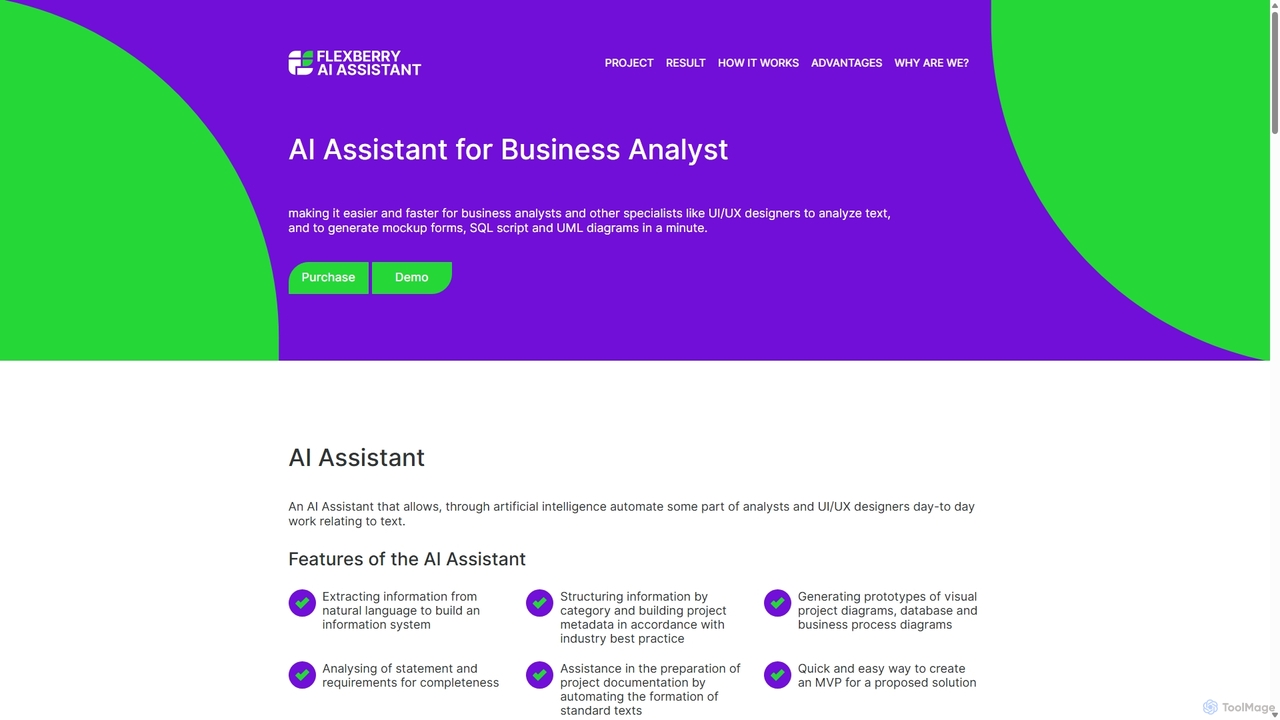
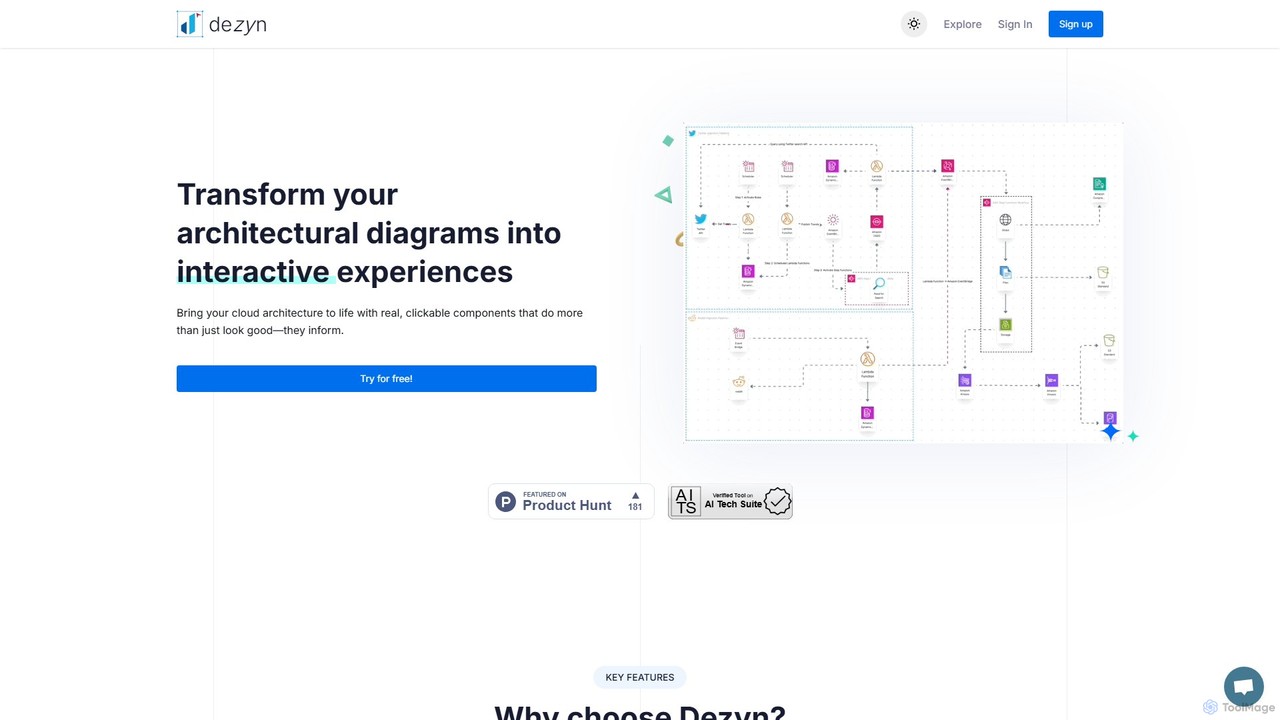
AI System Design tools are a specialized category of developer tools that use artificial intelligence to automate and enhance the process of creating software architecture diagrams. They leverage natural language processing and machine learning to translate textual descriptions, code, or database schemas into visual representations like UML or C4 models. This approach significantly accelerates the design phase, improves clarity among team members, and helps identify potential architectural flaws early. These tools effectively bridge the gap between abstract ideas and concrete, standardized system blueprints.
Core Features
- Text-to-Diagram Generation: Automatically create complex system diagrams from plain text prompts or markdown-like syntax.
- Architecture Analysis: Analyze designs for inconsistencies, security vulnerabilities, or performance bottlenecks.
- Code Reverse Engineering: Generate diagrams by analyzing existing codebases or database schemas to document current state.
- Collaborative Whiteboarding: Provide an intelligent canvas for real-time team collaboration on system architecture.
- Automated Documentation: Generate and maintain up-to-date technical documentation alongside the visual design.
Use Cases
These tools are primarily used by software architects, senior developers, and DevOps engineers during the planning and documentation phases of a project. They are valuable for brainstorming new microservices architectures, documenting existing legacy systems for modernization, or ensuring design consistency across large engineering teams.
How to Choose
When selecting a tool, consider the supported diagram types (e.g., UML, C4, ERD), integration with your tech stack (GitHub, Jira, Confluence), and the accuracy of the AI generation. Also, evaluate the collaboration features for team-based projects and the tool's ability to handle large-scale systems and provide various export options.