ToolMage
Sign in

Best 1,209 Finance AI tools

Popular Finance AI tools include Brave, Shop, Realtor.com, Intuit, SAP, KuCoin, CoCounsel, Buy Me a Coffee, Workday, and Ramp, helping you work more efficiently.

abacum
Paid

abacum

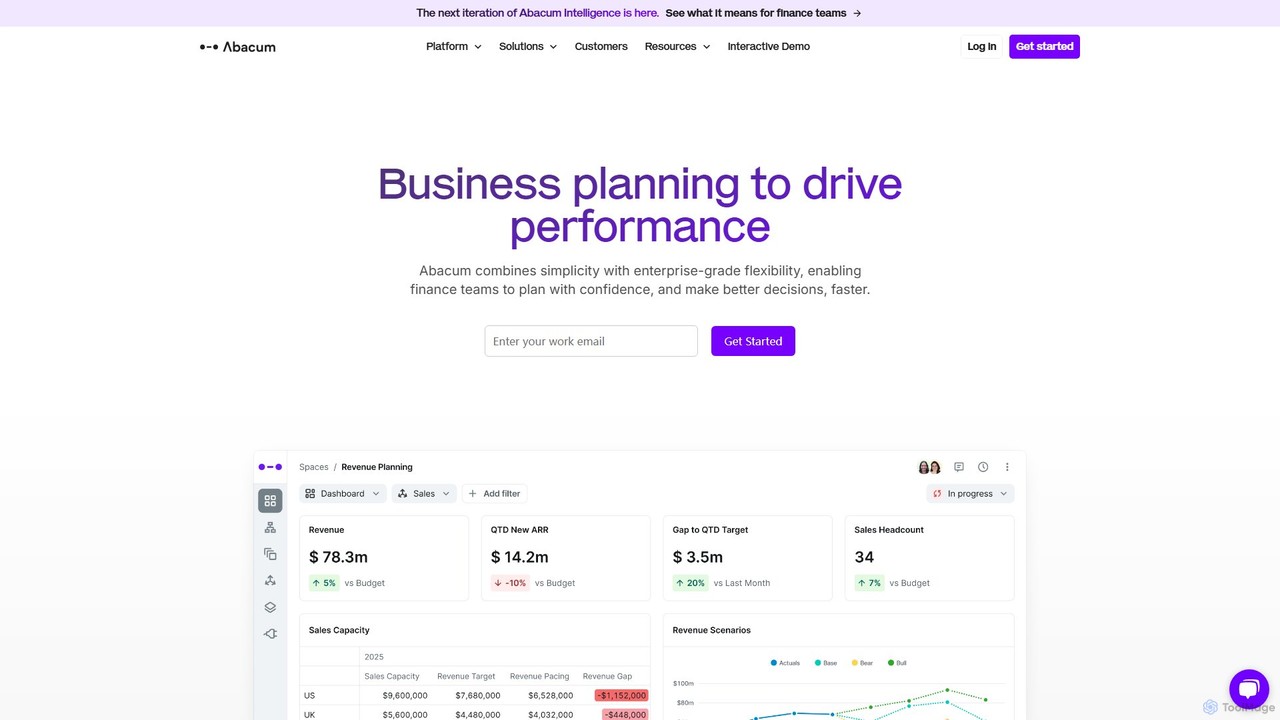
Abacum is an AI-powered Financial Planning and Analysis (FP&A) platform designed for modern finance teams. It automates data collection, streamlines budgeting and forecasting, and provides real-time insights to drive strategic decision-making. By integrating with over 50 business systems, Abacum eliminates manual tasks, enhances collaboration, and transforms finance departments into key drivers of business growth.

Analytics
Visits 110.8KFavorites 118Likes 146

FutureFounderAI
Paid

FutureFounderAI

FutureFounderAI is an AI-powered platform designed for aspiring entrepreneurs to validate their business ideas. It analyzes your concept against market trends, provides a strength assessment, and offers personalized guidance and market insights to refine your plan and increase your chances of success.

Startup Tools
Visits 5.6KFavorites 101Likes 115
Clyr
Paid

Clyr

Clyr is an AI-powered expense and bill management platform designed for contractors, project managers, and businesses with field teams. It automates expense tracking, receipt capture, and accounts payable to save time, boost efficiency, and increase profit margins. Clyr integrates seamlessly with your existing CRM, ERP, and accounting software.

Accounting
Visits 11.9KFavorites 147Likes 124
Img2Sheet
Freemium

Img2Sheet

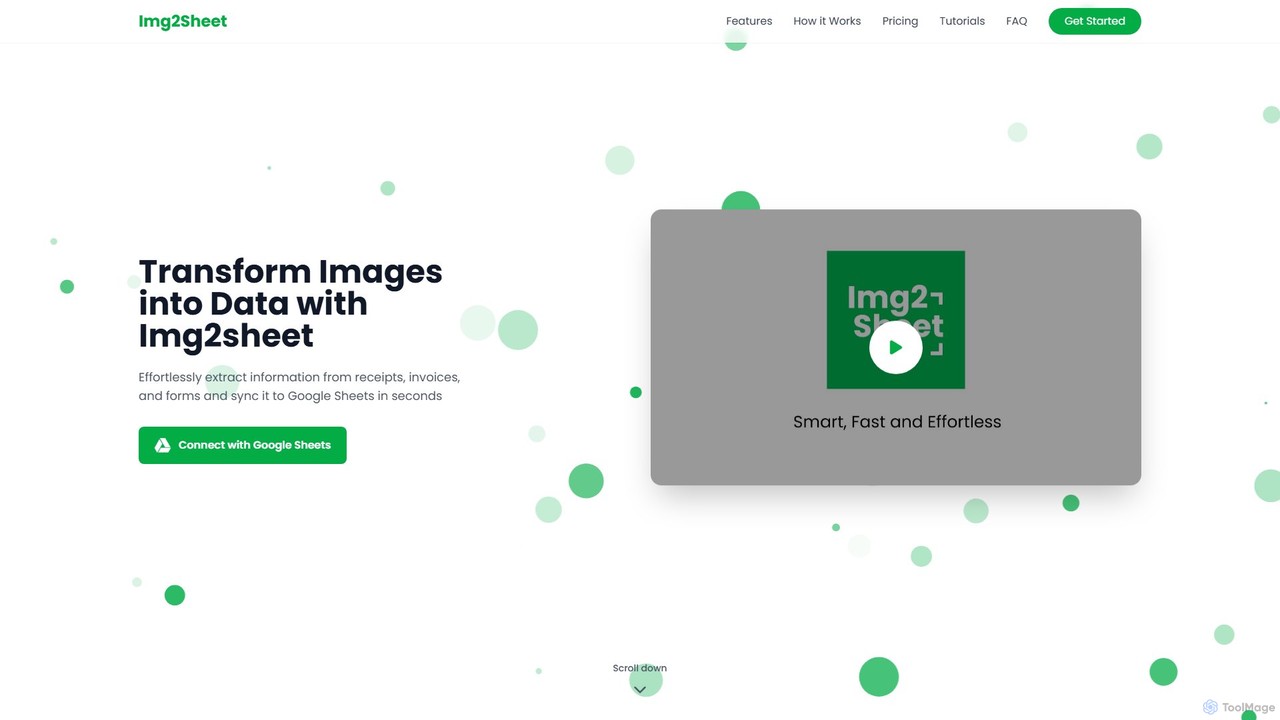
Img2Sheet is an AI-powered tool that automates data extraction from images like receipts, invoices, and forms, syncing the information directly into Google Sheets. It eliminates manual data entry, saves time, and increases accuracy with a simple, pay-per-use model.

Extraction
Visits 15.8KFavorites 98Likes 116
Clear
Freemium

Clear

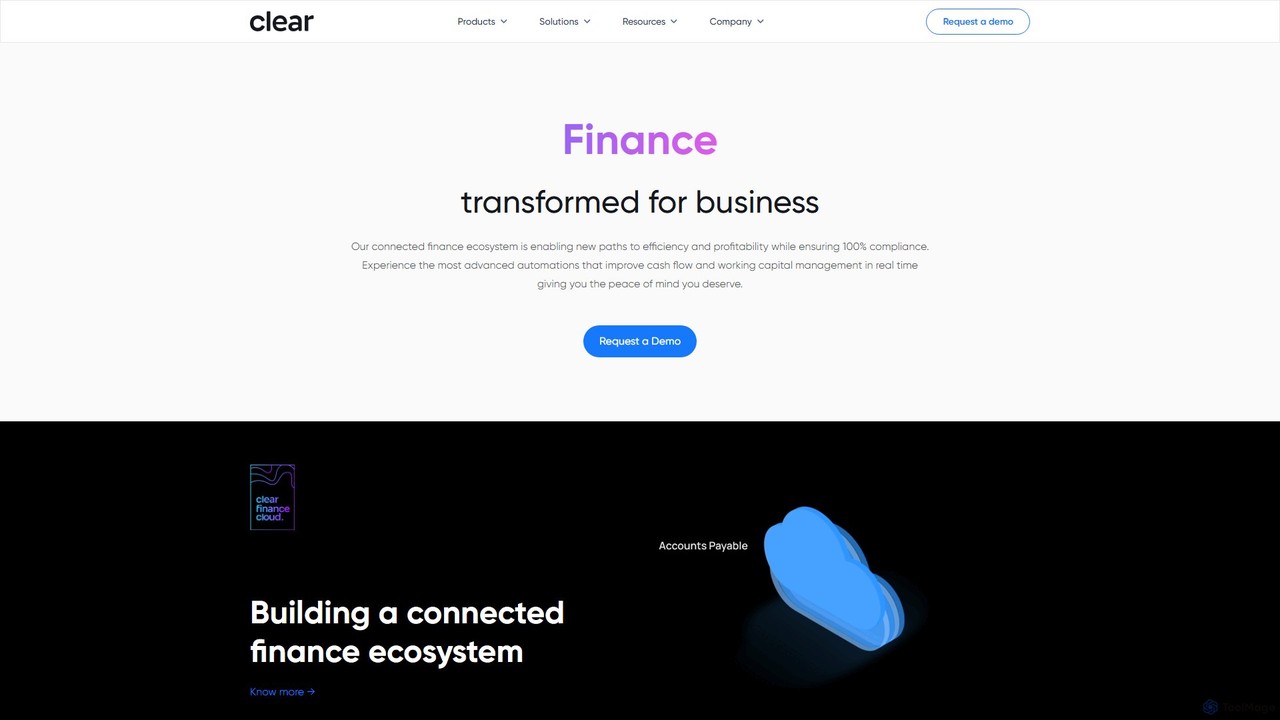
Clear is a comprehensive financial technology platform for India, offering AI-powered solutions for individuals, businesses, and tax professionals. It simplifies tax compliance, including GST, TDS, and ITR e-filing, through advanced automation. For businesses, it provides an integrated ecosystem for e-invoicing, accounts payable automation, and supply chain financing, aiming to enhance efficiency, improve cash flow, and ensure 100% compliance with Indian financial regulations.

Compliance
Visits 151.7KFavorites 143Likes 116
SafeBet
Freemium

SafeBet

SafeBet is an AI-powered platform that provides daily sports betting picks. By analyzing vast amounts of data across sports like the NBA, NFL, and Soccer, it generates data-driven predictions to help users make informed, unemotional betting decisions. Picks are delivered via a private Telegram channel, complete with detailed reports and an 'AI Safe Score' to assess risk.

Predictive Analytics
Visits 6.5KFavorites 115Likes 113
Base64.ai
Freemium

Base64.ai

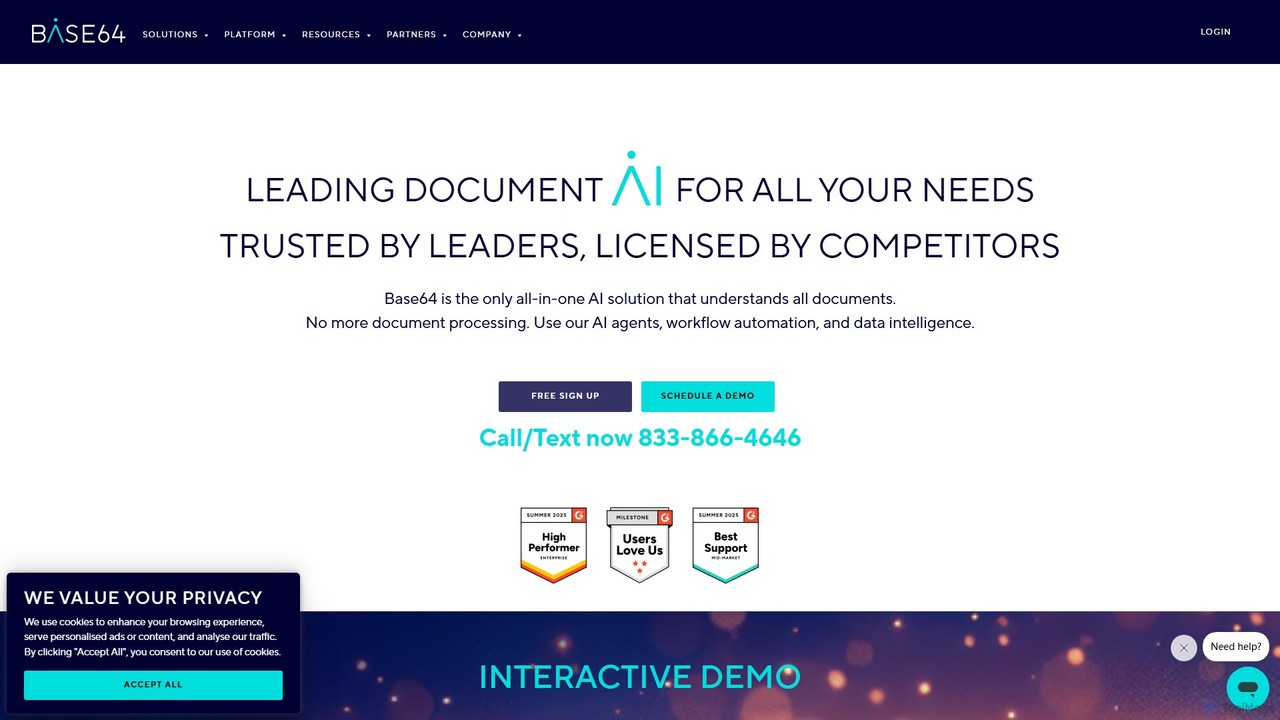
Base64.ai is an enterprise-grade, all-in-one Document Intelligence platform. It uses AI to automate data extraction and processing from any document, image, or multimedia file. With over 2,800 pre-trained models and seamless API/no-code integrations, it helps businesses in finance, insurance, and healthcare achieve 99.7% accuracy, reduce costs by 5x, and cut processing time from weeks to seconds.

Document Management
Visits 25.4KFavorites 143Likes 129
Leasecake
Paid

Leasecake

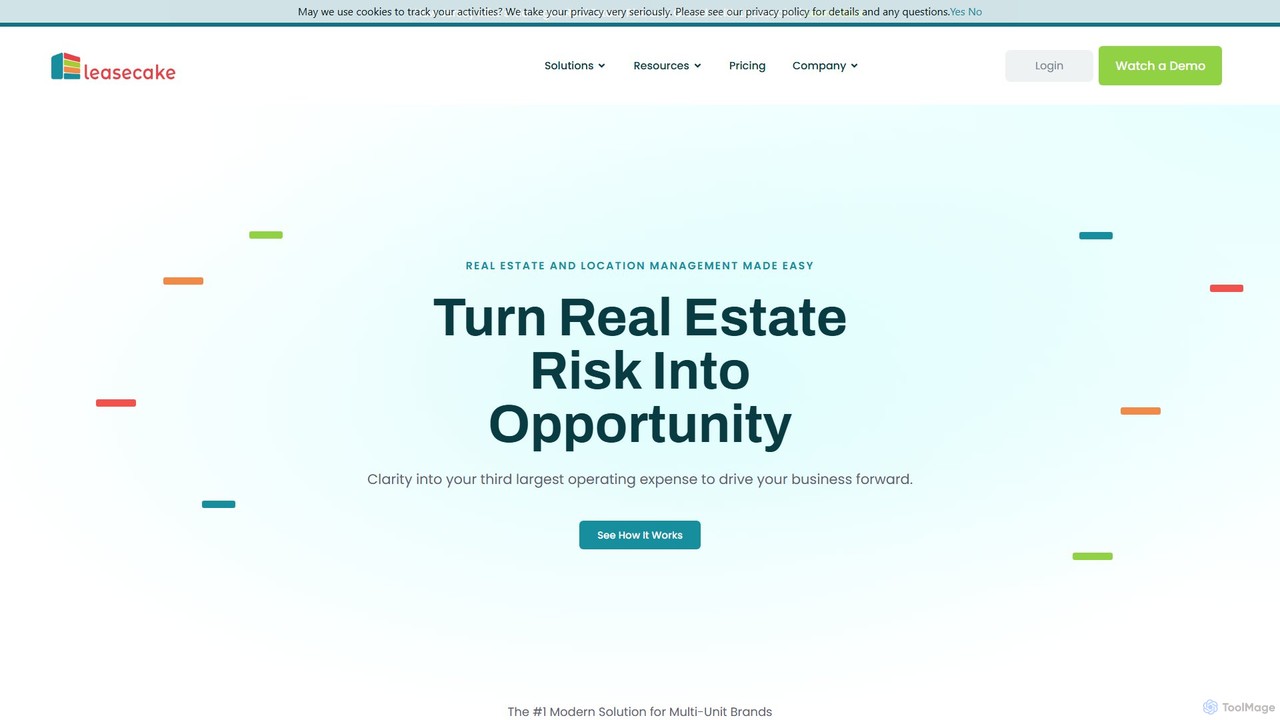
Leasecake is a cloud-based lease management and location intelligence platform designed for multi-unit businesses. It simplifies real estate and location management by automating critical date tracking, ensuring compliance, and centralizing all lease-related data. This helps tenants, franchisees, and operators reduce risk, save costs, and make informed decisions to drive business growth.

Real Estate Management
Visits 18.2KFavorites 164Likes 151
Arc
Freemium

Arc

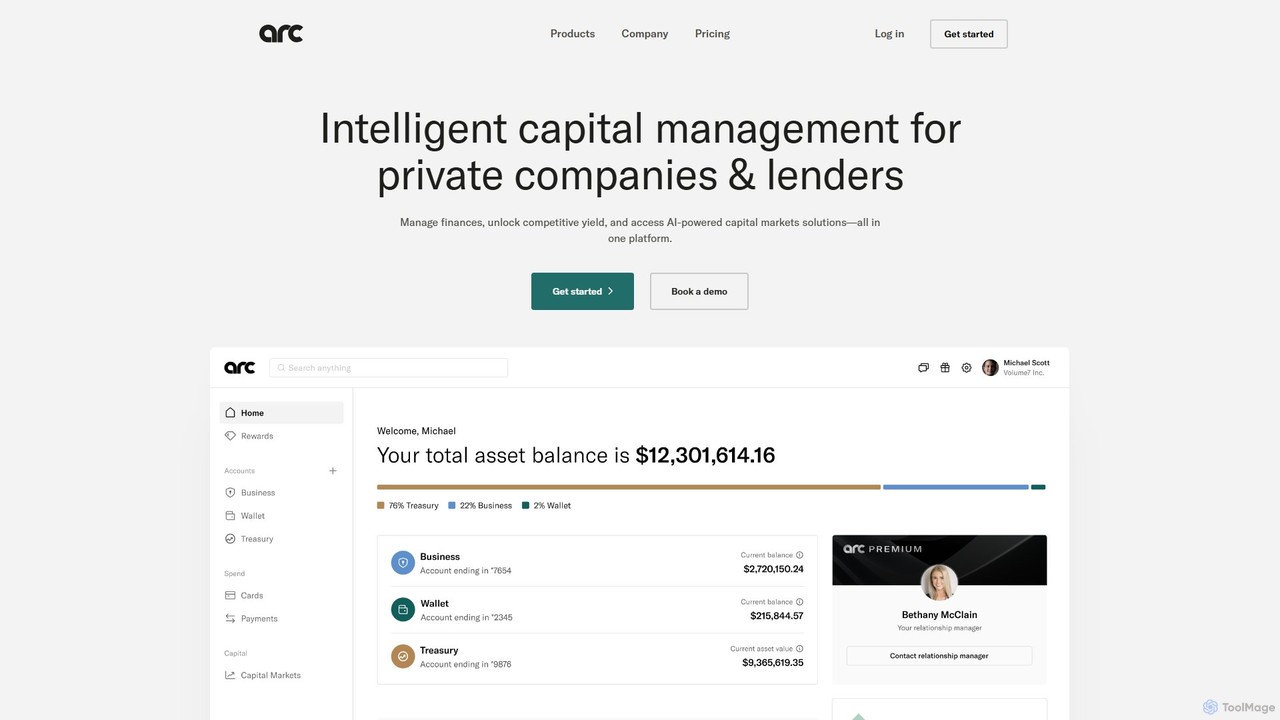
Arc is an AI-powered financial platform for startups and private companies, offering an all-in-one solution for intelligent capital management. It combines high-yield cash and treasury management with AI-driven access to non-dilutive capital markets. Manage finances, earn competitive yield on idle cash, and secure debt financing efficiently on a single, secure platform.

Banking
Visits 44.8KFavorites 110Likes 117

About Finance

AI Finance tools are a class of applications that leverage artificial intelligence to analyze financial data, automate processes, and generate actionable insights. These tools utilize machine learning algorithms, predictive analytics, and natural language processing to interpret complex market data, assess risk, and forecast trends. They empower users, from individual investors to large financial institutions, to make faster, more informed decisions and optimize their financial strategies. The primary value lies in their ability to process vast datasets in real-time, uncovering patterns that are invisible to human analysis.

Core Features

  • Predictive Market Analysis: Forecasts stock prices, market trends, and economic indicators using historical data and machine learning models.
  • Algorithmic Trading: Automates the execution of trades based on predefined criteria and real-time market analysis.
  • Risk Management & Compliance: Identifies, assesses, and mitigates financial risks while ensuring adherence to regulatory standards.
  • Fraud Detection: Employs anomaly detection to identify and flag suspicious transactions in real-time, preventing financial loss.
  • Personalized Financial Advisory: Provides tailored investment advice and portfolio management based on an individual's financial goals and risk tolerance.

Use Cases

AI Finance tools are widely used across the financial sector. Investment banks and hedge funds use them for high-frequency trading and portfolio optimization. Retail banks apply them for credit scoring and loan approval automation. Corporate finance departments utilize these tools for financial forecasting and expense management, while individual investors use robo-advisors for personal wealth management.

How to Choose

When selecting an AI Finance tool, consider the following: First, evaluate its data security and compliance with financial regulations like GDPR or SEC rules. Second, assess its integration capabilities with your existing brokerage accounts, banks, or accounting software. Third, examine the accuracy and transparency of its predictive models. Finally, ensure the tool's specific features align with your primary goal, whether it's day trading, long-term investing, or business financial planning.

Featured tool rankings

Finance use cases

1

Automated Stock Market Analysis for Investors

An individual investor or financial analyst uses an AI-powered platform to screen thousands of stocks based on custom criteria like P/E ratios, revenue growth, and market sentiment analysis from news articles. The tool automatically generates detailed reports on promising stocks, highlighting potential risks and opportunities. This process reduces hours of manual research into minutes, allowing the investor to focus on strategic decision-making rather than data collection. The system can also set up real-time alerts for significant market events or price movements affecting their portfolio.

2

Executing High-Frequency Trading Strategies

A quantitative trading firm deploys an AI-driven algorithmic trading system to execute trades at speeds impossible for humans. The system analyzes real-time market data streams, identifies fleeting arbitrage opportunities, and places buy/sell orders in microseconds. The AI continuously learns from market responses and adjusts its strategies to optimize performance and manage risk. This application is crucial for capitalizing on small price inefficiencies in highly liquid markets like foreign exchange or equities, where speed is the primary competitive advantage.

3

AI-Powered Credit Scoring and Loan Approval

A bank or lending institution uses an AI model to assess the creditworthiness of loan applicants. Instead of relying solely on traditional credit scores, the AI analyzes a wider range of data points, including transaction history, income stability, and even behavioral patterns, to create a more accurate risk profile. This allows the institution to make faster, more consistent, and less biased lending decisions. It also helps identify creditworthy individuals who might be overlooked by conventional scoring systems, thereby expanding the potential customer base while managing default risk effectively.

4

Real-time Transaction Fraud Detection

An e-commerce platform or financial service provider integrates an AI-powered fraud detection system to monitor transactions as they occur. The system analyzes hundreds of variables for each transaction, such as user location, device information, purchase amount, and historical behavior, to calculate a real-time risk score. If a transaction is flagged as high-risk, it can be automatically blocked or sent for manual review. This proactive approach significantly reduces financial losses from fraudulent activities and chargebacks, while ensuring a smooth experience for legitimate customers.

5

Personalized Retirement Portfolio Management

An individual planning for retirement uses a robo-advisor service. After answering a questionnaire about their financial situation, retirement goals, and risk tolerance, the AI platform constructs a diversified, low-cost investment portfolio tailored to them. The AI automatically monitors the portfolio and performs periodic rebalancing to keep it aligned with the target asset allocation. It also provides projections and recommendations, helping the user stay on track to meet their retirement objectives with minimal manual intervention.

6

Automating Corporate Expense Management

A company's finance department uses an AI tool to streamline its expense reporting process. Employees simply take photos of their receipts, and the AI uses Optical Character Recognition (OCR) to extract key information like vendor, date, and amount. The tool automatically categorizes the expense and checks it against company policy for compliance. This automation drastically reduces the manual data entry for employees and the review time for the finance team, leading to faster reimbursements and improved accuracy in financial records.

Finance FAQ

What are AI Finance tools?

AI Finance tools are software applications that use artificial intelligence technologies like machine learning, predictive analytics, and natural language processing to perform financial tasks. They are designed to analyze large volumes of financial data, identify trends, automate trading, manage risk, and provide personalized financial advice. These tools help both individuals and organizations make more data-driven and efficient financial decisions, ranging from personal budgeting to complex institutional investing.

How to choose the right AI Finance tool?

Choosing the right AI Finance tool depends on your specific needs. Consider these factors:

  • Your Goal: Are you looking for a tool for automated investing (robo-advisor), in-depth market analysis, personal budgeting, or fraud detection? Select a tool specialized for your primary objective.
  • Data Security: Finance involves sensitive data. Ensure the tool has robust security measures, encryption, and complies with relevant financial regulations.
  • Integration: Check if the tool can connect with your existing financial accounts, such as bank accounts, brokerage platforms, or accounting software.
  • Cost and Pricing Model: Evaluate the cost, whether it's a subscription fee, a percentage of assets managed, or a one-time purchase. Ensure it aligns with your budget and expected returns.
  • User-Friendliness: The interface should be intuitive for your level of technical expertise. Some tools are designed for beginners, while others are for professional quants.
What are the main benefits of using AI in finance?

Using AI in finance offers several key benefits. It enhances decision-making by providing rapid, data-driven insights that are often beyond human capacity. AI automates repetitive and time-consuming tasks like data entry and compliance checks, freeing up professionals to focus on higher-value strategic work. It also improves risk management by identifying potential fraud and market risks more accurately and quickly. For consumers, AI enables highly personalized services, such as tailored investment advice and customized financial products, making sophisticated financial management more accessible.

Who can benefit from AI Finance tools?

A wide range of users can benefit from AI Finance tools. Individual investors can use robo-advisors for automated portfolio management and analysis tools to research stocks. Financial analysts and traders leverage AI for advanced market forecasting, algorithmic trading, and identifying complex patterns. Corporate finance teams use them for automating expense reporting, financial planning, and risk assessment. Finally, banks and lending institutions apply AI for credit scoring, fraud detection, and improving customer service through chatbots.

What are the risks or limitations of AI Finance tools?

While powerful, AI Finance tools have limitations. A primary risk is model dependency; their performance is only as good as the data they are trained on, and historical data may not predict future 'black swan' events. Some AI models can be 'black boxes', making it difficult to understand their decision-making process, which is a concern for regulatory compliance and accountability. There's also a risk of over-reliance, where users may follow AI recommendations blindly without applying their own judgment. Finally, data security is a major concern, as these tools handle highly sensitive financial information that can be a target for cyberattacks.