ToolMage
Sign in

Best 20 Extraction AI tools for Data

Popular Extraction AI tools in Data include Parseur, Lido, PDF.co, Parsio, Handwriting OCR, Airparser, NotionSender, Img2Sheet, olocr, and NuMind, helping you work more efficiently.

Varynex
Freemium

Varynex

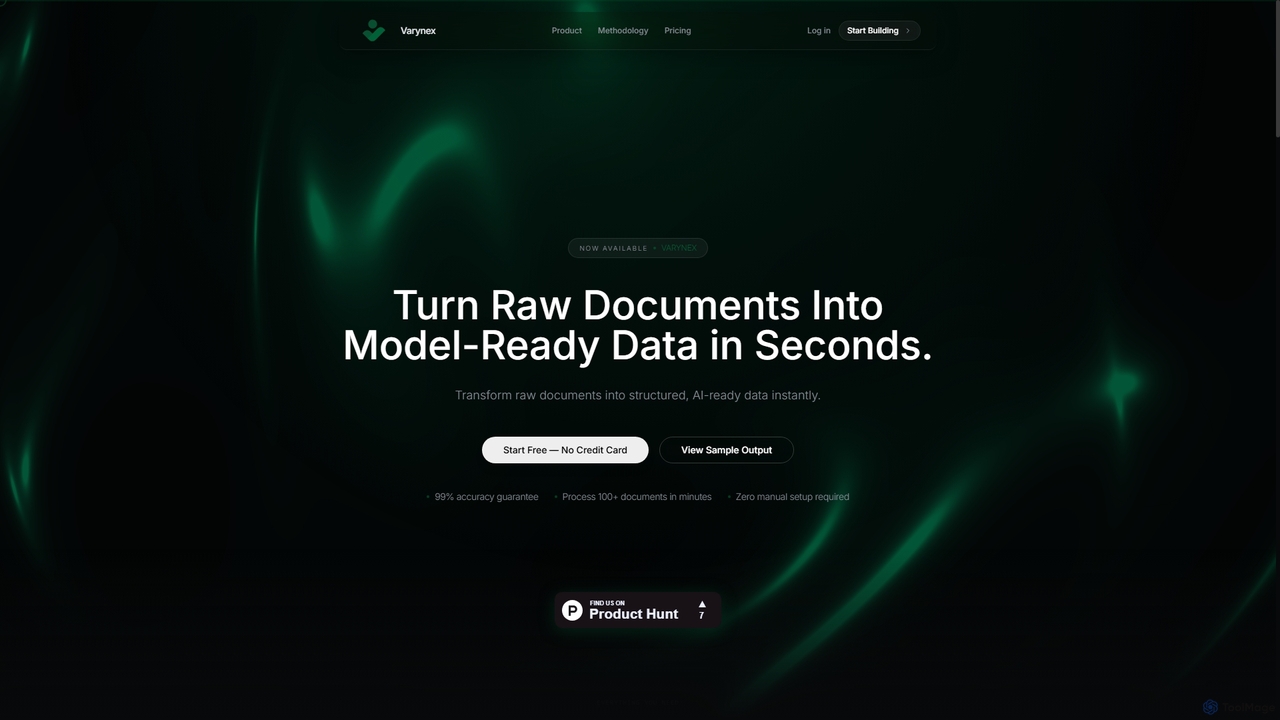
Varynex is an automated data processing platform that transforms raw documents into structured, AI-ready data with 99% accuracy. It instantly extracts entities, generates Q&A pairs, creates knowledge graphs, and redacts PII, eliminating manual data preparation and accelerating AI development.

Extraction
Visits 6.5KFavorites 141Likes 138
Pdfparser
Freemium

Pdfparser

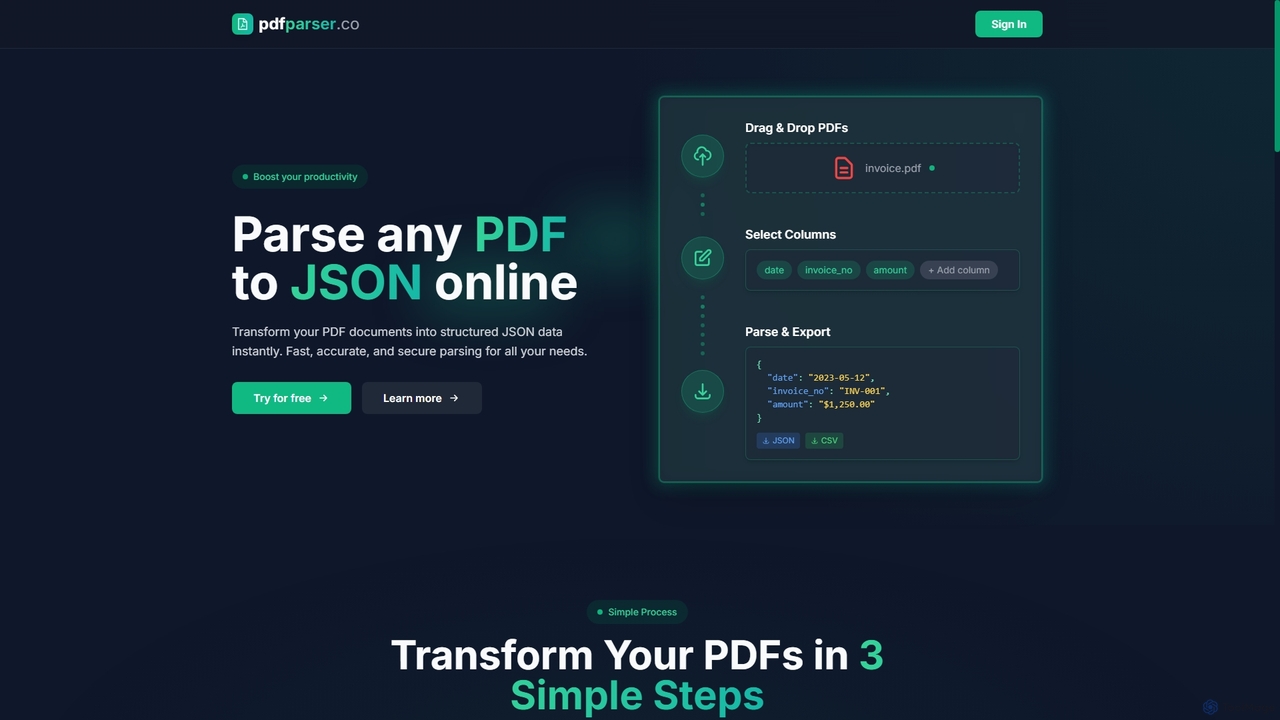
Pdfparser is an AI-powered online tool that effortlessly transforms PDF documents into structured JSON or CSV data. It automates data extraction from various documents like invoices, contracts, and reports, eliminating manual entry. With a simple drag-and-drop interface, users can specify required fields and get accurate, machine-readable data in seconds. It's designed for both non-technical users and developers seeking to streamline their data workflows.

Extraction
Visits 6.9KFavorites 145Likes 143
PDF AI Sheet
Freemium

PDF AI Sheet

A Google Sheet add-on that allows you to chat with and extract information from multiple PDF documents in bulk directly within your spreadsheets. Automate data analysis and research by asking questions to your PDFs using a simple formula.

Extraction
Visits 6.4KFavorites 143Likes 129
NuMind
Freemium

NuMind

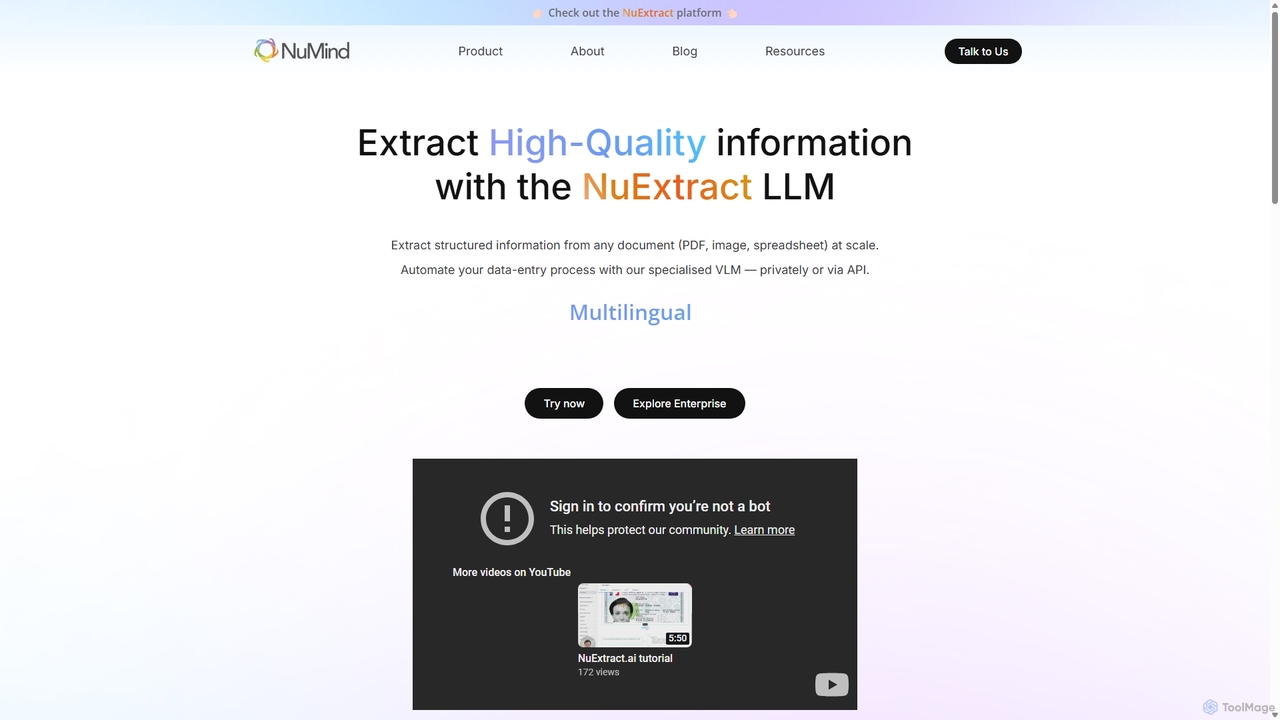
NuMind provides NuExtract, a specialized AI platform for high-quality structured information extraction. It transforms unstructured documents like PDFs, images, and emails into clean JSON data at scale. Leveraging a lightweight, powerful VLM/LLM, it offers superior accuracy and lower hallucination rates than larger models, available via API or as a private enterprise solution.

Extraction
Visits 11.3KFavorites 127Likes 139
Nanonets
Freemium

Nanonets

Nanonets is an AI-powered intelligent document processing (IDP) and workflow automation platform. It enables businesses to extract data from unstructured documents like invoices, receipts, and POs with high accuracy, and automate complex processes such as accounts payable, reconciliation, and approvals using a no-code interface.

Finance
Visits 6.5KFavorites 122Likes 125
extractify
Freemium

extractify

Extractify is an AI-powered platform for automated data extraction from websites, PDFs, and other documents. It intelligently captures and structures information, eliminating manual data entry and streamlining workflows for businesses and developers.

Data Analysis
Visits 6.3KFavorites 129Likes 127
Procys
Freemium

Procys

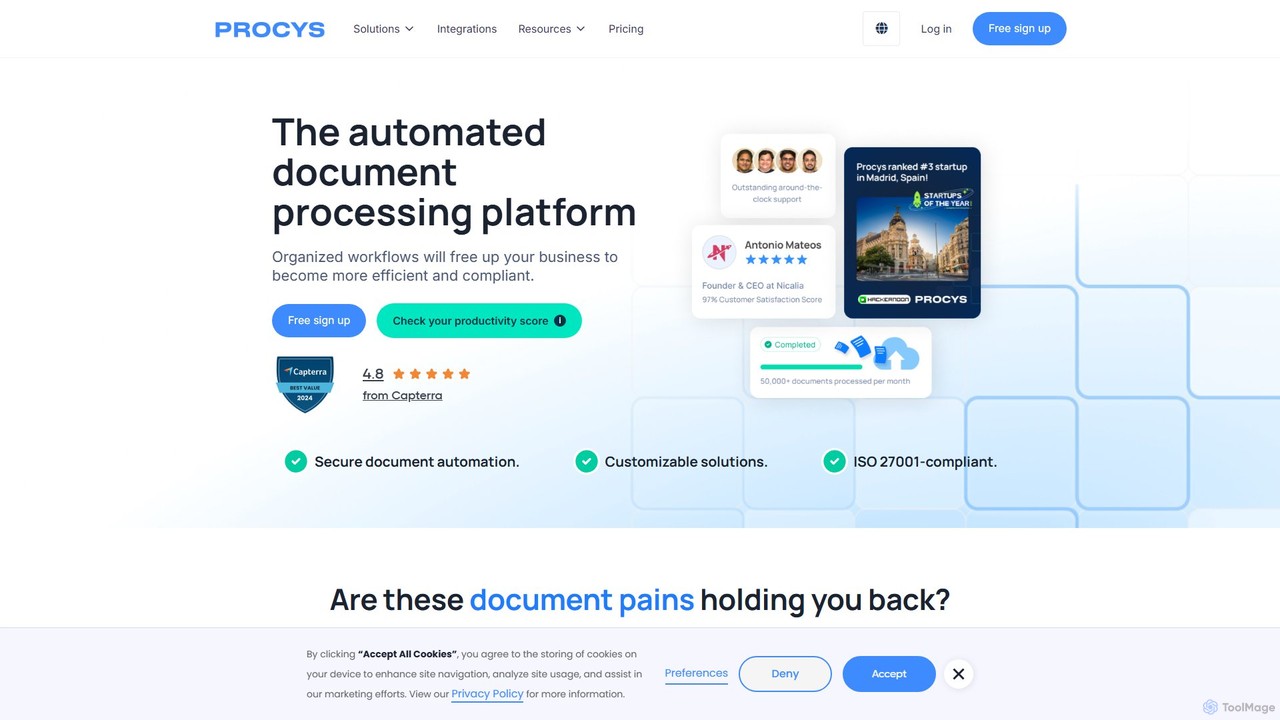
Procys is an AI-powered document processing platform designed to automate data extraction and streamline workflows. It efficiently handles invoices, purchase orders, and other business documents, reducing manual tasks, minimizing errors, and ensuring compliance. With robust integrations and customizable solutions, Procys helps businesses save time and improve operational efficiency.

Automation
Visits 9.7KFavorites 118Likes 125
Lido
Freemium

Lido

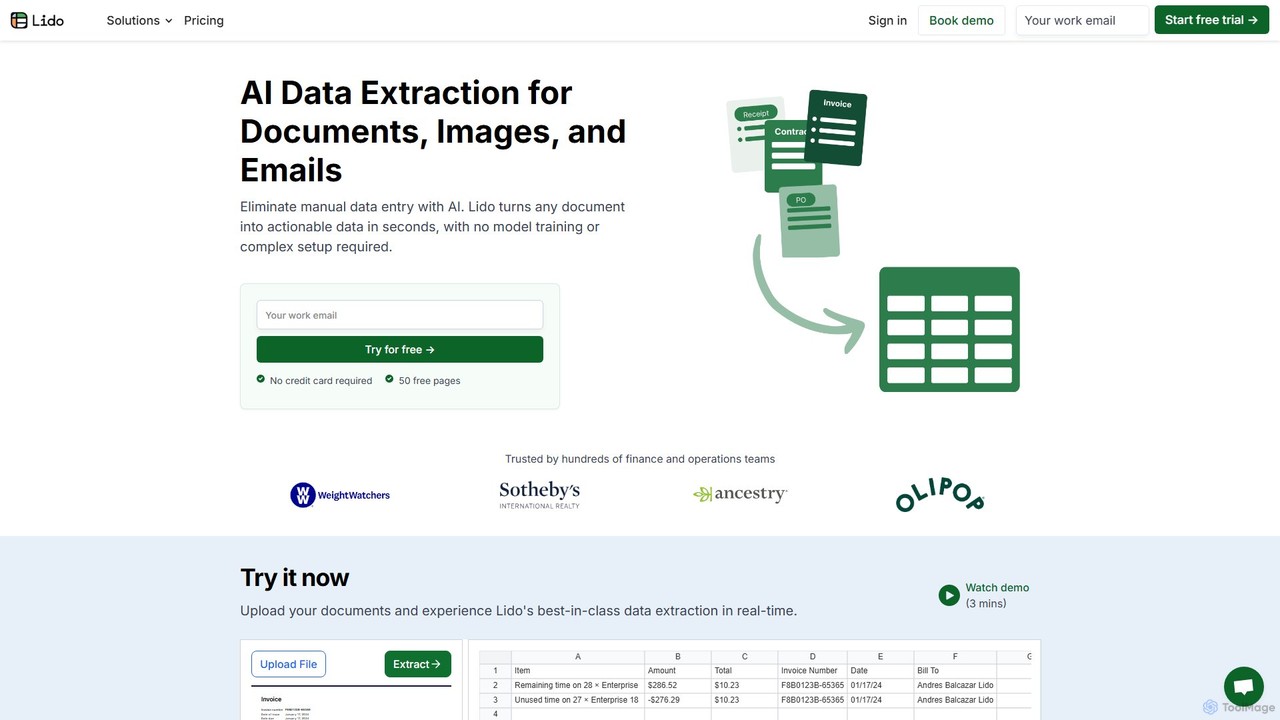
Lido is an AI-powered data extraction tool that automates the process of pulling information from any document, including PDFs, invoices, and images, into structured formats like Excel and CSV. It's template-free, fast, and designed for finance and operations teams to eliminate manual data entry and save significant time.

Document Management
Visits 116.7KFavorites 127Likes 145
Handwriting OCR
Freemium

Handwriting OCR

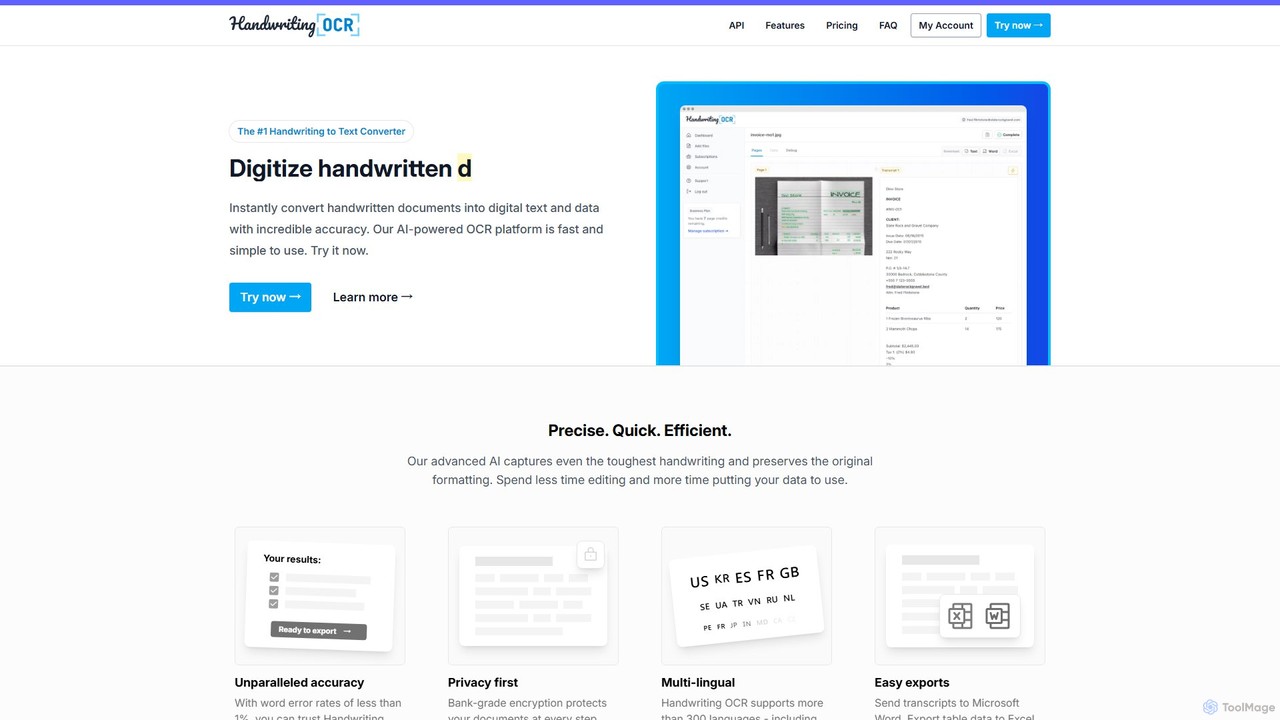
Handwriting OCR is an AI-powered platform that instantly converts handwritten and printed documents into editable digital text with incredible accuracy. It supports over 300 languages, various file formats (PDF, JPG, PNG), and exports to Word, Excel, and plain text. Designed for businesses, researchers, and individuals, it prioritizes security with bank-grade encryption and a strict no-data-training policy.

Data Entry
Visits 38.9KFavorites 134Likes 116
Parsio
Freemium

Parsio

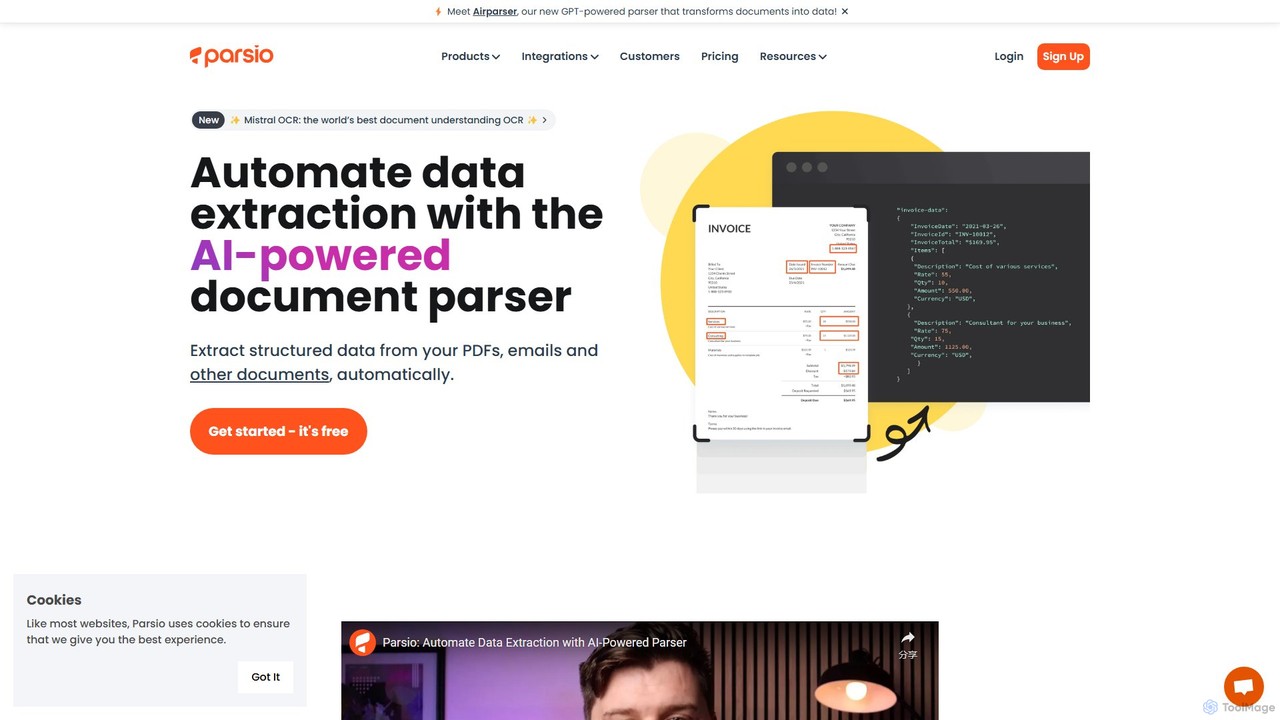
Parsio is an AI-powered document parser that automates data extraction from emails, PDFs, and other documents. It uses OCR and AI models like GPT to capture structured data from unstructured text, eliminating manual data entry and streamlining business workflows through seamless integrations.

Document Management
Visits 61.1KFavorites 164Likes 144
Molku
Freemium

Molku

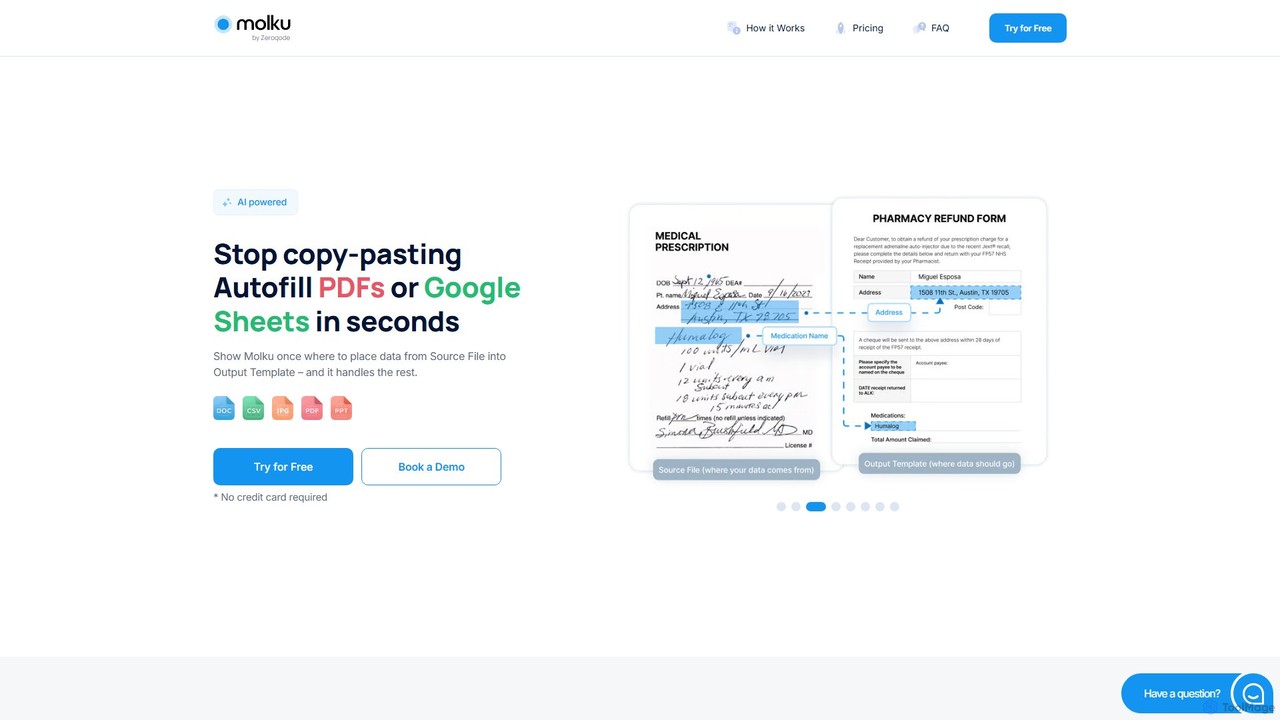
Molku is an AI-powered platform that automates data extraction from PDFs and other documents, populating it into PDF templates or Google Sheets in seconds. It eliminates manual copy-pasting, handles complex layouts and handwritten text, and integrates with thousands of apps, saving businesses significant time and reducing errors.

Document Management
Visits 6.6KFavorites 139Likes 143
olocr
Free

olocr

olocr is a free, privacy-focused AI OCR tool that extracts text from images and PDFs directly in your browser. It supports over 70 languages, batch processing, and can create searchable PDFs without uploading your files, ensuring complete data security.

Extraction
Visits 15.9KFavorites 125Likes 131
LedgerBox
Freemium

LedgerBox

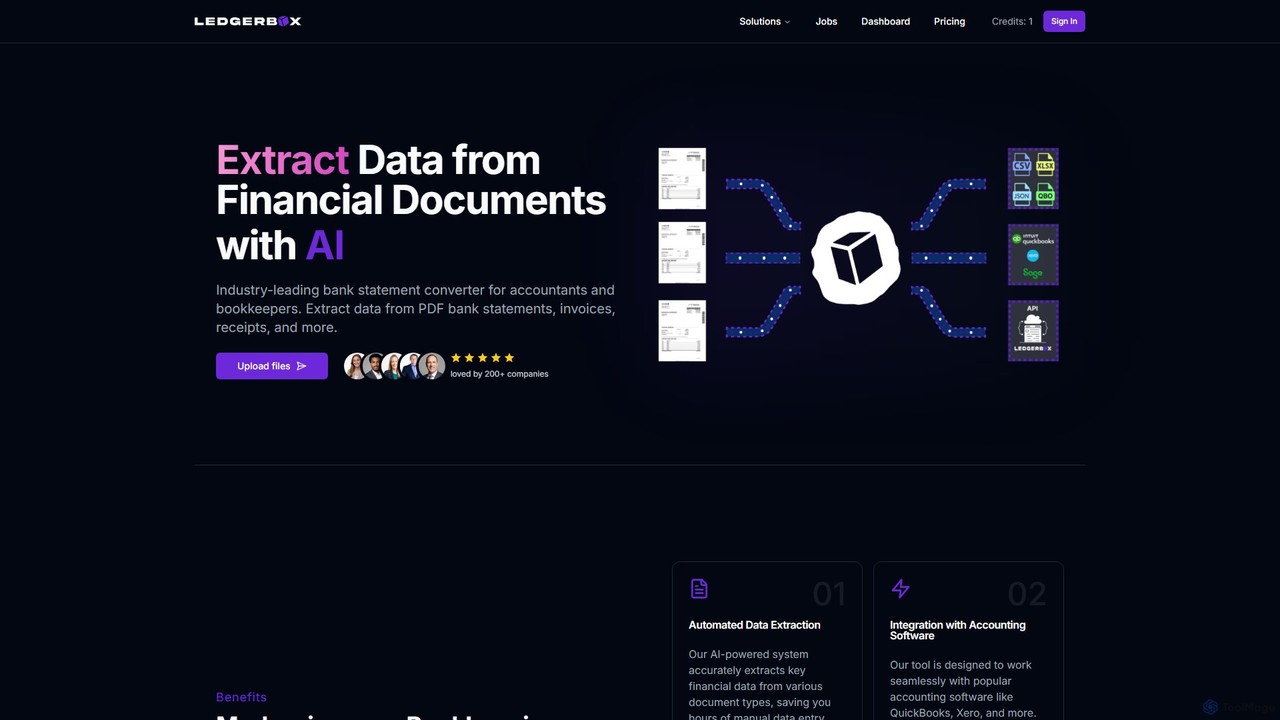
LedgerBox is an AI-powered bank statement converter designed for accountants and bookkeepers. It automates data extraction from financial documents like PDF bank statements, invoices, and receipts, converting them into Excel, CSV, JSON, and QuickBooks Online formats to streamline bookkeeping workflows.

Extraction
Visits 7.4KFavorites 131Likes 114
Swiftgum
Freemium

Swiftgum

Swiftgum is an AI-powered intelligent document management platform for lawyers and real estate professionals. It automates email sorting, extracts critical deadlines from legal documents like contracts and leases, and prepares court bundles. The platform ensures GDPR and professional secrecy compliance, boosting productivity and reducing risks.

Extraction
Visits 6.5KFavorites 138Likes 148
Parseur
Freemium

Parseur

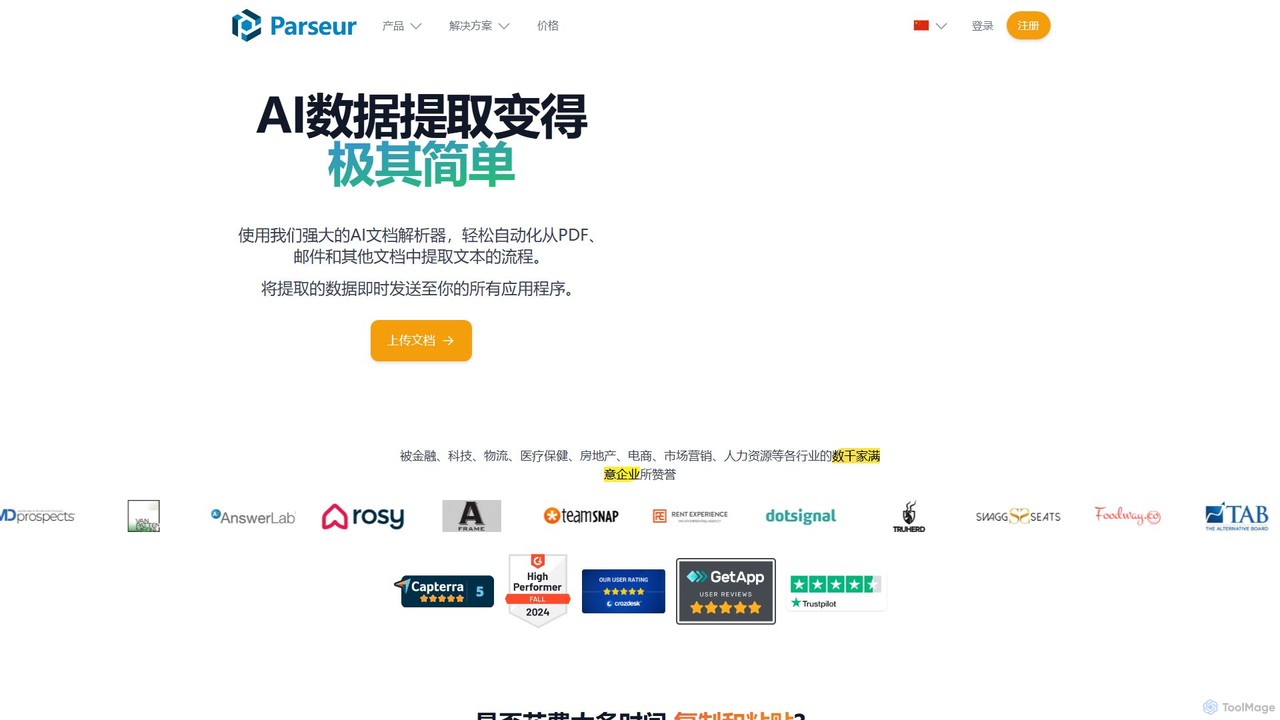
Parseur is a powerful AI-powered document parsing tool that automates data extraction from emails, PDFs, and other documents. It converts unstructured text into structured data and sends it to thousands of applications, eliminating manual data entry and saving significant time.

Document Management
Visits 159KFavorites 121Likes 120
NotionSender
Freemium

NotionSender

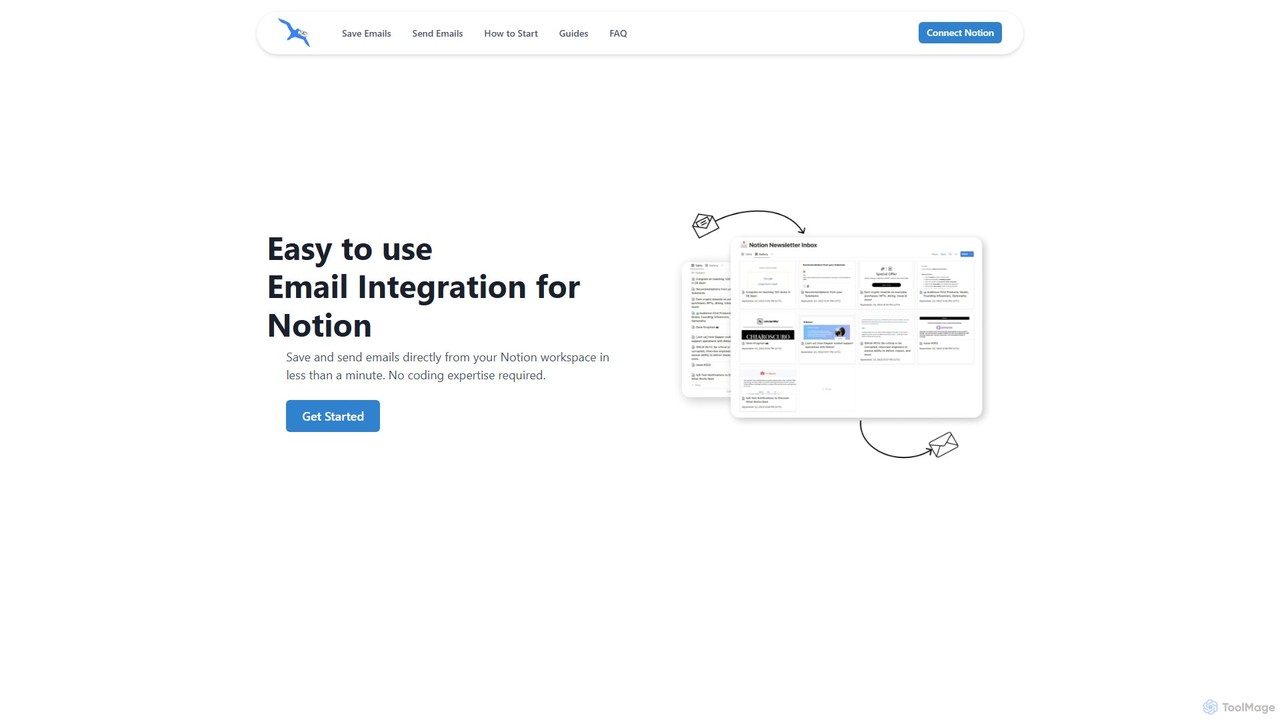
NotionSender is an email integration tool for Notion that allows you to send and receive emails directly within your workspace. It transforms your Notion database into a powerful email hub, enabling you to save emails with attachments, use AI to automatically extract data like invoice details, and send dynamic, personalized emails using Notion pages as templates. Streamline your communication and project management without switching between apps.

Workflow
Visits 21.2KFavorites 102Likes 120
PDF.co
Freemium

PDF.co

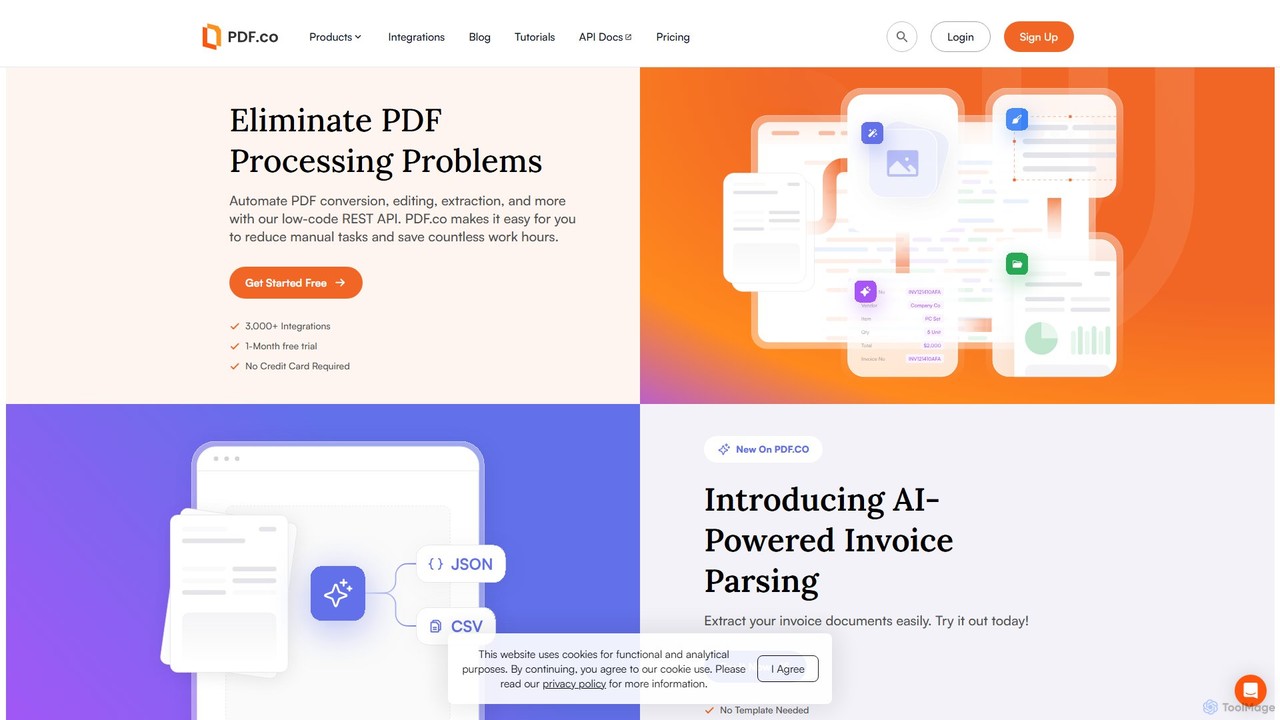
PDF.co is a powerful REST API platform for developers and businesses to automate all PDF-related tasks. It enables PDF data extraction, editing, conversion, creation, and form filling. Featuring AI-powered invoice parsing and seamless integration with over 3,000 platforms like Zapier and Make, it helps eliminate manual work and streamline document workflows.

Automation
Visits 101.5KFavorites 131Likes 127
Airparser
Freemium

Airparser

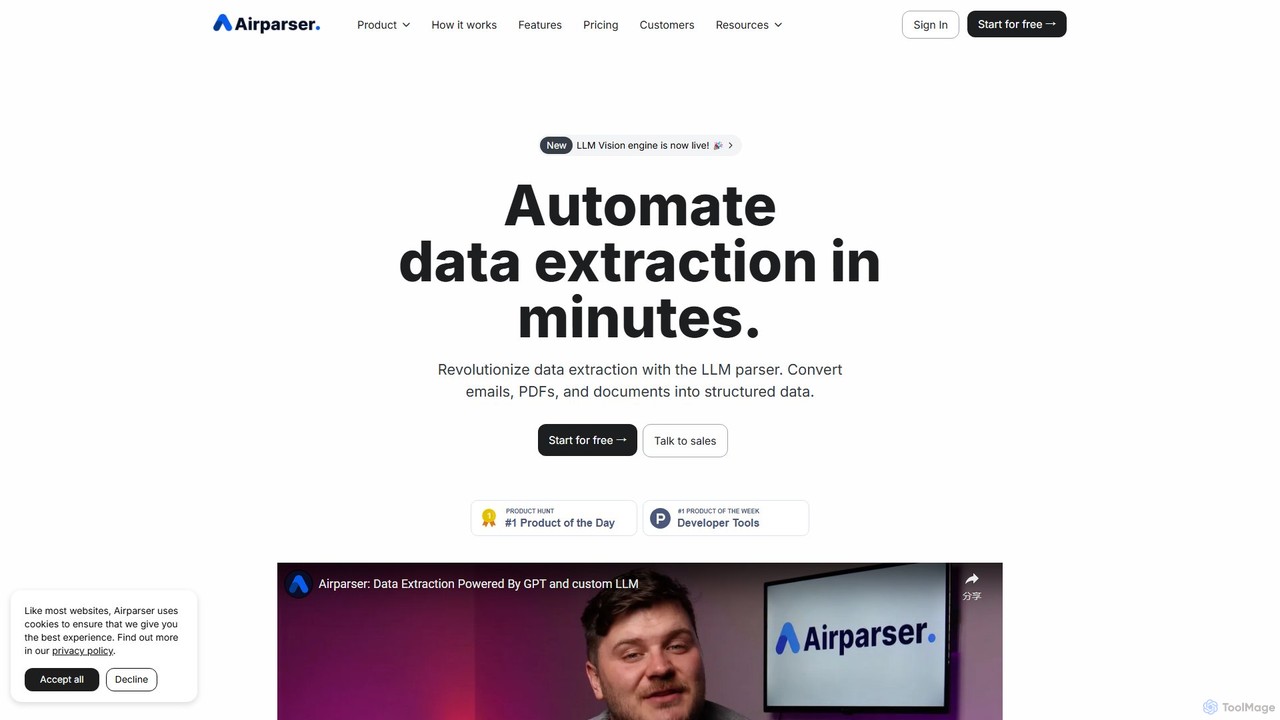
Airparser is an LLM-powered data extraction tool that automates the process of converting unstructured data from emails, PDFs, and various documents into structured, actionable formats. It uses advanced AI to understand context, eliminating the need for manual data entry and complex parsing rules.

Document Management
Visits 32.2KFavorites 127Likes 137
Jsonify
Paid

Jsonify

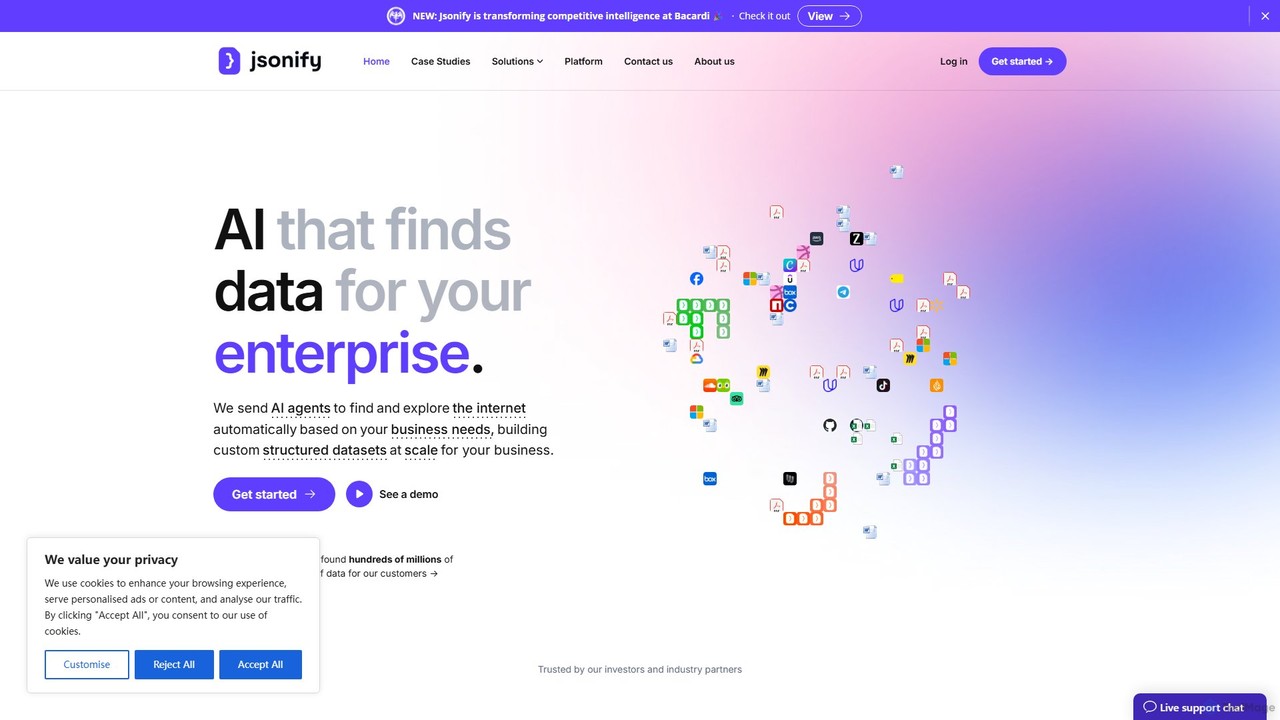
Jsonify is an AI-powered platform designed for enterprises to automatically find, extract, and structure data from various documents and web sources into clean JSON format. It streamlines data processing workflows, eliminating manual entry and enabling seamless integration via its robust API.

Data Analysis
Visits 9.3KFavorites 176Likes 149
Img2Sheet
Freemium

Img2Sheet

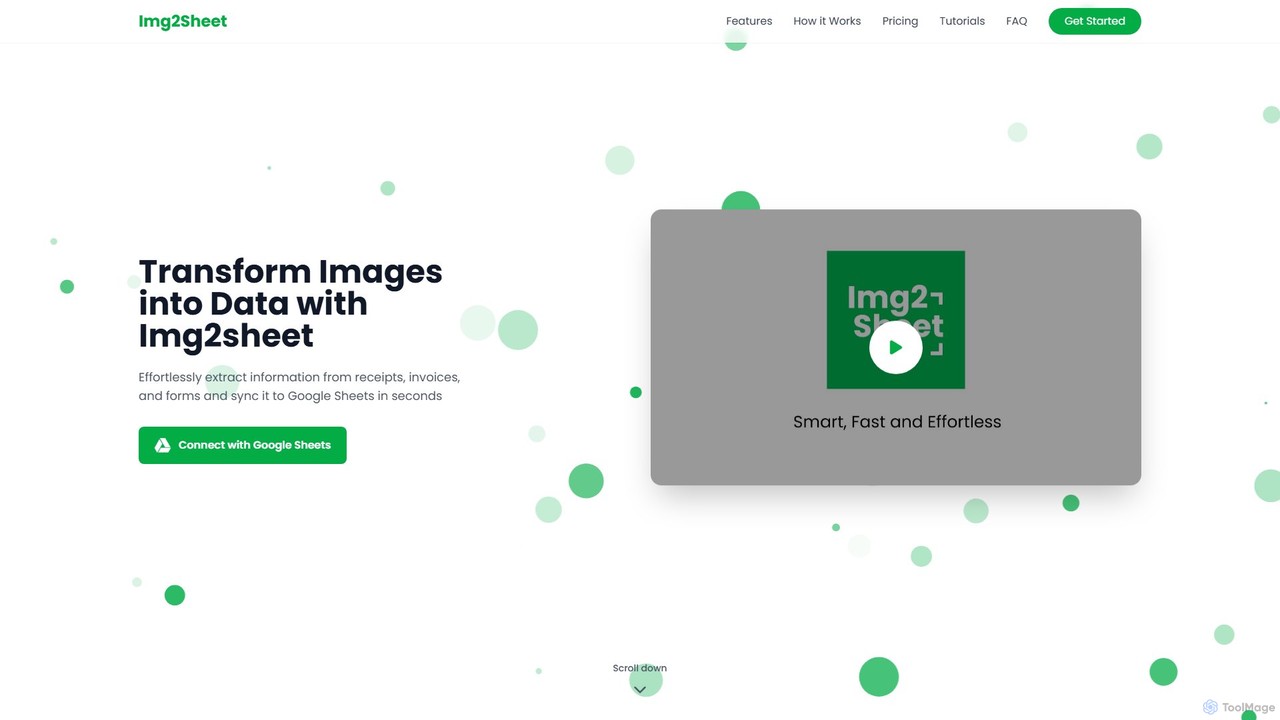
Img2Sheet is an AI-powered tool that automates data extraction from images like receipts, invoices, and forms, syncing the information directly into Google Sheets. It eliminates manual data entry, saves time, and increases accuracy with a simple, pay-per-use model.

Extraction
Visits 16.7KFavorites 107Likes 129

About Extraction

Extraction tools are AI-powered solutions designed to identify, collect, and structure specific information from diverse data sources. These tools leverage advanced natural language processing (NLP), computer vision, and machine learning algorithms to parse both unstructured and semi-structured data. They automate the tedious process of manual data collection, transforming raw data into actionable insights for analysis and decision-making. Their unique advantage lies in their ability to handle various data formats, from text documents and web pages to images and audio, adapting to complex patterns and evolving data structures within the broader category of data tools.

Core Features

  • Intelligent Data Identification: Automatically recognizes and pinpoints relevant data points, entities, and relationships within large datasets.
  • Multi-format Support: Processes information from diverse sources including text, PDFs, images, scanned documents, and web content.
  • Pattern Recognition & Learning: Learns from examples to identify and extract data based on complex patterns, improving accuracy over time.
  • Structured Output Generation: Transforms extracted raw data into organized, machine-readable formats like CSV, JSON, or database entries.
  • Error Detection & Validation: Includes mechanisms to flag inconsistencies or potential errors in extracted data, ensuring higher data quality.

Use Cases

Businesses across various sectors utilize AI extraction tools to streamline operations and gain insights. For instance, legal firms extract key clauses from contracts, financial institutions pull specific data points from reports, and e-commerce platforms gather product information from competitor websites. These tools significantly reduce manual data entry, accelerate information retrieval, and support compliance efforts by ensuring accurate data capture.

How to Choose

When selecting an AI extraction tool, consider its data source compatibility (e.g., web, PDF, images), the complexity of the data patterns it can handle, and its integration capabilities with existing systems. Evaluate the accuracy of its extraction engine, its scalability for large volumes of data, and the flexibility of its output formats. Additionally, assess the ease of configuration and the level of technical expertise required for setup and maintenance.

Featured tool rankings

Extraction use cases

1

Automated Invoice Processing

Finance departments can leverage AI extraction tools to automatically process incoming invoices. The tool identifies and extracts critical information such as vendor name, invoice number, date, line items, and total amount from various invoice formats (PDFs, scanned images). This automates data entry into accounting systems, significantly reducing manual errors and accelerating payment cycles, allowing staff to focus on reconciliation and analysis.

2

Market Research & Competitor Analysis

Marketing teams and business strategists can employ extraction tools to gather competitive intelligence. By extracting product features, pricing, customer reviews, and promotional offers from competitor websites and online marketplaces, businesses can gain a comprehensive understanding of market trends and competitive positioning. This data fuels strategic decision-making, product development, and pricing adjustments, providing a significant market advantage.

3

Legal Document Review

Legal professionals and paralegals can significantly accelerate their work by using AI extraction tools for document review. These tools can quickly identify and extract key clauses, dates, party names, and relevant case facts from large volumes of contracts, legal briefs, and discovery documents. This reduces the time spent on manual review, enhances accuracy, and ensures compliance with legal requirements, making complex legal processes more efficient.

4

Customer Feedback Analysis

Customer service and product development teams can utilize extraction tools to gain insights from vast amounts of customer feedback. By extracting sentiment, key topics, product mentions, and common issues from customer reviews, social media comments, and support tickets, businesses can quickly identify areas for improvement. This enables proactive problem-solving, enhances customer satisfaction, and informs product roadmap decisions based on real user needs.

5

Healthcare Data Capture

Healthcare providers and researchers can leverage AI extraction tools to efficiently capture critical patient data from various medical records. This includes extracting patient demographics, diagnoses, treatment plans, medication lists, and lab results from unstructured clinical notes, scanned documents, and legacy systems. Automating this process improves data accuracy, supports clinical decision-making, and accelerates medical research by making vast amounts of patient data readily accessible and analyzable.

6

Supply Chain Optimization

Logistics and supply chain managers can use AI extraction tools to streamline operations and improve visibility. By extracting shipping details, inventory levels, order statuses, and supplier information from diverse documents like bills of lading, packing slips, and purchase orders, businesses can gain real-time insights into their supply chain. This enables better inventory management, reduces delays, and optimizes routing, leading to significant cost savings and improved operational efficiency.

Extraction FAQ

What are AI Extraction tools?

AI Extraction tools are intelligent software solutions that use artificial intelligence, primarily machine learning and natural language processing, to automatically identify, locate, and pull specific pieces of information from unstructured or semi-structured data sources. They go beyond simple keyword matching, understanding context and patterns to accurately extract entities, relationships, and facts. Common applications include extracting data from documents, web pages, and images for various business processes.

How to choose the right AI Extraction tool?

When selecting an AI extraction tool, consider several key factors. First, assess its data source compatibility, ensuring it can process your specific data types (e.g., PDFs, web pages, images). Second, evaluate the complexity of data patterns it can handle, especially if your data is highly unstructured. Third, check its integration capabilities with your existing systems. Finally, consider the accuracy of its extraction engine, its scalability for future growth, and the level of technical expertise required for implementation and ongoing maintenance.

What's the difference between AI Extraction and traditional data scraping?

The primary difference lies in intelligence and adaptability. Traditional data scraping typically relies on predefined rules, XPath, or CSS selectors to pull data from structured web pages. It's brittle and breaks if the website layout changes. AI Extraction, however, uses machine learning and NLP to understand the context and meaning of data, allowing it to intelligently identify and extract information even from unstructured documents or dynamic web content. It can adapt to variations and is more robust against layout changes, focusing on the semantic content rather than just the structure.

What types of data can AI Extraction tools handle?

AI Extraction tools are highly versatile and can handle a wide array of data types. This includes unstructured text from documents (PDFs, Word files, emails), web content (articles, product descriptions, reviews), and social media posts. They also excel at processing semi-structured data like invoices, receipts, and forms. Furthermore, advanced tools can extract information from images (e.g., text from scanned documents via OCR) and even audio/video by transcribing and then analyzing the text. Their ability to process diverse formats makes them invaluable for comprehensive data initiatives.

What are the main benefits of using AI Extraction tools?

The main benefits of using AI Extraction tools are significant. They drastically improve efficiency by automating manual data entry, saving countless hours and reducing operational costs. Accuracy is greatly enhanced as AI minimizes human error in data capture. These tools also enable faster access to critical information, accelerating decision-making and business processes. Furthermore, they unlock insights from previously inaccessible unstructured data, providing a competitive edge and supporting better compliance by ensuring consistent and accurate data handling across an organization.