Beam Eye Tracker
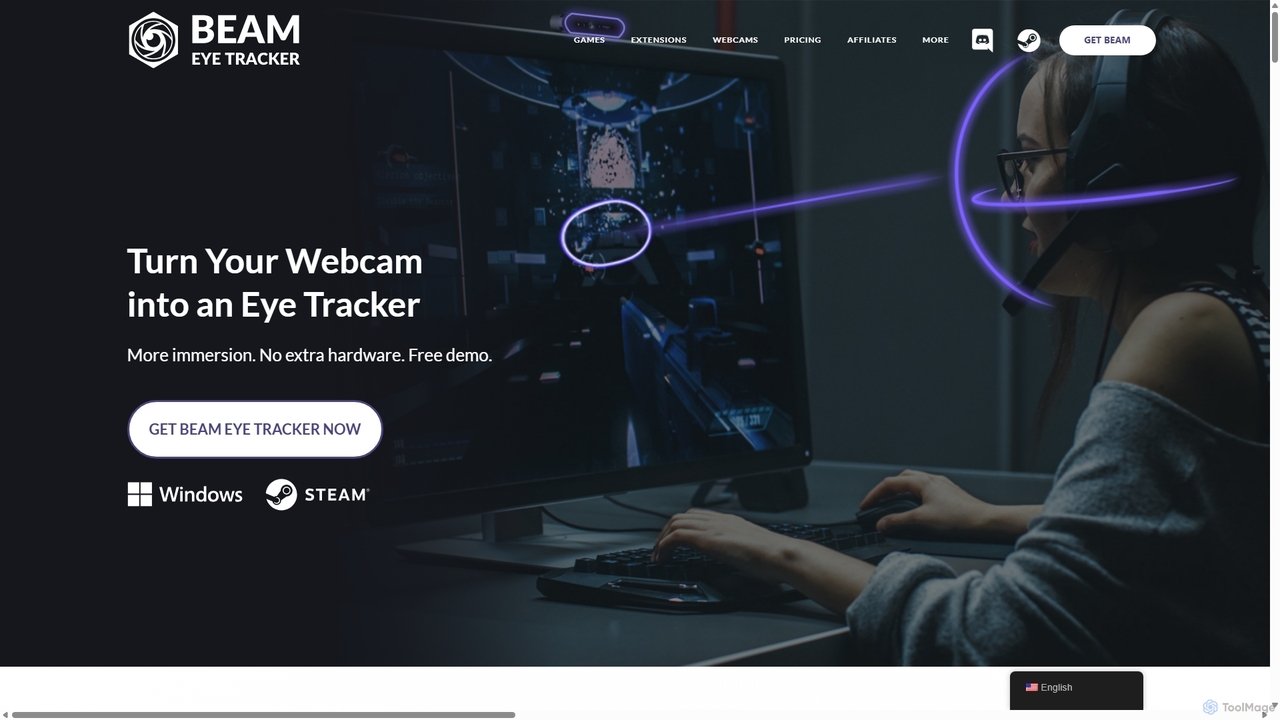
Beam Eye Tracker is an AI-powered software that transforms your webcam or smartphone into a high-performance eye and …
Beam Eye Tracker is an AI-powered software that transforms your webcam or smartphone into a high-performance eye and head tracker. Designed for gamers, streamers, and content creators, it provides immersive 6DoF tracking in over 200 games without requiring expensive, dedicated hardware. Enhance your gameplay, analyze your focus, and engage your audience with a customizable eye-tracking overlay.
Eyeware
Eyeware provides AI-powered head and eye tracking software that transforms standard webcams into powerful tracking devices. It offers …
Eyeware provides AI-powered head and eye tracking software that transforms standard webcams into powerful tracking devices. It offers solutions for immersive gaming, enhanced live streaming, productivity, user research, and OEM integration, eliminating the need for specialized hardware.
About Game Enhancement
Game Enhancement tools are AI-powered solutions designed to elevate various aspects of the gaming experience, from player performance to content creation and game development. These tools leverage advanced machine learning algorithms to analyze gameplay data, automate complex tasks, and generate intelligent insights. Their primary value lies in optimizing player skill, streamlining game asset creation, and providing strategic advantages, ultimately making gaming more immersive, competitive, and accessible for a wide range of users within the broader Gaming ecosystem.
Core Features
- Performance Analysis: Analyzes gameplay metrics to identify strengths, weaknesses, and areas for improvement for individual players.
- AI Opponents/Companions: Generates intelligent non-player characters (NPCs) that offer dynamic challenges or provide strategic assistance.
- Content Generation: Automates the creation of game assets, levels, narratives, or personalized in-game experiences.
- Strategy Optimization: Provides real-time advice, predicts opponent moves, or suggests optimal strategies based on game state.
- Accessibility Features: Adapts game interfaces, controls, or difficulty settings to cater to diverse player needs.
Use Cases
These tools are widely adopted by professional gamers seeking a competitive edge, game developers aiming to accelerate content creation, and casual players looking for a more personalized and engaging experience. They can be used to refine esports strategies, automate repetitive development tasks, or even create unique, AI-driven narratives within games.
How to Choose
When selecting Game Enhancement tools, consider the specific aspect of gaming you wish to improve, such as competitive performance, content creation, or accessibility. Evaluate the tool's compatibility with your preferred games, the accuracy and relevance of its AI models, and its ease of integration. Also, assess the pricing model, community support, and the tool's ethical guidelines regarding fair play and data privacy.

Game EnhancementUse Cases
Analyze Esports Performance for Strategic Advantage
Professional esports players and teams utilize AI Game Enhancement tools to meticulously analyze vast amounts of gameplay data. These tools identify subtle patterns, optimal decision-making points, and opponent weaknesses that human observation might miss. For instance, an AI can review hundreds of hours of match footage to pinpoint a player's common tactical errors or suggest counter-strategies against specific opponents, leading to refined training regimens and a significant competitive edge in tournaments.
Accelerate Game Asset Design and Generation
Game developers, especially indie studios or those working on large-scale projects, leverage AI Game Enhancement for automated asset creation. Instead of manually designing every texture, 3D model, or environmental element, artists can use AI to generate variations, fill in details, or even create entire levels based on simple prompts or existing styles. This drastically reduces development time and costs, allowing creative teams to focus on core game mechanics and narrative, while maintaining visual consistency and quality.
Receive Real-time Personalized Gaming Coaching
Individual gamers looking to improve their skills can benefit from AI-driven personalized coaching. These tools integrate directly into gameplay, observing player actions and providing real-time feedback or post-match analysis. For example, an AI coach might highlight missed opportunities for a critical spell in an RPG, suggest better positioning in an FPS, or explain why a certain build failed in a strategy game. This tailored guidance helps players understand their mistakes and learn more effectively than generic tutorials.
Create Intelligent and Adaptive Game AI
Game designers employ AI Game Enhancement to develop more sophisticated and engaging non-player characters (NPCs) and AI opponents. Rather than relying on scripted behaviors, AI can learn from player interactions and adapt its strategies, making each encounter unique and challenging. This is crucial for single-player experiences where a predictable AI can quickly become boring, or for creating dynamic open-world environments where NPCs react realistically to player actions and environmental changes, enhancing immersion.
Improve Game Accessibility for Diverse Players
Developers use AI Game Enhancement to make games more accessible to a wider audience, including players with disabilities. AI can analyze a player's input patterns or visual preferences and automatically adjust game settings like control sensitivity, UI scaling, or color palettes. For example, an AI might detect a player struggling with quick button presses and suggest a slower reaction time mode, or provide audio cues for visual information, ensuring a more inclusive and enjoyable gaming experience for everyone.
Automate Content Creation for Game Streamers
Game streamers and content creators utilize AI Game Enhancement tools to streamline their workflow and enhance audience engagement. AI can automatically identify and clip highlight moments from live streams, generate engaging titles and descriptions, or even moderate chat for inappropriate content. This frees up streamers to focus on interacting with their audience and playing the game, while the AI handles the tedious post-production and community management tasks, helping them grow their channel more efficiently.