
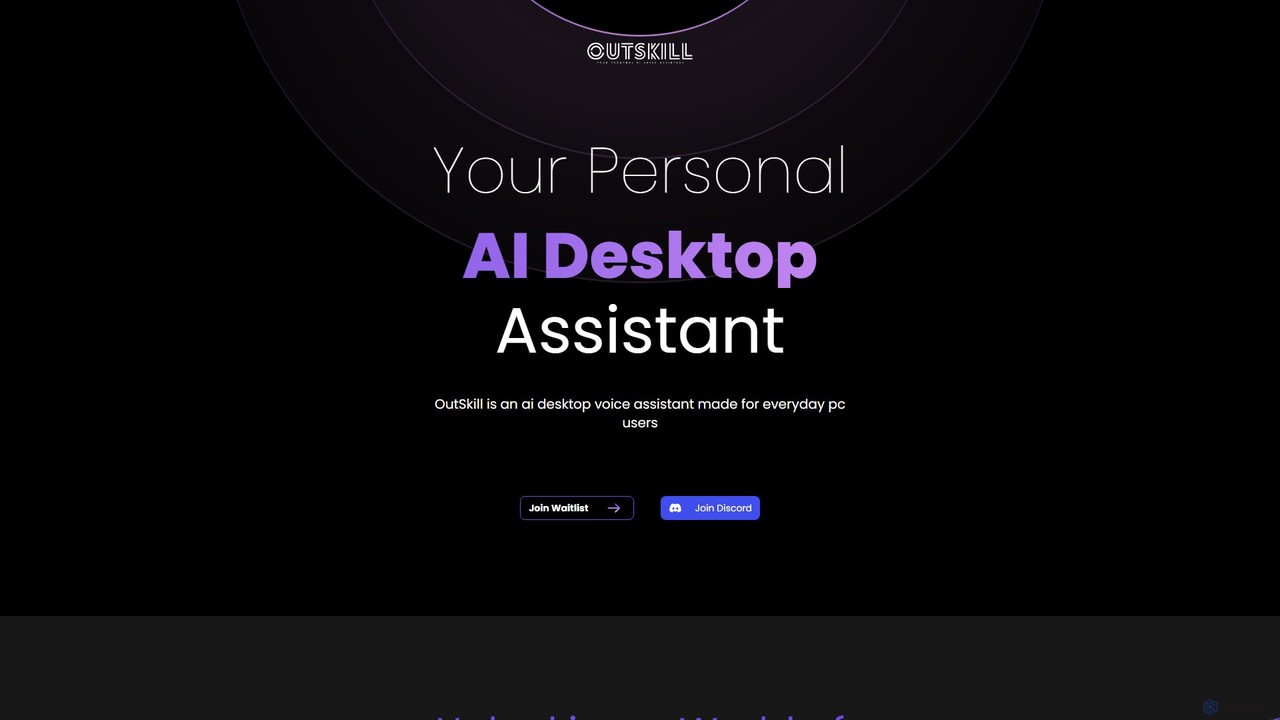
Gaming Best in category 1 results Gameassistant AI Tool

Popular AI tools in the Gameassistant field of Gaming include Outskill, etc., helping you quickly improve efficiency.

Outskill

Outskill

Outskill is a revolutionary AI-powered desktop voice assistant designed for both productivity and gaming. Control your PC, manage …

5.0K

About Gameassistant

AI Game Assistants are specialized tools that leverage artificial intelligence to enhance gameplay and streamline game development. They analyze vast amounts of game data to provide real-time strategic advice, performance feedback, and content generation support. These assistants act as intelligent coaches for players or creative partners for developers, offering data-driven insights to improve skill or accelerate production. Unlike simple mods, they focus on augmenting human capability rather than automating gameplay entirely.

Core Features

  • Real-time Strategy Guidance: Offers optimal character builds, item suggestions, and tactical advice based on the current game state.
  • Gameplay Analysis: Reviews recorded gameplay to identify weaknesses in areas like aiming, positioning, and decision-making.
  • Procedural Content Generation: Assists developers in creating game elements such as dialogue, level layouts, or character backstories.
  • Interactive Walkthroughs: Provides dynamic, context-aware hints and solutions that adapt to the player's progress.
  • Performance Optimization: Suggests in-game settings and hardware configurations to maximize frame rates and stability.

Use Cases

AI Game Assistants are used by competitive gamers seeking to refine their skills in titles like MOBAs or FPS games. They are also valuable for players of complex RPGs and strategy games who need help navigating intricate mechanics. For game developers, especially indie studios, these tools accelerate content creation and testing, allowing for the development of richer game worlds with smaller teams.

How to Choose

When selecting an AI Game Assistant, first determine its primary purpose: is it for player skill improvement or game development? Verify its compatibility with your specific games or game engine. Evaluate the depth of its features—whether you need real-time overlays, post-game analysis, or generative capabilities. Finally, consider its ease of use and integration method, ensuring it fits smoothly into your existing gaming or development workflow.

GameassistantUse Cases

1

Optimize Character Builds in RPGs

An RPG player is often faced with complex skill trees and countless equipment combinations. Instead of spending hours on external wikis and forums, they can use an AI Game Assistant. By inputting their character's class, level, and desired playstyle (e.g., tank, damage dealer), the tool analyzes game data to recommend optimal skill point allocations and gear setups. This provides a clear, data-backed path for character progression, allowing the player to focus more on enjoying the game's story and challenges rather than complex theorycrafting.

2

Improve Aiming in Competitive FPS Games

An aspiring competitive FPS player wants to improve their aiming accuracy. They use an AI Game Assistant that integrates with their game to record and analyze gameplay sessions. The tool tracks metrics like crosshair placement, time-to-kill, and accuracy with different weapons. After each match, it provides a detailed report highlighting specific areas for improvement, such as over-flicking or poor tracking. It may also generate personalized training drills within an aim trainer to target these weaknesses, offering a structured path to better mechanical skill.

3

Generate Dynamic NPC Dialogue for Developers

An indie game developer is creating an open-world RPG but lacks the resources for a large writing team. To make the world feel alive, they use a generative AI Game Assistant. They define personality traits, backstories, and knowledge for various NPC archetypes (e.g., 'gruff blacksmith', 'curious scholar'). The AI then generates a wide range of context-aware dialogue. When a player approaches an NPC, the dialogue can reflect the time of day, recent game events, or the player's reputation, creating a more immersive and less repetitive experience for the player.

4

Get Real-time Tactical Advice in MOBA Games

During a high-stakes MOBA match, a player can become overwhelmed with decisions. An AI Game Assistant running as an overlay can provide crucial, timely advice. It analyzes the game state, including team compositions, item builds, and map objectives. It might suggest 'Buy a magic resistance item now' when facing a fed enemy mage, or 'Group for Dragon in 60 seconds' based on objective timers and enemy positions. This acts like a coach whispering in the player's ear, helping them make smarter macro-level decisions without automating their character's actions.

5

Rapidly Prototype Level Layouts

A level designer needs to create several map variations for a new puzzle game. Using an AI Game Assistant focused on procedural generation, they can set key parameters like map size, number of obstacles, and entry/exit points. The AI then generates multiple unique, playable layouts in seconds. This allows the designer to quickly test different concepts and iterate on ideas without manually building each version from scratch. The tool acts as a creative amplifier, handling the tedious parts of layout creation so the designer can focus on the overall flow and player experience.

6

Master Complex Strategy Game Openings

A player new to a complex strategy game like Chess or StarCraft wants to learn standard opening strategies. They use an AI Game Assistant that acts as a sparring partner and tutor. The player starts a game, and the assistant guides them through the initial moves of a chosen opening (e.g., the 'Sicilian Defense'). It explains the purpose behind each move and shows common responses from opponents. This interactive learning is more effective than reading articles, as it provides immediate feedback and helps the player build muscle memory for crucial early-game decisions.

GameassistantFrequently Asked Questions