Gaming Best in category 1 results Gaming Platform AI Tool

Popular AI tools in the Gaming Platform field of Gaming include Discord, etc., helping you quickly improve efficiency.

Discord

Discord

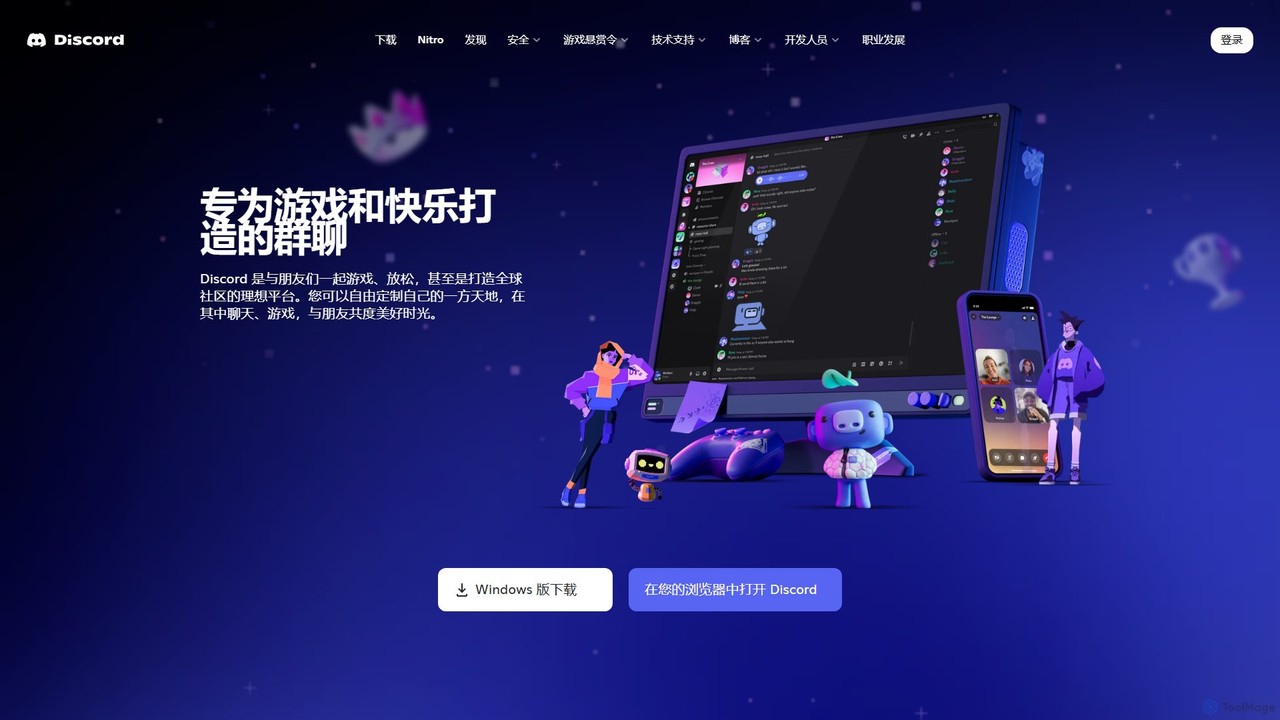
Discord is a premier voice, video, and text chat platform designed for creating and managing online communities. Initially …

599.5M

About Gaming Platform

AI Gaming Platforms are integrated systems that leverage artificial intelligence to create, manage, and enhance interactive game experiences. These platforms utilize machine learning models for functions like intelligent matchmaking, procedural content generation (PCG), and dynamic difficulty adjustment. Their primary value lies in building more immersive, fair, and endlessly replayable games for players, while providing developers with powerful tools for game balancing and player retention. They go beyond simple game asset creation, offering a foundational AI layer for live game operations.

Core Features

  • Intelligent Matchmaking: Analyzes player skill, behavior, and latency to create balanced and competitive matches.
  • Procedural Content Generation (PCG): Automatically generates unique game levels, quests, characters, and items to increase replayability.
  • Dynamic Difficulty Adjustment: Adapts game challenges in real-time based on a player's performance to maintain engagement.
  • Advanced NPC Behavior: Creates non-player characters (NPCs) that learn from player actions and exhibit complex, adaptive strategies.
  • Behavioral Anti-Cheat: Identifies and flags cheaters by analyzing gameplay patterns rather than just scanning for known software.

Applicable Scenarios

These platforms are primarily used by game development studios, from indie teams to AAA publishers, especially for live-service and multiplayer games. They are crucial for balancing competitive esports titles, creating vast, ever-changing worlds for MMORPGs, and ensuring the long-term engagement of players in mobile games through personalized experiences.

Selection Criteria

When choosing an AI Gaming Platform, consider its integration capabilities with major game engines like Unity and Unreal. Evaluate its scalability to handle your projected player base and the level of customization offered for its AI models. Also, assess the depth of the analytics suite for insights into player behavior and game health.

Gaming PlatformUse Cases

1

Balancing Competitive Multiplayer Games

A game developer for a 5v5 tactical shooter uses an AI Gaming Platform to maintain a fair and engaging competitive environment. The platform's AI analyzes millions of match data points to identify overpowered weapons or character abilities, providing data-driven recommendations for balance patches. Furthermore, its intelligent matchmaking system goes beyond simple skill ratings, considering player roles, recent performance, and communication patterns to create higher-quality matches, which reduces player frustration and improves retention rates.

2

Creating Infinite Worlds for RPGs

An indie studio developing a roguelike RPG leverages an AI Gaming Platform's Procedural Content Generation (PCG) capabilities. Instead of manually designing hundreds of dungeons, the platform's AI generates unique layouts, enemy placements, and loot distributions for every single playthrough. This not only saves thousands of development hours but also provides players with virtually endless replayability. The AI can be trained on the studio's design principles to ensure the generated content maintains a consistent style and quality, creating a dynamic world that always feels fresh.

3

Enhancing Esports Tournament Integrity

An esports league organizer integrates an AI Gaming Platform's behavioral anti-cheat system to ensure fair play during high-stakes tournaments. Unlike traditional anti-cheat that scans for known cheat programs, this AI monitors player inputs and in-game actions in real-time. It can detect subtle, inhuman patterns indicative of aimbots or wallhacks that might otherwise go unnoticed. This provides a more robust layer of security, protecting the integrity of the competition and the prize pools, thereby building trust with both players and spectators.

4

Personalizing the MMO Player Journey

An operator of a large-scale MMORPG uses an AI Gaming Platform to increase long-term player engagement. The platform's AI analyzes individual playstyles—for example, whether a player prefers solo questing, group dungeons, or crafting. Based on this profile, the system dynamically generates personalized daily quests and recommends relevant in-game activities or social groups. This tailored experience makes each player feel that the game understands and caters to them, significantly boosting daily logins and reducing player churn over the game's lifespan.

5

Dynamic Difficulty Scaling in Action Games

A developer of a single-player action game implements an AI platform for dynamic difficulty adjustment. The system monitors the player's performance in real-time, tracking metrics like accuracy, damage taken, and completion speed. If a player is struggling in a particular section, the AI might subtly reduce enemy health or aggression. Conversely, if a player is breezing through, it might introduce more complex enemy attack patterns. This ensures the game remains challenging but fair, preventing frustration for less skilled players and boredom for experts, leading to higher completion rates.

6

Training Realistic AI Teammates

In a cooperative squad-based game, developers use an AI platform to create NPC teammates that behave like real players. The AI is trained on data from thousands of human player matches, learning effective tactics, positioning, and communication cues. As a result, when a player's friend goes offline, their AI-controlled replacement can still perform complex maneuvers, provide useful covering fire, and adapt to the player's strategy. This creates a seamless cooperative experience, whether playing with humans or AI, improving the game's appeal for solo players who still want a team-based feel.

Gaming PlatformFrequently Asked Questions