CV-UPDATE
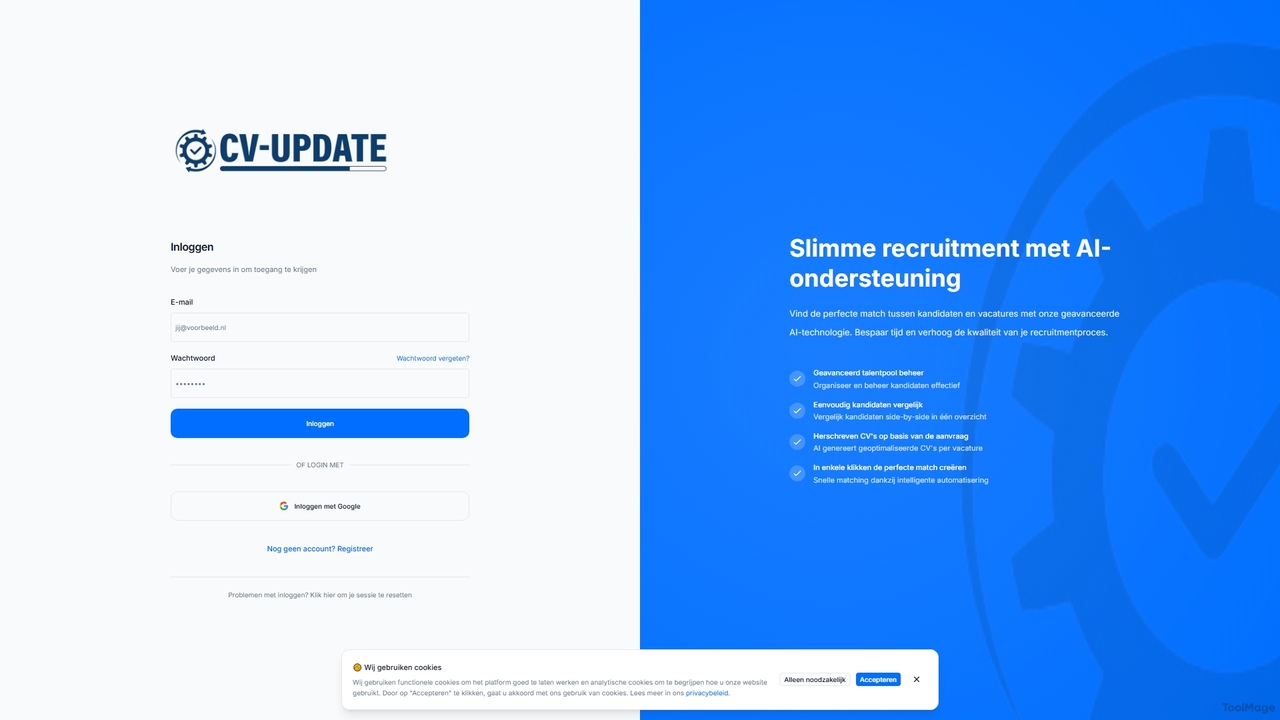
CV-UPDATE is an AI-powered recruitment platform designed to streamline and enhance the hiring process. It leverages advanced AI …
CV-UPDATE is an AI-powered recruitment platform designed to streamline and enhance the hiring process. It leverages advanced AI technology to find the perfect match between candidates and vacancies, optimize CVs, and manage talent pools efficiently. Recruiters can save time, improve candidate quality, and make faster, data-driven hiring decisions.
Workday
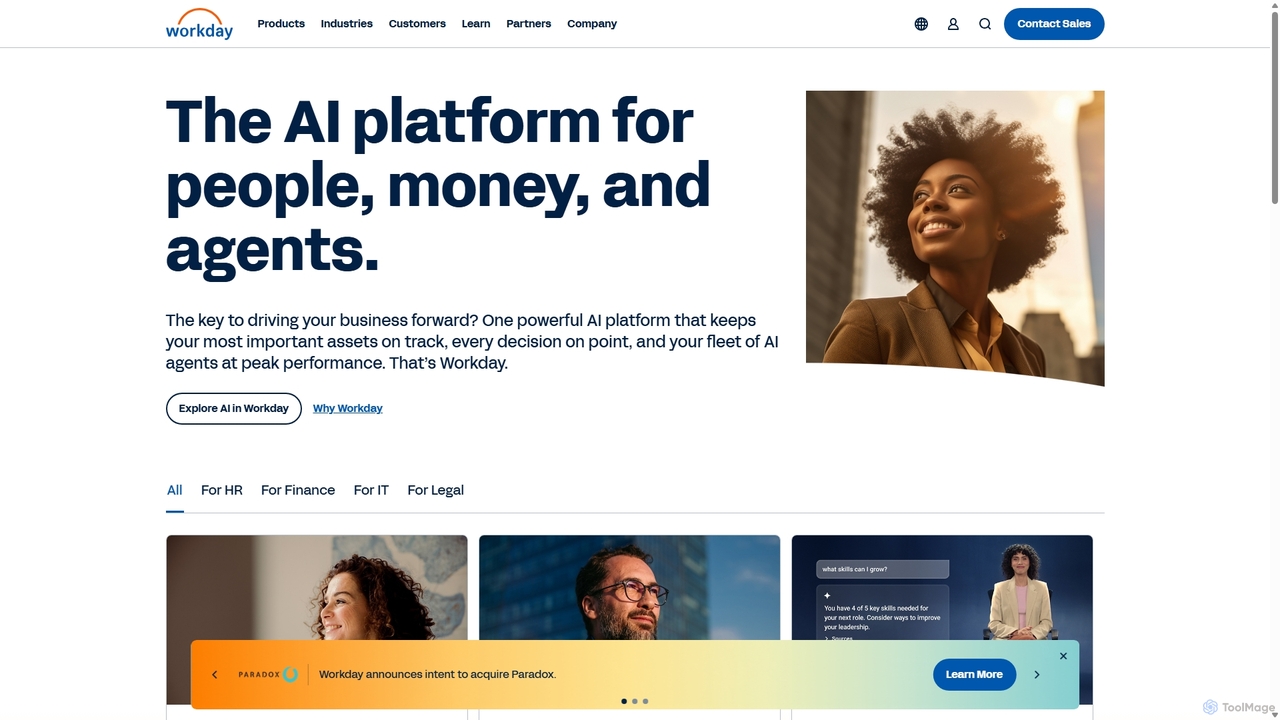
Workday is an enterprise-grade, AI-powered cloud platform for Human Capital Management (HCM), financial management, planning, and spend management. …
Workday is an enterprise-grade, AI-powered cloud platform for Human Capital Management (HCM), financial management, planning, and spend management. It provides a unified system to help organizations manage their people and money, leveraging AI and machine learning to deliver intelligent insights, automate processes, and enhance decision-making for a rapidly changing world.
TeamifAI
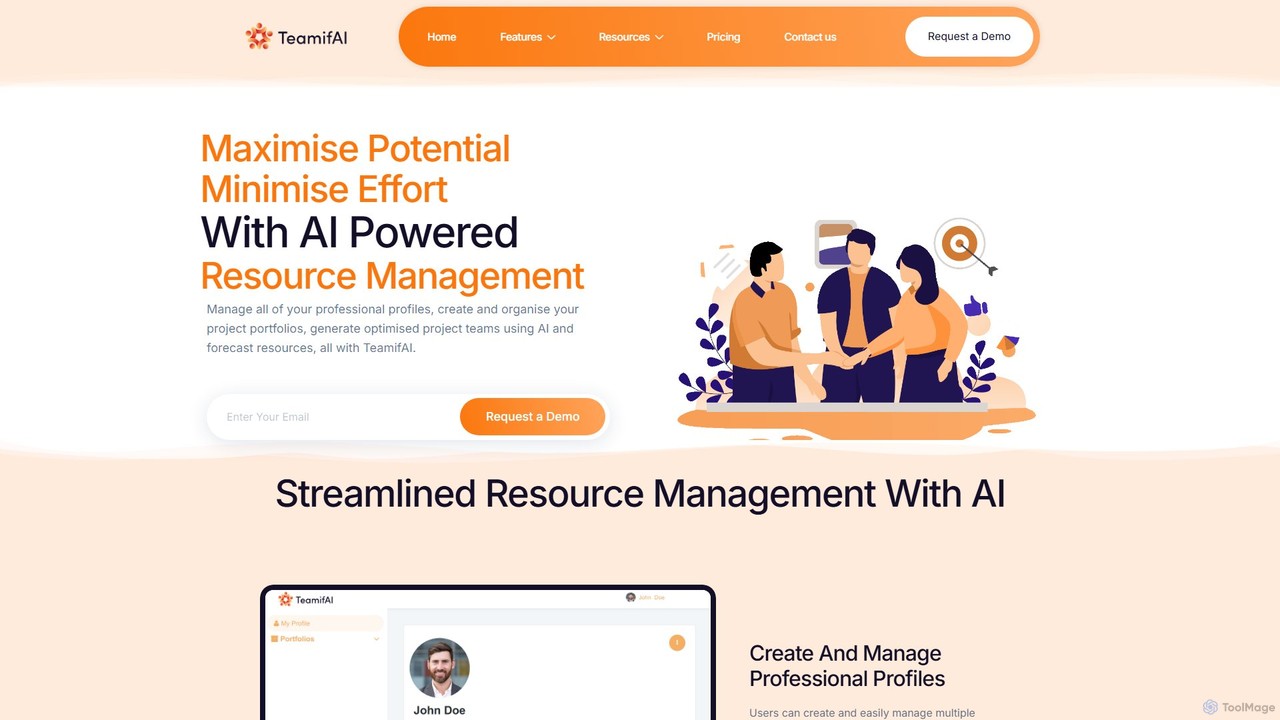
TeamifAI is an AI-powered resource management platform designed to optimize team creation and project staffing. It enables businesses …
TeamifAI is an AI-powered resource management platform designed to optimize team creation and project staffing. It enables businesses to create and manage professional profiles, generate ideal project teams using AI, forecast resource allocation, and track utilization in real-time, maximizing potential while minimizing effort.
About Talent Management
Talent Management AI tools are advanced platforms that leverage artificial intelligence to optimize various aspects of an organization's workforce. These tools utilize machine learning, natural language processing, and predictive analytics to enhance processes from recruitment and onboarding to performance management, learning & development, and retention. By providing data-driven insights and automating routine tasks, AI-powered talent management solutions enable HR professionals and leaders to make more informed decisions, foster employee growth, and strategically align human capital with business objectives, ultimately improving overall organizational effectiveness and employee satisfaction within the broader HR landscape.
Core Features
- Predictive Analytics for Retention: Identifies employees at risk of turnover by analyzing various data points, enabling proactive intervention.
- Automated Skill Gap Analysis: Assesses current workforce capabilities against future needs, highlighting skill deficiencies and recommending development paths.
- Personalized Learning & Development: Curates tailored training programs and resources based on individual employee performance, career goals, and skill gaps.
- AI-driven Performance Insights: Provides objective feedback and performance trends, assisting managers in coaching and development discussions.
- Intelligent Succession Planning: Identifies high-potential employees and matches them with future leadership roles, ensuring continuity and internal mobility.
Use Cases
Organizations across various sectors, from tech startups to large enterprises, utilize AI talent management tools to strategically manage their human capital. These tools are particularly valuable for HR departments seeking to move beyond administrative tasks towards a more strategic, data-driven approach to workforce development and retention. They help in identifying top talent, nurturing employee growth, and building resilient teams capable of adapting to market changes.
How to Choose
When selecting an AI talent management solution, consider its integration capabilities with existing HRIS and other business systems to ensure seamless data flow. Evaluate the breadth and depth of its AI functionalities, such as predictive modeling accuracy and personalization options for learning. Assess the user experience for both HR administrators and employees, ensuring intuitive interfaces. Finally, consider scalability to accommodate future growth and compliance with data privacy regulations.
Talent ManagementUse Cases
Automated Skill Gap Identification & Development
A large manufacturing company's HR department uses AI talent management tools to continuously analyze employee skills against evolving industry demands. The AI identifies critical skill gaps in real-time, then automatically recommends personalized online courses and internal mentorship opportunities to employees, ensuring the workforce remains competitive and future-ready. This proactive approach significantly reduces the time and cost associated with traditional manual skill assessments and external training procurement.
Predictive Employee Turnover Risk Assessment
A fast-growing tech startup leverages AI to monitor various employee data points, including engagement scores, performance reviews, and tenure, to predict potential turnover risks. The AI flags employees who exhibit patterns associated with leaving, allowing HR and managers to intervene proactively with targeted retention strategies, such as career development discussions, compensation adjustments, or improved work-life balance initiatives. This helps reduce costly attrition and preserves institutional knowledge.
Personalized Career Pathing & Internal Mobility
A global consulting firm employs AI talent management to map out personalized career paths for its employees. Based on an individual's skills, performance history, and career aspirations, the AI suggests suitable internal job openings, project opportunities, and necessary skill-building resources. This facilitates internal mobility, reduces recruitment costs for senior roles, and significantly boosts employee engagement and loyalty by demonstrating clear growth opportunities within the organization.
AI-Enhanced Performance Feedback & Coaching
A customer service center integrates AI tools to analyze communication patterns and performance metrics of its agents. The AI provides objective, real-time feedback on call quality, problem-solving efficiency, and customer satisfaction. Managers receive AI-generated insights to guide their coaching sessions, focusing on specific areas for improvement, leading to more effective performance development and a measurable increase in service quality without bias.
Optimized Onboarding & New Hire Integration
A retail chain utilizes AI to personalize the onboarding experience for new hires across its numerous locations. The AI tailors onboarding content, assigns relevant mentors, and schedules initial training modules based on the new employee's role, department, and prior experience. This ensures new hires quickly become productive, feel integrated into the company culture, and reduces the time-to-proficiency, leading to higher retention rates during the critical first few months.
Strategic Workforce Planning & Succession
A healthcare provider uses AI to analyze demographic data, retirement trends, and future demand for specialized medical roles. The AI forecasts potential talent shortages and identifies high-potential employees ready for leadership or critical positions. This enables the organization to proactively develop a robust succession pipeline, ensuring continuity of essential services and leadership, and mitigating risks associated with key personnel departures.