Infrastructure Best in category 3 results Serverless AI Tool

Popular AI tools in the Serverless field of Infrastructure include Banana、GPUX、Rivet, etc., helping you quickly improve efficiency.

GPUX

GPUX

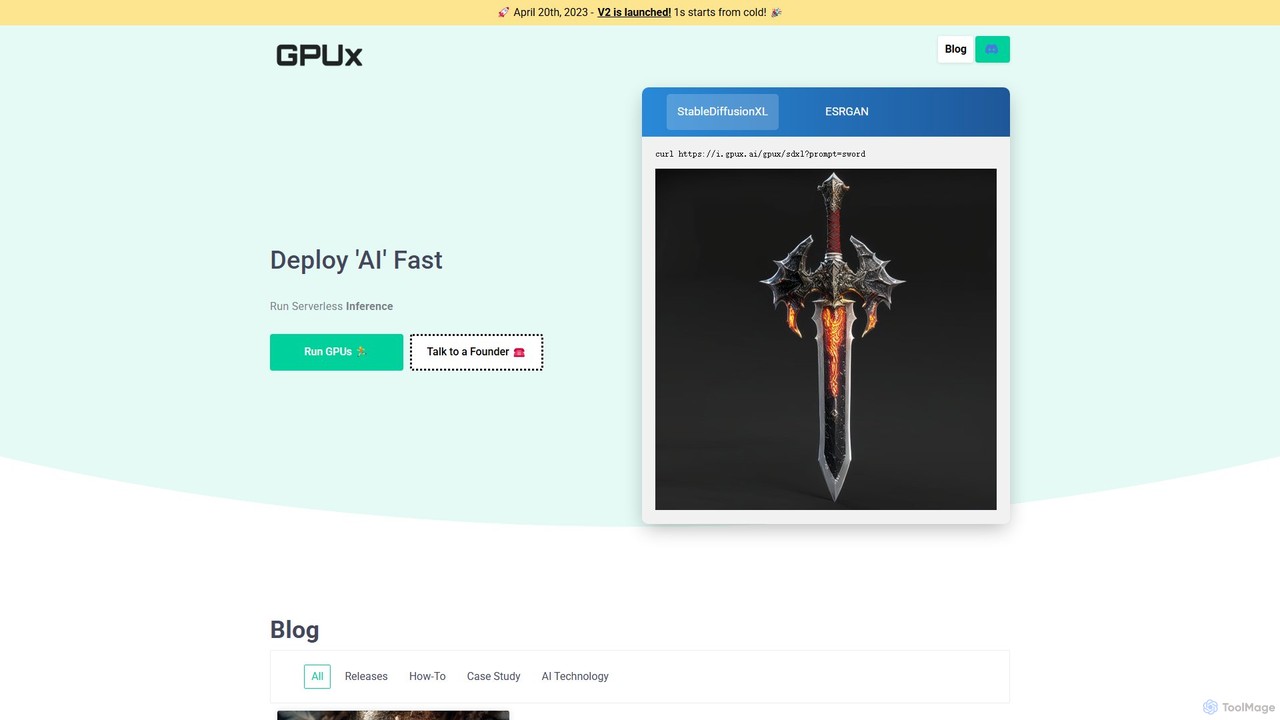
GPUX is a serverless, decentralized GPU cloud platform for fast and affordable AI model inference. It allows developers …

4.5K
Rivet

Rivet

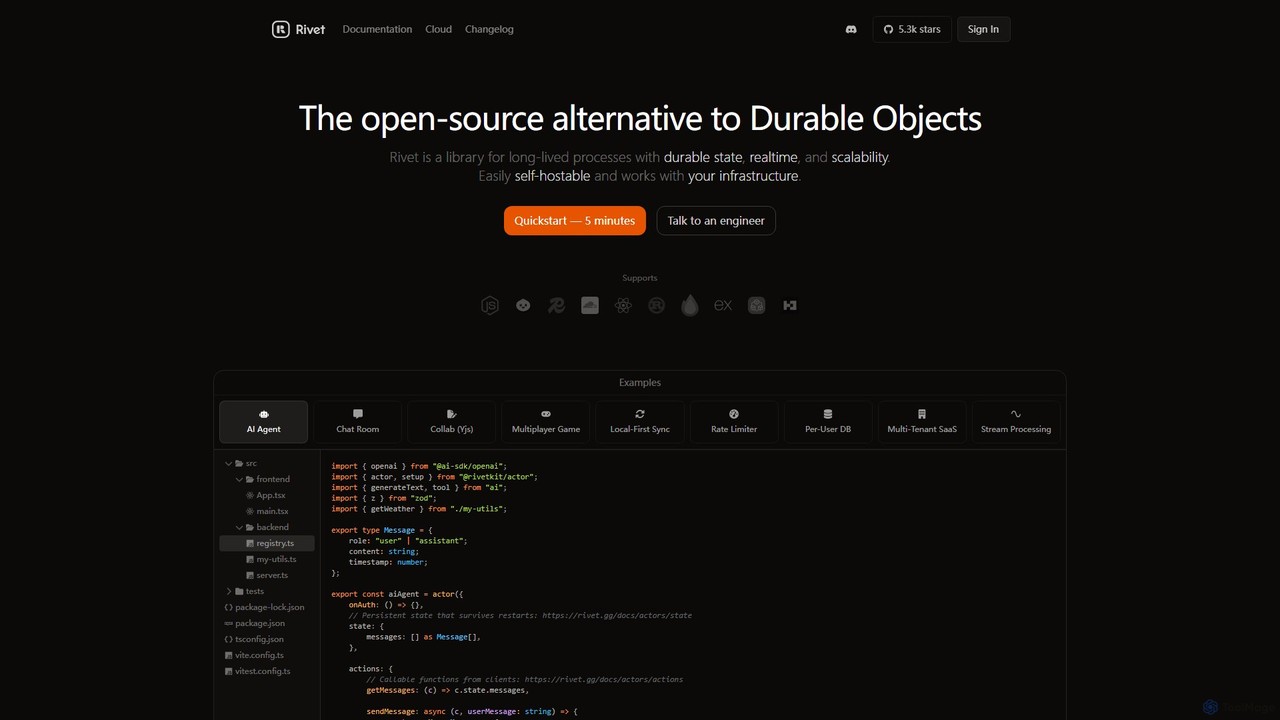
Rivet is an open-source library for developers building scalable, real-time applications with durable state. It provides long-lived, stateful …

3.5K
Banana

Banana

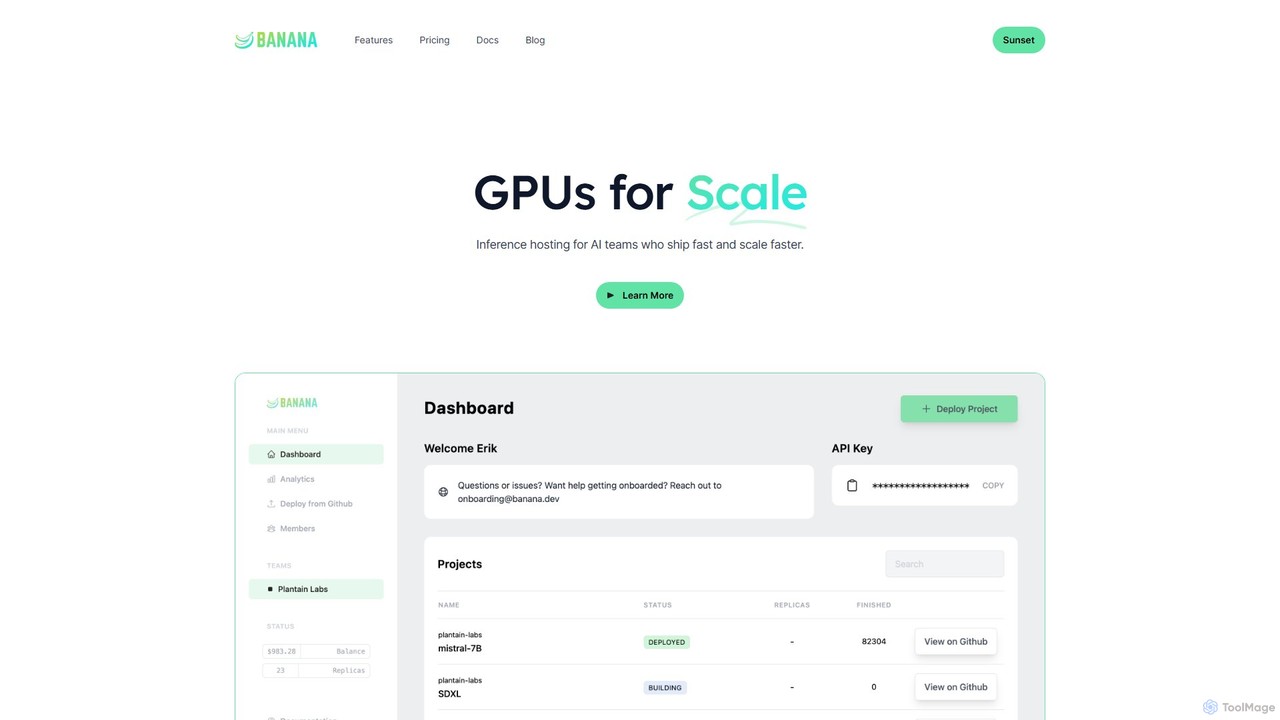
Banana was a serverless GPU platform designed for AI developers to deploy and scale machine learning models for …

7.2K

About Serverless

Serverless is a cloud execution model where the cloud provider dynamically manages the allocation and provisioning of servers, allowing developers to run code without provisioning or managing underlying infrastructure. This approach enables highly scalable, cost-efficient, and event-driven applications by abstracting away server management. It empowers development teams to focus purely on writing application logic, accelerating deployment and innovation within the broader infrastructure landscape.

Core Features

  • Automatic Scaling: Automatically adjusts compute resources to match demand, handling traffic spikes seamlessly.
  • Pay-per-Execution: Users are billed only for the actual compute time and resources consumed by their code, not for idle servers.
  • Event-Driven Architecture: Functions are triggered by various events, such as HTTP requests, database changes, file uploads, or message queue events.
  • Reduced Operational Overhead: Eliminates the need for server provisioning, patching, maintenance, and scaling, simplifying operations.
  • Fast Deployment: Enables quicker iteration and deployment cycles, accelerating time-to-market for new features and services.

Applicable Scenarios

Serverless computing is ideal for building responsive, scalable, and cost-effective applications. It's widely adopted for creating robust API backends for web and mobile applications, processing real-time data streams from IoT devices, and automating backend tasks like data transformations or scheduled reports.

How to Choose

When selecting a Serverless platform, consider the suitability of your workload for an event-driven, stateless model. Evaluate the vendor's ecosystem for seamless integration with other cloud services, understand the specific cost model based on invocations and resource consumption, and assess the developer experience for ease of deployment, monitoring, and debugging.

ServerlessUse Cases

1

Automated Image and Video Processing

Content creators or e-commerce platforms can use Serverless functions to automatically process uploaded media. When a new image or video is uploaded to cloud storage, a Serverless function is triggered to generate thumbnails, apply watermarks, resize for different devices, or transcode video formats, all without managing dedicated servers. This significantly reduces manual effort and ensures media is optimized for various uses instantly.

2

Building Scalable API Backends for Mobile/Web Apps

Developers can leverage Serverless to create highly scalable and resilient API backends for mobile and web applications. Each API endpoint can be implemented as a separate Serverless function, triggered by HTTP requests. This allows the backend to automatically scale up or down based on user demand, ensuring low latency and high availability even during peak traffic, while minimizing operational costs.

3

Real-time Data Stream Processing and Analytics

IoT solution providers or data analysts can use Serverless to process vast amounts of streaming data in real-time. As data arrives from sensors or log files, Serverless functions can ingest, filter, transform, and analyze it on the fly. This enables immediate insights, anomaly detection, and automated responses, crucial for applications like fraud detection, personalized recommendations, or industrial monitoring.

4

Automating Backend Tasks and Scheduled Jobs

IT operations teams or business analysts can automate routine backend tasks and scheduled jobs using Serverless. Functions can be configured to run at specific intervals (e.g., daily, hourly) to perform tasks such as generating reports, cleaning up old database entries, sending out daily summary emails, or backing up data. This eliminates the need for dedicated cron servers and reduces maintenance overhead.

5

Implementing Chatbot and Voice Assistant Logic

Customer service departments or product teams can power the conversational logic of chatbots and voice assistants with Serverless functions. When a user interacts with the bot, the query triggers a Serverless function that processes the input, integrates with various backend services (e.g., CRM, inventory), and generates a response. This provides a flexible, scalable, and cost-effective way to build intelligent conversational interfaces.

6

Processing Webhooks and Third-Party Integrations

SaaS companies or integration developers can use Serverless to efficiently handle webhooks from third-party services. When an event occurs in an external system (e.g., a payment gateway notification, a Git repository push, a CRM update), it sends a webhook to a Serverless function. The function then processes this event, updates internal systems, or triggers further actions, enabling seamless and reactive integrations without persistent servers.

ServerlessFrequently Asked Questions