

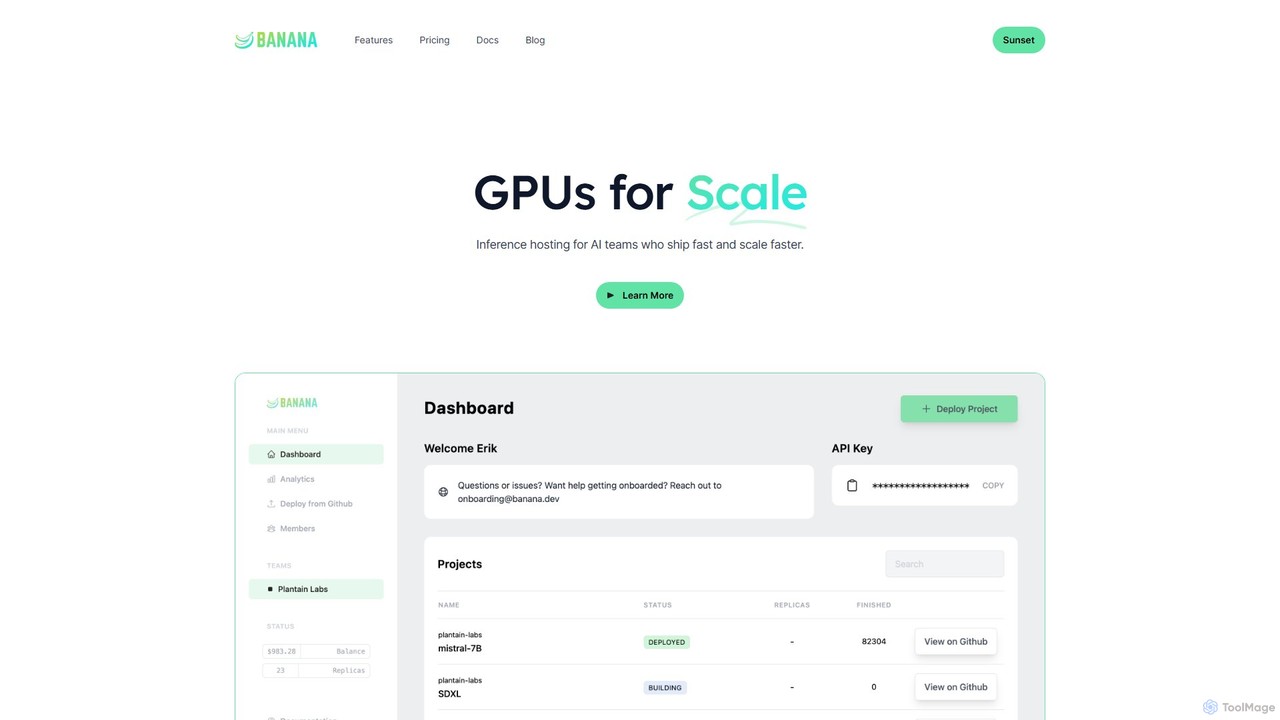
Banana Overview
Important Notice: The Banana serverless GPU platform was officially shut down on March 31, 2024, and is no longer an active service. The following description details the platform's features and functionality as they existed prior to its discontinuation.
Banana was a specialized cloud infrastructure platform designed to simplify the deployment and scaling of AI models for inference. It targeted AI teams and developers who needed a reliable, high-throughput, and cost-effective solution for running GPU-intensive workloads without the complexity of managing their own infrastructure. The platform was built on the principle of providing a seamless developer experience, combining serverless architecture with powerful GPU resources.
The core of Banana's offering was its serverless GPU hosting, which allowed models to be deployed in customizable container environments. This was powered by Potassium, Banana's open-source Python framework, which enabled developers to easily wrap their models (from popular libraries like PyTorch, TensorFlow, and Hugging Face) and prepare them for deployment. The platform's architecture was designed for high-throughput inference, automatically managing resources to handle fluctuating demand efficiently.
How to use Banana
The development and deployment workflow on Banana was designed to be straightforward and integrate with standard developer practices:
- Model Preparation: Developers would use the Potassium framework to structure their Python code. This typically involved an `init()` function to load the model and other heavy assets into memory upon startup, and a `handler()` function to process incoming inference requests using the pre-loaded model.
- Containerization: The application, along with all its dependencies (e.g., `torch`, `transformers`), was packaged into a Docker container, ensuring a consistent and reproducible environment.
- Deployment: Developers could deploy their containerized application to the Banana platform using the provided Command Line Interface (CLI) or through direct integration with GitHub for CI/CD pipelines. This allowed for features like rolling deploys and branch-based test environments.
- Scaling and Inference: Once deployed, Banana would provide a unique API endpoint for the model. The platform's autoscaler would automatically spin up or down GPU replicas based on real-time request traffic, scaling from zero to handle bursts and scaling down to zero during idle periods to save costs.
Core Features of Banana
- Autoscaling GPUs: Automatically adjusted the number of active GPU instances based on demand, ensuring high performance during peak times and minimizing costs during lulls.
- Pass-through Pricing: Offered a transparent pricing model with a flat monthly platform fee plus the direct, at-cost price of the GPU compute time, without any markup.
- Full DevOps Platform: Included essential tools for modern development, such as GitHub integration, CI/CD, a powerful CLI, rolling deployments, tracing, and centralized logging.
- Observability and Analytics: Provided built-in dashboards for monitoring request traffic, latency, and error rates in real-time. It also offered business analytics to track spending and endpoint usage over time.
- Potassium Framework: An open-source Python framework that simplified the process of creating production-ready, containerized model servers.
- Automation API: A comprehensive API with SDKs that allowed for the programmatic management and automation of deployments and other platform resources.
Use Cases for Banana
Banana was ideal for a variety of AI inference tasks, particularly those requiring custom models or specialized processing logic. Common use cases included:
- Hosting fine-tuned Large Language Models (LLMs) for custom chatbot or content generation applications.
- Deploying image generation models like Stable Diffusion with custom pre-processing or post-processing steps.
- Serving audio transcription models such as Whisper for real-time or batch processing.
- Running computer vision models for object detection, image classification, or other analysis tasks.
Advantages of Banana
The primary advantage of Banana was its ability to abstract away the complexities of GPU infrastructure management. This allowed teams to focus on building and improving their models rather than on DevOps. Its autoscaling from zero and at-cost compute model made it a highly cost-effective solution for workloads with variable traffic. The developer-centric tools and integrations streamlined the entire MLOps lifecycle, from development to deployment and monitoring.
Pricing and Plans
Prior to its shutdown, Banana offered the following plans:
- Team Plan: Priced at $1200/month plus at-cost compute. This plan was designed for small teams and included support for 10 team members, 5 projects, and up to 50 parallel GPUs, along with features like logging, analytics, and custom GPU types.
- Enterprise Plan: Offered custom pricing plus at-cost compute. It included all features of the Team plan, plus enterprise-grade features like SAML SSO, a dedicated Automation API, a higher limit on parallel GPUs, customizable inference queues, and dedicated support.
Traffic
Latest traffic
Status
Monthly traffic trend
- 2025-9: 28.3K
- 2026-1: 5.0K
- 2026-2: 4.2K
- 2026-3: 4.1K
- 2026-4: 3.7K
- 2026-5: 3.8K
Geography
Top 5 countries / regions
- 🇺🇸United States64.7%
- 🇮🇳India19.2%
- 🇮🇩Indonesia10.1%
- 🇹🇷Türkiye6.0%
Top keywords
| Keyword | Cost per click |
|---|---|
| banalaana | $0.00 |
| banana | $0.58 |
| banana.dev | $0.00 |
| banana website | $0.00 |
| banano dev | $0.00 |
Banana Alternatives
Baseten
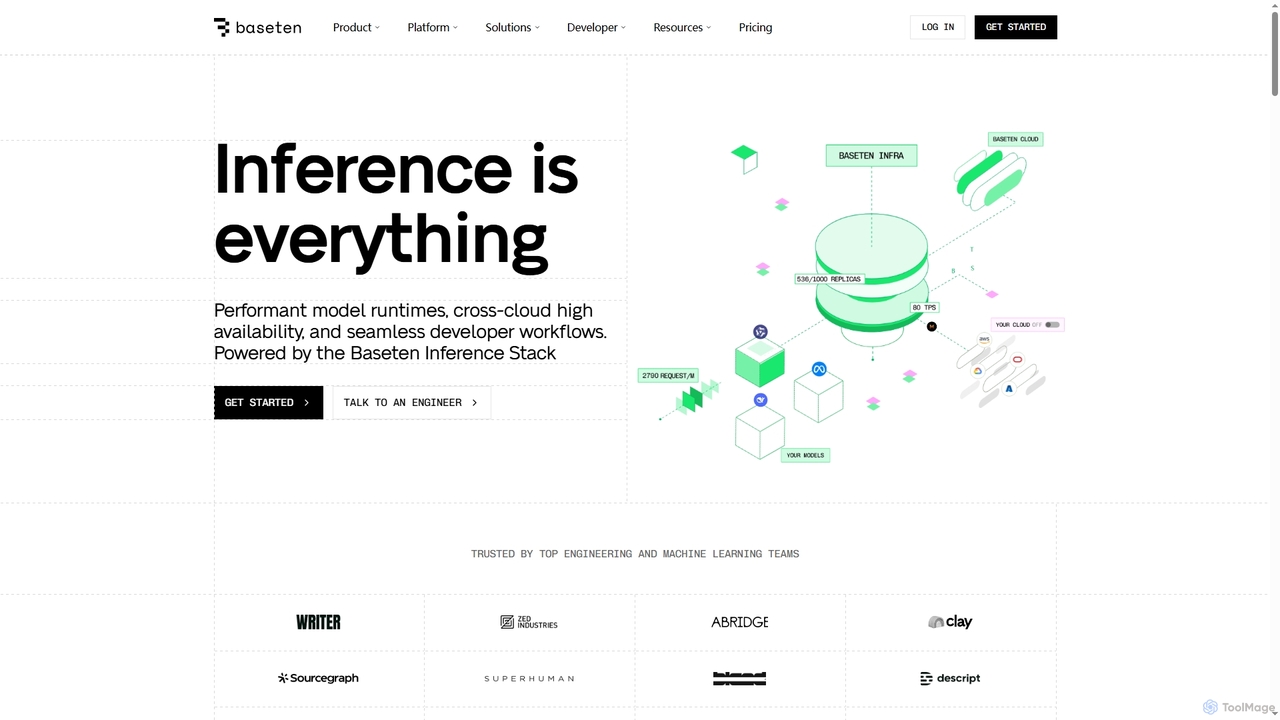
Baseten is a production-grade inference platform for deploying, scaling, and managing AI models. It offers high-performance runtimes, seamless developer workflows, and flexible deployment options (cloud, self-hosted, hybrid). Ideal for engineering and ML teams building mission-critical AI applications.
Deployment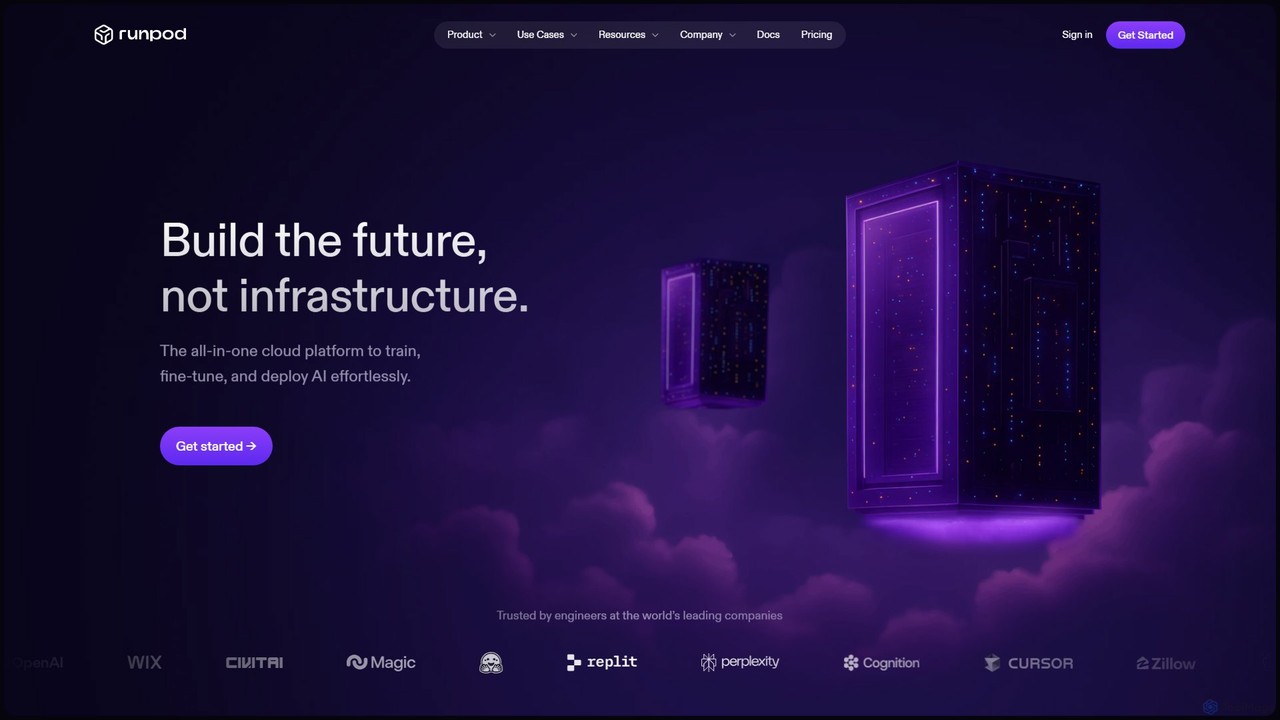
Runpod
Runpod is a cloud platform designed for AI and machine learning, offering scalable GPU compute for deploying, training, and running AI models. It provides serverless GPUs, pre-built templates, and cost-effective pricing to simplify the entire AI development workflow, from idea to production.
Machine Learning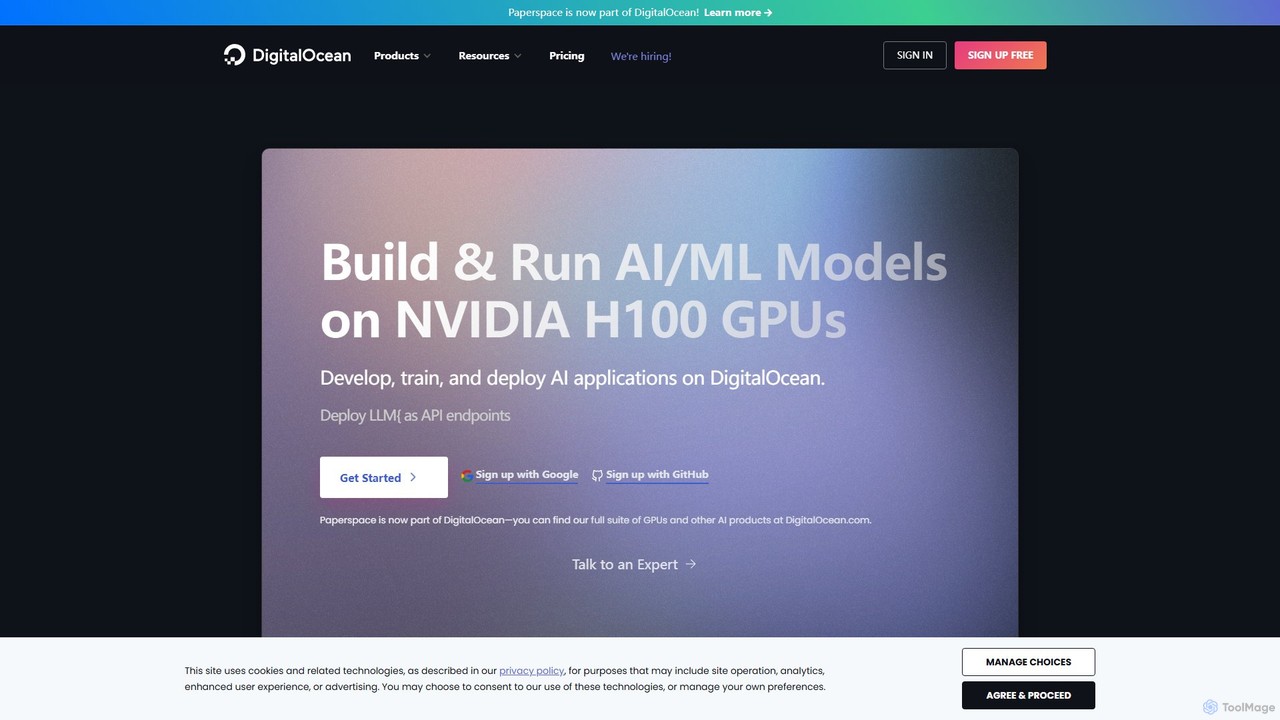
Paperspace
Paperspace is a high-performance cloud computing platform designed for AI and Machine Learning. It provides effortless access to powerful cloud GPUs, managed Jupyter notebooks, and a complete MLOps platform (Gradient) to build, train, and deploy models. Ideal for developers, data scientists, and enterprises looking to accelerate their AI workflows without the complexity of managing infrastructure.
Machine Learning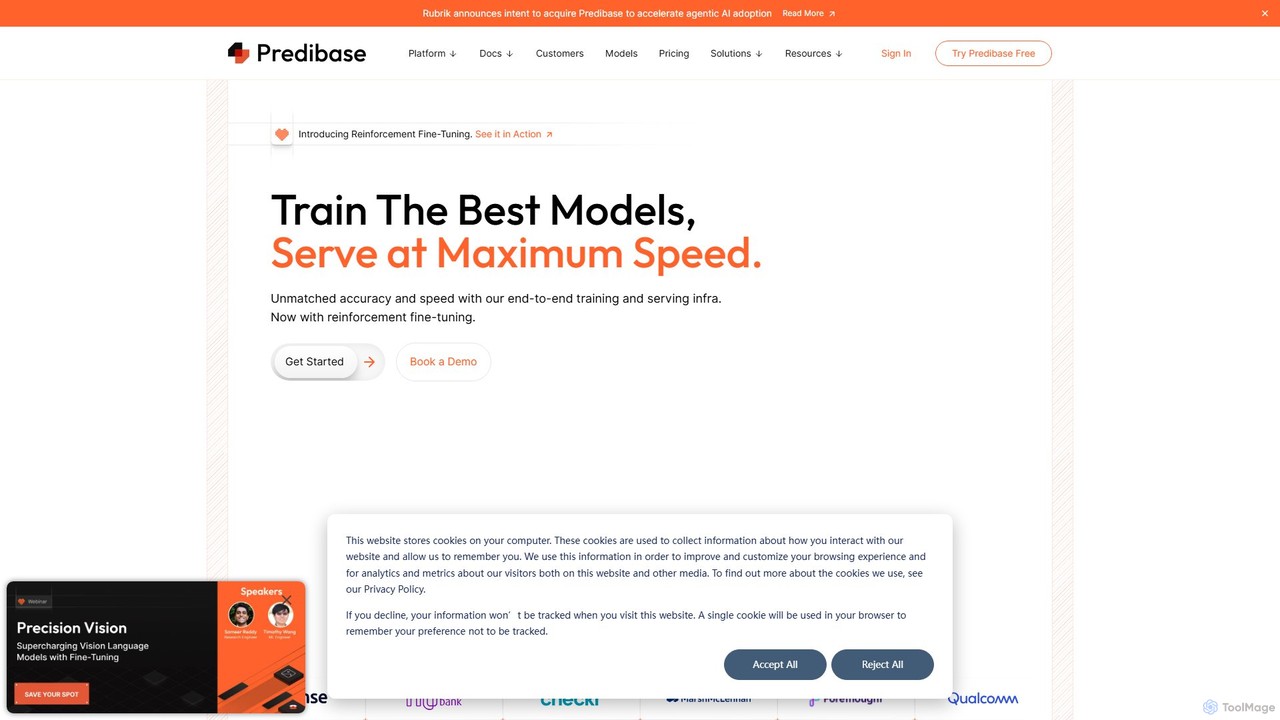
Predibase
Predibase is an end-to-end developer platform for efficiently fine-tuning and serving open-source Large Language Models (LLMs). It enables users to build custom AI models that outperform large proprietary models like GPT-4 on specific tasks, while significantly reducing costs and inference latency. The platform features advanced techniques like Reinforcement Fine-Tuning (RFT) and LoRAX for high-speed, multi-model serving.
Machine Learning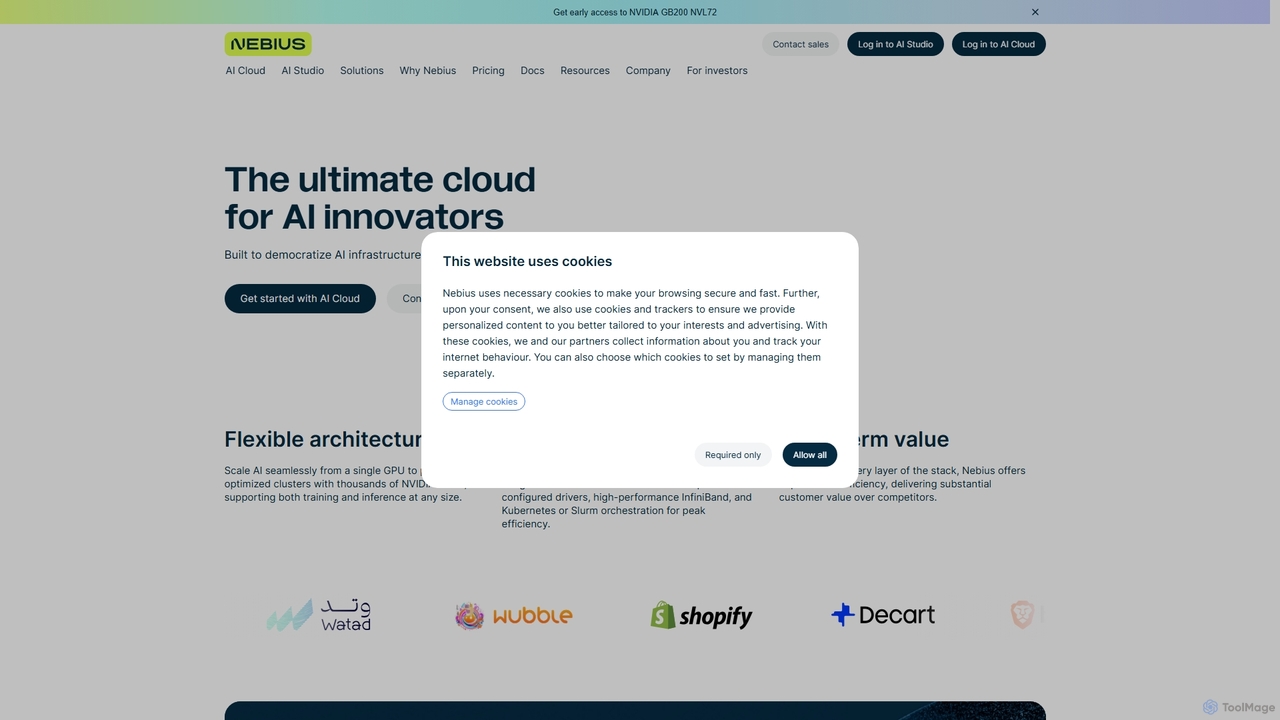
Nebius
Nebius is a high-performance cloud platform specifically engineered for demanding AI and Machine Learning workloads. It provides scalable access to the latest NVIDIA GPUs, from single instances to massive clusters, complemented by a suite of managed services and an integrated AI Studio to streamline the entire ML lifecycle from training to inference.
Gpu CloudBanana Categories
Banana Embed Widget
Copy this embed code to place the badge on your blog, article, or product site and send readers directly to this ToolMage detail page.

Related AI tools
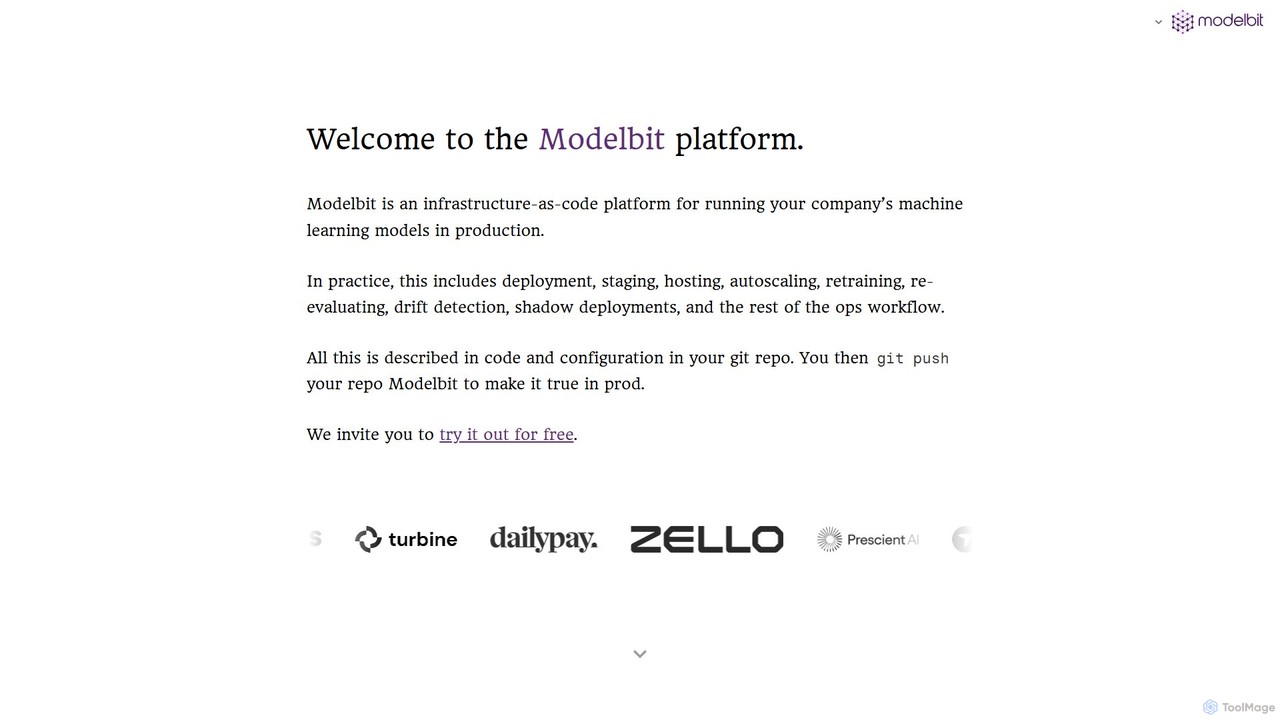
Modelbit
Modelbit is an MLOps platform for deploying machine learning models directly from Python notebooks to production. It provides an infrastructure-as-code workflow, enabling data scientists to deploy, host, scale, and manage models with a single line of code and a git push.
MlopsBaseten
Baseten is a production-grade inference platform for deploying, scaling, and managing AI models. It offers high-performance runtimes, seamless developer workflows, and flexible deployment options (cloud, self-hosted, hybrid). Ideal for engineering and ML teams building mission-critical AI applications.
Deployment
OctoAI
OctoAI is a high-performance compute platform for developers to run, tune, and scale generative AI models efficiently. It offers optimized, production-ready API endpoints for popular open-source models like Llama, Mixtral, and Stable Diffusion. By focusing on deep system optimizations, OctoAI provides faster inference speeds and lower costs, enabling businesses to build and deploy scalable AI applications without managing complex infrastructure.
Api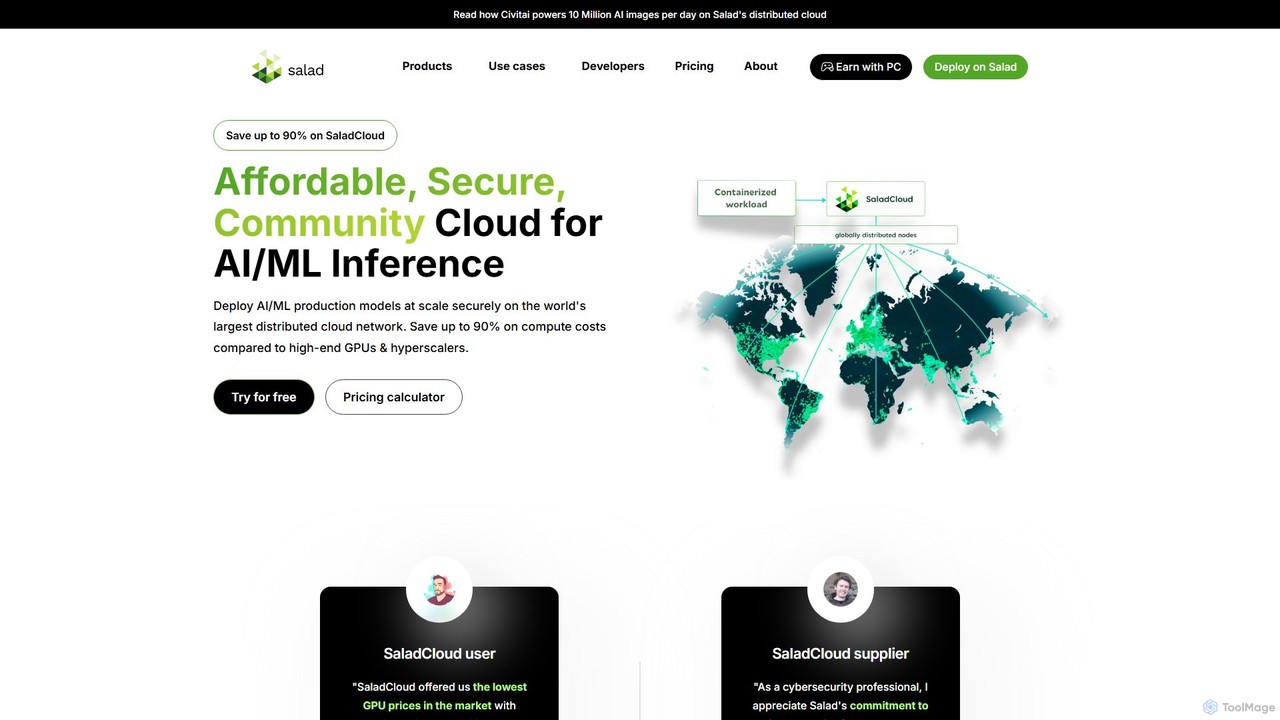
Salad
Salad is a distributed GPU cloud platform that harnesses unused computing power from a global network of consumer PCs. It offers businesses highly affordable and scalable on-demand GPU resources for AI/ML workloads, model training, and inference, reducing compute costs by up to 90% compared to traditional cloud providers.
Model Deployment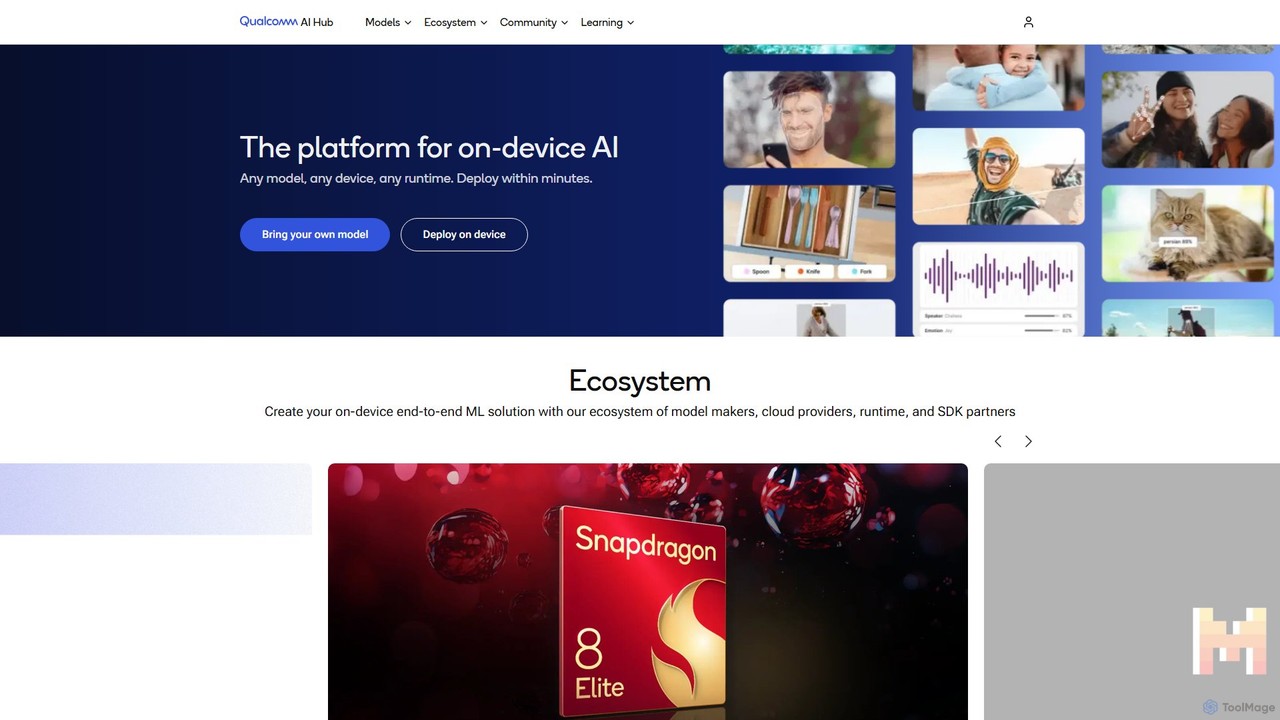
Qualcomm AI Hub
A developer platform for optimizing and deploying AI models on-device. Qualcomm AI Hub provides a library of 100+ pre-optimized models and tools to compile, profile, and run your own models on real Snapdragon-powered hardware, streamlining the path to production for edge AI applications.
Model Deployment
Datature
Datature is an end-to-end Vision AI platform designed for developers and enterprises. It streamlines the entire machine learning lifecycle, from collaborative data annotation and no-code model training to flexible deployment. The platform empowers teams to build, fine-tune, and deploy production-ready computer vision models for diverse applications across industries like healthcare, retail, and manufacturing.
Machine Learning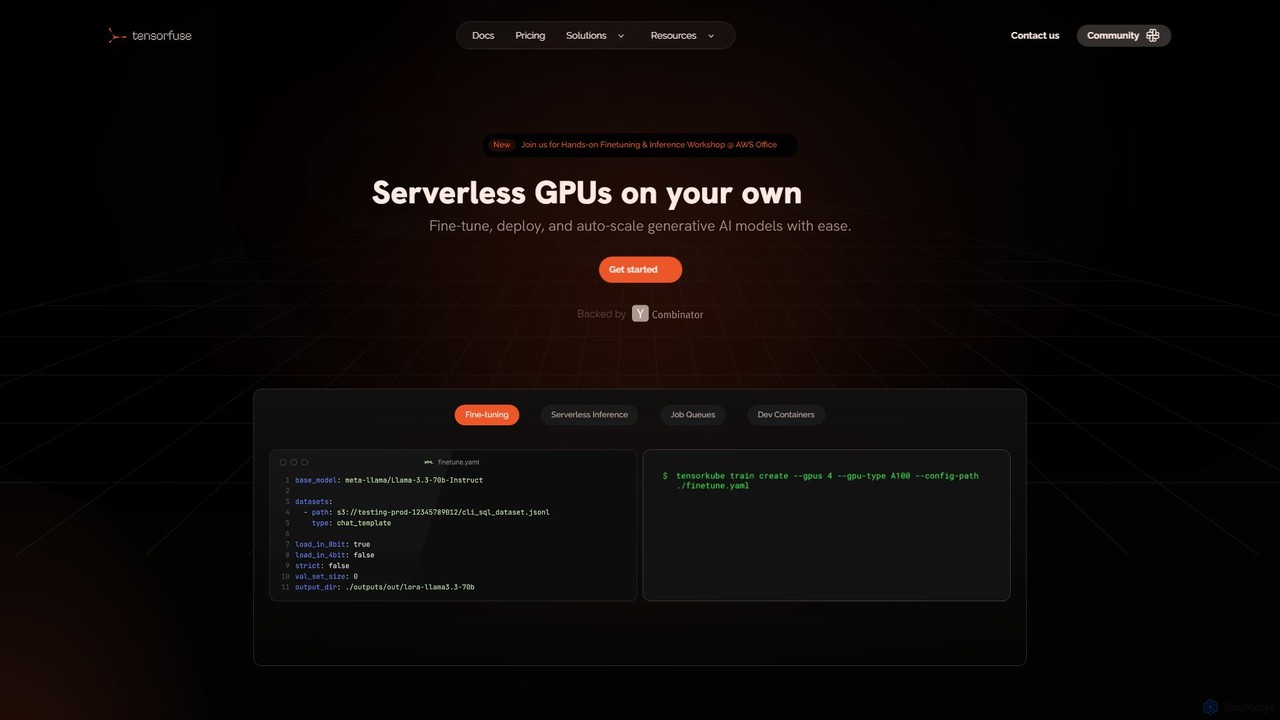
Tensorfuse
Tensorfuse is a serverless GPU platform that allows developers to fine-tune, deploy, and auto-scale generative AI models on their own AWS cloud. It simplifies infrastructure management, offering features like serverless inference, job queues, and dev containers to accelerate development, reduce costs, and eliminate DevOps overhead.
Deployment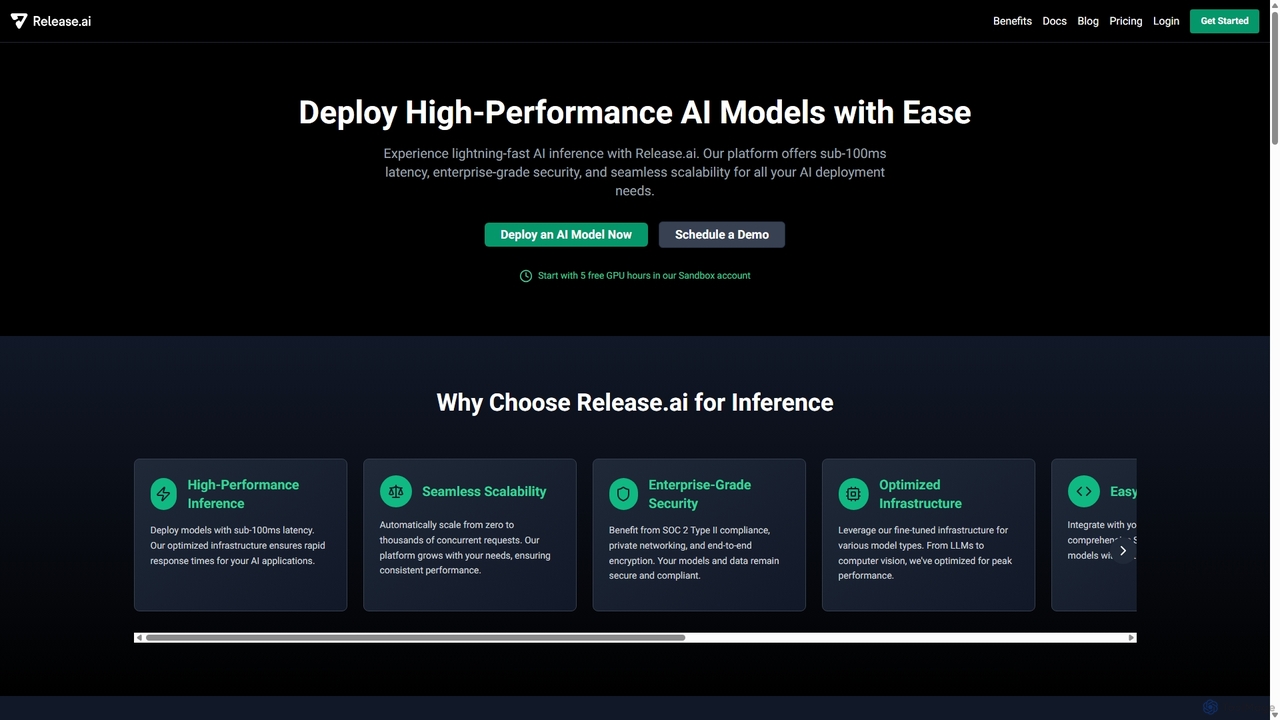
Release.ai
Release.ai is an enterprise-grade platform for developers to easily deploy, manage, and scale high-performance AI models. It offers sub-100ms inference latency, seamless auto-scaling, robust security, and a vast library of pre-optimized models, enabling rapid integration into any development workflow with just a few lines of code.
Platform As A Service (Paas)
StackSpaces
StackSpaces is an integrated development platform designed to help developers build, deploy, and scale full-stack AI applications with ease. It provides a unified environment with backend, frontend, and infrastructure components, streamlining the entire development lifecycle from idea to production.
Backend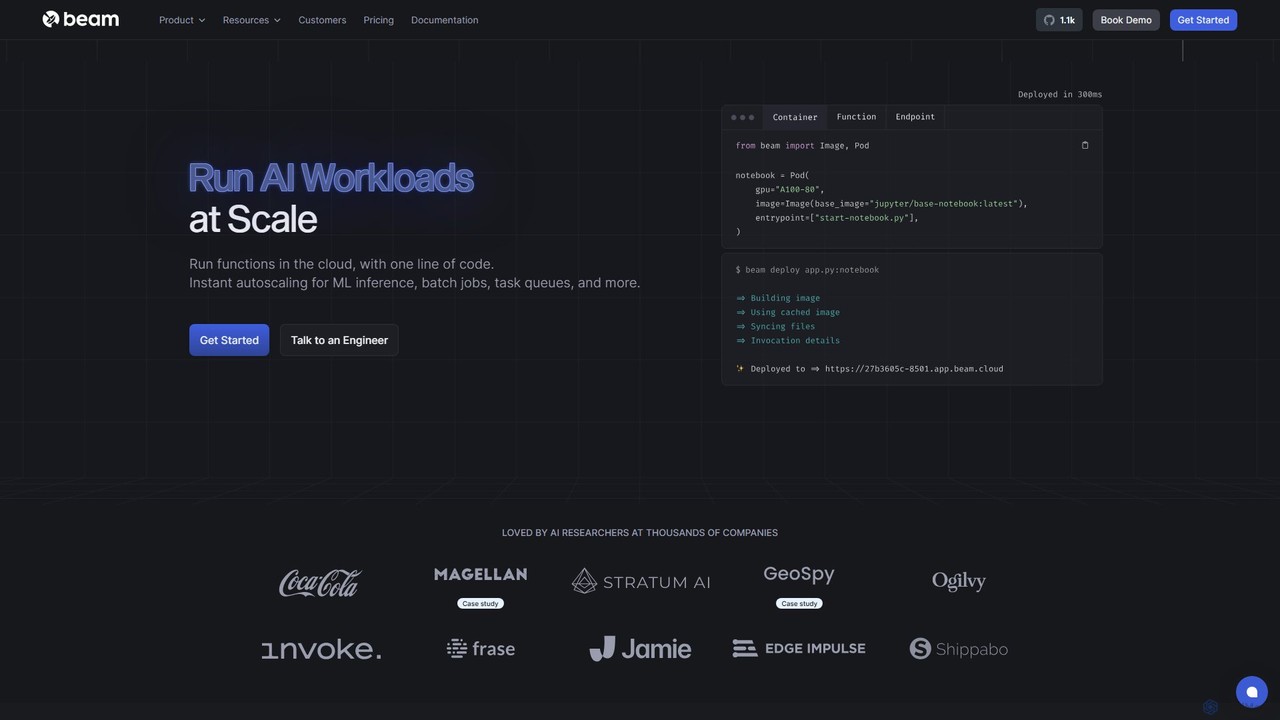
Beam
Beam is a serverless cloud platform designed for developers to run, scale, and deploy AI/ML models and applications on GPUs with ease. It offers instant autoscaling, pay-per-second billing, and a streamlined workflow, allowing you to go from code to a scalable API in minutes without managing complex infrastructure.
Machine Learning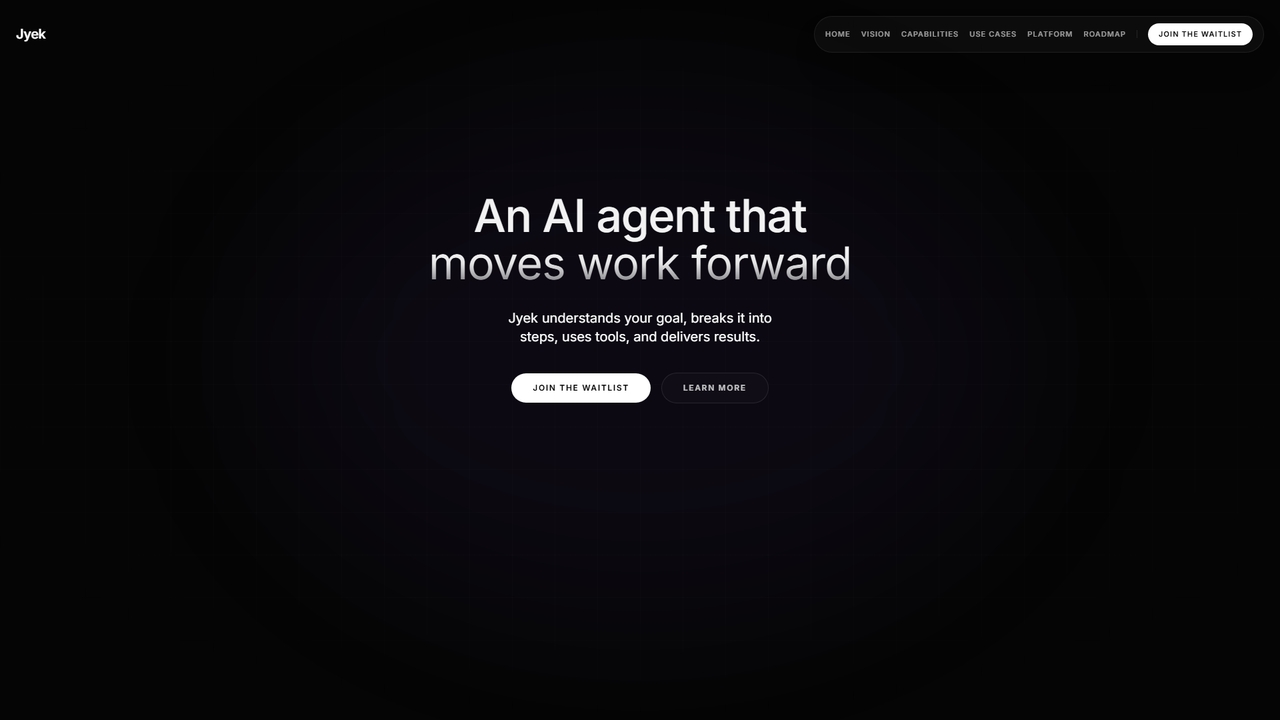
Jyek
Jyek is an AI agent platform that understands objectives, creates execution plans, uses tools, and delivers verifiable results for complex, multi-step tasks.
Automation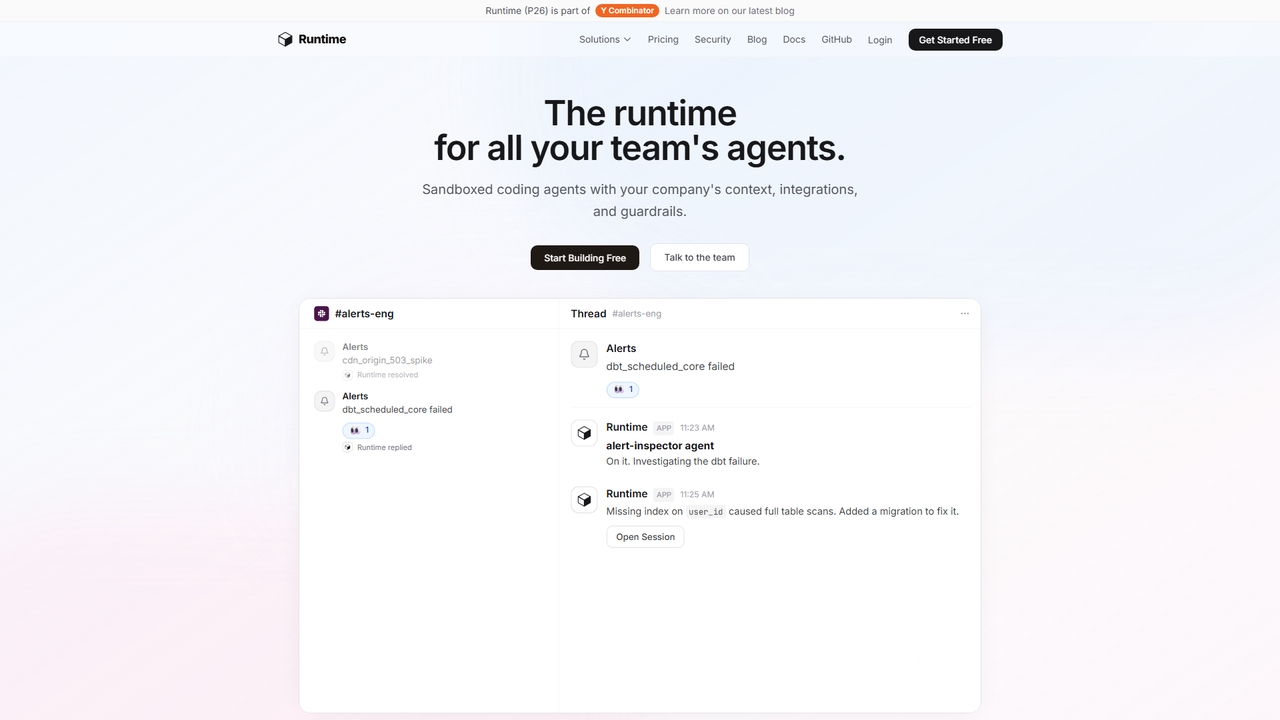

Inferless
Inferless is a serverless GPU platform designed for developers to deploy machine learning models in minutes. It eliminates infrastructure management, offering automatic scaling from zero to handle spiky workloads. The platform is optimized for lightning-fast cold starts and cost-efficiency, allowing users to save up to 90% on GPU bills by paying only for what they use.
Machine Learning Deployment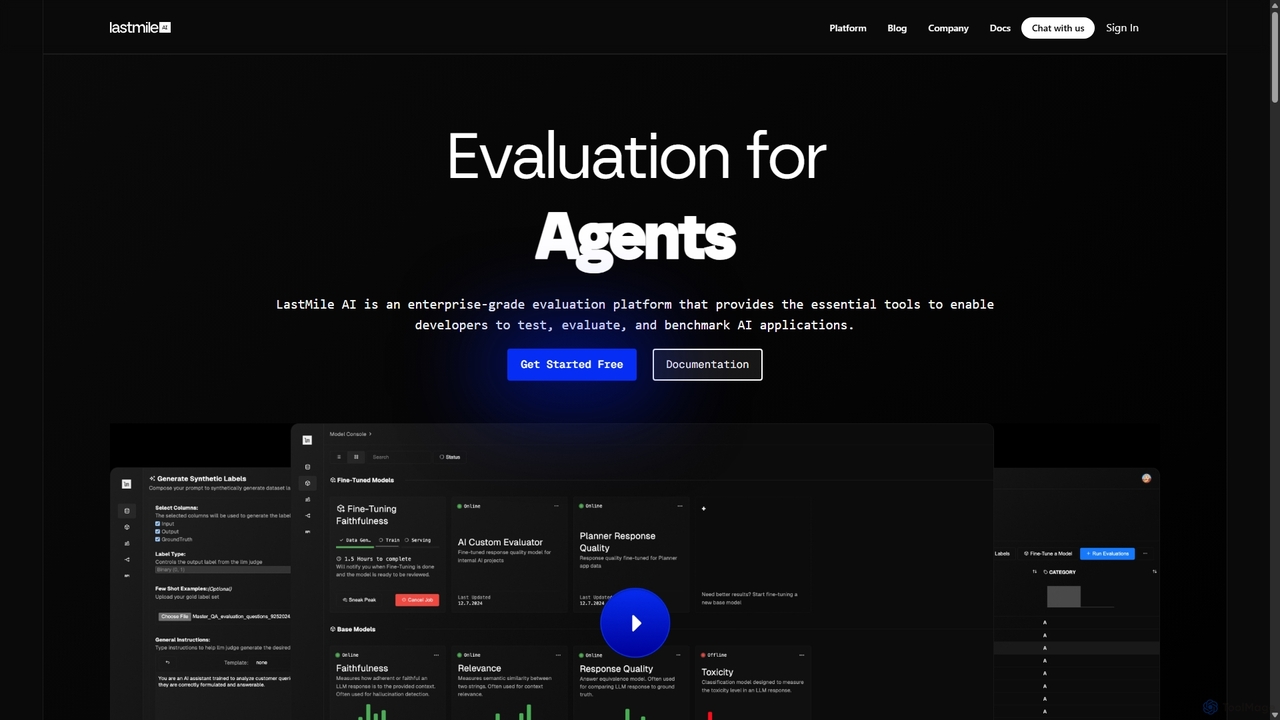
LastMile AI
LastMile AI is an enterprise-grade developer platform for testing, evaluating, and monitoring generative AI applications. It provides tools like AutoEval for custom evaluator fine-tuning, synthetic data generation, and real-time monitoring to ensure AI systems are reliable and production-ready.
Model EvaluationRunpod
Runpod is a cloud platform designed for AI and machine learning, offering scalable GPU compute for deploying, training, and running AI models. It provides serverless GPUs, pre-built templates, and cost-effective pricing to simplify the entire AI development workflow, from idea to production.
Machine Learning
Banana Comments (0)
Sign in to comment.
Sign inNo comments yet.