Freemium
Popular Devops AI tools in Development include GitLab, Qovery, Devtron, Bunnyshell, Codesphere, Release, CTO.ai, Runtime, Devozy.ai, and apiversion.dev, helping you work more efficiently.
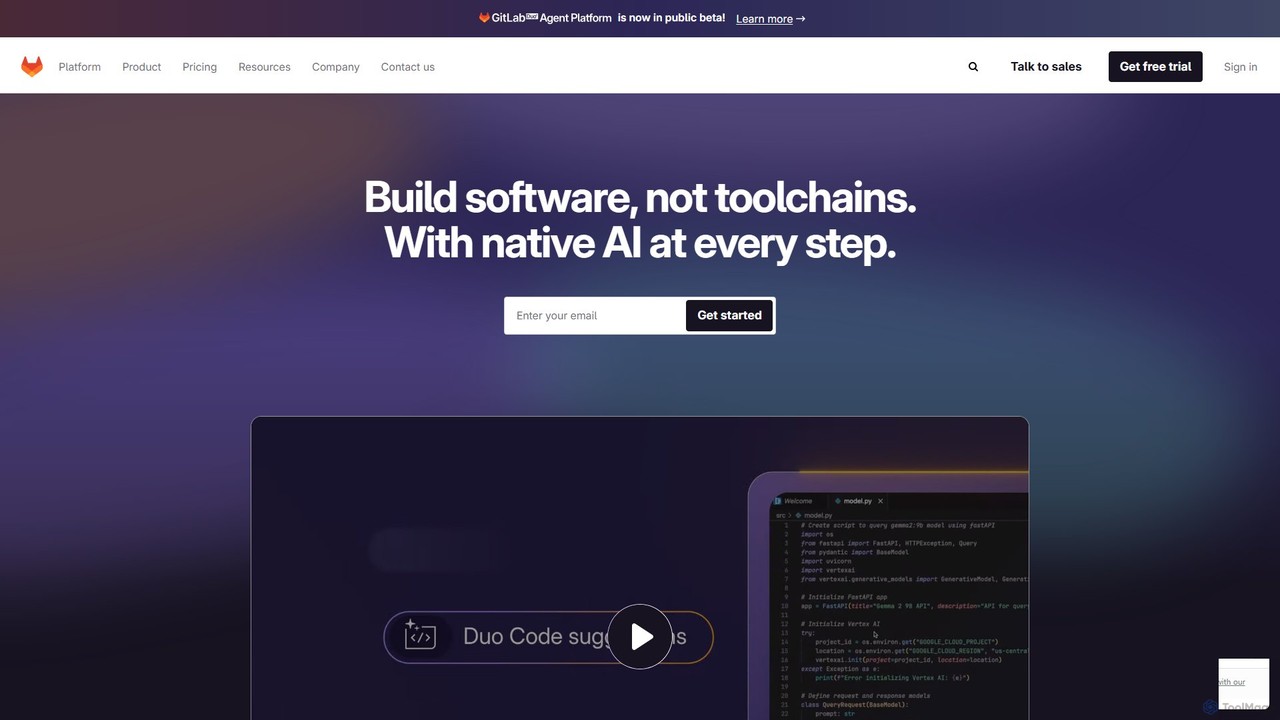
GitLab is a comprehensive, AI-powered DevSecOps platform that unifies the entire software development lifecycle into a single application. It provides source code management, CI/CD, security scanning, and project management, enhanced by GitLab Duo, its suite of AI capabilities, to accelerate software delivery and improve developer productivity.
Code Assistant
apiversion.dev is an AI-powered platform that automates API and endpoint versioning. It helps development teams create, manage, and deliver accurate, industry-standard versions using Semantic or Calendar Versioning. By integrating with CI/CD pipelines, it reduces manual errors, improves communication, and accelerates development cycles, ensuring seamless updates for both internal teams and external customers.
Api Management
Release is an AI-powered ephemeral environments platform that accelerates software development. It provides instant, isolated testing environments for every feature or pull request, eliminating infrastructure bottlenecks. By integrating with AI development tools and IDEs, Release enables teams to test and deploy code up to 10x faster.
Devops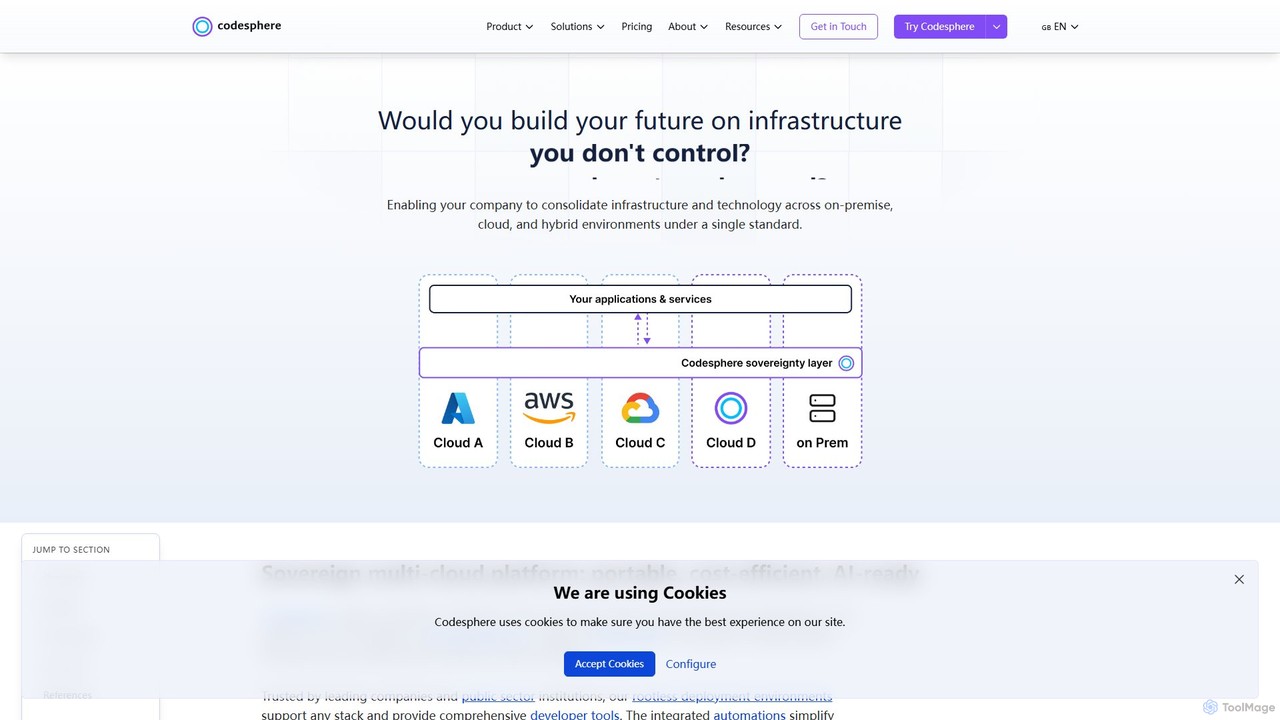
Codesphere is an all-in-one cloud IDE and DevOps platform that unifies development, deployment, and management. It offers a sovereign, multi-cloud solution designed to accelerate go-to-market, reduce costs, and simplify complex infrastructure without needing Kubernetes expertise. It's AI-ready and built for enterprise-grade security and scalability.
Cloud Ide
Bunnyshell is an AI-orchestrated Environments as a Service (EaaS) platform that automates the creation of ephemeral, production-like environments. It's designed to accelerate the testing, review, and deployment of code, especially AI-generated code, enabling teams to ship software up to 100x faster while reducing cloud costs by up to 70%.
Infrastructure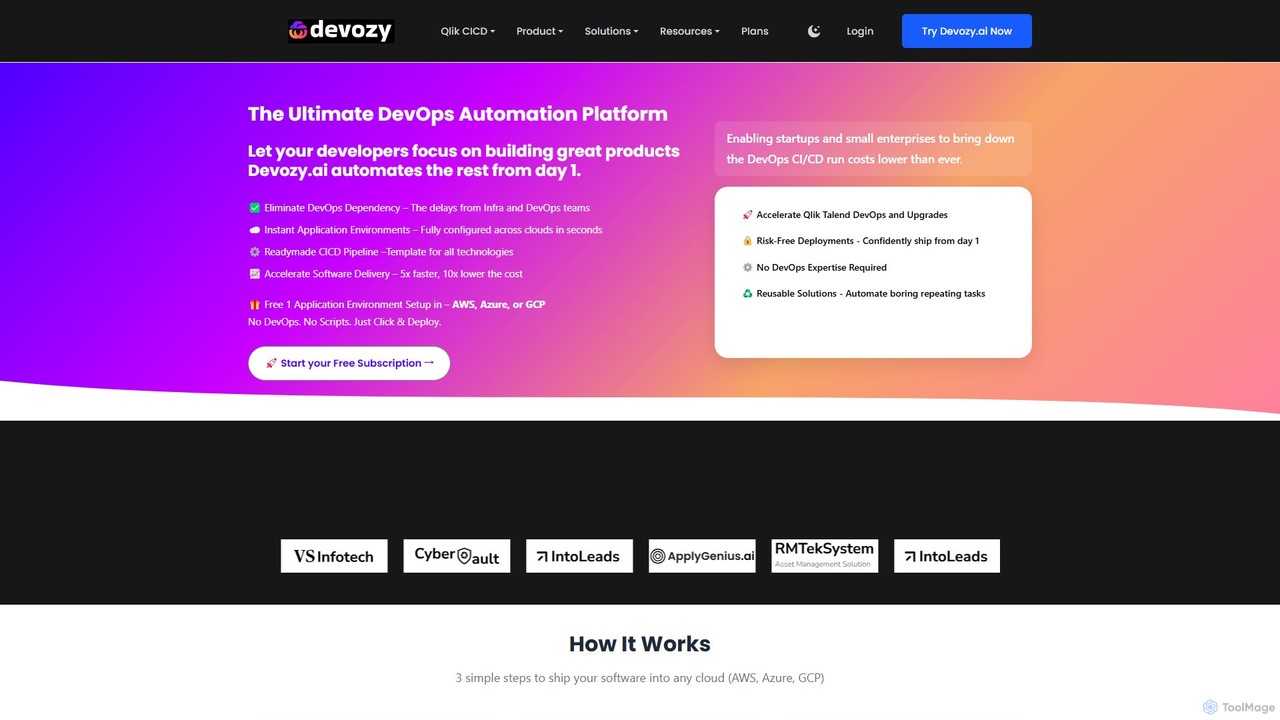
Devozy.ai is a self-service DevOps automation platform designed for IT engineering teams. It streamlines software deployment to multi-cloud environments like AWS, Azure, and GCP, providing ready-made CI/CD pipelines and instant application environments. This allows developers to focus on coding by eliminating DevOps dependencies, accelerating delivery by up to 5x and reducing costs.
Multi Cloud Management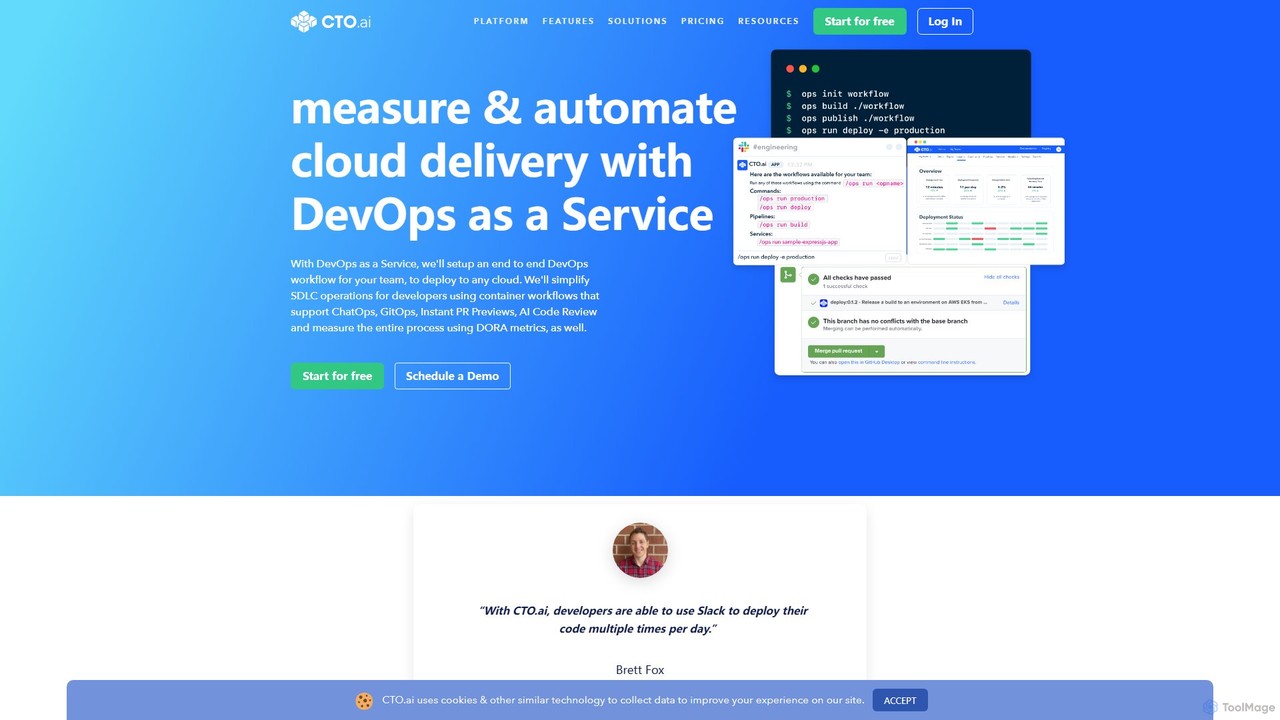
CTO.ai is a DevOps as a Service platform that helps engineering teams build an Internal Developer Platform (IDP). It uses DORA metrics, event-driven automation, and AI-powered features like code review to accelerate cloud delivery, improve developer experience, and provide data-driven insights into the software development lifecycle.
Platform As A Service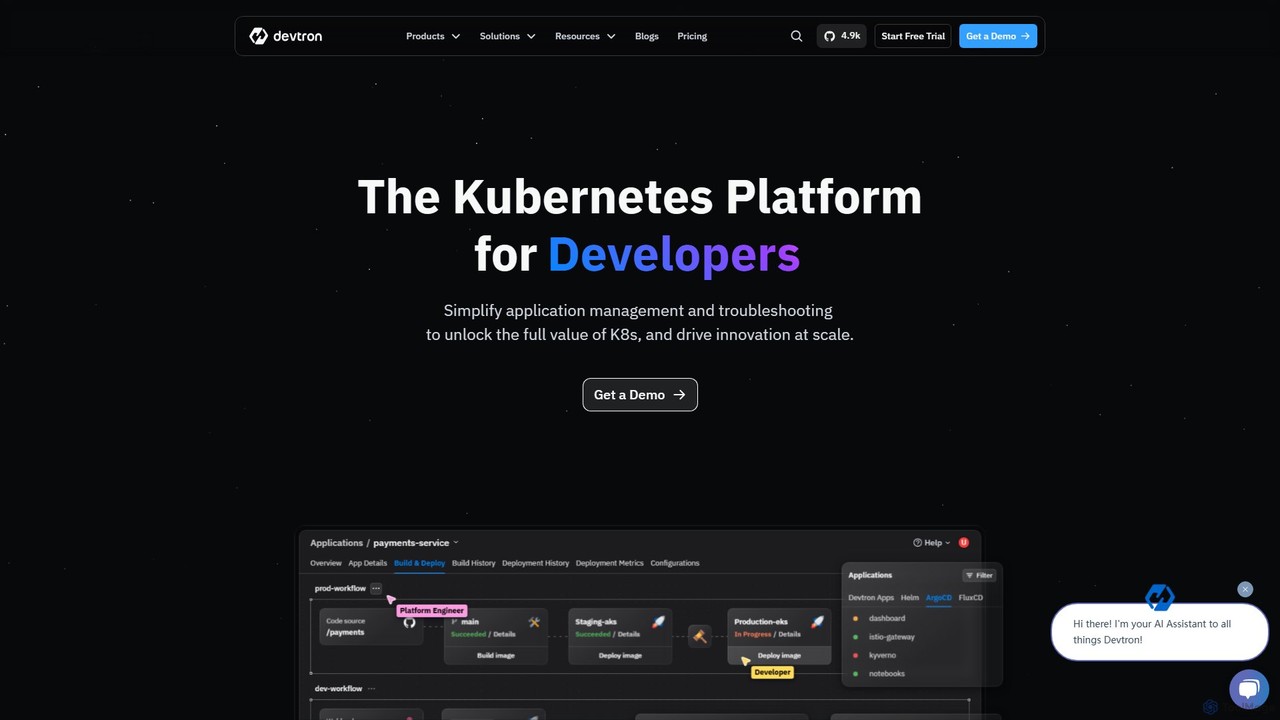
Devtron is an open-source, Kubernetes-native software delivery platform that simplifies application management. It integrates CI/CD, GitOps, security, and observability into a unified dashboard, empowering developers and DevOps teams to manage complex Kubernetes environments with ease, accelerate release cycles, and improve productivity without a steep learning curve.
Cloud Computing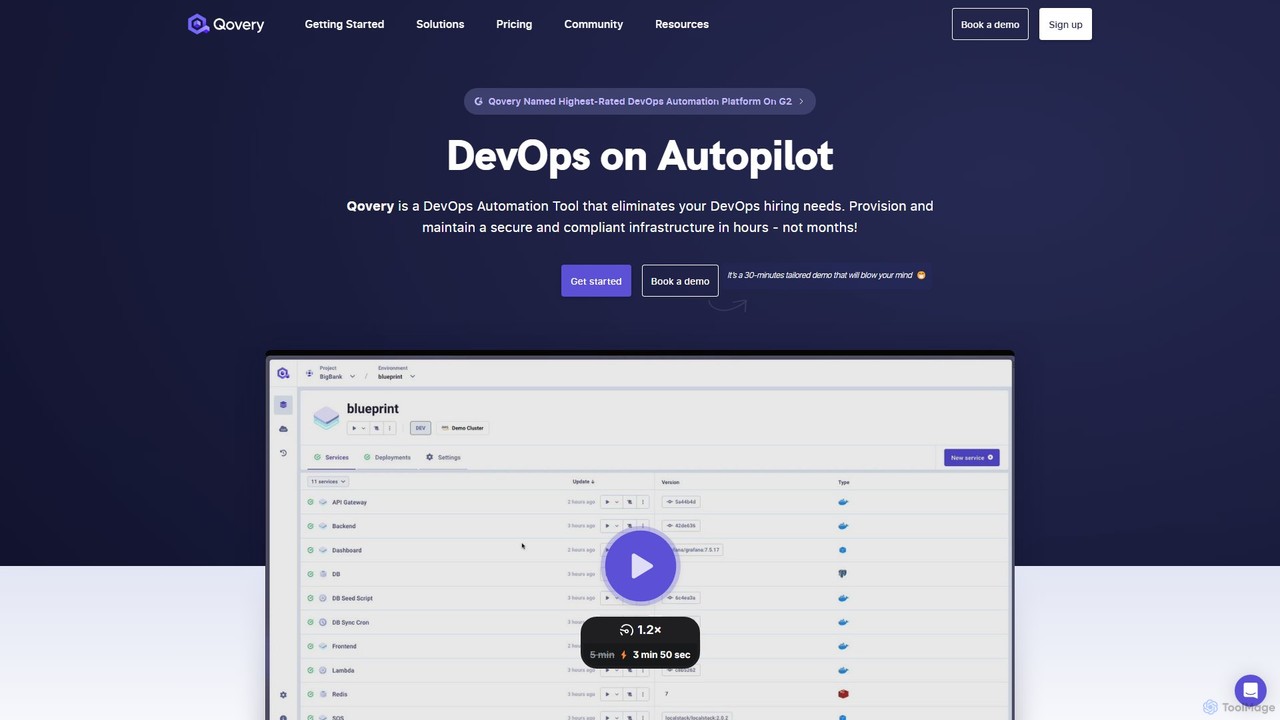
Qovery is a DevOps Automation Platform that provides self-service infrastructure for developers. It automates environment provisioning, accelerates deployment cycles, and optimizes cloud costs on AWS, Azure, and GCP, eliminating the need for extensive DevOps hiring.
Infrastructure As CodeAI DevOps tools are a class of solutions that leverage artificial intelligence and machine learning to automate and optimize the software development lifecycle. These tools analyze vast amounts of data from code repositories, CI/CD pipelines, and production environments to identify patterns, predict issues, and suggest improvements. Their primary value lies in enhancing speed, reliability, and security, enabling teams to deliver higher-quality software faster. By moving beyond simple rule-based automation, AI DevOps tools provide predictive insights and intelligent orchestration for complex development workflows.
AI DevOps tools are primarily used by DevOps engineers, Site Reliability Engineers (SREs), and software development teams in organizations that practice continuous integration and continuous delivery (CI/CD). They are particularly valuable in complex, cloud-native environments with microservices architectures, where manual monitoring and management are challenging. Common applications include proactive incident management in high-availability systems and optimizing resource consumption in large-scale cloud deployments.
When selecting an AI DevOps tool, consider its integration capabilities with your existing toolchain (e.g., Jenkins, GitLab, Kubernetes, Datadog). Evaluate the sophistication and transparency of its AI models—can it explain its recommendations? Assess its data handling and security policies, especially for sensitive production data. Finally, match the tool's specific strengths, whether in observability, CI/CD optimization, or security, to your team's most critical pain points.
A Site Reliability Engineering (SRE) team for a large e-commerce platform uses an AI DevOps tool to proactively manage production stability. When the tool's anomaly detection algorithm identifies a sudden spike in API error rates, it automatically triggers an alert. Instead of just notifying the on-call engineer, the tool correlates metrics, logs, and deployment data from the past hour. It identifies a recent code deployment as the likely cause and highlights the specific microservice and code commit responsible. This reduces the mean time to resolution (MTTR) from hours to minutes, minimizing customer impact and freeing up engineers from manual troubleshooting.
A software development team working on a complex application with a long test suite integrates an AI DevOps tool into their CI/CD pipeline. The tool analyzes historical test run data to identify which tests are most likely to fail based on the specific code changes in a pull request. It then intelligently re-orders the test suite to run these high-risk tests first. This 'fail-fast' approach provides developers with feedback in minutes rather than waiting over an hour for the full suite to complete. The tool also identifies flaky tests and performance bottlenecks in the pipeline, suggesting optimizations that cut the average build time by 30%.
A FinOps team at a fast-growing startup uses an AI DevOps tool to control escalating cloud infrastructure costs. The tool continuously analyzes resource utilization patterns across their Kubernetes clusters and cloud provider accounts. It identifies over-provisioned servers, idle resources, and inefficiently configured autoscaling groups. Based on predictive models of future workload, it provides actionable recommendations, such as rightsizing virtual machines or purchasing reserved instances for stable workloads. The team can configure the tool to automatically apply these changes during off-peak hours, resulting in a consistent 25% reduction in their monthly cloud bill without impacting performance.
A developer is working on a new feature and opens a pull request. An integrated AI DevOps tool automatically scans the code changes. It goes beyond simple linting by identifying complex issues like potential race conditions, inefficient database queries, and subtle security vulnerabilities that static analysis tools might miss. The tool provides clear, context-aware suggestions and code examples directly as comments in the pull request. This allows the developer to fix issues before a human reviewer even sees the code, improving code quality, reducing the burden on senior developers, and accelerating the review cycle.
A security team implements a DevSecOps culture by embedding an AI-powered security tool into the CI/CD pipeline. As developers commit code, the tool not only scans for known vulnerabilities (CVEs) in dependencies but also uses machine learning to analyze code patterns for potential zero-day exploits or logical flaws. For example, it can detect insecure data handling practices that could lead to injection attacks. When a high-risk issue is found, it can automatically fail the build and create a detailed security ticket for the development team. This shifts security left, catching vulnerabilities early in the lifecycle when they are cheaper and easier to fix.
A release manager for a financial services application needs to ensure deployment stability. Before a scheduled release, they use an AI DevOps tool to generate a comprehensive risk score. The tool analyzes multiple factors: the complexity and volume of code changes, the results of automated tests, historical failure rates of the involved services, and current production environment stability. It predicts the likelihood of the release causing an incident and highlights the specific changes contributing most to the risk. Based on this data-driven insight, the manager can decide to proceed, delay the release for more testing, or implement a phased rollout strategy like a canary release to mitigate potential impact.
AI DevOps tools are advanced software solutions that apply artificial intelligence and machine learning to automate, optimize, and secure the entire software development lifecycle. Unlike traditional tools that rely on predefined rules, AI DevOps tools learn from data to predict failures, identify performance bottlenecks, detect security threats, and automate complex decision-making. Their goal is to increase velocity, improve system reliability, and enhance developer productivity by providing intelligent, data-driven insights and actions.
The key difference lies in their core logic. Traditional DevOps tools are imperative and rule-based; they execute tasks exactly as configured by a human (e.g., 'if this test fails, stop the pipeline'). AI DevOps tools are data-driven and predictive. They analyze patterns in historical and real-time data to make intelligent decisions. For example, instead of just running all tests, an AI tool might predict which tests are most relevant to a code change and run them first. Traditional tools automate known processes, while AI tools optimize processes and uncover unknown issues proactively.
Choosing the right tool depends on your specific needs. Consider the following factors:
Integrating AI into DevOps practices offers several significant benefits. The primary advantages include:
AI DevOps tools cater to a range of technical roles involved in the software lifecycle. The primary users include: