It Best in category 3 results Infrastructure AI Tool

Popular AI tools in the Infrastructure field of It include Truefoundry、iomete、Rebolt, etc., helping you quickly improve efficiency.

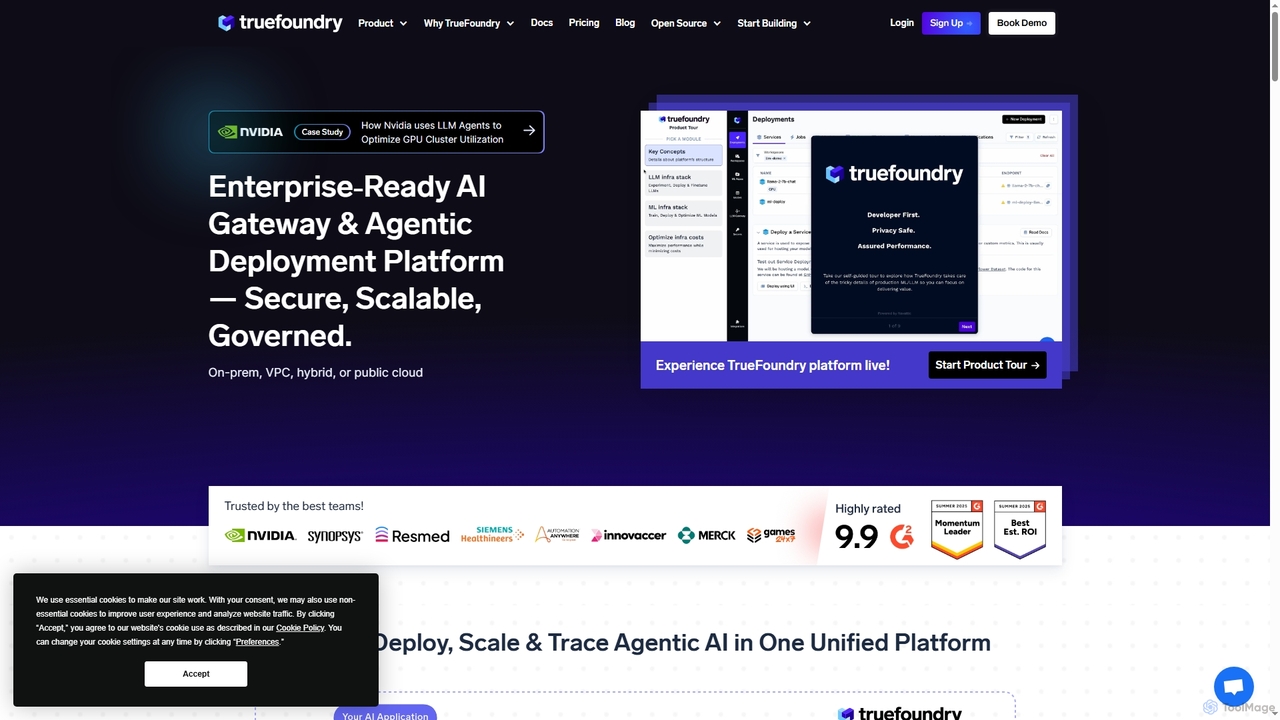
Truefoundry

Truefoundry

Truefoundry is an enterprise-ready platform for deploying, managing, and scaling agentic AI applications. It provides a unified AI …

176.2K
Rebolt

Rebolt

Rebolt is an AI-powered platform designed to automate the entire software development lifecycle. It helps developer and DevOps …

2.6K
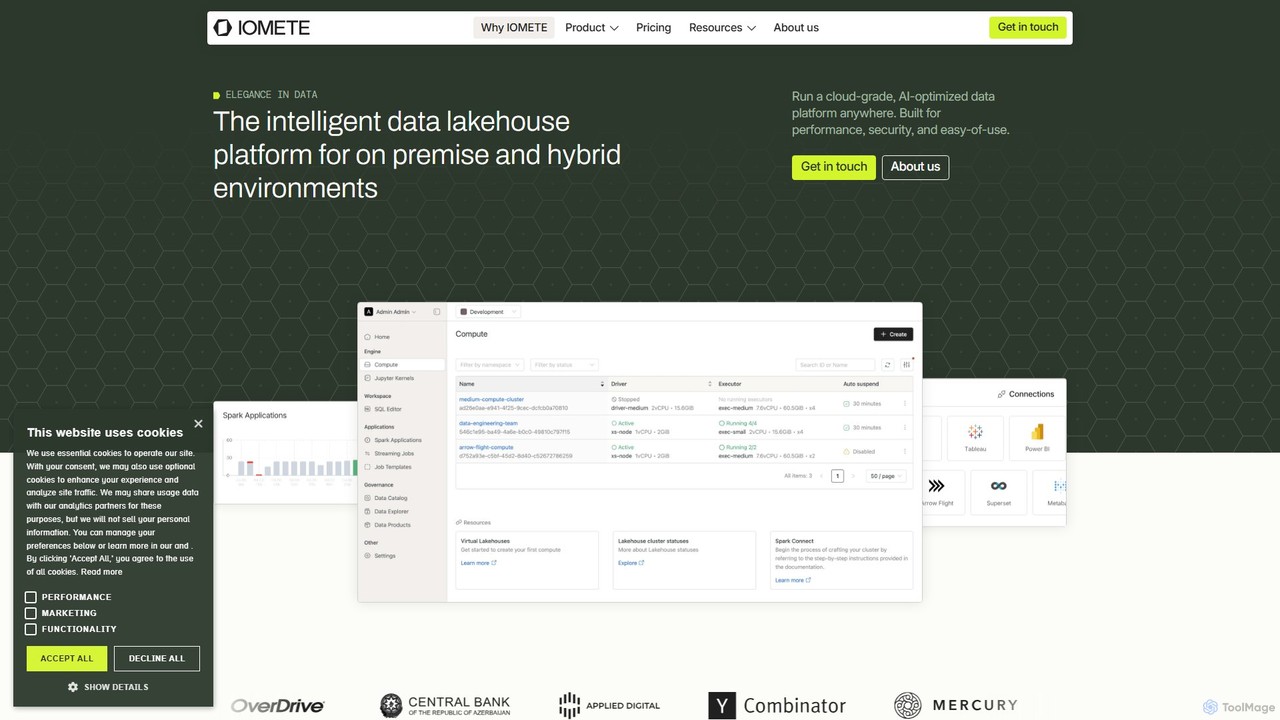
iomete

iomete

iomete is a self-hosted data lakehouse platform designed for enterprises. It combines the flexibility of data lakes with …

26.5K

About Infrastructure

AI Infrastructure refers to the specialized hardware, software, and services that form the foundational environment for developing, training, deploying, and managing artificial intelligence models and applications. These tools provide the necessary computational power, data storage, and operational frameworks to handle the intensive demands of AI workloads. They enable organizations to build, scale, and maintain their AI initiatives efficiently and reliably.

Core Features

  • Accelerated Computing: Utilizes GPUs, TPUs, or specialized AI chips for high-performance model training and inference.
  • Scalable Data Management: Provides optimized storage and processing solutions for massive AI datasets, including data lakes and feature stores.
  • MLOps Platforms: Offers integrated tools for model lifecycle management, from experimentation and versioning to deployment, monitoring, and retraining.
  • Containerization & Orchestration: Supports packaging AI applications and dependencies for consistent deployment across various environments.
  • Cloud & Edge Deployment: Facilitates deploying AI models on cloud platforms, on-premise servers, or at the edge for real-time processing.

Applicable Scenarios

Data scientists and machine learning engineers leverage AI infrastructure to train complex deep learning models on vast datasets, ensuring efficient resource utilization and faster iteration cycles. Enterprises use these platforms to deploy AI-powered applications at scale, such as recommendation engines or predictive analytics tools, requiring robust and reliable operational environments.

How to Choose

When selecting AI infrastructure, consider the specific AI workloads (training vs. inference), required computational resources (GPU vs. CPU), data volume and velocity, and integration with existing IT systems. Evaluate scalability, cost-effectiveness, ease of management (MLOps features), and support for preferred AI frameworks (TensorFlow, PyTorch).

InfrastructureUse Cases

1

Accelerating Deep Learning Model Training

Data scientists in research institutions or tech companies utilize AI infrastructure to significantly reduce the time required for training large deep learning models. By leveraging specialized hardware like GPUs and distributed computing frameworks, they can process massive datasets and iterate on model architectures much faster than with traditional CPU-based systems, leading to quicker development cycles and improved model performance.

2

Deploying Scalable AI Applications

Software engineers and MLOps teams in e-commerce or SaaS companies use AI infrastructure to deploy AI-powered applications, such as personalized recommendation engines or intelligent chatbots, that can handle millions of user requests. The infrastructure provides robust container orchestration, auto-scaling capabilities, and load balancing, ensuring high availability and responsiveness even during peak traffic, thereby enhancing user experience.

3

Managing End-to-End MLOps Pipelines

Machine learning engineers in various industries, from finance to healthcare, implement MLOps platforms within their AI infrastructure to streamline the entire machine learning lifecycle. This includes automated data versioning, model training, continuous integration/continuous deployment (CI/CD) for models, and real-time monitoring of model performance in production, ensuring model reliability and quick updates.

4

Processing Large-Scale Data for AI

Data engineers and analysts in big data companies or research labs rely on AI infrastructure to efficiently process and prepare vast amounts of raw data for AI model consumption. Specialized data storage solutions and distributed processing engines enable them to clean, transform, and feature-engineer petabytes of data, providing high-quality inputs essential for accurate and unbiased AI model training.

5

Enabling Edge AI Deployments

IoT solution architects and embedded systems developers leverage AI infrastructure to deploy lightweight AI models directly onto edge devices, such as smart cameras or industrial sensors. This allows for real-time inference without constant cloud connectivity, reducing latency, improving privacy, and enabling immediate decision-making in environments like smart factories, autonomous vehicles, or remote monitoring systems.

6

Building Secure AI Development Environments

Security architects and development teams in regulated industries like banking or defense utilize AI infrastructure to create isolated and secure environments for developing sensitive AI models. These infrastructures offer robust access controls, data encryption, compliance auditing features, and secure network configurations, protecting proprietary algorithms and confidential data throughout the AI development lifecycle.

InfrastructureFrequently Asked Questions