It Best in category 1 results Legacy System Modernization AI Tool

Popular AI tools in the Legacy System Modernization field of It include Axal, etc., helping you quickly improve efficiency.

Axal

Axal

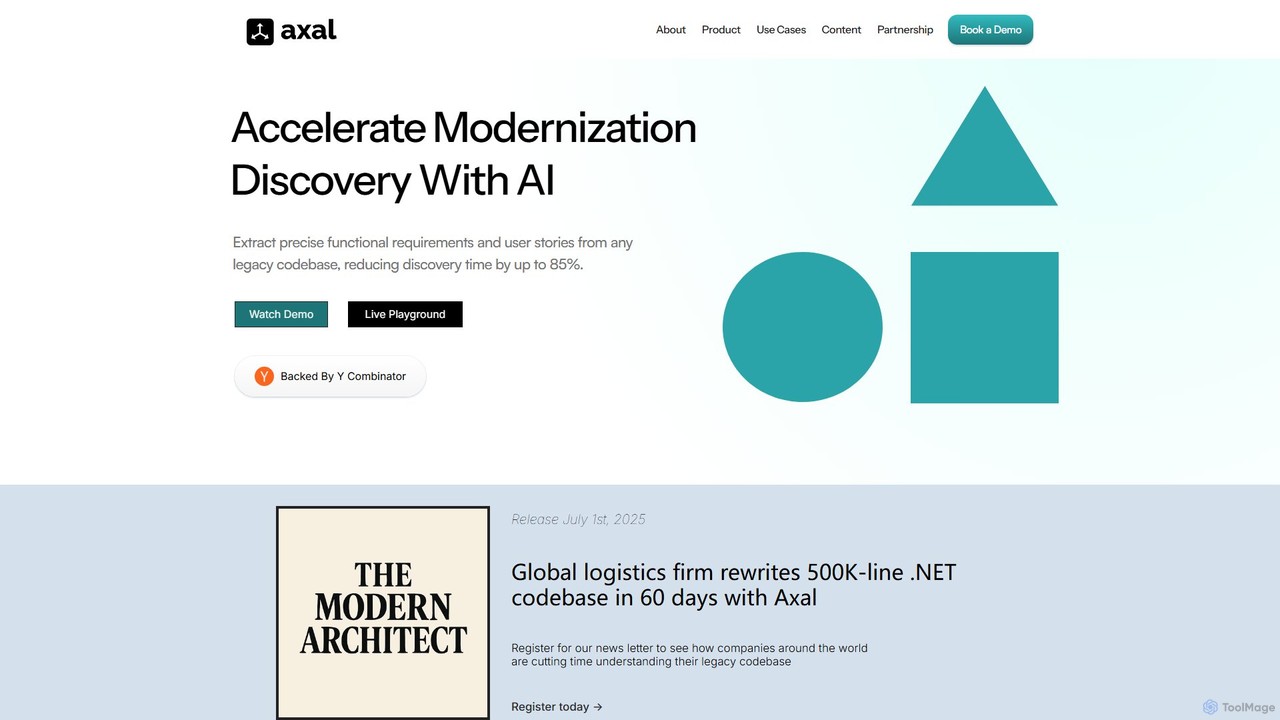
Axal is a Y Combinator-backed AI platform that analyzes legacy codebases to automatically extract functional requirements, user stories, …

8.9K

About Legacy System Modernization

Legacy System Modernization tools are AI-powered solutions designed to transform outdated software applications and infrastructure into modern, efficient, and scalable systems. These tools leverage artificial intelligence to analyze existing codebases, automate refactoring processes, and facilitate migration to contemporary platforms like cloud environments. They enable organizations to enhance performance, improve security, reduce operational costs, and accelerate digital transformation initiatives within their IT landscape.

Core Features

  • Automated Code Analysis: AI algorithms scan legacy code for dependencies, vulnerabilities, and modernization opportunities, identifying areas for refactoring or replacement.
  • Intelligent Code Refactoring: Tools can automatically rewrite or optimize portions of legacy code into modern languages or frameworks, maintaining functionality while improving efficiency.
  • Cloud Migration Assistance: AI guides the re-platforming or re-hosting of legacy applications to cloud infrastructures, optimizing configurations and ensuring compatibility.
  • Data Migration & Integration: Facilitates the secure and efficient transfer of data from old databases to new systems, ensuring data integrity and seamless integration.
  • Automated Testing & Validation: AI-driven testing frameworks verify the functionality and performance of modernized systems, ensuring stability and preventing regressions.

Use Cases

Organizations across various sectors utilize Legacy System Modernization tools to overcome the limitations of their aging IT infrastructure. This includes financial institutions updating core banking systems, manufacturing companies migrating monolithic ERPs to microservices, and government agencies transforming outdated public service platforms to cloud-native applications. These tools are essential for IT departments aiming to reduce technical debt and align their systems with current business demands.

How to Choose

Selecting the right Legacy System Modernization tool requires evaluating several factors: the tool's compatibility with your existing legacy technologies and target modern platforms, its level of automation for code analysis and refactoring, the robustness of its data migration and integration capabilities, and its support for automated testing. Consider the vendor's expertise, the tool's scalability for future growth, and its security features to protect sensitive data during the modernization process.

Legacy System ModernizationUse Cases

1

Automating Monolithic Application Decomposition

For large enterprises with complex, monolithic applications, AI-powered modernization tools can analyze the codebase to identify logical boundaries and dependencies. This enables architects and developers to automatically decompose the application into smaller, independent microservices, facilitating agile development, easier maintenance, and scalable deployment on cloud platforms.

2

Migrating On-Premise ERP to Cloud-Native

Manufacturing or retail companies often run critical ERP systems on outdated on-premise infrastructure. Legacy System Modernization tools assist IT teams in re-platforming these systems to cloud-native architectures, automatically converting database schemas, refactoring application logic, and ensuring seamless integration with other cloud services, significantly reducing operational costs and improving accessibility.

3

Refactoring COBOL Mainframe Applications

Financial institutions and insurance companies still rely on mission-critical applications written in COBOL on mainframes. Modernization tools can analyze these complex COBOL programs, identify business logic, and automatically translate or refactor them into modern languages like Java or C, allowing these applications to run on distributed systems or cloud environments, extending their lifespan and reducing reliance on specialized mainframe skills.

4

Enhancing Security of Outdated Web Portals

Government agencies or healthcare providers often maintain public-facing web portals built on older frameworks with known security vulnerabilities. AI modernization tools can scan these applications for security flaws, suggest and even automate the application of security patches, or guide the migration to more secure, modern web frameworks, protecting sensitive user data and ensuring compliance.

5

Accelerating Data Warehouse Modernization

Businesses with large, aging on-premise data warehouses struggle with performance and scalability. Legacy System Modernization tools facilitate the migration of these data warehouses to modern cloud data platforms (e.g., Snowflake, BigQuery). They automate schema conversion, data pipeline re-engineering, and ensure data quality during the transfer, enabling faster analytics and better business intelligence.

6

Streamlining Legacy API Integration for Digital Transformation

Companies undergoing digital transformation often face challenges integrating new digital services with existing legacy systems that lack modern APIs. Modernization tools can help expose legacy functionalities through new, standardized APIs, or even wrap existing interfaces, allowing new applications and third-party services to securely interact with core legacy data and processes without extensive manual re-coding.

Legacy System ModernizationFrequently Asked Questions