News Best in category 3 results Analysis AI Tool

Popular AI tools in the Analysis field of News include NewsCord、Clarity、stocknewsai.com, etc., helping you quickly improve efficiency.

Free
NewsCord

NewsCord

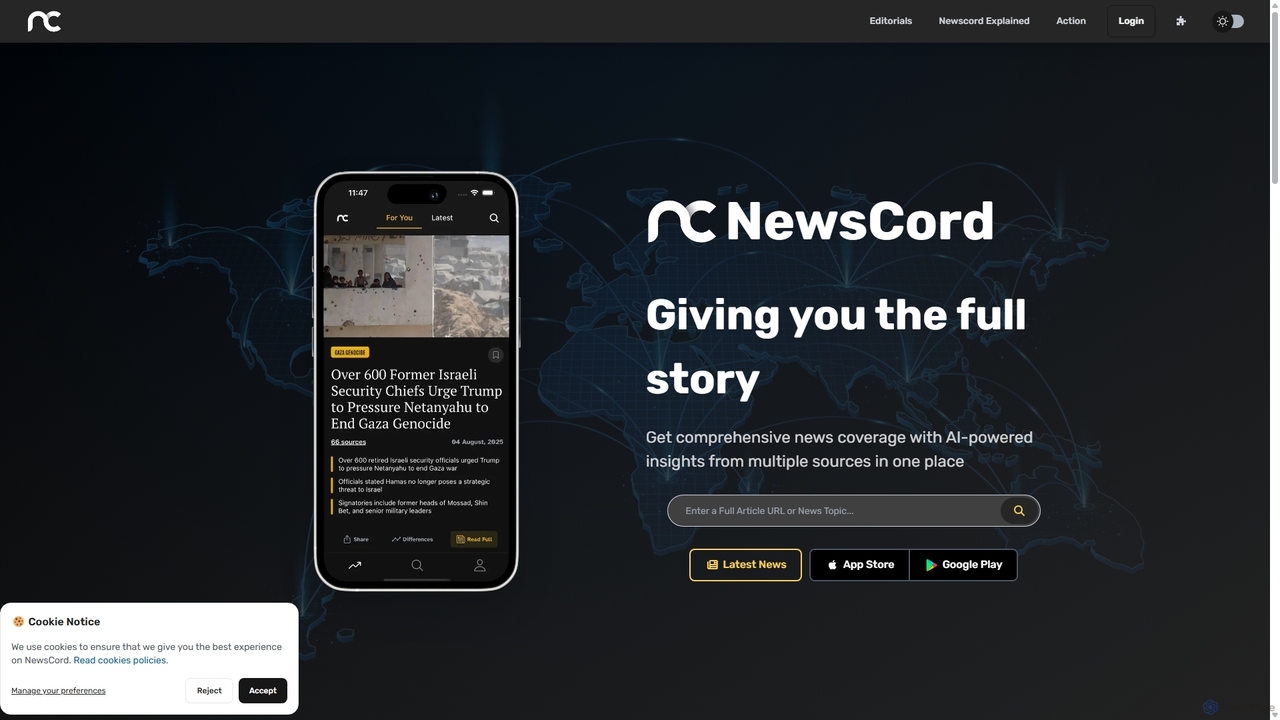
NewsCord is an AI-powered news analysis platform that reveals media bias by comparing articles from thousands of global …

6.9K
stocknewsai.com

stocknewsai.com

An AI-powered platform that analyzes and summarizes global stock market news, providing investors with real-time sentiment analysis, trend …

3.1K
Free
Clarity

Clarity

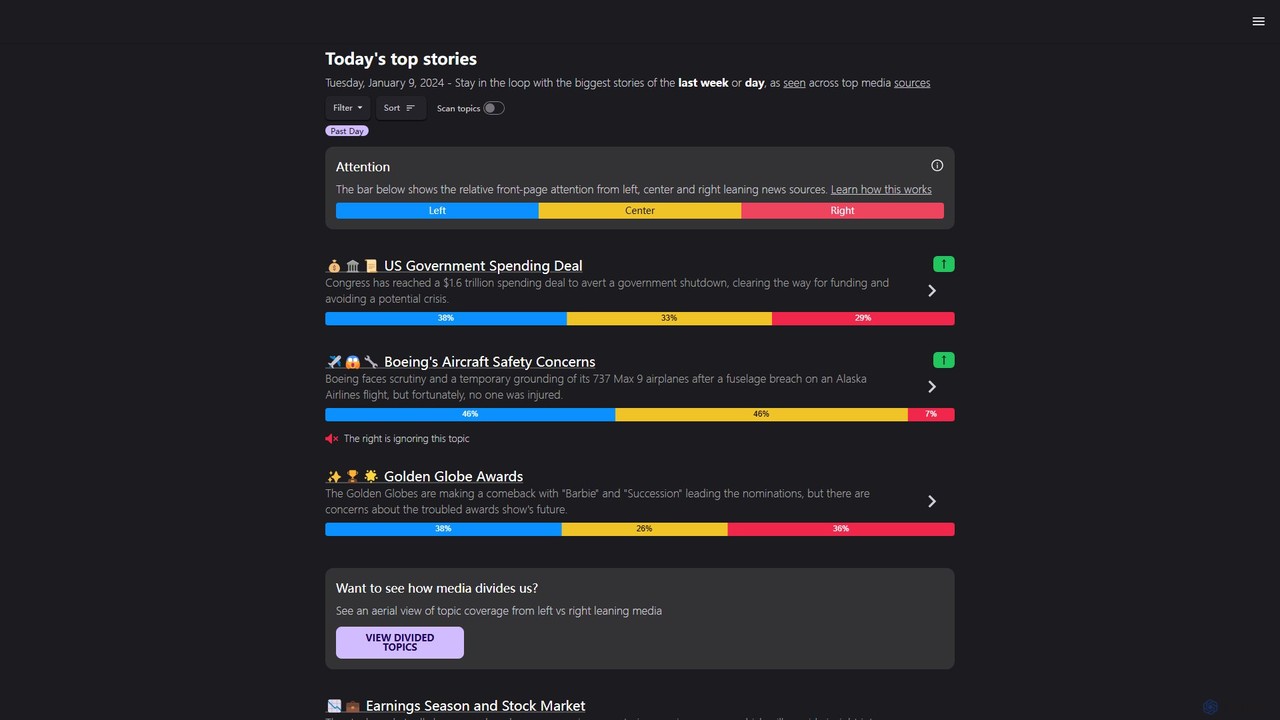
Clarity is an AI-powered news aggregator designed to combat media bias. It analyzes and presents news from left, …

3.1K

About Analysis

AI Analysis tools for news are specialized applications that use machine learning and natural language processing (NLP) to extract meaningful insights from large volumes of media content. These tools go beyond simple aggregation by identifying trends, sentiment, and key narratives within news articles, broadcasts, and social media. They empower users to understand public opinion, track brand reputation, and monitor market-moving events in real-time. This capability transforms raw information into structured, actionable intelligence for strategic decision-making.

Core Features

  • Sentiment Analysis: Automatically determines the emotional tone (positive, negative, neutral) of news coverage regarding a specific topic, brand, or person.
  • Trend & Topic Detection: Identifies emerging themes, keywords, and narratives from thousands of sources to spot new trends as they happen.
  • Entity Recognition: Extracts and categorizes mentions of people, organizations, locations, and products within the text.
  • Source & Bias Analysis: Evaluates the credibility, political leaning, or potential bias of different news sources to provide a more balanced perspective.
  • Data Visualization: Presents complex data through intuitive dashboards, charts, and graphs for easier interpretation of trends and patterns.

Use Cases

These tools are primarily used by public relations agencies, corporate communications teams, financial analysts, and political strategists. For instance, a PR team can monitor the sentiment of a product launch campaign, while a financial analyst can track news that might impact stock prices. They are also valuable for market researchers conducting competitive intelligence and academics studying media trends.

How to Choose

When selecting an AI News Analysis tool, consider the breadth and depth of its data sources (global vs. local, web vs. broadcast). Evaluate the sophistication of its analytical features, such as sentiment accuracy and trend detection speed. Assess its real-time monitoring capabilities and the quality of its data visualizations and reporting. Finally, check for API access and integration options if you need to connect the data with other business intelligence systems.

AnalysisUse Cases

1

Manage Corporate Brand Reputation

A public relations manager for a global tech company uses an AI analysis tool to continuously monitor news mentions of their brand. Following a major product launch, the tool analyzes thousands of articles and social media posts in real-time. It provides a dashboard showing a 75% positive sentiment in North America but a mixed 45% neutral sentiment in Europe. The tool identifies a key theme of concern around data privacy in European media, allowing the PR team to proactively address these specific concerns with targeted messaging, thereby preventing a potential reputation crisis.

2

Identify Financial Market Investment Signals

An investment analyst at a hedge fund configures an AI news analysis tool to track news related to the renewable energy sector. The tool scans global financial news, press releases, and regulatory filings 24/7. It detects a sudden spike in news volume and highly positive sentiment around a small solar panel manufacturer, correlated with mentions of a 'new patent'. This alert is triggered hours before the official announcement is widely reported. Acting on this early signal, the analyst initiates a position, capitalizing on the subsequent stock price increase when the news becomes public knowledge.

3

Monitor Political Campaign Narratives

A political campaign strategist uses an AI analysis tool to track media coverage of their candidate and opponents across key swing states. The tool identifies that a negative narrative about their candidate's economic policy is gaining traction in local online newspapers. It visualizes the spread of this narrative from one source to others over 48 hours. The campaign team uses this insight to quickly deploy a rapid-response team, providing local journalists with counter-points and expert quotes, effectively neutralizing the negative story before it dominates the weekly news cycle.

4

Conduct Competitive Intelligence Analysis

A market intelligence analyst for a consumer electronics firm uses an AI tool to analyze all news coverage related to its main competitor. The system is set to flag any news mentioning the competitor alongside terms like 'partnership', 'acquisition', or 'new technology'. The tool detects a cluster of articles from regional tech blogs discussing a potential partnership with a leading AI chip designer. This information, not yet reported by major outlets, gives the analyst an early warning, allowing their company to re-evaluate its own chip strategy and prepare a competitive response.

5

Assess Supply Chain Risks from Global Events

A supply chain manager for a large manufacturing company uses an AI news analysis tool to monitor geopolitical and environmental events. The tool is customized to track news from regions where their key suppliers are located. It sends an alert about emerging labor strikes at a major port, analyzing local news reports to estimate the potential duration and impact. This early warning gives the manager a 72-hour head start to reroute critical shipments through an alternative port, avoiding production delays that could have cost the company millions.

6

Research Media Bias and Framing

An academic researcher studying media studies uses an AI analysis tool to investigate coverage of a specific climate change policy across 100 different news outlets over six months. The tool automatically categorizes each outlet's political leaning based on its historical content. It then performs a comparative analysis, revealing that outlets on one side of the spectrum used framing words like 'economic burden' 80% more often, while outlets on the other side used 'environmental protection'. This quantitative data provides a strong, evidence-based foundation for their research paper on media framing.

AnalysisFrequently Asked Questions