ToolMage
Sign in

Best 5 Personalized News AI tools for News

Popular Personalized News AI tools in News include neus.ai, trendoo, Heyscottie, tailoredpod, and Yoptio, helping you work more efficiently.

Yoptio
Freemium

Yoptio

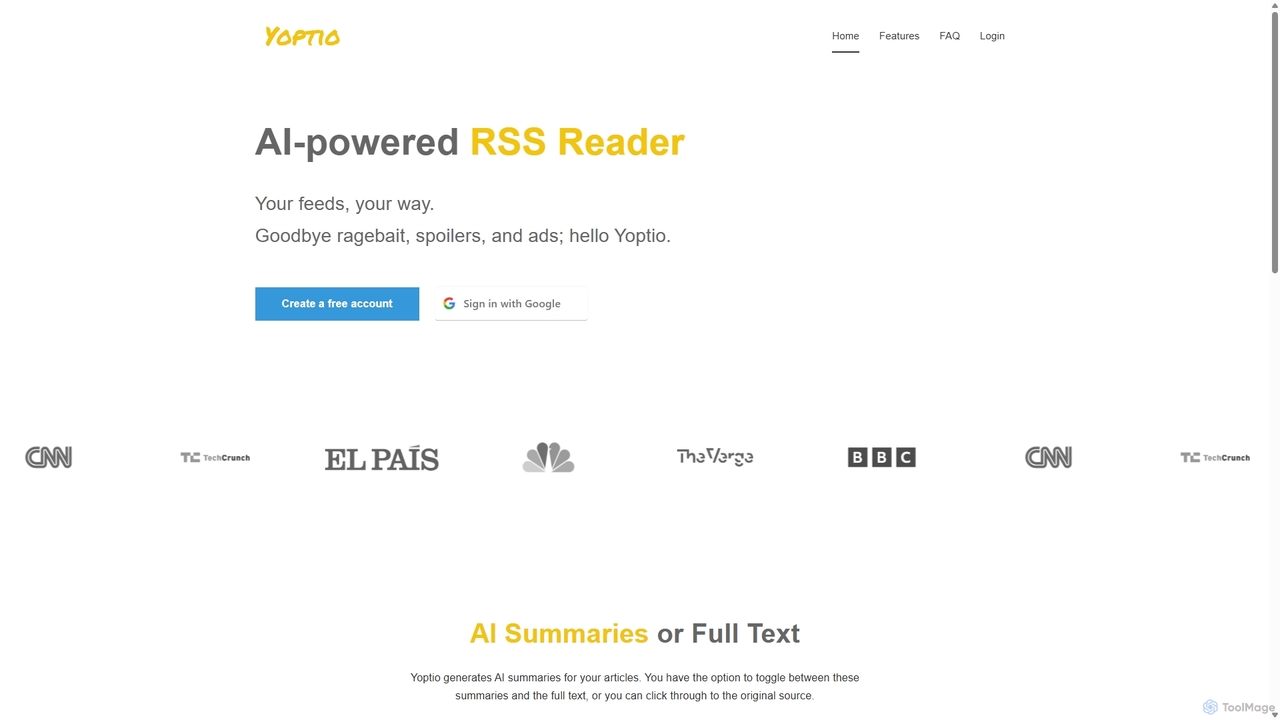
Yoptio is an intelligent, AI-powered RSS reader designed for users who want full control over their news feed. It transforms your selected text-based RSS feeds into a daily, personalized audio podcast. Yoptio presents news in a clean, reverse-chronological order, freeing you from algorithmic manipulation and information overload. It's a simple yet powerful tool for staying informed on your own terms, available on both desktop and mobile.

Text To Speech
Visits 5.8KFavorites 154Likes 167
Heyscottie
Paid

Heyscottie

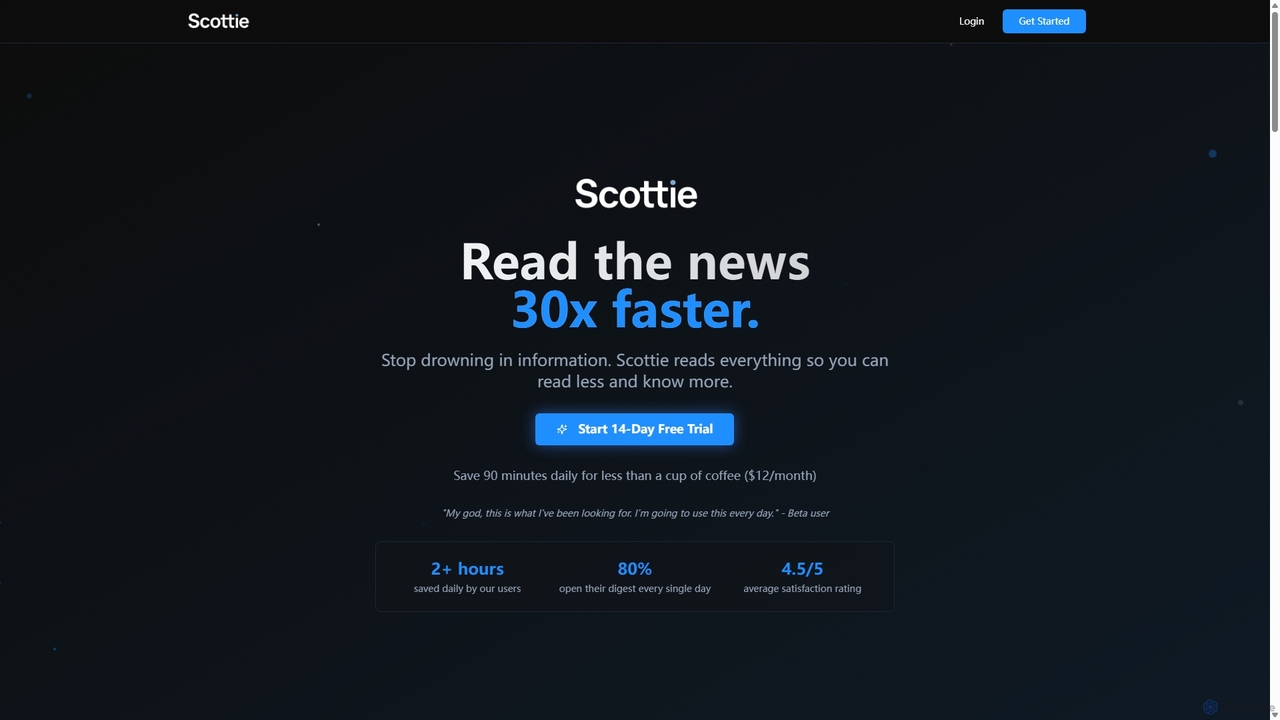
Heyscottie is an AI-powered service that transforms your cluttered newsletter inbox into a concise, 5-minute daily brief. It connects to your Gmail, analyzes your subscriptions to understand your interests, and delivers personalized key insights. This allows you to save over 90 minutes daily, combat information overload, and stay informed on what truly matters without the noise.

Curation
Visits 5.9KFavorites 140Likes 126
trendoo
Freemium

trendoo

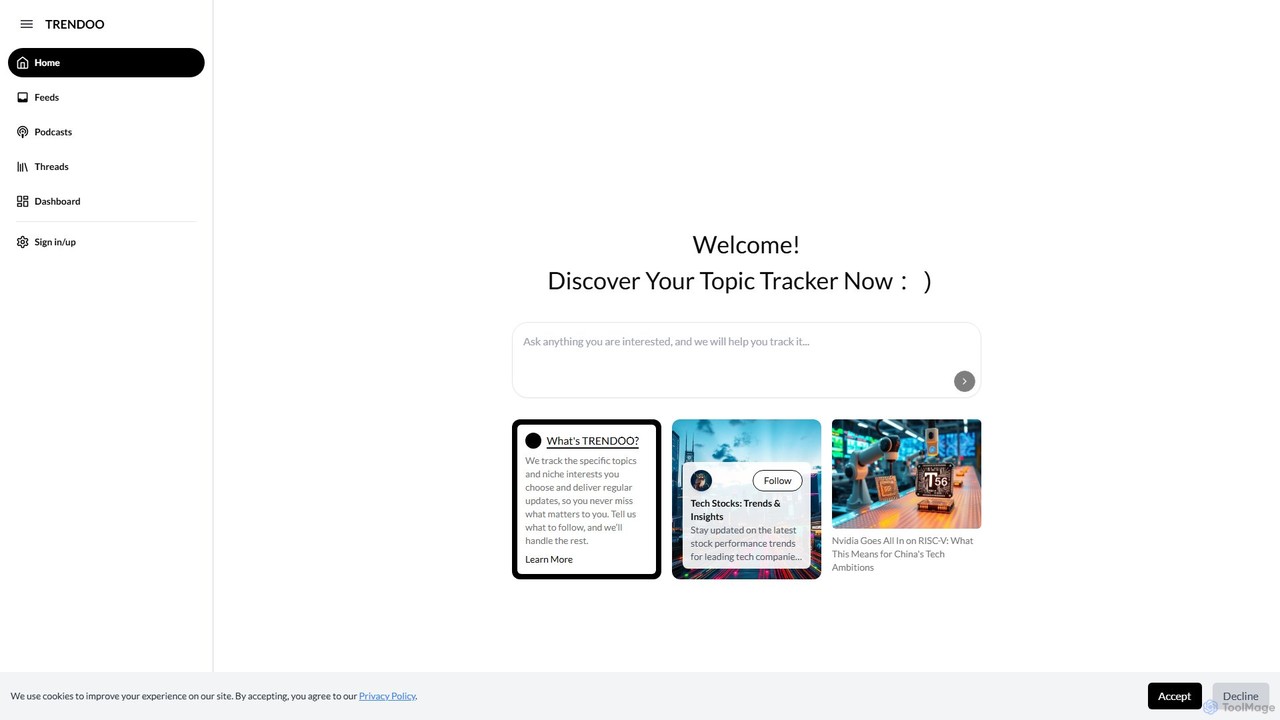
trendoo is an AI-powered intelligence platform that tracks specific topics and niche interests you choose. It delivers curated, regular updates through feeds, podcasts, and discussion threads, ensuring you never miss critical information in technology, finance, startups, and more.

Trend Analysis
Visits 6KFavorites 98Likes 121
tailoredpod
Freemium

tailoredpod

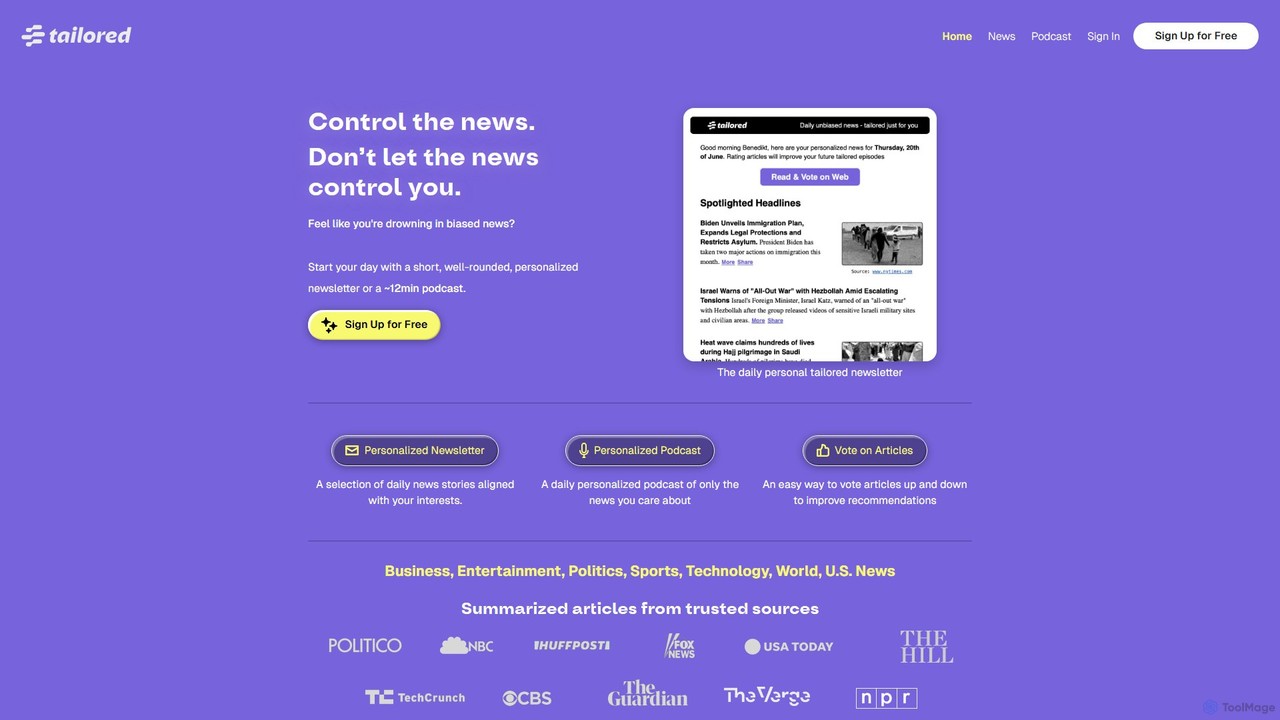
TailoredPod is an AI-powered platform that delivers personalized daily news through a concise newsletter or a ~12-minute podcast. It summarizes articles from multiple trusted sources to provide balanced, neutral content tailored to your interests. By voting on stories, you continuously refine the AI's recommendations, ensuring you stay informed without the noise and bias of traditional news feeds.

Podcast Generation
Visits 5.9KFavorites 149Likes 128
neus.ai
Freemium

neus.ai

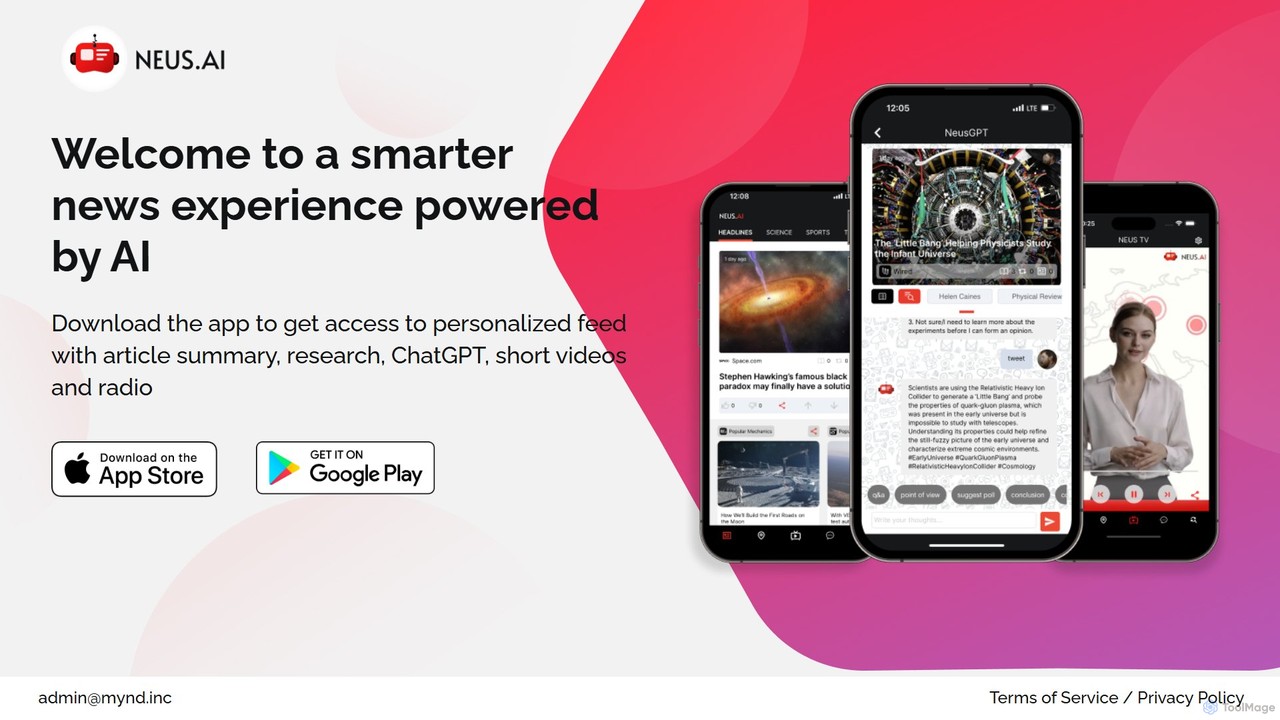
neus.ai is an AI-powered news application that delivers a personalized news experience. It provides article summaries, an integrated research assistant, short news videos, and audio radio, helping you stay informed efficiently and cut through the noise.

Research Assistant
Visits 10.3KFavorites 154Likes 165

About Personalized News

Personalized News tools are AI-powered platforms that curate and deliver news content specifically tailored to an individual user's interests, preferences, and past consumption patterns. These tools leverage advanced machine learning algorithms to analyze vast amounts of information, filtering out irrelevant articles and highlighting stories that are most likely to engage the user. Their primary value lies in combating information overload and ensuring users receive a highly relevant and engaging news experience, moving beyond generic headlines to deeply customized feeds.

Core Features

  • Interest-Based Filtering: Automatically identifies and prioritizes news articles based on user-defined topics, keywords, or inferred interests from browsing history.
  • Behavioral Analysis: Learns from user interactions like clicks, reads, and shares to refine future content recommendations, adapting to evolving preferences.
  • Source Aggregation: Gathers news from a diverse range of sources, including major publications, niche blogs, and social media, to provide a comprehensive yet personalized view.
  • Content Summarization: Utilizes AI to generate concise summaries of longer articles, allowing users to quickly grasp key information before diving deeper.
  • Multi-Format Delivery: Delivers personalized news through various channels, such as web dashboards, mobile apps, email newsletters, or even voice assistants.

Applicable Scenarios

Individuals seeking to stay informed without being overwhelmed by general news feeds, professionals needing to track specific industry developments, and researchers monitoring niche topics benefit greatly from personalized news tools. These platforms are ideal for anyone who values efficiency in information consumption and desires a news experience that directly aligns with their personal or professional focus, ensuring they don't miss critical updates while avoiding irrelevant noise.

How to Choose

When selecting a personalized news tool, consider the breadth and depth of its content sources, ensuring it covers your areas of interest comprehensively. Evaluate the sophistication of its personalization algorithms – how quickly and accurately it adapts to your preferences. Look for intuitive user interfaces and flexible delivery options (e.g., mobile app, email digest). Finally, assess its privacy policy regarding data usage, as these tools rely heavily on personal consumption data to function effectively.

Personalized News use cases

1

Curating Daily Industry-Specific Briefings

A marketing professional needs to stay updated on the latest trends in digital advertising and competitor activities. By using a personalized news tool, they can set up specific keywords and sources, receiving a daily digest of highly relevant articles. This eliminates the need to manually browse multiple industry blogs and news sites, saving significant time and ensuring no crucial market shifts are missed, directly impacting strategic decision-making.

2

Enhancing Personal Learning and Skill Development

An individual learning a new programming language or a complex subject can leverage personalized news to supplement their studies. They can configure the tool to deliver articles, tutorials, and research papers related to their learning path. This provides a continuous stream of fresh, relevant information, reinforcing concepts and exposing them to new ideas and best practices, accelerating their skill acquisition beyond structured courses.

3

Monitoring Niche Hobbies and Interests

An enthusiast of a niche hobby, such as vintage watch collecting or specific historical periods, often struggles to find relevant content amidst general news. A personalized news tool allows them to create highly specific filters based on obscure terms, brands, or historical figures. This ensures they receive updates on auctions, new research, community discussions, or related events, fostering deeper engagement and knowledge within their specialized interest.

4

Supporting Academic Research and Literature Review

University researchers and students conducting literature reviews require efficient access to the latest scholarly articles and publications in their field. Personalized news tools can be configured to track specific journals, authors, and research topics, delivering new findings directly to their inbox or dashboard. This streamlines the process of staying current with academic advancements, identifying emerging theories, and avoiding redundant research efforts.

5

Streamlining Competitive Intelligence for Businesses

Businesses need to keep a close eye on competitors, market shifts, and regulatory changes. Personalized news platforms enable companies to set up sophisticated monitoring profiles for competitor names, product launches, industry regulations, and economic indicators. This provides real-time alerts and curated reports, allowing decision-makers to react swiftly to market opportunities or threats, maintaining a competitive edge.

6

Discovering New Perspectives Beyond Filter Bubbles

While personalization often leads to filter bubbles, advanced personalized news tools can be configured to intentionally introduce diverse viewpoints. Users can specify a desire for articles from opposing political stances or alternative scientific perspectives. This helps individuals break out of echo chambers, fostering critical thinking and a more nuanced understanding of complex issues by exposing them to a broader spectrum of ideas.

Personalized News FAQ

What are Personalized News tools?

Personalized News tools are AI-driven platforms that deliver news content specifically tailored to an individual's unique interests and reading habits. They use machine learning to analyze user preferences, past interactions, and explicit inputs to curate a highly relevant news feed. Their core purpose is to cut through information overload, ensuring users receive stories that matter most to them, from a variety of sources.

How do Personalized News tools differ from traditional news aggregators?

Traditional news aggregators simply collect headlines from various sources, often categorized by broad topics, requiring users to manually browse for relevance. Personalized News tools, however, go a step further by actively learning user preferences and filtering content algorithmically. They don't just show you "all news about technology"; they show you "technology news specifically about AI ethics, from sources you trust, that you haven't read yet," based on your unique profile.

What are the key benefits of using Personalized News tools?

The primary benefits include significant time savings by eliminating manual browsing, improved information relevance by focusing on user interests, and reduced information overload. Users gain a more engaging and efficient news consumption experience, ensuring they stay informed on critical topics without being distracted by irrelevant content. These tools also help in discovering niche content that might otherwise be missed.

How do Personalized News tools learn my preferences?

Personalized News tools learn your preferences through a combination of explicit and implicit signals. Explicit signals include topics you select, sources you follow, or keywords you input. Implicit signals are derived from your behavior: articles you click on, how long you read them, articles you share, or even those you skip. Advanced algorithms analyze these patterns to build a dynamic profile of your interests, constantly refining recommendations over time.

Can Personalized News tools help me avoid filter bubbles?

While personalization can inherently lead to filter bubbles by reinforcing existing interests, many advanced Personalized News tools offer features to mitigate this. Users can often explicitly request diverse viewpoints, include sources outside their usual consumption, or explore "trending" topics that might not align with their direct interests. The ability to customize and override algorithmic suggestions empowers users to actively seek out broader perspectives and challenge their own biases.