ToolMage
Sign in

Best 5 Secure Communication AI tools for Privacy & Security

Popular Secure Communication AI tools in Privacy & Security include Private LLM, Chatpad AI, Sanctum, Omnibot, and Conversease, helping you work more efficiently.

Omnibot
Free

Omnibot

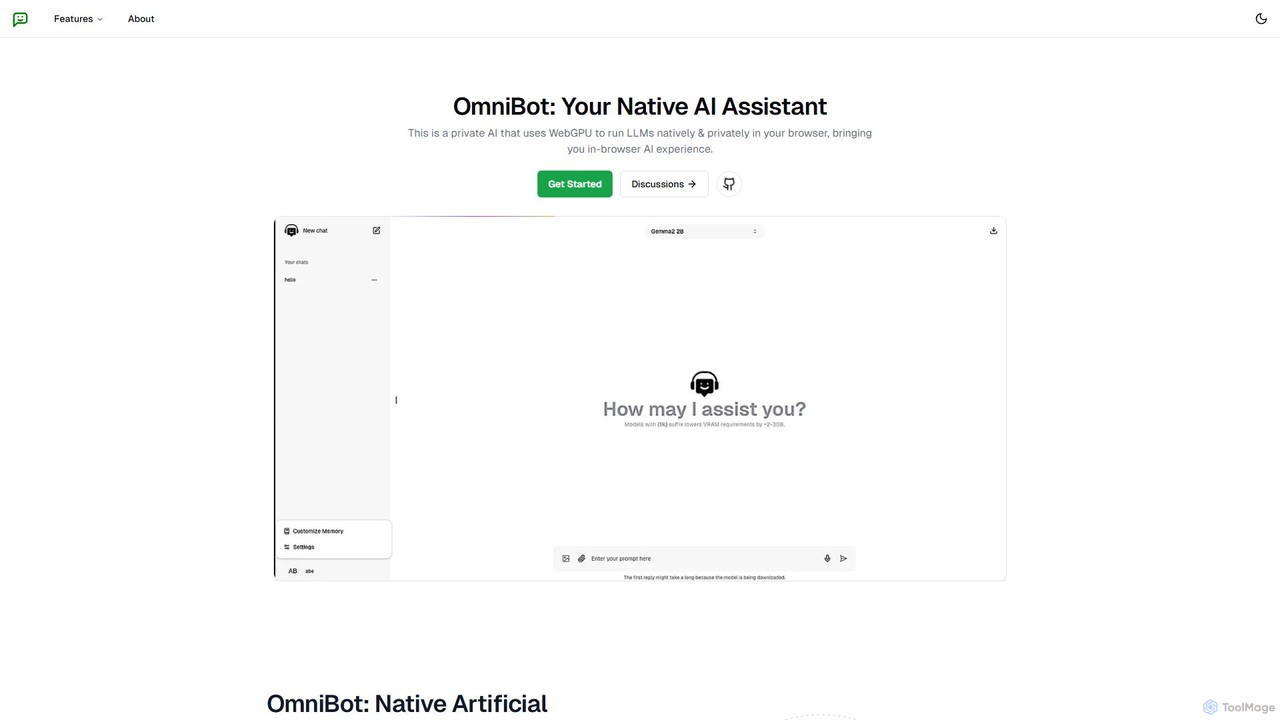
Omnibot is a private, native AI assistant that runs large language models (LLMs) directly in your browser using WebGPU. It offers a completely offline and secure chat experience, ensuring your data never leaves your computer. Customize it with your own instructions for personalized responses.

Local Development
Visits 4.3KFavorites 108Likes 105
Conversease
Freemium

Conversease

A privacy-focused AI chat platform that provides a unified interface for leading AI models like GPT-4o and Pixtral. Users connect their own API keys to store, manage, and search conversations locally on their browser. It supports advanced features including PDF chat and image analysis, offering a secure and versatile AI interaction experience.

Api Management
Visits 4.2KFavorites 136Likes 141
Sanctum
Freemium

Sanctum

Sanctum is a privacy-first AI assistant that allows you to run powerful open-source Large Language Models (LLMs) directly on your local machine. It ensures your data is encrypted, secure, and never leaves your device. Interact with models, chat with your documents, and transcribe audio, all offline and with complete privacy.

Local Development
Visits 7KFavorites 118Likes 109
Chatpad AI
Free

Chatpad AI

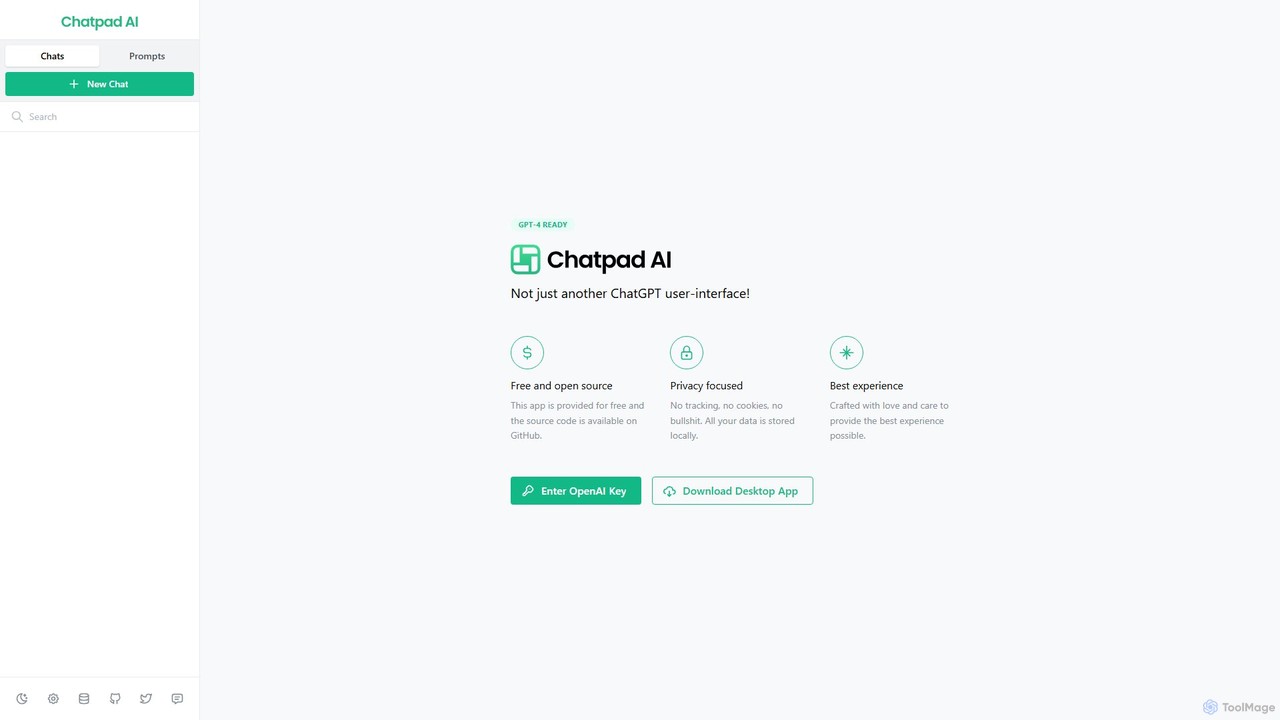
Chatpad AI is a free, open-source, and privacy-focused desktop client for OpenAI's GPT models, including GPT-4. It enhances the standard chat experience by storing all your data locally, ensuring complete privacy and data ownership. Use your own OpenAI API key for a secure and powerful AI interaction.

Code Assistant
Visits 8.6KFavorites 132Likes 129
Private LLM
Paid

Private LLM

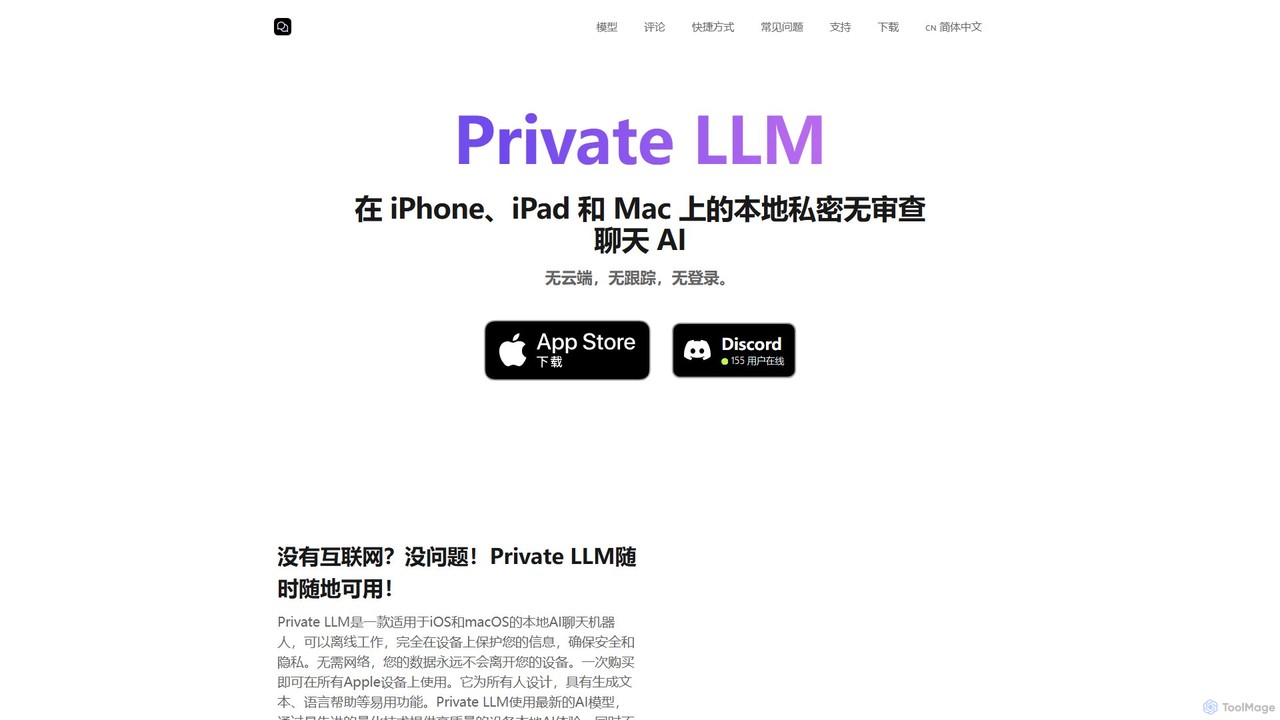
Private LLM is a secure, offline AI chatbot for iPhone, iPad, and Mac. It runs powerful open-source LLMs locally on your device, ensuring 100% privacy with no data tracking or cloud servers. It features a one-time purchase model, deep integration with the Apple ecosystem via Siri and Shortcuts, and offers superior performance through advanced model quantization.

Coding Assistant
Visits 25.2KFavorites 122Likes 105

About Secure Communication

AI Secure Communication tools are applications designed to protect digital conversations and data exchanges using advanced encryption and threat intelligence. These tools primarily leverage end-to-end encryption (E2EE), ensuring only the intended recipients can access the content. AI enhances this security by proactively detecting phishing attempts, malicious links, and unusual behavior within the communication flow. This provides a confidential environment for sensitive discussions, making them vital for protecting personal privacy and corporate intellectual property.

Core Features

  • End-to-End Encryption (E2EE): Guarantees that messages, calls, and files are unreadable to anyone except the sender and receiver.
  • AI-Powered Threat Analysis: Automatically scans for and flags potential security risks like malware, phishing, and social engineering tactics.
  • Metadata Obfuscation: Minimizes or conceals communication metadata (who, when, where) to prevent traffic analysis and surveillance.
  • Secure File Transfer: Encrypts documents, images, and other files both in transit and at rest within the platform.
  • Zero-Knowledge Architecture: The service provider has no access to user data or encryption keys, ensuring maximum privacy.

Applicable Scenarios

These tools are critical for legal professionals discussing confidential cases, healthcare providers sharing patient data under regulations like HIPAA, corporate teams collaborating on trade secrets, and journalists protecting their sources from surveillance.

Selection Criteria

When selecting a tool, evaluate its encryption protocol's strength and audit history. Consider the provider's jurisdiction and data privacy policies. Assess whether its features (e.g., group chat, video calls) meet your needs and balance its security level with ease of use for your team.

Featured tool rankings

Secure Communication use cases

1

Secure Collaboration on Corporate Mergers

For C-suite executives and legal teams managing a sensitive merger and acquisition (M&A), data leaks are a major risk. They use a secure communication platform with E2EE for all chats, calls, and document sharing. The platform's AI flags any suspicious login attempts or unusual file access patterns, providing an early warning. This creates a secure digital 'war room,' allowing them to exchange financial projections and strategic plans with confidence that the information remains strictly confidential until the official announcement.

2

Protecting Journalist-Source Anonymity

An investigative journalist needs to communicate with a whistleblower exposing corporate fraud. To protect the source's identity and safety, they use a secure messaging app known for strong metadata protection. This ensures that not only are the messages encrypted, but the records of who contacted whom and when are also obscured. The ephemeral messaging feature is used to automatically delete sensitive conversations, leaving no digital trail and safeguarding the source from potential retaliation.

3

HIPAA-Compliant Telehealth Consultations

A psychiatrist conducts remote therapy sessions with patients. To comply with healthcare privacy laws like HIPAA, the clinic adopts a secure communication tool that provides E2EE for video calls and messaging. The platform allows the doctor to securely share session notes and treatment plans with the patient. The zero-knowledge architecture ensures that even the platform provider cannot access the sensitive patient health information, building trust and maintaining regulatory compliance.

4

Safeguarding Intellectual Property in R&D

A tech company's research and development team is working on a breakthrough battery technology. To prevent industrial espionage, all team communication occurs on a secure collaboration platform. Engineers share complex schematics, test data, and chemical formulas using encrypted file transfer. The platform's access controls ensure only authorized team members can view specific channels, protecting valuable trade secrets throughout the entire development lifecycle before patents are filed.

5

Coordination for Human Rights Activists

Activists operating in a region with heavy government surveillance need to coordinate protests and share information safely. They rely on a decentralized or federated secure communication tool that isn't controlled by a single company. This prevents a central point of failure or government pressure. Features like anonymous sign-up (not requiring a phone number) and Tor integration provide additional layers of protection, enabling them to organize and report on human rights issues without exposing their identities.

6

Confidential Legal Client Communication

A law firm represents a client in a high-stakes intellectual property lawsuit. Attorneys use a secure communication portal to exchange privileged information, case strategies, and evidence with their client. The platform provides an auditable trail of communication while ensuring attorney-client privilege is maintained through E2EE. This is superior to standard email, which can be intercepted, ensuring all sensitive legal discussions remain confidential and protected from discovery by opposing counsel.

Secure Communication FAQ

What are AI-powered Secure Communication tools?

AI-powered Secure Communication tools are applications that use end-to-end encryption and artificial intelligence to protect digital conversations. Their primary function is to make messages, calls, and file transfers unreadable to third parties, including the service provider. AI adds another layer of security by actively identifying and neutralizing threats like phishing links, malware, and social engineering attempts in real-time, creating a more robust defense than encryption alone.

How do I choose the right secure communication tool?

To choose the right tool, consider four key factors. First, evaluate the encryption strength: look for open-source, audited protocols like the Signal Protocol. Second, check the privacy policy and jurisdiction: prefer providers in countries with strong privacy laws. Third, assess the feature set: ensure it has the functions you need, such as group calls or large file transfers. Finally, balance security and usability: the most secure tool is useless if it's too complex for your team to adopt.

What's the difference between secure communication tools and standard messaging apps?

The main difference lies in their default privacy model and data access. Secure communication tools typically feature end-to-end encryption by default for all communications and are built on a zero-knowledge principle, meaning the provider cannot access your data. Standard apps like Slack or Telegram (in cloud chats) may encrypt data in transit but often hold the keys, allowing them to access content. Secure tools also focus on minimizing metadata collection, which standard apps often use for analytics or other purposes.

Is end-to-end encryption (E2EE) completely foolproof?

End-to-end encryption is extremely effective at protecting data in transit from being intercepted and read by third parties (like hackers or the service provider). However, it does not protect the endpoints. If your device or the recipient's device is compromised with malware or spyware, your communications could still be exposed. Therefore, E2EE is a critical component of security, but it should be combined with good device hygiene, such as using strong passwords and keeping software updated.

Who needs to use secure communication tools?

While essential for professionals like journalists, lawyers, and activists, the need for secure communication extends to many others. Businesses use them to protect trade secrets and client data. Healthcare providers use them for HIPAA compliance. Individuals use them to protect personal conversations from data mining and surveillance. In an era of frequent data breaches, anyone who values their privacy and the confidentiality of their conversations can benefit from using a secure communication tool.