Productivity Best in category 1 results Agents AI Tool

Popular AI tools in the Agents field of Productivity include Steamship, etc., helping you quickly improve efficiency.

Steamship

Steamship

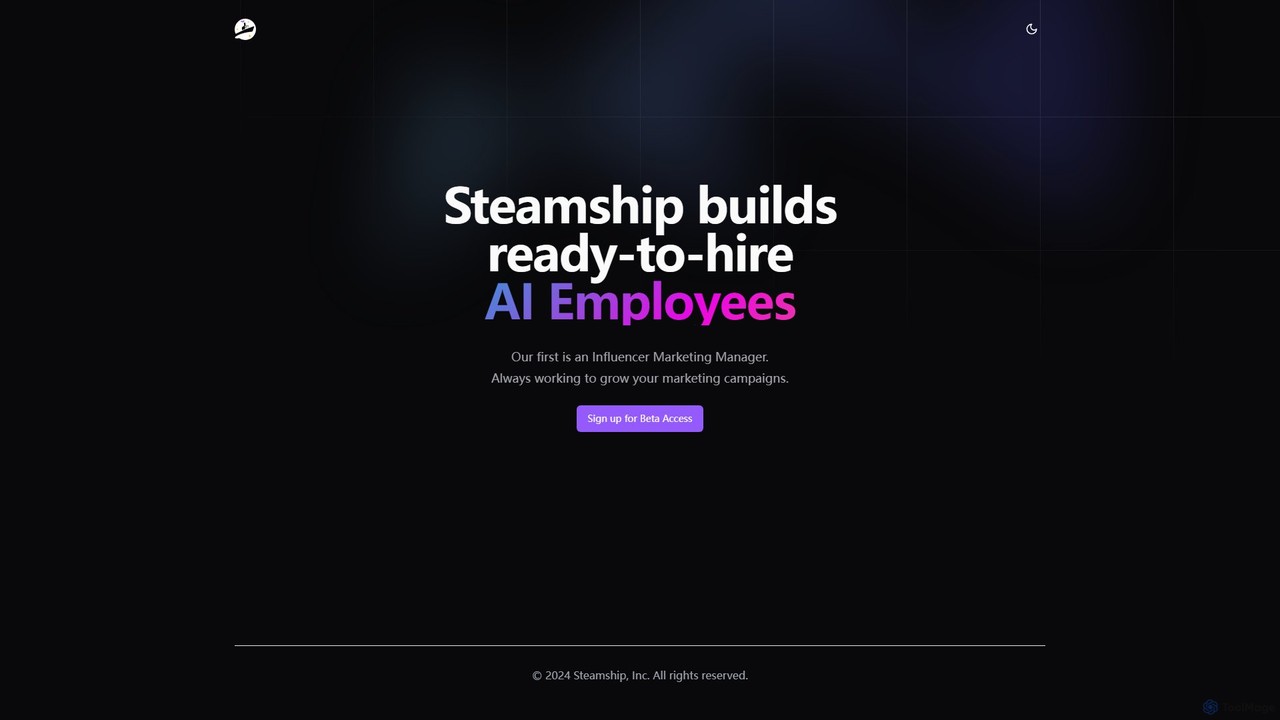
Steamship is a developer platform for building and deploying autonomous AI agents, often referred to as "AI Employees." …

3.3K

About Agents

AI Agents are autonomous systems designed to understand goals, create plans, and execute multi-step tasks independently. They function by breaking down a high-level objective into a sequence of manageable actions, often utilizing various tools and APIs to interact with digital environments. This capability allows them to handle complex workflows that go beyond simple automation, acting as proactive problem-solvers. As a key component of modern productivity, AI Agents can automate research, coding, data analysis, and other intricate processes with minimal human intervention.

Core Features

  • Autonomous Operation: Executes tasks from start to finish based on a given objective without step-by-step instructions.
  • Multi-step Task Planning: Decomposes complex goals into a logical sequence of actions and sub-tasks.
  • Tool & API Integration: Utilizes web browsers, code interpreters, and third-party APIs to gather information and perform actions.
  • Dynamic Adaptation: Adjusts its plan based on real-time feedback and results from previous actions.
  • Goal-Oriented Reasoning: Focuses on achieving the final objective rather than just executing pre-defined scripts.

Use Cases

AI Agents are particularly valuable for developers automating coding and debugging, researchers conducting comprehensive data gathering and analysis, and marketers creating complex campaign strategies. They also serve as powerful personal assistants for managing schedules, planning travel, and handling complex administrative tasks that require accessing multiple information sources.

How to Choose

When selecting an AI Agent, consider the complexity of tasks it can handle and its range of tool integrations (e.g., web browsing, file system access, specific software APIs). Evaluate its level of autonomy and the degree of control you have over its actions. Also, assess its security protocols for handling sensitive data and its ability to learn or be customized for specific workflows.

AgentsUse Cases

1

Automated Market Research and Reporting

A marketing analyst tasks an AI Agent with the goal: 'Analyze the top 3 competitors for our new SaaS product and generate a summary report.' The agent autonomously browses the web to identify competitors, visits their websites to extract pricing and feature information, scans social media for customer sentiment, and synthesizes all findings into a structured report. This process, which would manually take hours, is completed in minutes, providing the analyst with actionable insights for strategic planning.

2

Autonomous Code Generation and Debugging

A developer provides an AI Agent with a user story: 'Create a Python script that fetches weather data from an API and saves it to a CSV file.' The agent plans the steps: find a suitable weather API, write the code to make the API call, handle the JSON response, parse the data, and write it to a CSV. It then executes this plan, writes the script, and even runs a test. If an error occurs, it can read the error message, search for solutions, and attempt to fix the code, significantly accelerating the development cycle.

3

Complex Travel Itinerary Planning

A user gives an AI Agent a complex request: 'Plan a 5-day budget-friendly trip to Paris for two in May, focusing on art museums and local cuisine.' The agent accesses flight and hotel booking sites to find the best deals, researches museum opening times and ticket prices, browses food blogs for restaurant recommendations within the budget, and compiles a day-by-day itinerary. The final output is a detailed plan complete with booking links, a map, and a budget breakdown, saving the user hours of research and coordination.

4

Proactive Customer Support Resolution

A complex customer support ticket arrives: 'My order 12345 hasn't arrived, and the tracking link is broken.' An AI Agent assigned to the ticket accesses the company's CRM to verify the customer's details, queries the shipping provider's API with the order number to get the real-time status, identifies that the package is delayed, and then drafts a personalized email to the customer explaining the situation, providing the new tracking information, and offering a discount on their next purchase. This resolves the issue without human intervention.

5

Automating Content Creation Workflows

A content manager sets a goal for an AI Agent: 'Create a comprehensive blog post about the benefits of AI in marketing.' The agent begins by searching for top-ranking articles on the topic to identify key themes. It then generates a detailed outline, conducts further research to find statistics and examples for each section, drafts the full article, and even suggests relevant images. The manager can then review, edit, and publish the content, reducing the creation time from days to a few hours.

6

Personal Productivity and Task Management

A busy professional delegates tasks to their personal AI Agent: 'Review my emails from today, summarize the important ones, draft replies for urgent messages, and update my calendar with any new meetings.' The agent scans the inbox, uses natural language understanding to identify priorities, composes draft responses for approval, and interacts with the calendar API to schedule events. It acts as a true digital assistant, managing routine administrative work and allowing the user to focus on high-priority strategic tasks.

AgentsFrequently Asked Questions