Productivity Best in category 2 results Agriculture AI Tool

Popular AI tools in the Agriculture field of Productivity include KisanAI、Agent Crop, etc., helping you quickly improve efficiency.

Free
KisanAI

KisanAI

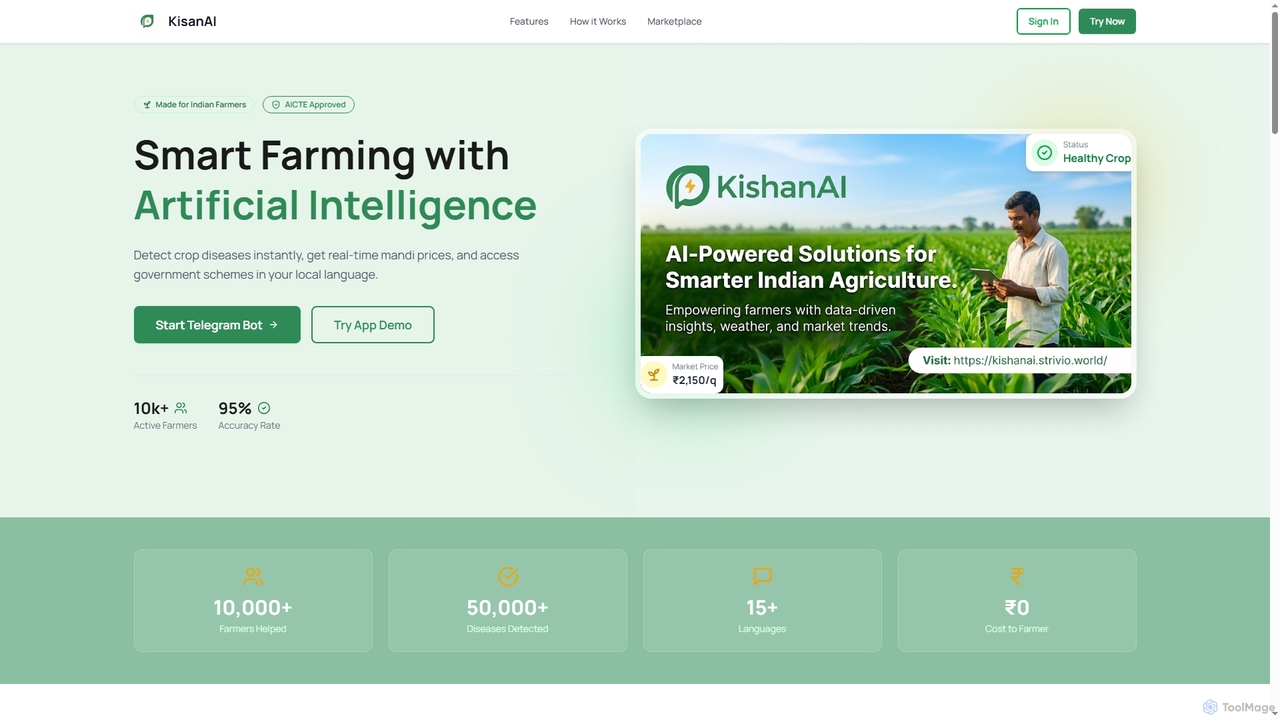
KisanAI is India's first AI-powered agricultural assistant designed for Indian farmers. It provides instant crop disease detection, real-time …

3.2K
Free
Agent Crop

Agent Crop

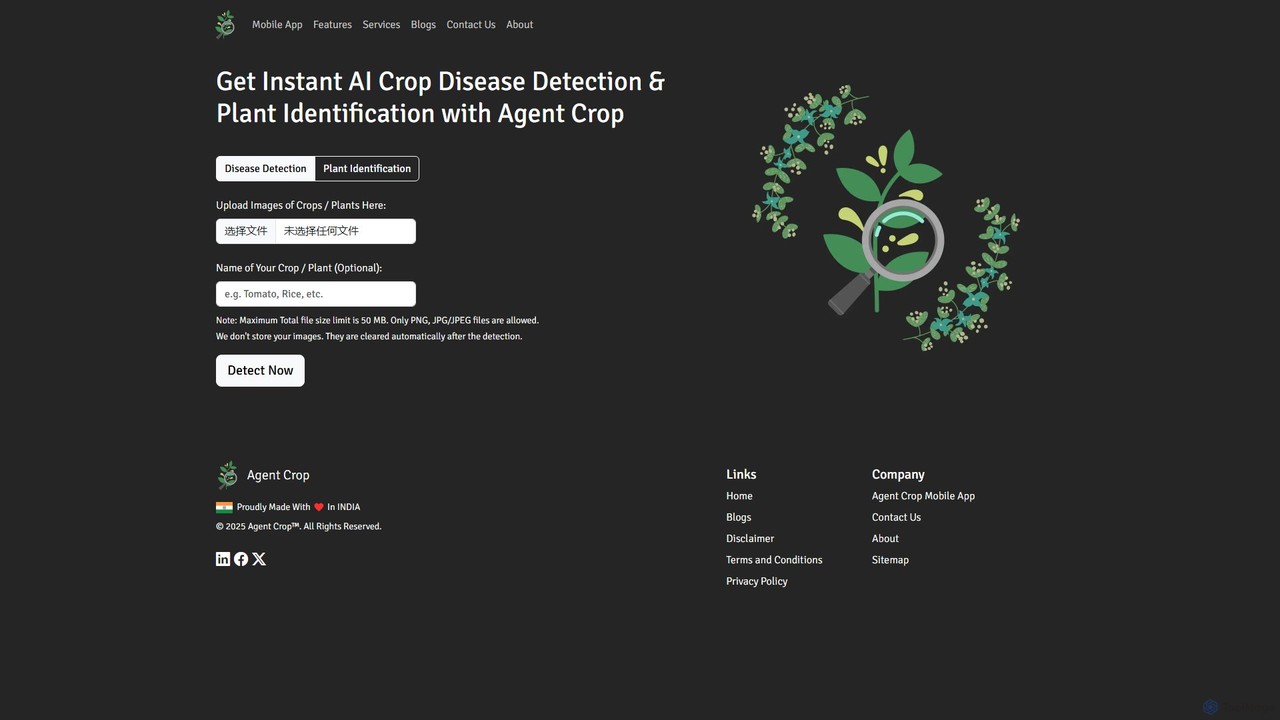
Agent Crop is a free AI-powered tool for instant crop disease detection and plant identification. Simply upload an …

3.1K

About Agriculture

AI Agriculture tools are a specialized category of software that applies machine learning, computer vision, and data analytics to farming operations. These tools analyze data from sensors, drones, and satellites to provide actionable insights for crop management and livestock monitoring. This technology helps farmers increase yields, reduce waste, and optimize resource usage, leading to more sustainable and profitable agriculture. They often integrate with existing farm management systems to automate decision-making processes.

Core Features

  • Crop Monitoring & Health Analysis: Uses drone and satellite imagery to detect pests, diseases, and nutrient deficiencies early.
  • Predictive Yield Analytics: Forecasts crop yields based on weather data, soil conditions, and historical performance.
  • Automated Resource Management: Optimizes water and fertilizer application based on real-time sensor data.
  • Livestock Monitoring: Tracks animal health, behavior, and location using computer vision and wearable sensors.
  • Precision Farming Guidance: Provides GPS-guided recommendations for planting, spraying, and harvesting operations.

Use Cases

These tools are primarily used in modern farming, agribusiness, and agricultural research. Farmers utilize them for daily operational decisions, such as identifying stress areas in a field, while agronomists use them for crop consulting and creating long-term management plans.

How to Choose

When selecting an AI Agriculture tool, consider the type of your farm (crop vs. livestock), its integration capabilities with existing equipment like tractors and drones, and data source compatibility (satellite, sensor). Also, evaluate the level of technical and agronomic support provided and the platform's scalability to cover larger areas.

AgricultureUse Cases

1

Precision Pest and Disease Detection

An agronomist managing a large cornfield uses an AI tool to analyze weekly drone imagery. The system automatically identifies early signs of northern corn leaf blight in specific zones, which are invisible to the naked eye. Instead of blanket-spraying the entire field, the farmer applies fungicide precisely to the affected areas, saving 30% on chemical costs and minimizing environmental impact.

2

Optimizing Irrigation Schedules

A vineyard owner in a water-scarce region uses an AI platform connected to soil moisture sensors. The AI analyzes sensor data, weather forecasts, and vine growth stage to create a dynamic, variable-rate irrigation schedule. This ensures each block of vines receives the exact amount of water needed, improving grape quality and reducing water consumption by up to 40% compared to fixed-schedule irrigation.

3

Automated Livestock Health Monitoring

A dairy farm manager employs an AI system with cameras in the barns. The computer vision algorithm monitors individual cows' feeding patterns, rumination time, and gait. The system flags a cow showing subtle signs of lameness two days before it becomes visually apparent to staff, allowing for early intervention, preventing milk production loss, and improving animal welfare.

4

Forecasting Crop Yield for Market Planning

A large agricultural cooperative uses an AI tool to predict soybean yields across thousands of member farms. By analyzing satellite imagery, historical yield data, and long-range weather models, the platform provides an accurate yield forecast three months before harvest. This allows the cooperative to secure better pricing on contracts and optimize logistics for storage and transportation.

5

Autonomous Weeding with AI-Powered Robots

An organic vegetable farmer deploys a small, autonomous rover equipped with AI-powered cameras. The robot navigates the rows of lettuce, using computer vision to differentiate between crops and weeds. It then uses precise mechanical or laser tools to eliminate weeds without chemicals, reducing manual labor costs by over 70% and ensuring compliance with organic standards.

6

Soil Nutrient Management and Fertilizer Recommendation

A wheat farmer uses an AI platform that integrates soil sample data with satellite imagery showing crop vigor. The system creates a detailed nutrient map of the field, identifying areas with nitrogen or potassium deficiencies. It then generates a variable-rate prescription file for the farmer's smart tractor, ensuring fertilizer is applied only where needed and at the correct rate, maximizing nutrient uptake and minimizing runoff.

AgricultureFrequently Asked Questions