
GenProfile.ai
GenProfile.ai is an AI-powered tool for creating ultra-realistic, synthetic profile pictures. It's designed for users seeking privacy, anonymity, …
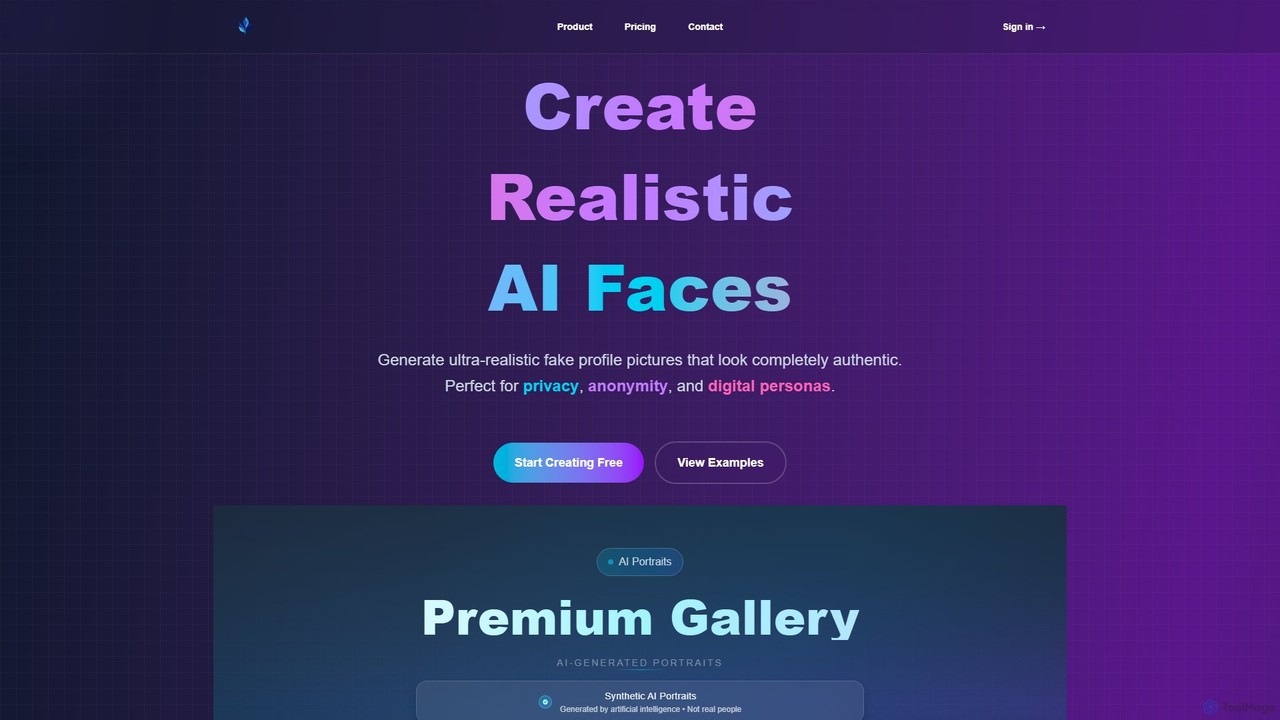
GenProfile.ai is an AI-powered tool for creating ultra-realistic, synthetic profile pictures. It's designed for users seeking privacy, anonymity, or unique digital personas. The platform generates high-quality, 4K faces that are indistinguishable from real photos, all without requiring any personal data.
About Anonymity
AI Anonymity tools are a class of software that uses artificial intelligence to protect user identity and conceal sensitive data. They employ advanced algorithms for data masking, redaction, and synthetic data generation to remove or alter personally identifiable information (PII). This enables secure communication, data analysis, and content creation without compromising privacy, thereby boosting productivity in sensitive workflows. These tools offer a more sophisticated layer of protection than traditional methods like VPNs.
Core Features
- PII Redaction: Automatically detects and removes personal information like names, addresses, and social security numbers from documents.
- Data Masking & Obfuscation: Replaces sensitive data with realistic but fictional data, preserving the original data's format and utility for testing or analysis.
- Voice & Face Anonymization: Alters audio recordings and video feeds to disguise a person's voice and facial features while retaining the original content.
- Stylometric Anonymization: Modifies text to remove unique writing style characteristics, preventing author identification.
Use Cases
These tools are crucial for journalists protecting sources, healthcare organizations anonymizing patient data for research, and financial institutions securing transaction details. They also enable developers to use realistic test data without exposing customer information and allow market researchers to collect candid feedback while ensuring participant privacy.
How to Choose
When selecting an AI Anonymity tool, evaluate the types of data it supports (text, image, audio). Assess its compliance with regulations like GDPR or HIPAA. Consider its integration capabilities with your existing systems and whether the anonymization process needs to be reversible for authorized access. Finally, analyze the strength and methodology of its anonymization algorithms.
AnonymityUse Cases
Anonymizing Datasets for Machine Learning
A data science team needs to train a new AI model on customer behavior data but is restricted by privacy regulations like GDPR. Using an AI Anonymity tool, they process the entire dataset to automatically identify and mask all PII, such as names, emails, and locations. The tool replaces this sensitive information with structurally identical, synthetically generated data. This allows the team to build and test their models on a large, realistic dataset without risking a data breach or violating compliance, accelerating the development lifecycle.
Protecting Sources in Investigative Journalism
An investigative journalist receives a large cache of documents from a whistleblower. To protect their source and publish the story safely, they use an AI Anonymity tool. The tool scans all documents, redacting the source's name, contact details, and any metadata that could trace back to them. It also applies stylometric anonymization to any written statements to mask the source's unique writing style. This ensures the integrity of the information can be reported without endangering the individual who provided it.
Securing User Feedback for Product Analysis
A product manager wants to analyze thousands of user feedback comments to identify common issues and feature requests. To comply with privacy policies, the raw feedback cannot be shared widely within the company. They use an AI Anonymity tool to process the comments, removing all user names, account IDs, and company names mentioned. The anonymized feedback can then be safely shared with development and marketing teams for qualitative analysis, enabling data-driven decisions while upholding user trust.
Creating Safe Environments for Online Support Groups
An online platform hosts support groups for sensitive topics like mental health or addiction recovery. To encourage open sharing, member anonymity is paramount. The platform integrates an AI Anonymity tool that automatically scans user posts for accidental disclosures of personal information. It can also offer real-time voice and video anonymization during virtual meetings, allowing members to participate fully without revealing their identity, fostering a safer and more supportive community.
Conducting Anonymous Corporate Investigations
A corporate compliance officer is conducting an internal investigation into potential misconduct. They need to review employee emails and chat logs without revealing the scope of the investigation or compromising the privacy of uninvolved parties. An AI Anonymity tool is used to create a sanitized copy of the communication data, masking the identities of all individuals except those directly relevant to the case. This allows the investigation to proceed effectively while minimizing internal disruption and legal risks.
Anonymizing Medical Records for Clinical Research
A medical research institute aims to conduct a large-scale study using patient records from multiple hospitals. To comply with HIPAA regulations, all patient data must be de-identified. Researchers use a specialized AI Anonymity tool trained on medical terminology to accurately identify and remove 18 specific types of PII from electronic health records (EHRs). This creates a secure, anonymized dataset that can be used for vital research to advance medical science without compromising patient confidentiality.