ZOYO
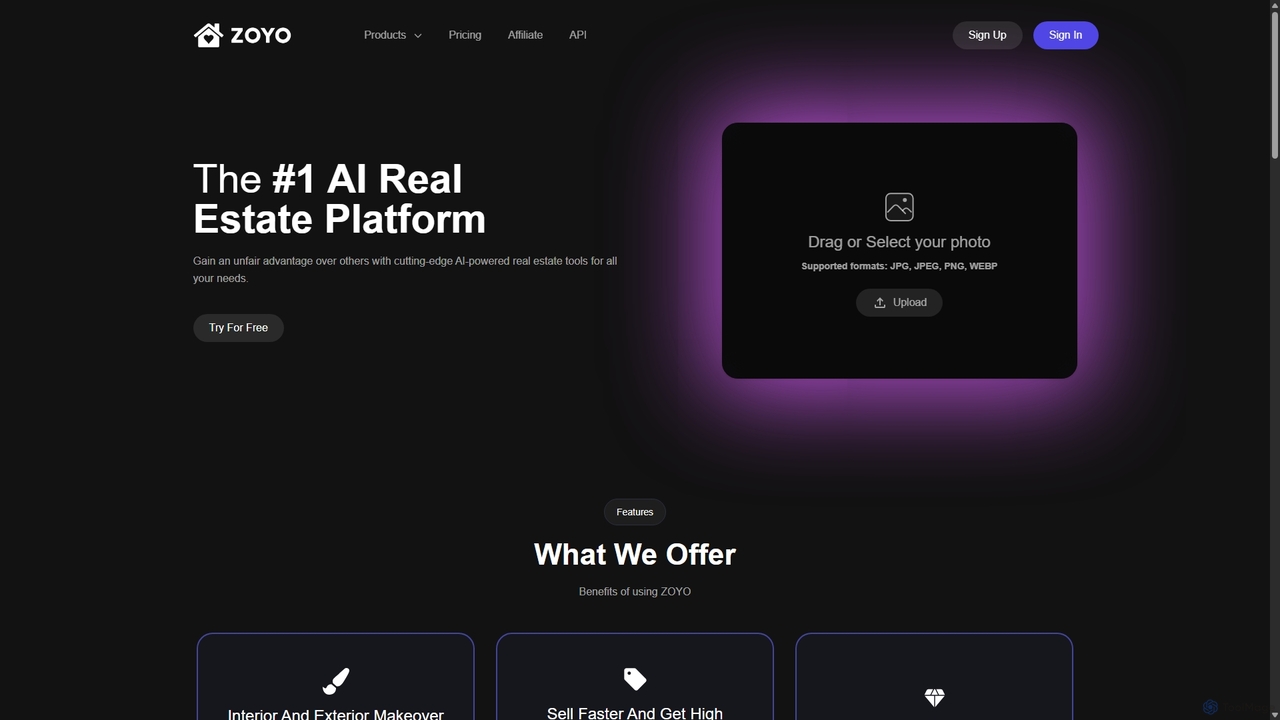
ZOYO is an AI-powered real estate platform designed for realtors, designers, and homeowners. It offers a suite of …
ZOYO is an AI-powered real estate platform designed for realtors, designers, and homeowners. It offers a suite of tools for interior and exterior design, virtual staging, image enhancement, and converting sketches to realistic renders. The platform aims to enhance property listings, accelerate sales, and simplify the design visualization process, providing high-quality results in seconds.
About Architectural Visualization
Architectural Visualization AI tools are specialized software solutions that leverage artificial intelligence to generate, enhance, and render realistic visual representations of architectural designs. These tools utilize advanced algorithms to transform 2D plans or 3D models into high-quality images, animations, and interactive experiences. They significantly accelerate the design review process, aid in client presentations, and facilitate more informed decision-making by providing immersive visual insights into future structures.
Core Features
- AI-Powered Rendering: Automatically generates photorealistic images and videos from 3D models with minimal manual input.
- Automated Material Application: Intelligently suggests and applies textures, finishes, and lighting based on design context.
- Intelligent Scene Generation: Populates environments with realistic elements like vegetation, furniture, and people to create lifelike settings.
- Real-time Walkthroughs: Enables interactive exploration of designs in virtual reality or 3D environments, offering dynamic perspectives.
Use Cases
Architects and interior designers use these tools to present concepts to clients, real estate developers leverage them for marketing properties, and urban planners visualize large-scale projects. They are crucial for creating compelling visual narratives that communicate design intent effectively across various stakeholders.
How to Choose
When selecting Architectural Visualization AI tools, consider the rendering quality and speed, integration capabilities with existing CAD/BIM software, the breadth of material and object libraries, and the ease of use for your team. Evaluate the range of output formats (images, videos, VR) and the cost-effectiveness for your project scale.
Architectural VisualizationUse Cases
Generating Photorealistic Client Presentations
Architects and design firms utilize AI visualization tools to rapidly produce high-quality, photorealistic renderings and animations of their proposed designs. Instead of spending days on manual rendering, they can generate multiple design options and perspectives in hours, allowing for more dynamic client presentations. This accelerates feedback cycles, helps clients visualize the final outcome more clearly, and ultimately leads to faster project approvals and increased client satisfaction.
Rapid Iteration of Interior Design Concepts
Interior designers leverage AI architectural visualization to quickly experiment with various material palettes, furniture layouts, and lighting schemes. By inputting design parameters, they can instantly generate multiple visual variations of a space, allowing for rapid iteration and comparison. This capability significantly reduces the time spent on manual adjustments and rendering, enabling designers to explore more creative options and refine their concepts efficiently before presenting to clients.
Virtual Property Showings for Real Estate Marketing
Real estate developers and agencies employ AI architectural visualization to create immersive virtual tours and interactive 3D models of properties, even before construction is complete. This allows potential buyers to explore unbuilt homes or commercial spaces remotely, experiencing the layout, finishes, and views as if they were physically present. This significantly broadens the reach of marketing efforts, attracts a wider audience, and helps secure early sales or leases by providing a compelling preview of the final product.
Urban Planning and Masterplan Visualization
City planners and urban developers utilize AI architectural visualization to model and visualize large-scale urban projects, such as new districts, infrastructure developments, or public spaces. These tools help assess the visual impact of proposed changes on existing urban landscapes, analyze pedestrian flow, and simulate environmental factors like sunlight and shadows. This enables stakeholders to make more informed decisions regarding urban aesthetics, functionality, and sustainability, fostering better community engagement and approval processes.
Marketing Materials for Property Developers
Property developers rely on compelling visuals to market their upcoming projects. AI architectural visualization tools enable them to generate high-quality images, cinematic animations, and even interactive VR experiences that showcase the unique selling points of a development. These assets are crucial for brochures, websites, social media campaigns, and sales centers, helping to create excitement, attract investors, and pre-sell units long before physical construction is complete. The efficiency of AI tools allows for rapid content creation at scale.
Educational Tools for Architecture Students
Architecture students can significantly enhance their learning and project presentations by utilizing AI architectural visualization tools. These tools allow them to bring theoretical designs to life, experiment with complex forms, and quickly generate professional-grade visuals for their academic portfolios. By providing accessible and efficient rendering capabilities, AI tools help students develop practical skills in design communication, explore innovative concepts without extensive technical hurdles, and prepare for industry demands more effectively.