ToolMage
Sign in

Best 1 Call Management AI tools for Productivity

Popular Call Management AI tools in Productivity include Safina, helping you work more efficiently.

Safina
Freemium

Safina

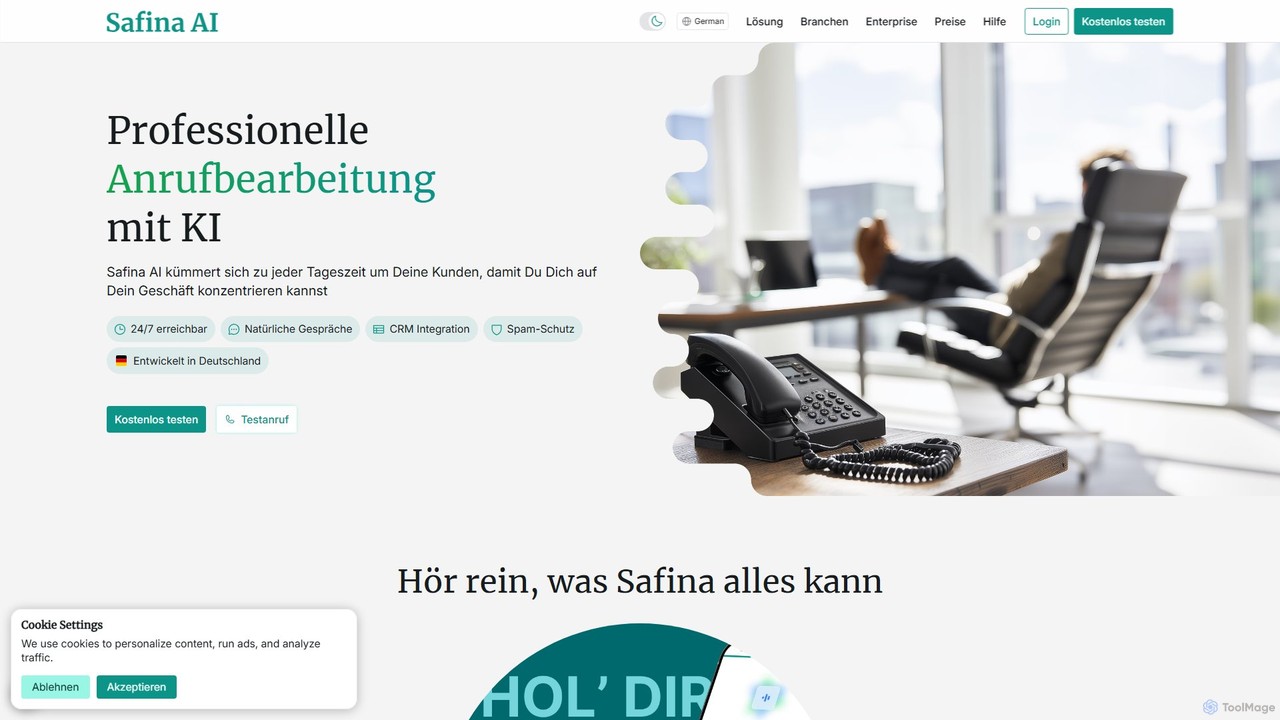
Safina is an AI-powered phone assistant that intelligently manages your calls to boost productivity. It answers calls, filters spam, records conversations, and provides detailed summaries with transcripts. Designed for professionals and businesses, it ensures you never miss an important call while allowing you to stay focused. It offers features like multilingual support, CRM integration, and customizable conversation flows.

Automation
Visits 12.7KFavorites 160Likes 144

About Call Management

Call Management tools are AI-powered solutions designed to automate, optimize, and analyze phone call interactions and related communications within an organization. Leveraging advanced Natural Language Processing (NLP), speech-to-text, and machine learning, these tools enhance efficiency, improve customer experience, and provide actionable insights from voice data. They are crucial for businesses aiming to streamline communication workflows, reduce operational costs, and elevate service quality in high-volume call environments.

Core Features

  • Intelligent Call Routing: Automatically directs incoming calls to the most appropriate agent or department based on caller intent, history, and agent availability.
  • Real-time Agent Assistance: Provides live prompts, knowledge base suggestions, and sentiment analysis to agents during calls, improving response quality and efficiency.
  • Call Transcription & Analysis: Converts spoken conversations into text, enabling detailed analysis of keywords, sentiment, compliance, and agent performance.
  • Virtual Agents & Chatbots: Handles routine inquiries, qualifies leads, and schedules appointments through automated voice interactions, freeing up human agents.
  • Performance Monitoring & Reporting: Tracks key call metrics, agent productivity, and customer satisfaction, offering insights for continuous improvement.

Use Cases

Businesses across various sectors, from customer service centers to sales organizations and compliance departments, utilize AI Call Management tools. They are essential for automating initial customer interactions, ensuring calls reach the right expert swiftly, and extracting valuable data from conversations to inform strategic decisions and improve service delivery.

How to Choose

When selecting an AI Call Management solution, consider its integration capabilities with existing CRM and helpdesk systems, the accuracy and sophistication of its AI (e.g., NLP, sentiment analysis), scalability to handle fluctuating call volumes, and robust security and compliance features. Evaluate customization options to align with specific business workflows and reporting needs, ensuring it provides actionable insights.

Call Management use cases

1

Automated Customer Support Triage

Customer service centers leverage AI call management tools to intelligently route incoming calls. Through voice recognition and natural language understanding, the system automatically identifies caller intent and sentiment. Urgent or complex issues are directed to senior agents, while common queries are handled by virtual assistants or guided to self-service options, significantly reducing customer wait times and improving first-call resolution rates.

2

Sales Lead Qualification & Routing

Sales teams utilize AI call management systems to quickly assess prospect intent and needs during initial calls. By asking pre-defined questions and analyzing dialogue with AI, the system rapidly qualifies leads. It automatically logs key information and precisely assigns leads to the most suitable sales representative based on lead quality and product fit, thereby enhancing sales conversion efficiency.

3

Real-time Agent Assistance & Coaching

During customer calls, contact center agents benefit from AI call management tools that analyze conversation content in real-time. The system instantly displays relevant knowledge base articles, product information, or recommended scripts on the agent's screen. Post-call, it provides personalized feedback and training suggestions, continuously improving service quality and agent performance.

4

Compliance Monitoring & Risk Detection

Regulated industries like finance and healthcare employ AI call management tools for automatic recording, transcription, and keyword analysis of all customer calls. The system identifies potential compliance breaches, sensitive language, or customer complaint risks, alerting compliance teams promptly. This ensures operational adherence to regulations and mitigates legal risks effectively.

5

Intelligent Appointment Scheduling & Reminders

Clinics, service providers, or sales teams use AI virtual assistants to manage appointment calls. Customers can interact with the AI using natural language to book, modify, or cancel appointments. The system also automatically sends appointment confirmations and reminders via SMS or calls, effectively reducing no-show rates and optimizing resource utilization.

6

Post-Call Analysis & Customer Feedback

Businesses use AI call management systems to automatically generate detailed call summaries and key takeaways after each interaction. Simultaneously, the system can initiate brief customer satisfaction surveys via phone or SMS, collecting feedback data and performing sentiment analysis. This provides valuable insights for product improvement and service optimization strategies.

Call Management FAQ

What are AI Call Management tools?

AI Call Management tools are advanced software solutions that use artificial intelligence, primarily Natural Language Processing (NLP) and machine learning, to automate, optimize, and analyze phone call interactions. They go beyond basic call routing by understanding caller intent, providing real-time assistance, transcribing conversations, and extracting valuable insights from voice data to improve efficiency and customer experience.

How do AI Call Management tools benefit businesses?

Businesses benefit significantly from AI Call Management tools through improved operational efficiency, enhanced customer satisfaction, and reduced costs. They enable faster call resolution, personalized customer interactions, better lead qualification, and automated routine tasks. Furthermore, these tools provide deep analytical insights into call patterns, agent performance, and customer sentiment, driving informed strategic decisions.

What are the essential features of AI Call Management solutions?

Essential features include intelligent call routing based on AI analysis of caller intent, real-time agent assistance with dynamic information display, accurate call transcription and sentiment analysis for post-call review, and virtual agents capable of handling common inquiries or scheduling. Advanced solutions also offer comprehensive performance monitoring, compliance tracking, and seamless integration with existing CRM or helpdesk systems.

What are the common challenges when implementing AI Call Management?

Implementing AI Call Management can present challenges such as integrating with legacy systems, ensuring data privacy and security compliance (especially with call recordings), and accurately training AI models for specific business contexts and accents. Additionally, managing the transition for human agents and ensuring their adoption of new tools, along with the initial investment costs, are key considerations.

How do AI Call Management tools differ from traditional PBX systems or CRM call features?

Traditional PBX systems primarily handle call connectivity and basic routing, while CRM call features log interactions. AI Call Management tools, however, add an intelligent layer. They actively understand, analyze, and optimize conversations using AI. This includes intent recognition, real-time agent guidance, sentiment analysis, automated virtual agents, and advanced analytics, transforming calls from mere interactions into data-rich, optimized engagements.